
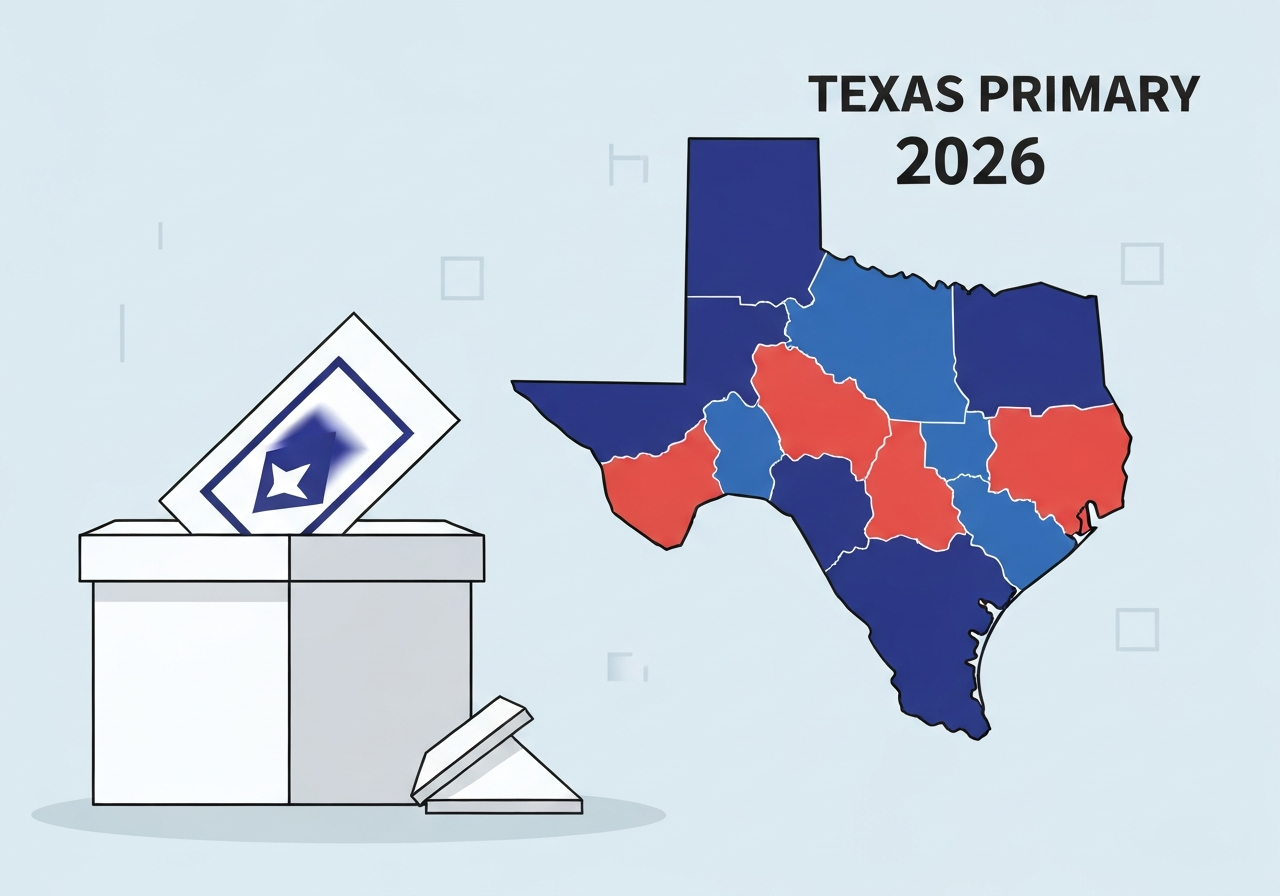
Lead: On March 3, 2026, Texas voters cast ballots in a high-stakes primary that could reshape contests for U.S. Senate, governor and several statewide offices. Results published and updated through 10:07 p.m. Central are compiled primarily from the Associated Press and local election departments, with Hearst Newspapers collecting additional returns. At the time of the latest update, many statewide races were still unfolding and calls depend on AP tabulation rules and local certification. Readers should expect additional updates as precincts finish reporting and any required runoffs are determined.
Key Takeaways
- Primary date: March 3, 2026; latest update posted March 3, 2026, 10:07 p.m. Central time.
- Top races to watch: U.S. Senate (Democratic and Republican primaries), Governor (Democratic and Republican primaries), Attorney General (both parties), Comptroller (both parties) and Railroad Commissioner.
- Data sources: Most federal and statewide tallies come from the Associated Press; other results are supplied by Hearst Newspapers from local election departments.
- AP calling rules: AP computes an expected vote percentage (EVP) using turnout and early-vote details; it requires at least 35% EVP and a 2-point lead before marking a candidate as leading.
- Local newsroom calls: Certain state and local contests may be called by newsroom editors rather than AP bureaus, depending on jurisdictional reporting.
- Runoff rule: Texas primaries require a majority to win a nomination; if no candidate reaches 50%, the top two advance to a runoff per state law.
- Project credits: Development and graphics by Vivien Ngo, Maren Kranking and Andrew Williams (Hearst DevHub); data development by Ying Zhao, Evan Wagstaff and Tazbia Fatima; design and editing led by Danielle Rindler; project management by Brittany Schell; illustrations by Liz Hart.
Background
Texas primary contests are a pivotal early test in the 2026 electoral calendar because the state’s large delegate and voter base can influence both statewide outcomes and national party narratives. Historically, Texas has leaned Republican in statewide general elections, but demographic shifts and stronger suburban Democratic performance in recent cycles have tightened competitive margins in some districts and statewide races. The 2026 primaries determine which nominees will carry their parties into the November general election, and they shape each party’s messaging and resource allocation going forward.
Turnout patterns in Texas have been shaped by expanded early-voting windows and heightened attention to voter registration trends since 2020. Parties and campaigns focus heavily on early ballots and get-out-the-vote operations; these factors are folded into forecasting models like AP’s expected vote percentage. County election officials conduct the tabulation and certification processes, with statewide tallies aggregated by news organizations and official state canvassing boards setting the final certified totals weeks after Election Day.
Main Event
On election night, thousands of AP correspondents and local election staff submitted precinct-level returns that feed into centralized tabulations. The Associated Press aggregates those returns and applies its EVP model to assess how representative reported votes are of the total expected vote in a race. When reporters and editors have sufficient data—commonly at or above the 35% EVP threshold—and a candidate leads by at least two percentage points, AP may mark that candidate as holding a lead; final winners are called only after the bureau is confident in the trajectory.
Hearst Newspapers supplemented AP data with direct reporting from local election departments to fill gaps where AP coverage is limited or delayed. In some counties, newsroom editors may issue calls for local and state races based on their own reporting and historical patterns. This multi-source approach aims to balance speed with accuracy but can lead to incremental updates as more precincts submit results or provisional ballots are resolved.
Because several primaries feature crowded fields, particularly in open-seat or high-profile contests, many races are likely to fall short of an outright majority. In those cases, Texas law mandates a runoff between the top two primary finishers, pushing a final decision into a subsequent runoff date. That dynamic concentrates strategic attention on coalition-building and turnout in the weeks between the primary and any runoff contest.
Analysis & Implications
Short-term, primary results will determine who represents each party in the November general election and how national party resources are allocated. If high-profile Republican or Democratic primaries result in more ideologically extreme nominees, national committees may re-evaluate their funding and ad strategies; conversely, moderate nominees can attract cross-party donors and alter competitive calculations in swing suburban counties. The composition of nominees for governor and U.S. Senate is especially consequential because those offices command large campaign war chests and national attention.
Down-ballot offices like attorney general and comptroller carry substantive policy implications. The attorney general shapes litigation strategy on issues ranging from federal-state disputes to election law enforcement, while the comptroller influences budget projections and fiscal policy. Results in these races can therefore shift legal and fiscal priorities at the state level regardless of the governor’s outcome, creating inter-branch dynamics the next administration must navigate.
Energy and regulation stakes are embodied in the Railroad Commissioner contest, which oversees oil, gas and pipeline rules in Texas. Given the state’s central role in U.S. energy production, nominees for that office can affect permitting decisions, emergency response protocols and the state’s posture on federal energy regulation. Outcomes here have implications that extend into broader national energy and climate debates.
Comparison & Data
| Race | Party | Primary Type | Data Source |
|---|---|---|---|
| U.S. Senate | Democratic / Republican | Statewide | Associated Press |
| Governor | Democratic / Republican | Statewide | Associated Press |
| Attorney General | Democratic / Republican | Statewide | AP / Local election departments |
| Comptroller | Democratic / Republican | Statewide | AP / Hearst |
| Railroad Commissioner | Republican | Statewide | Local departments / Hearst |
The table summarizes which organization supplies returns for each race in most cases; local conditions can vary and newsroom editors may call certain contests independently. Readers should treat early returns as provisional until county canvasses and the Texas Secretary of State complete official certifications.
Reactions & Quotes
“We are continuing to collect and verify precinct returns; patience is essential as canvass teams reconcile outstanding tallies.”
Texas Secretary of State (official statement)
“AP marks a lead only after at least 35% of expected votes are tabulated and when the margin exceeds two percentage points, reflecting both turnout patterns and early-vote behavior.”
Associated Press (methodology summary)
“Voters we spoke with in suburban precincts described higher-than-typical engagement, especially among early-ballot participants.”
Hearst Newspapers reporting
Unconfirmed
- Final winners: several statewide primaries had not reached final certification by 10:07 p.m. update; official winners depend on full tabulation and possible runoffs.
- Vote-shift patterns: precinct-level changes during late-count reporting could alter some margins; those shifts remain pending verification.
- Unaudited social-media claims about specific precinct fraud or misconduct were not corroborated by election officials at the time of the update.
Bottom Line
The March 3, 2026 Texas primary is an early but consequential chapter in the 2026 cycle: it sets nominees for high-profile federal and statewide offices and will influence party strategy and resource flows ahead of November. Because AP and local departments use layered thresholds and verification steps, readers should expect updates and, in some contests, runoffs that extend the decision timeline.
Watch the governor and U.S. Senate contests for their national implications, and monitor attorney general, comptroller and Railroad Commissioner results for state-level policy impact. For the most reliable information, follow AP tabulations, local county reporting and the Texas Secretary of State’s certified results as they become available.