
Lead
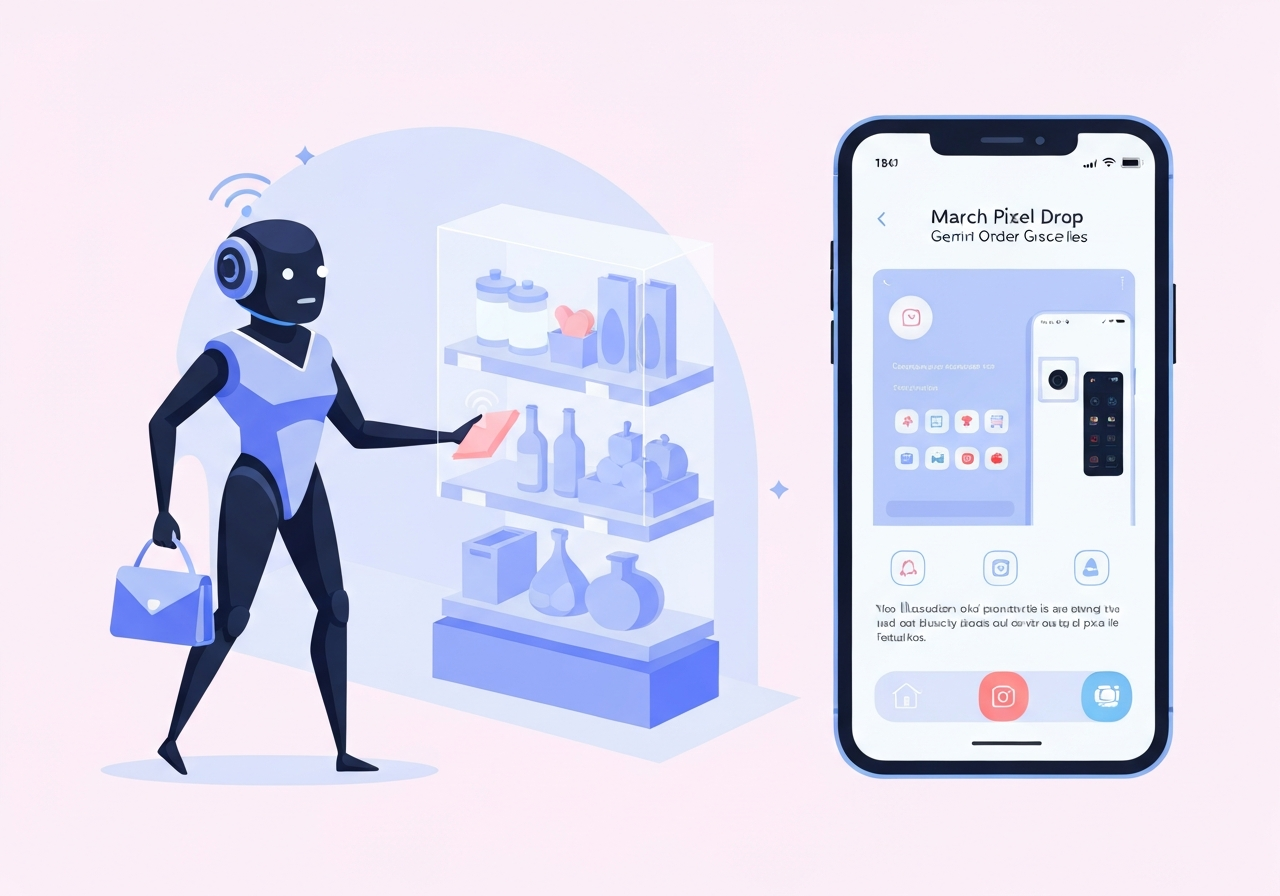
Google’s March Pixel software update brings a set of new capabilities to Pixel phones, most notably an agentic mode for its Gemini assistant that can complete tasks like ordering groceries or booking rides on the user’s behalf. The rollout begins now for the Pixel 10, Pixel 10 Pro and Pixel 10 Pro XL and was previewed at Samsung’s recent Unpacked event. Alongside Gemini’s new background actions, Google is expanding Circle to Search, updating Magic Cue, and introducing visual and productivity tweaks across Pixel models from the Pixel 6 through Pixel 10. The changes aim to blend more proactive AI into everyday phone tasks while keeping control and oversight in users’ hands.
Key Takeaways
- Gemini’s agentic mode can act inside “select” third-party apps — Google specifically named integrations with Uber and Grubhub — and is rolling out to Pixel 10, Pixel 10 Pro and Pixel 10 Pro XL.
- The feature runs in the background but allows users to supervise or interrupt the assistant at any time, per Google’s announcement.
- Samsung’s S26 phones will receive the same agentic capability ahead of similar upgrades arriving for other platforms.
- Circle to Search is expanded across the entire Pixel 10 lineup to break down outfits into individual pieces and offer a virtual try-on option.
- Magic Cue will proactively suggest context-aware replies and recommendations across messaging, email, weather and phone apps; it’s coming to Pixel 10 variants including the Pixel 10 Pro Fold in select countries and languages.
- A new “comfort” view reduces strong color stimulation on the Pixel 10 series to ease visual strain.
- Older Pixel devices gain updates: Pixel 8+ desktop experience on external displays; Pixel 7+ At-a-Glance commute updates; Pixel 6+ gets a Now Playing app, AI-generated app icons, and home/lockscreen sports and stock info.
Background
Google has used periodic “Pixel Drops” to distribute feature updates and refinements to the Pixel family for several years, combining platform improvements with AI-driven utilities. The company’s broader product strategy has increasingly emphasized on-device and cloud-assisted AI, moving from passive tools to more proactive assistants that can take multi-step actions. That shift reflects an industry-wide push — driven by advances in large language models and app APIs — to let assistants act as agents rather than only as search-orchestration interfaces.
At the same time, regulators, developers and consumer advocates have pressed technology firms to clarify how automated actions interact with user data, consent and third-party services. Apple, Google, and others face questions about transparency, data handling and potential liability when an AI performs transactions or interacts with commerce apps on a user’s behalf. Google’s announcement comes amid that broader debate, and it follows a high-profile demonstration of similar capabilities at Samsung’s Unpacked event.
Main Event
In the March Pixel Drop, Google enabled a new agent-capable mode for Gemini on Pixel 10 hardware. Users can ask Gemini to complete tasks inside a limited set of companion apps; Google named Uber and Grubhub as early examples. After the user grants permission, Gemini can initiate orders or bookings while running in the background, and Google says the user may supervise or halt the assistant’s actions at any time.
The rollout starts on Pixel 10, Pixel 10 Pro and Pixel 10 Pro XL and will also appear on Samsung S26 devices as part of a cross-manufacturer introduction. Google emphasized that the agentic abilities are available only in “select” apps and contexts, not universally across the platform, and that users retain control through interruption and oversight mechanisms built into the assistant workflow.
Beyond agentic Gemini, Circle to Search now supports outfit breakdown and virtual try-on for the Pixel 10 family, letting users draw a circle around apparel on-screen, isolate pieces and locate similar items. Magic Cue, Google’s context-aware helper, was updated to offer proactive suggestions—such as restaurant options—based on the preferences of people mentioned in a conversation. These features will be available in select countries and languages rather than globally at launch.
The update also brings incremental but wide-reaching additions to older Pixels: Pixel 8 and later gain a desktop-like interface when connected to an external display; Pixel 7 and later receive expanded commute information in the At-a-Glance widget; Pixel 6 and later gain a Now Playing app, AI-generated app icons, and quick views for sports scores and market prices on home or lock screens. Together, these changes extend Google’s AI and convenience features deeper across its device lineup.
Analysis & Implications
The move to let Gemini take direct actions inside apps marks a meaningful step from suggestion to execution for mainstream phone assistants. For users, the convenience gains are clear: routine tasks like reordering groceries or booking rides can be delegated, saving time and cognitive load. For Google and partner apps, agentic access could increase transaction volume and open new integration opportunities, particularly if users adopt the convenience features at scale.
Privacy and consent will be central to adoption. Although Google says users can supervise or interrupt agent actions, any system that performs transactions must handle credentials, payment details and order confirmations with rigorous safeguards. Third-party apps and ecosystems will need to certify secure interactions and clear permission prompts to maintain user trust and satisfy regulators.
There are also competitive and regulatory angles. Google’s agentic rollout comes while rival platforms — notably Apple’s Siri — have been slower to enable similar end-to-end actions, according to reporting. That timing may give Android and Samsung partners an early advantage in demonstrating agent-first uses. But faster deployment invites closer scrutiny from policymakers concerned about automated decision-making, consumer protection and platform control.
Finally, the staged availability (select apps, countries and languages) reflects both technical complexity and commercial negotiation. App-by-app integrations require housekeeping around APIs, error handling, and refunds or disputes when an assistant initiates a purchase. Success will depend on reliability, clear affordances for user control, and transparent logging so customers can review what an assistant did and why.
Comparison & Data
| Feature | Pixel 10 Series | Pixel 8/9 | Pixel 6/7 |
|---|---|---|---|
| Gemini agentic actions | Yes (Pixel 10 / 10 Pro / 10 Pro XL) | No (not announced) | Not supported |
| Circle to Search (outfit breakdown) | Yes (entire Pixel 10 lineup) | No | No |
| Magic Cue proactive suggestions | Yes (Pixel 10 variants + Pro Fold in select locales) | No | No |
| Desktop experience when docked | No | Yes (Pixel 8 and up) | No for Pixel 6 |
| Now Playing app & AI icons | No | No | Yes (Pixel 6 and up) |
The table summarizes where Google is placing each major March update feature. The Pixel 10 family is the primary platform for Gemini agent features, while earlier Pixel generations receive more limited, targeted upgrades to expand utility across the installed base. This staged approach helps Google manage technical scaling and third-party certification while bringing benefits to users on older devices.
Reactions & Quotes
Google framed the agentic feature as a user-controlled helper that executes tasks inside approved apps, stressing ongoing oversight.
“You can supervise or interrupt its work at any time.”
The Verge reporting on Google announcement
On visual accessibility, Google described a new display option intended to reduce eye strain on high-saturation screens.
“Reduces visual stimulation from very bright or saturated colors.”
The Verge reporting on Google announcement
Industry observers and app developers noted the potential for increased convenience but flagged the need for robust error-handling and transparent permission models before broad user adoption. Early reactions from some developers emphasize interest in partnerships, while privacy advocates call for clear logs and user controls.
Unconfirmed
- Exact global rollout schedule beyond Pixel 10 models and Samsung S26: Google has not published a full timetable for other devices or regions.
- Long-term plans for broader Siri-like parity: reports note delays on rival platforms, but timelines and feature parity remain uncertain.
Bottom Line
Google’s March Pixel Drop advances a clear agenda: move assistants from passive suggesters to active executors while preserving user control. The Gemini agent’s ability to place orders or book rides in select apps demonstrates practical, real-world use cases for agentic AI and could materially change how users delegate routine tasks to their phones.
Adoption will hinge on reliability, transparent permissions, and the clarity of audit trails for actions taken by an assistant. If Google and its partners establish predictable behavior, robust privacy safeguards and clear user controls, agentic features could become a defining convenience for mobile platforms; without those safeguards, they risk user confusion and regulatory pushback.