
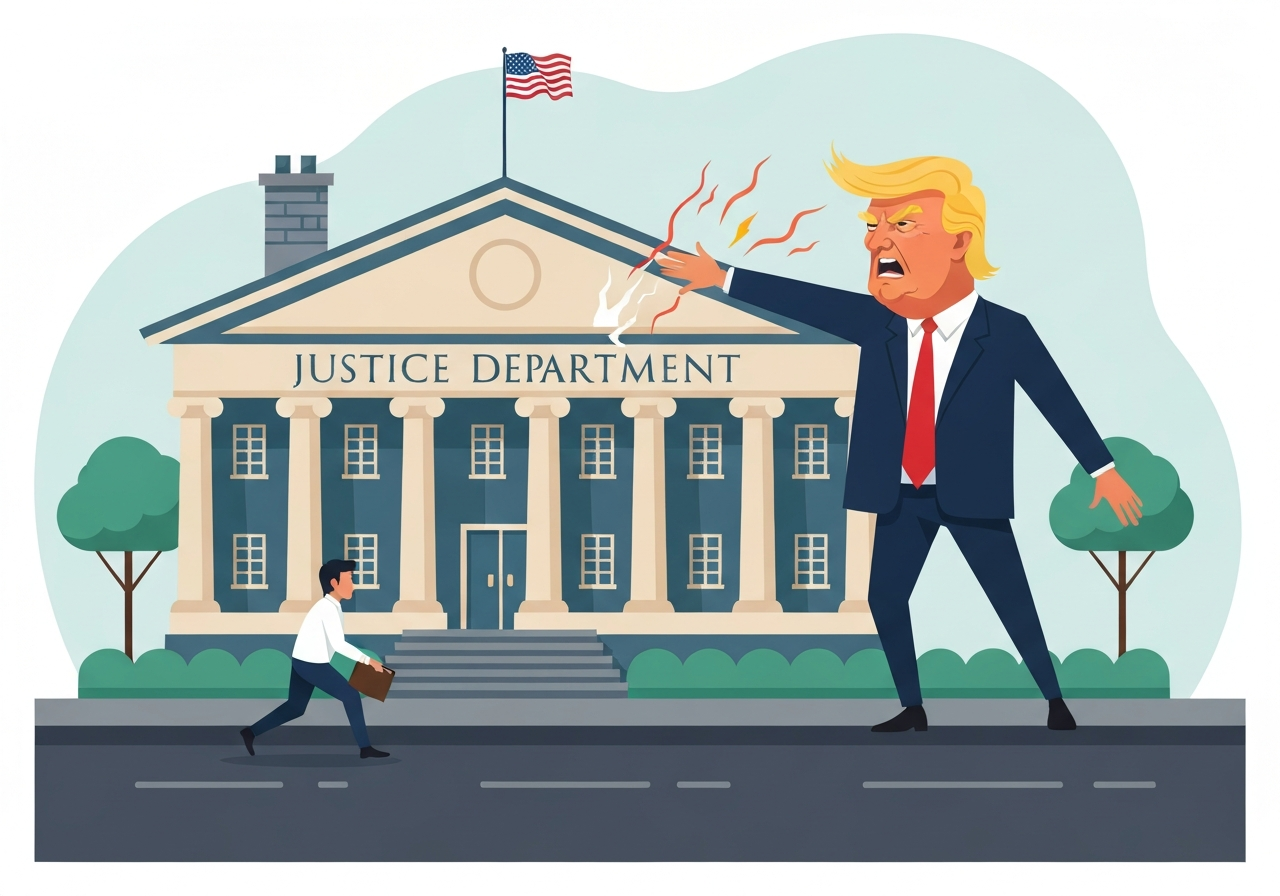
Lead: In March 2026, prosecutors in the U.S. attorney’s office in Washington examined whether President Joe Biden’s use of an autopen to sign documents, including late-term pardons, violated federal law, but concluded they could not make a prosecutable case. The inquiry, pursued amid public pressure from President Donald J. Trump, was quietly shelved after career prosecutors judged the evidence insufficient. The outcome underscores limits on the Justice Department’s ability to translate the president’s demands into criminal charges. It also highlights tensions inside the department between political appointees and veteran career staff.
Key Takeaways
- The U.S. attorney’s office in Washington, led by Jeanine Pirro (a Trump ally), opened a probe into Biden’s use of an autopen but did not bring charges; the inquiry was closed in recent months.
- The matter centered on whether autopen signatures on late-term pardons meant the pardons were invalid — an allegation tied to a theory that Mr. Biden lacked capacity when he issued them.
- Prosecutors found the evidence insufficient to sustain criminal counts, reflecting skepticism among career staff about the legal theory and available proof.
- The autopen probe was one of several politically sensitive matters that the department considered after public calls from President Trump to pursue his opponents.
- In a related Washington case, a grand jury declined to indict six Democratic lawmakers over a video; that refusal signaled limits to prosecutorial outcomes amid politicized cases.
- The decisions reveal a pattern: some Trump-era investigations were rejected by grand juries, some dismissed by judges, and some abandoned internally by prosecutors.
Background
The autopen is a mechanical device that can reproduce an individual’s signature remotely; presidents have used it on routine documents when physically unavailable. The legal question raised by critics is whether use of the autopen on certain high-consequence documents — notably, pardons issued at the end of an administration — can render those acts invalid if the signatory lacked the requisite capacity. That theory gained traction among some Trump allies after Mr. Biden left office, and President Trump publicly pressed the Justice Department to investigate.
Historically, the Justice Department has maintained distance from partisan pressure through norms like prosecutorial discretion and career staff review. But the Trump presidency and its aftermath strained those norms: politically charged investigations into opponents became more frequent, testing the institutional firewall between elected officials’ wishes and independent legal judgments. The U.S. attorney’s office in Washington is overseen by a Trump appointee, Jeanine Pirro, who led several inquiries that career prosecutors viewed skeptically.
Main Event
The autopen review began after public and internal requests to assess whether certain pardons could be voided. Prosecutors looked at signature practices, contemporaneous documents, and the legal standards for capacity and valid execution of presidential acts. Despite examining records, the team was unable to assemble the documentary or testimonial evidence required to charge Mr. Biden or his aides with a crime.
Officials familiar with the matter say the inquiry was quietly shelved in recent months rather than publicly litigated. The closure coincided with another high-profile failed effort by the same office: prosecutors sought an indictment in a separate matter involving six Democratic lawmakers who posted a video addressing active-duty troops, and a grand jury declined to bring charges in that matter.
Veteran prosecutors involved in or briefed on both inquiries reportedly judged the factual and legal bases to be weak. Their assessment reflected concerns about stretching criminal statutes to address political grievances and about meeting the high evidentiary bar for federal crimes. As a result, the department did not move forward with formal charges in either case.
Analysis & Implications
The autopen saga illustrates the friction between political directives from a president and the evidence-driven standards required for criminal prosecution. When political actors publicly demand investigations into rivals, the Justice Department faces reputational risk if it pursues weak cases, and institutional risk if it appears to ignore apparent political pressure. The decision to stop the autopen pursuit suggests that career prosecutors still exercise gatekeeping authority even when offices are led by presidential allies.
For President Biden, the immediate practical effect is limited: no charges were filed, and the legal validity of the pardons remains intact absent successful judicial challenge. Politically, however, the episode feeds partisan narratives on both sides — supporters of Mr. Biden point to the closed probe as vindication, while critics argue the department should have pursued the question further. For the DOJ, repeated episodes like this can erode public confidence if the public perceives investigations are opened for political reasons, even when they are later dropped.
Looking ahead, the pattern of politically sensitive investigations being opened and then abandoned or rejected may discourage career prosecutors from engaging in politically fraught inquiries unless the evidence is clear. It may also prompt calls for stronger safeguards to insulate charging decisions from political influence, including clearer internal review processes and more transparency about how sensitive cases are handled.
Comparison & Data
| Case | Lead Office | Subject | Outcome | Grand Jury Result |
|---|---|---|---|---|
| Autopen review | U.S. Attorney’s Office, D.C. (Jeanine Pirro) | Biden autopen signatures on late-term pardons | Investigation closed; no charges | Not applicable (no indictment sought) |
| Lawmakers’ video | U.S. Attorney’s Office, D.C. | Six Democratic lawmakers’ public video | Prosecutors sought indictment; case stalled | Grand jury declined to indict |
The table highlights two contemporaneous matters handled by the same office with divergent procedural endings: the autopen review was closed internally, while the video case proceeded to a grand jury that refused to return an indictment. Both outcomes reflect barriers to converting political complaints into criminal cases when evidentiary thresholds or legal theories are weak.
Reactions & Quotes
President Biden responded to accusations about the autopen and his capacity by rejecting them forcefully; his public messaging framed the claims as politically motivated. Supporters used the closure of the probe to argue the department acted responsibly by following the evidence rather than political pressure.
“Liars.”
President Joe Biden
Legal observers and some career prosecutors emphasized the evidentiary standard required to bring federal charges and cautioned against expanding criminal statutes to settle political disputes. The New York Times reporting conveyed the view of experienced prosecutors who told reporters they saw no near-term path to prove criminal intent or incapacity.
“There was anything close to sufficient evidence to justify criminal charges,”
The New York Times (summarizing unnamed veteran prosecutors)
Unconfirmed
- The assertion that the pardons were invalid solely because Mr. Biden lacked capacity remains legally unproven and was not established by the closed inquiry.
- Any internal White House contemporaneous records demonstrating incapacity at the time of signing have not been publicly disclosed or independently verified.
- The extent to which political considerations — as opposed to strictly legal judgments — influenced the decision to open the autopen review cannot be fully determined from public reporting.
Bottom Line
The Justice Department’s decision not to pursue criminal charges over President Biden’s use of an autopen reflects the practical limits of converting political grievances into federal crimes. Career prosecutors required stronger evidence and clearer legal theories than were available, and their judgment constrained an office led by a politically aligned U.S. attorney.
Moving forward, the episode will likely sharpen debates over the politicization of the Justice Department and spur calls for clearer safeguards around charging decisions in politically sensitive matters. For now, the closed inquiry leaves the underlying political disagreement unresolved but confirms that evidentiary standards remain a key barrier to weaponizing the criminal justice system for partisan ends.
Sources
- The New York Times — news reporting on the autopen review and related prosecutions (March 4, 2026).
- U.S. Department of Justice — official federal department site for policy and press releases (official).
- U.S. Attorney’s Office for the District of Columbia — office overseeing the Washington prosecutions (official).