
Lead
On March 4, 2026, in the Oval Office, President Donald J. Trump ordered a military strike on Iran, saying his personal judgment about Tehran’s intentions drove the choice. The decision unfolded during a meeting with German Chancellor Friedrich Merz and was followed by competing explanations from senior officials. Secretary of State Marco Rubio initially framed the action as compelled by an imminent Israeli move, then stepped back from that account; the White House press secretary later described the president’s choice as based on a strong instinct. The rapid, informal path to a major use of force left many national security staff scrambling to align policy, messaging and operational readiness.
Key Takeaways
- Decision date and setting: The strike order was given on March 4, 2026, in the Oval Office while Chancellor Friedrich Merz was present.
- Presidential rationale: President Trump described his own judgment as the principal reason for ordering the action, citing perceived Iranian intent.
- Conflicting public accounts: Secretary of State Marco Rubio initially said the U.S. joined a pre-emptive move tied to Israeli activity, then moderated his remarks the next day.
- White House messaging: Press secretary Karoline Leavitt later characterized the choice as grounded in the president’s strong feeling that Iran would act against U.S. interests.
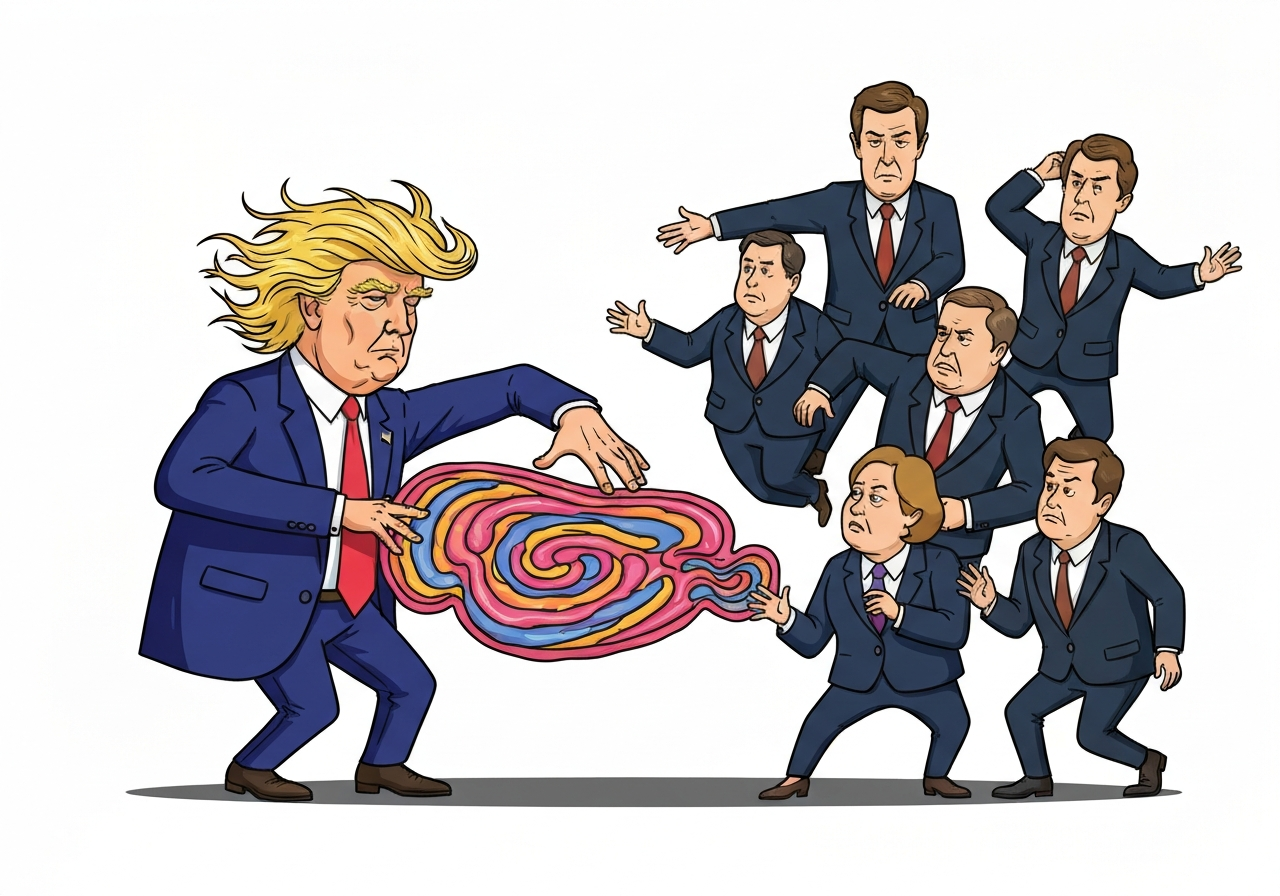
- Advisory structure: Officials and former aides say the president has narrowed decision channels, relying on a compact, tightly controlled inner circle rather than a broad interagency process.
- Operational posture: Senior commanders and allied partners reported accelerated steps to synchronize operations after the order was announced.
- Diplomatic ripple effects: Allies, including Germany, were briefed contemporaneously, underscoring strain points in alliance coordination and public messaging.
Background
Tensions between the United States and Iran have been a persistent foreign-policy flashpoint for years, shaped by disputes over nuclear activities, regional proxies and maritime incidents. Successive administrations have used a mix of diplomacy, sanctions and selective military pressure to try to manage those risks; the pattern has produced recurring crises that test alliance cohesion. Recent months saw heightened alerts at U.S. bases and allied facilities, which became part of the administration’s public justification for escalatory options.
President Trump’s approach to national security decision-making has repeatedly emphasized direct, personal judgment and a compact advisory team rather than long, layered deliberations. Current and former White House officials describe a deliberate effort to limit participation in sensitive choices to a small group of trusted aides, which proponents argue increases speed but critics say reduces institutional checks and preparedness. That strategy collided with a moment when a kinetic military option was chosen quickly, forcing rapid alignment across the Defense Department, State Department and allied capitals.
Main Event
The immediate sequence began in the Oval Office on March 4, 2026, when the president told visitors he believed Iran intended imminent harm to U.S. interests and that he moved to pre-empt that threat. Chancellor Friedrich Merz was present and described the encounter as brief; officials say allied representatives were informed in near real time. The White House issued a short public account but offered differing explanations across senior officials in the days that followed.
On March 5, Secretary of State Marco Rubio told reporters that because Israel was preparing to strike, the United States had little choice but to join in a pre-emptive action to forestall Iranian retaliation against U.S. bases and partners. Within 24 hours, Mr. Rubio softened that characterization, and the White House press office provided an alternative line that the president had acted largely on instinct about an imminent Iranian threat.
Senior national security staff worked overnight to convert the president’s directive into operational orders and diplomatic messages. Military commanders reported shifting to elevated readiness levels at regional bases; diplomats were asked to present allied views consistently while Washington refined attribution and legal rationales. Multiple aides said the compressed deliberation left limited time for contingency planning for adverse outcomes, including potential Iranian countermeasures.
Analysis & Implications
The choice to act primarily on presidential instinct raises questions about how the United States balances speed and oversight in national security decisions. Rapid, leader-driven decisions can pre-empt harms but also risk unintended escalation if opposing actors misread intent or if planning gaps leave U.S. forces vulnerable. Allies may welcome decisive action in some cases but grow wary if they are briefed late or if public explanations diverge, which can undermine trust and interoperability.
Institutionally, the episode highlights strain between narrow, centralized White House decision-making and the interagency apparatus designed to vet intelligence, legal issues and operational contingencies. Intelligence professionals and legal advisers traditionally provide assessments of adversary intent and options analysis; when their inputs are sidelined, policymakers and commanders may face higher uncertainty about enemy capabilities and likely responses.
Politically, the divergence in public accounts from Mr. Rubio and the White House press secretary complicates domestic messaging. The administration risks appearing disorganized to Congress and voters, which could prompt hearings or legislative responses to reassert oversight. Internationally, Iran’s allies and regional partners will test U.S. resolve and may seek to exploit perceived divisions among Western countries, increasing the risk of broader regional turbulence.
Comparison & Data
| Administration | Decision style | Coordination footprint |
|---|---|---|
| Trump (2026 incident) | Rapid, leader-driven | Small, tightly controlled inner circle; rapid operational alignment post-order |
| Bush (2003 Iraq) | Extended interagency deliberation | Large interagency process with congressional debate |
| Biden (examples 2021–2024) | Structured interagency reviews | Formal legal and policy clearance routines emphasized |
The table provides a qualitative comparison of decision styles and coordination footprints across administrations to show how choice architecture affects speed, oversight and allied consultation. While speed can be essential in some crises, narrower decision channels tend to reduce redundancy checks and may complicate downstream operational and diplomatic synchronization. Analysts caution that qualitative differences do not predict outcomes in isolation; context, intelligence quality and adversary behavior remain decisive.
Reactions & Quotes
Senior administration spokespeople and allied officials offered terse, sometimes inconsistent public comments as the events unfolded, forcing rapid clarification efforts from multiple offices.
“I felt we needed to act before they did; I thought they were going to move first,”
President Donald J. Trump (Oval Office remark, March 4, 2026)
In a separate briefing, the secretary of state linked U.S. timing to allied activity before later moderating that account.
“Given the situation, we found ourselves joining a pre-emptive posture to protect U.S. forces and partners,”
Secretary of State Marco Rubio (press briefing)
The White House press office sought to confirm the president’s instincts as a primary driver.
“The president acted on a strong sense that immediate action was necessary to protect American interests,”
White House Press Office (statement)
Unconfirmed
- Whether Tehran had an imminent, specific plan to strike U.S. forces before March 4 remains publicly unverified; available public statements do not cite declassified evidence of an immediate plot.
- Claims that Israel’s operational timetable forced the U.S. hand are disputed in official accounts and lack corroborating documentary proof released to date.
- Internal conversations among the president’s closest advisers about alternative, nonkinetic options have not been publicly disclosed and cannot be independently confirmed.
Bottom Line
The March 4, 2026 decision to strike Iran underscores the trade-off between decisiveness and institutional process in U.S. national security. Acting on presidential instinct can deliver speed in moments of danger but also creates vulnerabilities in planning, legal justification and alliance management.
Going forward, lawmakers, military leaders and diplomats will press for clearer records of the intelligence basis and decision rationale, while allies will seek firmer assurances on coordination. The episode may prompt renewed debate in Washington over how to codify oversight and contingency planning without unduly constraining the executive branch’s ability to respond to genuine, imminent threats.