
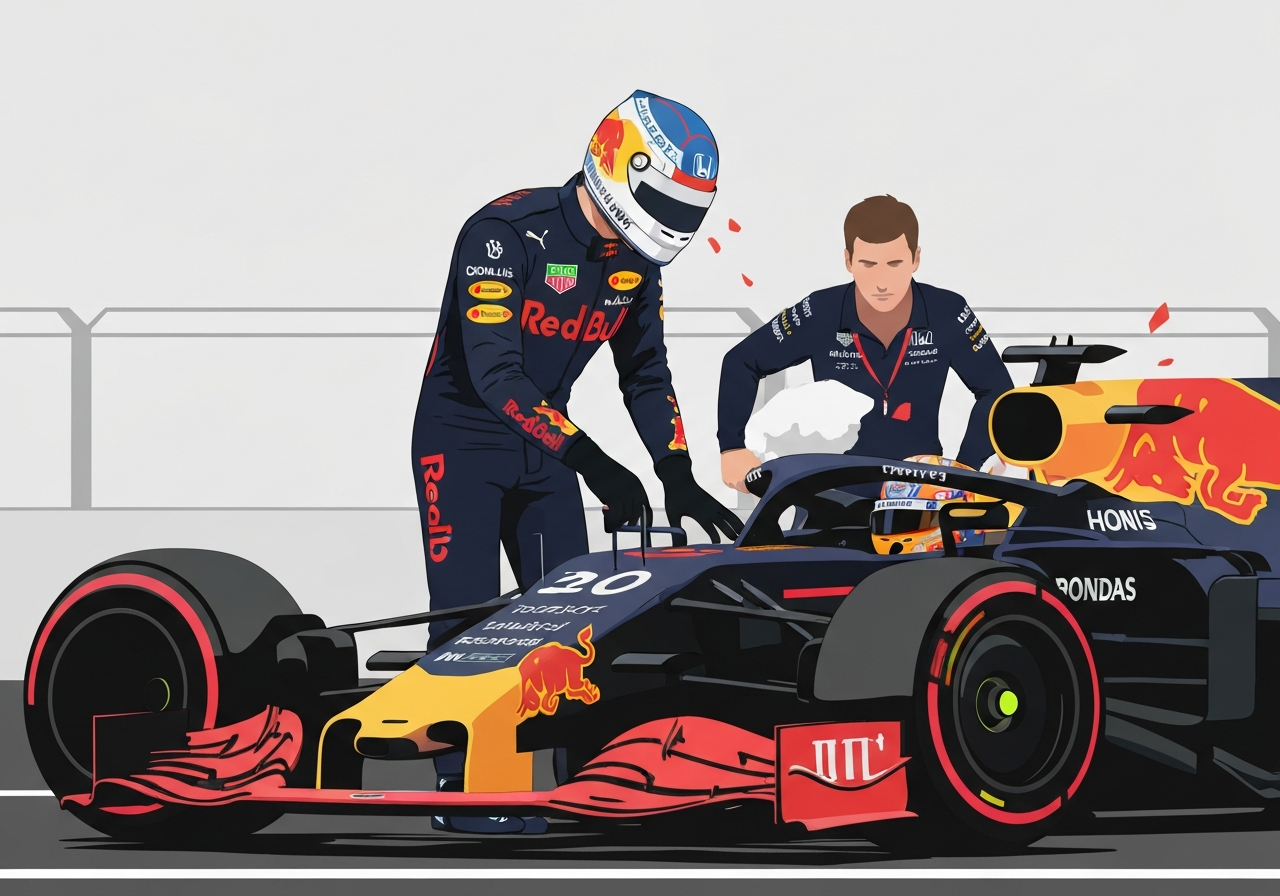
Lead: On Friday at Melbourne’s Albert Park during practice for the season-opening Australian Grand Prix, Max Verstappen ran wide at Turn 10 and slid into the gravel, leaving his Red Bull with what the team described as “enough damage to keep the team busy.” The four-time world champion escaped serious injury, but the incident forced a repair assessment ahead of the rest of the weekend. The same day brought separate concerns: RacingNews365 reported a startling Honda-related development and noted Aston Martin had used half of its battery allocation, while Qatar Airways cancelled hospitality events linked to the race.
Key Takeaways
- Max Verstappen suffered a gravel excursion at Turn 10 during FP2 in Melbourne; Red Bull says the car sustained substantial damage that will require significant work.
- Verstappen is a four-time Formula 1 world champion and was driving in the season-opening Australian Grand Prix practice sessions at Albert Park.
- RacingNews365 flagged an unexpected Honda-related update connected to the weekend; specifics were not fully detailed in the initial review.
- Aston Martin reportedly consumed half of its battery allocation for the weekend, leaving only the two batteries currently fitted to its cars for the remainder of the event.
- Qatar Airways cancelled all hospitality events at the Australian Grand Prix amid the Middle East crisis, according to The Australian Financial Review.
- Lewis Hamilton (seven-time champion) said his team uncovered useful information from the SF-26 despite a challenging Friday, finishing inside the top four in both sessions.
- McLaren confirmed Lando Norris completed just seven laps in FP1 due to a transmission control issue, forcing an early return to the garage and limiting data collection.
Background
The Australian Grand Prix at Albert Park traditionally serves as a high-profile early-season test of reliability and race pace. Practice sessions (FP1 and FP2) are used to validate setups, run long stints and gather data on tyre degradation and power-unit performance. Teams and engine partners enter Melbourne with limited opportunities to trial upgrades before the first sprint or race, amplifying the impact of any component failures or incidents.
Red Bull and Honda have been closely linked in recent years through power-unit supply arrangements and technical cooperation; any headline referencing Honda in the context of Red Bull therefore draws immediate attention from rivals and fans. Meanwhile, teams such as Aston Martin are balancing performance development against strict component and battery allocations mandated across a race weekend, which can shape strategy when units are consumed earlier than planned.
Main Event
During the second practice session at Albert Park, Verstappen carried speed through the approach to Turn 10 but ran wide and into the gravel trap. Track marshals and the team assessed the car on-track and later in the garage; Red Bull publicly stated the damage was sufficient “to keep the team busy,” indicating repairs beyond a quick check would be required. Verstappen walked away from the incident and was available for post-session interviews and team debriefs.
Aston Martin’s situation emerged as a separate technical story: RacingNews365 reported that, per team commentary, the squad had used roughly half of its allocated battery supply for the weekend, leaving only the two units fitted to its cars. That depletion restricts options for further long runs or power-unit diagnostics without risking component overuse penalties or running with older units in later sessions.
On the hospitality and reputational front, The Australian Financial Review reported Qatar Airways cancelled its Australian Grand Prix hospitality events, citing the Middle East crisis and the imprudence of hosting celebrations while other guests remain affected. The decision reduced a visible sponsor presence at the track and raised questions about how global events will influence on-site commercial activities during race weekends.
Analysis & Implications
Verstappen’s off and the resulting Red Bull damage carry more than immediate repair costs; they compress the team’s preparation window ahead of qualifying and the race. Even if the chassis is intact, replacing aerodynamic elements, flooring or suspension components can change balance and require setup work that would otherwise be scheduled over several sessions. For a championship-favourite team, that interruption can influence tyre allocation, run plans and comparative data gathering versus rivals.
Aston Martin’s reported battery usage presents strategic risk. Batteries are limited per regulations and teams manage them across practice, qualifying and the race. Using half the allocation early reduces the number of fresh cycles available for performance-spec checks later in the weekend. That can force conservative running or limit diagnostic work, potentially hampering the team’s ability to react to setup findings or implement upgrades.
The Qatar Airways cancellation illustrates how external geopolitical factors can affect the commercial fabric of a Grand Prix. Hospitality and partner activations are significant revenue and PR opportunities; their withdrawal alters sponsor exposure and may change how teams and promoters plan hospitality contingencies for volatile periods. It also shows motorsport’s susceptibility to global events beyond the track.
Comparison & Data
| Item | Reported Status |
|---|---|
| Verstappen incident | FP2 off at Turn 10; substantial damage reported |
| Aston Martin battery allocation | ~50% used; two batteries reportedly remaining (the fitted units) |
| Lando Norris running | Seven laps in FP1 due to transmission control issue |
The table summarizes the principal technical and operational notes from Friday practice. These items interact: limited running (as with Norris) reduces a team’s baseline data, while component usage and incidents (Verstappen, Aston Martin battery consumption) constrain options for setup evolution and performance testing ahead of qualifying.
Reactions & Quotes
“There was enough damage to keep the team busy.”
Red Bull (as reported by RacingNews365)
Red Bull’s succinct assessment framed the team’s immediate workload: repairs would be non-trivial and required time in the garage to restore the car to competitive condition.
“We unlocked some good information from the SF-26 despite it being a challenging day.”
Lewis Hamilton (RacingNews365)
Hamilton emphasized that Mercedes and Ferrari (reference to the SF-26 context in the report) extracted useful setup and aerodynamic data, underlining that Friday is primarily about learning rather than final performance statements.
“It would be inappropriate to host celebrations at the grand prix while other invited guests remain stuck in the Middle East.”
The Australian Financial Review (reporting Qatar Airways)
The AFR quoted airline communications explaining the cancellation of hospitality, the decision reflecting sensitivity to concurrent geopolitical disruptions.
Unconfirmed
- The precise nature and technical details of the “shocking Honda news” mentioned in the RacingNews365 review have not been fully disclosed in the initial report and remain unclear.
- Exact repair time and whether Verstappen’s car will require any chassis or power-unit component changes beyond bodywork have not been confirmed by Red Bull at the time of reporting.
Bottom Line
Friday at Albert Park produced a mix of technical headaches and strategic constraints that could shape the opening weekend. Verstappen’s off and the resulting Red Bull repair workload compress the team’s schedule; if repairs alter aerodynamic balance or require replacement components, the team may need to adjust its qualifying and race preparations. Meanwhile, Aston Martin’s battery usage and McLaren’s early running issues limit those teams’ data collection and response options.
Off-track developments — notably the Qatar Airways hospitality cancellations — show external factors can influence the commercial and public-facing dimensions of a Grand Prix. Across the paddock, teams will now balance repair work, component management and limited practice time to present the strongest possible cars for qualifying; the unfolding consequences will become clearer as sessions progress.