
Lead
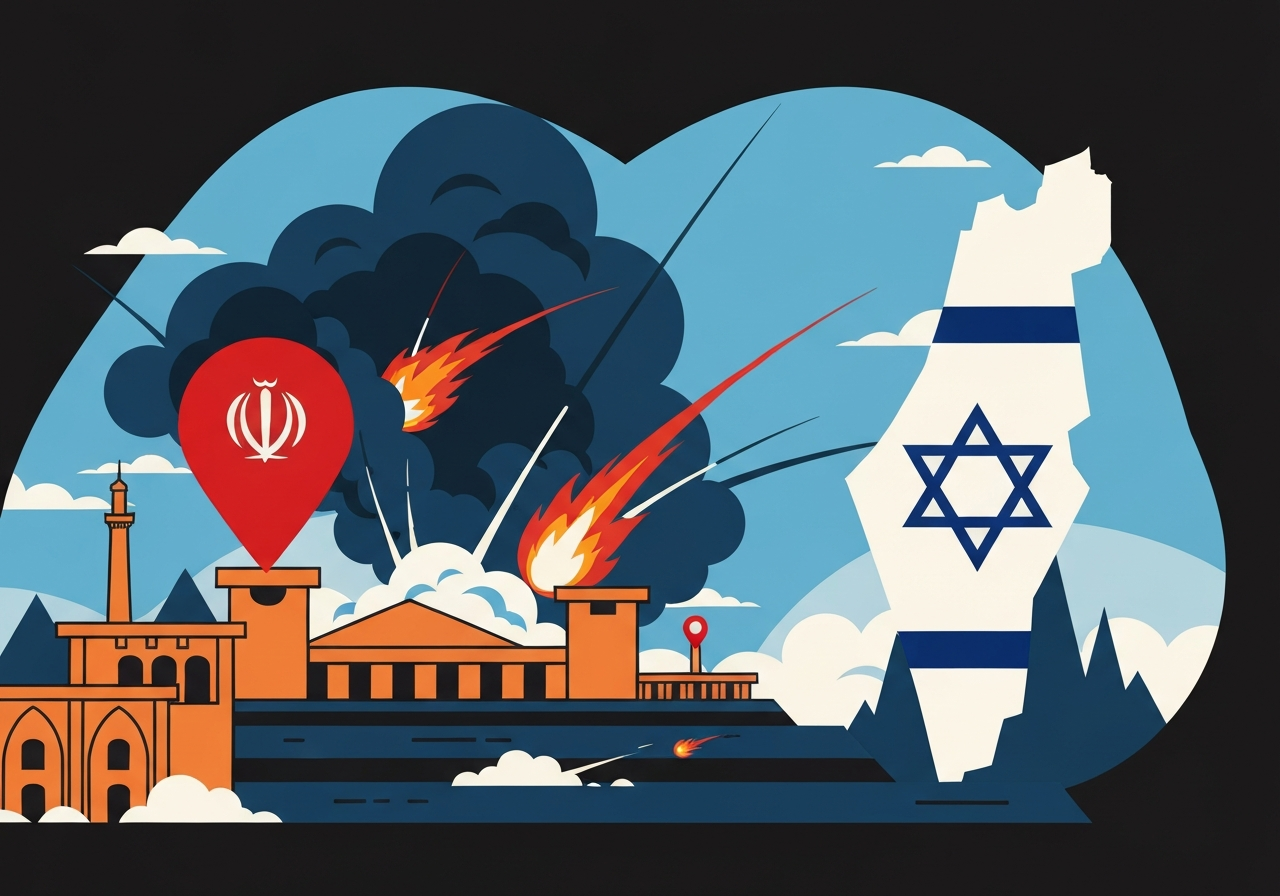
Tehran and Israel traded major attacks in the early hours of Saturday as Israel launched a large airborne operation against sites across Iran and Tehran responded with waves of missiles and drones across the Gulf region. Explosions and footage of flames at Tehran’s Mehrabad Airport were reported following the strikes; Iran’s president vowed the country will “never surrender.” Gulf states — including the UAE, Saudi Arabia and Bahrain — continued to intercept incoming missiles and drones while regional airspace and some airports experienced short disruptions. The conflict has already produced heavy casualties and wide infrastructure damage, and the United States is arranging a dignified transfer of six fallen service members at Dover Air Force Base.
Key takeaways
- Israel says it used more than 80 fighter jets in a “broad-scale wave of strikes” on Tehran and Isfahan, striking military infrastructure and command centers.
- Iran reported its forces launched missiles and drones at US bases and Gulf states; Gulf defenses intercepted dozens to hundreds of incoming threats (official claims vary by country).
- Iranian state media places the Iranian death toll from the week-long US‑Israeli campaign at roughly 1,230 people; independent verification remains limited.
- Mehrabad Airport in Tehran was shown on fire in state-broadcast footage; the extent of direct damage to airport facilities is unclear.
- Saudi Arabia reported intercepting 20 drones toward the Shaybah oil field and destroying missiles aimed at Prince Sultan Air Base; Shaybah produces about 1 million barrels per day.
- The UAE and Bahrain reported repeated interceptions (UAE said nine missiles and 109 drones intercepted on Friday; Bahrain published counts in the 80–150 range for missiles/drones since the conflict began).
- US Central Command says more than 3,000 targets in Iran were struck in the past week; that tally comes amid intense, fast-moving operations and fragmented reporting.
- The US will receive and dignify six service members killed in the conflict with a transfer at Dover Air Force Base; President Donald Trump and Vice President JD Vance are expected to attend.
Background
The current escalation follows a week of intensive US and Israeli military action inside Iran and reciprocal Iranian strikes across the Middle East. Iranian state outlets and official statements describe substantial loss of life and infrastructure damage, while US and Israeli officials characterize their operations as targeting regime military assets. The Iranian political leadership is operating under a temporary three-member council, according to state reporting, and officials have offered mixed signals about restraint toward neighboring states.
Gulf states have been on high alert since the exchange began: air defenses in Bahrain, the UAE, Qatar and Saudi Arabia have frequently been activated as authorities report intercepting drones and ballistic missiles. Regional civilian infrastructure — including airports, commercial hubs and oil production facilities — has faced interruptions. Global markets and energy analysts have already recorded price sensitivity tied to the disruption, with gasoline and oil indicators moving in response to the strikes and interceptions.
Main event
In pre-dawn operations, the Israel Defense Forces announced a wide-ranging air campaign that it said targeted military infrastructure in Tehran and Isfahan. The IDF described strikes on IRGC-related sites, an Imam Hossein military university, underground missile storage, command centers and launch sites across western and central Iran. Multiple pieces of footage circulating on state and social platforms showed explosions and visible flames, notably at the Mehrabad Airport complex.
Iranian state media and official military accounts say Tehran engaged in retaliatory launches of ballistic missiles and armed drones, directing some strikes toward US facilities in Bahrain and Qatar and others toward Gulf partner states. Gulf authorities and militaries countered many of those threats with layered air-defence systems; several states posted alerts telling citizens to shelter while local sirens sounded. Dubai’s airport briefly suspended departures, and Emirates paused operations for about 30 minutes before resuming.
Casualty and damage reports remain contested. Iranian state outlets report more than 1,200 killed inside Iran during the recent US‑Israeli campaign; Lebanese state media reported more than 200 killed in Lebanon from Israeli strikes. UN and humanitarian actors warn of growing displacement, notably from evacuation orders and damage in southern Lebanon. Meanwhile, Israeli hospitals reported shrapnel and trauma from barrages in and around Tel Aviv with no reported fatalities in those incidents.
Analysis & implications
The scale and scope of the latest strikes show the conflict has moved beyond localized exchanges into a broader regional confrontation with direct implications for global security and markets. Use of more than 80 fighter jets in a single operation — as the IDF reported — signals a high-risk escalation and suggests both sides are prioritizing strategic military targets over de-escalation. If sustained, such strikes increase the likelihood of supply-chain interruptions and insurance and security costs for shipping in the Gulf and for regional aviation.
Air-defence performance and intercept tallies are central to the near-term course of the war. Gulf states reporting large numbers of intercepted missiles and drones indicates both improved defensive coordination and a sustained attack tempo from Iran. However, interception claims are often asymmetric in public reporting; verifying hit rates and residual damage requires independent assessment. Discrepancies in official counts — for instance Bahrain’s varying reported totals across statements — complicate real-time assessments.
Politically, Iranian leadership rhetoric — including a public vow to “never surrender” and simultaneous conciliatory messaging toward Gulf neighbors — suggests a dual approach of internal resolve and limited regional restraint. That calculus may lessen immediate cross-border occupation risk but does not rule out continued asymmetric attacks aimed at deterrence. International actors face a narrow policy window to push for ceasefires or containment without rewarding violence; diplomatic avenues will be tested amid high domestic pressures on governments involved in the fighting.
Comparison & data
| Metric | Official reported figure |
|---|---|
| IDF jets used in Saturday operation | More than 80 fighter jets |
| Iranian casualties (state media) | ~1,230 killed in one week |
| US strikes reported by CENTCOM | More than 3,000 targets struck in past week |
| UAE interceptions (MoD, Friday) | 9 missiles, 109 drones |
| Bahrain interceptions (official statements) | Reported between ~84–86 missiles and ~147–148 drones since start |
These figures are drawn from a mix of military statements and state media releases over a fast-moving 48–72 hour window; they are useful for trend comparison but should be treated cautiously. Interception counts are frequently revised as militaries confirm debris, and casualty totals can change as hospitals and local authorities update records. The table highlights both the intensity of operations and the unevenness of real-time reporting.
Reactions & quotes
Iran’s president addressed the nation on state television and combined defiance with a limited conciliatory message toward nearby Gulf monarchies. He pledged resistance yet apologized to neighboring states and said Tehran would avoid striking them unless attacks originated from those countries.
“We will never surrender,”
Masoud Pezeshkian, President of Iran (state address)
The Israel Defense Forces framed the overnight campaign as a direct effort to degrade Iran’s military infrastructure and to counter threats posed by the IRGC’s capabilities. Israeli officials also reported continued drone incursions from Lebanon and missile salvos from Iran.
“A broad wave of strikes”
Israel Defense Forces (operational statement)
In Washington, President Donald Trump described Iran’s leadership as weakened and said he is seeking a leadership change that will align more closely with US and Israeli interests. The administration also coordinated the dignified transfer of US service members killed in the conflict.
“(Iran’s) leadership has been neutered,”
Donald Trump, President of the United States (interview)
Unconfirmed
- Whether Mehrabad Airport was struck directly or only damaged by nearby blast effects remains unverified; available footage shows fire but not a confirmed impact point.
- Reports that Supreme Leader Ali Khamenei was killed a week ago and that a three-person leadership council permanently replaced him are reported in some outlets but lack independent international confirmation.
- Discrepancies exist in interception tallies reported by Gulf states (e.g., Bahrain’s reported totals differ across statements); precise cumulative counts are pending verification.
Bottom line
The exchange marks a new phase of high-intensity, multi-domain conflict between Iran and Israel with significant regional spillover. Large-scale air operations, repeated missile and drone barrages, and high interception rates underscore the conflict’s military intensity and the fragile state of regional airspace and civilian infrastructure.
Short-term risks include further disruption to commercial aviation and energy routes, rising humanitarian needs in affected areas, and escalation by proxy actors. Diplomatic channels and third-party mediation will be critical in the coming days to prevent further escalation and to secure humanitarian access for civilians caught in the crossfire.