
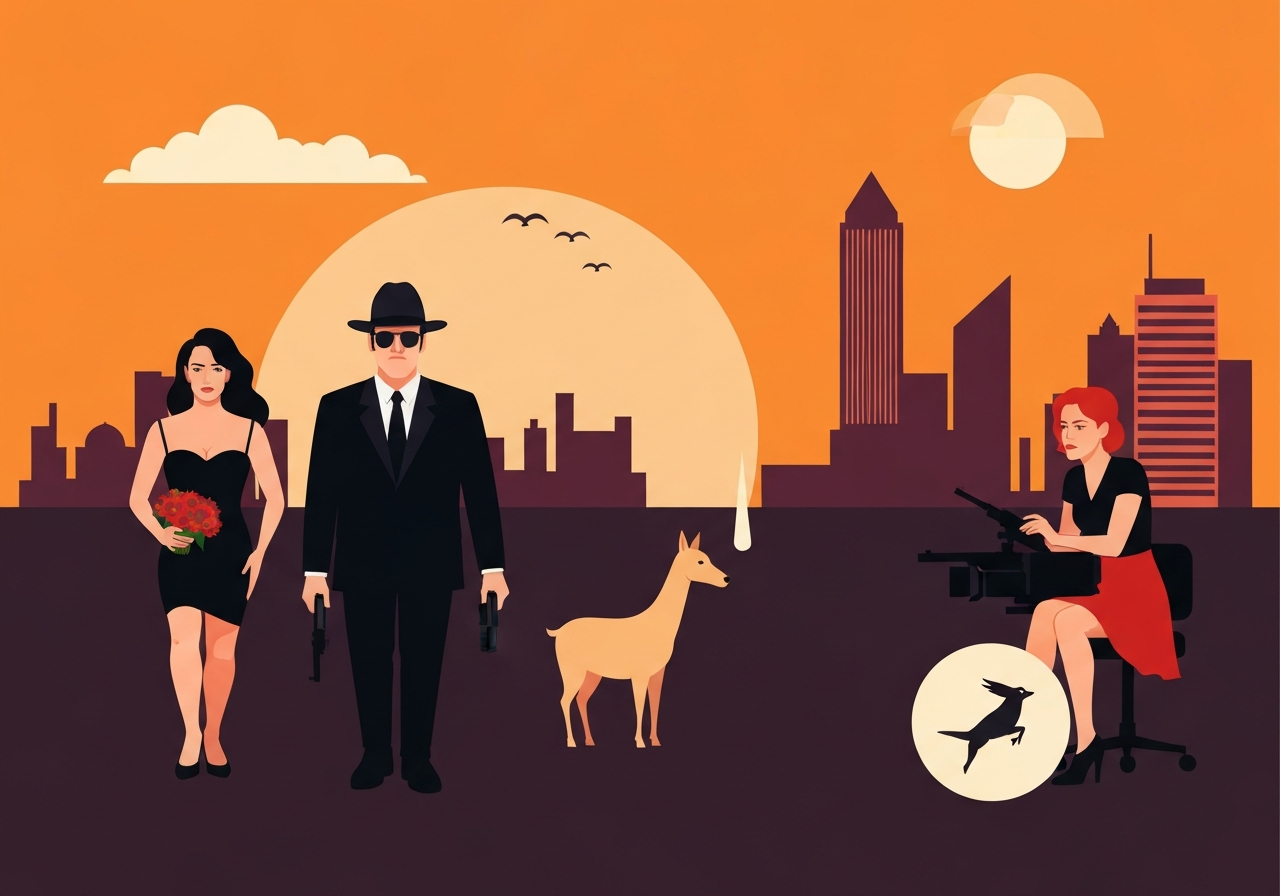
Quentin Tarantino is moving off the screen and toward the stage: sources report he has written an original British farce set for London’s West End, with a target opening in 2027 and a late-2026 possibility. The play is said to be a self-penned, old-fashioned farce in the vein of Brian Rix or Ray Cooney, and not an adaptation of any of his films. Tarantino is exploring West End theatres and assembling a cast that industry sources expect may include major Hollywood names. The announcement follows a public tease at the 2025 Sundance Film Festival when Tarantino confirmed he was writing a play and that its reception could shape his cinematic plans.
Key Takeaways
- Project type: An original stage play by Quentin Tarantino, billed as a British farce in the Noises Off tradition.
- Location and timing: Developed for London’s West End with a window for a 2027 debut; late 2026 remains possible.
- Authorship and source material: Tarantino reportedly wrote the script himself; it is not adapted from his prior films.
- Cast and production: The director is scouting theatres and seeking a cast expected to include high-profile film actors; Bradley Cooper has been named as a rumored candidate.
- Public reveal: Tarantino first hinted at the play during a conversation at the 2025 Sundance Film Festival; the detail reported to press comes via secondary coverage.
- Film-side context: Tarantino continues to consider his tenth and purportedly final movie; meanwhile he penned The Adventures of Cliff Booth, set to star Brad Pitt and directed by David Fincher, due to stream on Netflix later this year.
Background
Quentin Tarantino made his name as a filmmaker known for stylized dialogue, genre pastiche and a distinct cinematic voice. Across a career spanning more than three decades he has alternated between ambitious studio features and projects that play with format and era. In recent years he has publicly discussed stepping away from a long filmography after a planned tenth feature; the idea of a stage play represents a notable medium shift for a director whose work is closely associated with cinema.
The West End is among the world’s most established commercial theatre districts and has increasingly attracted film talent aiming to broaden artistic reach and box-office profiles. The British farce—characterized by rapid pacing, mistaken identities and physical comedy—has a long local history, with practitioners such as Brian Rix and Ray Cooney as reference points. Mounting a West End production demands a combination of theatrical infrastructure, commercial backing and casting that can draw both theatre-goers and international attention.
Main Event
The initial reporting, relayed through entertainment press outlets, describes Tarantino’s script as an “old-fashioned British farce” with the kind of door-slamming, trousers-dropping humour associated with classic West End comedies. The same sources say the play is original and not derived from any of Tarantino’s film properties. Production planning reportedly includes venue scouting across London and outreach to actors with stage experience and profile to anchor a commercially viable run.
“If you’re wondering what I’m doing right now, I’m writing a play, and it’s going to be probably the next thing I end up doing,”
NME (Tarantino, Sundance 2025)
Industry chatter includes names such as Bradley Cooper—an actor with a known theatrical background—as a potential leading choice, though casting is not finalized. Sources say a 2027 opening is the primary target, but producers are leaving room for late-2026 if rehearsals and theatre availability allow. The reporting frames the play as a strategic creative detour that could influence Tarantino’s timeline for any final film.
Parallel to the stage news, Tarantino wrote the screenplay for The Adventures of Cliff Booth, a film that will see Brad Pitt reprise the Cliff Booth character from Once Upon a Time… in Hollywood; that project is directed by David Fincher and slated for theatrical release and a Netflix streaming window later this year.
Analysis & Implications
A Tarantino-authored West End play would be significant on several levels. Artistically, it represents a director known for cinematic language testing the rules and rhythms of live theatre—an environment where audience reaction is immediate and performance variables are different from film. Professionally, a successful run could broaden Tarantino’s reputation beyond film and provide a new commercial avenue that leverages his name while minimizing the logistical scale of a feature film.
If the play is well received, Tarantino himself has suggested the outcome could affect whether he returns to the movie business in the same way. He explicitly linked the play’s success to the calculus about a final film, implying the theatrical result could either accelerate retirement from directing films or redirect his creative focus. That conditional stance increases the stakes for the West End project because it may shape what he chooses as his cinematic capstone.
For the West End and the broader theatre economy, a Tarantino production that attracts film stars would likely boost ticket demand and global attention, much as high-profile screen actors have previously driven box-office and tourism for London theatre. Conversely, if the play proves a mismatch for live audiences, it could offer a cautionary example about cross-medium transfers by director-brand-driven projects.
Comparison & Data
| Selected Tarantino releases | Year |
|---|---|
| Reservoir Dogs | 1992 |
| Pulp Fiction | 1994 |
| Once Upon a Time… in Hollywood | 2019 |
The table underlines Tarantino’s intermittent release schedule—major films cluster across decades rather than annually. A stage project in 2026–2027 would arrive seven to eight years after his most recent major theatrical release, representing a notable medium shift rather than a simple continuation of his film rhythm. Theatre runs also carry different revenue mechanics (ticket sales, limited runs, touring) compared with global theatrical releases and streaming deals.
Reactions & Quotes
“He has written this himself. It is not based on any of his films. It is a farce, in the British Noises Off tradition,”
Daily Mail (unnamed source)
The Daily Mail’s reporting provides the most concrete description to date, characterizing the script as a classic farce and emphasizing Tarantino’s sole authorship. That wording helps frame expectations for tone and staging choices but relies on an unnamed source for specifics.
“There was nothing to figure out [with The Movie Critic] because I already kind of knew more or less how to turn LA into an older time… it just was too much like the last one,”
Quentin Tarantino (on The Movie Critic)
That remark, offered in the context of Tarantino’s broader comments about his tenth film, hints at why he might experiment with theatre instead of immediately returning to cinema—seeking a creative departure rather than repetition.
Unconfirmed
- Cast roster: Reports name Bradley Cooper as a possibility, but no contracts or confirmations have been released.
- Premiere date: A 2027 opening is targeted, with late 2026 offered as an alternative; final scheduling remains undecided.
- Creative outcome impact: Tarantino’s suggestion that the play’s success could determine his final-film plans is his stated view, not an industry consensus.
- Venue selection and creative team: Specific theatre choices and collaborators have not been publicly identified.
Bottom Line
Quentin Tarantino’s reported move into West End theatre is both a creative pivot and a strategic test. He has written an original British farce he intends to mount in London, with producers aiming for a 2027 opening while keeping late 2026 as a contingency. The production’s casting and critical reception will matter not only for the West End run but also because Tarantino has framed the play’s results as potentially influential on his decision about a final film.
Readers should watch for official announcements about casting, confirmed theatre bookings and tour plans; those elements will convert current industry rumor into verifiable production milestones. For now, the news is a reminder that major filmmakers sometimes pursue theatre to explore different creative constraints—and that a successful crossover could alter an already notable career trajectory.
Sources
- ComingSoon.net — Entertainment news (secondary reporting)
- Daily Mail — News outlet cited for sourcing on the play
- NME — Music and entertainment outlet (source of Tarantino’s Sundance quote)