
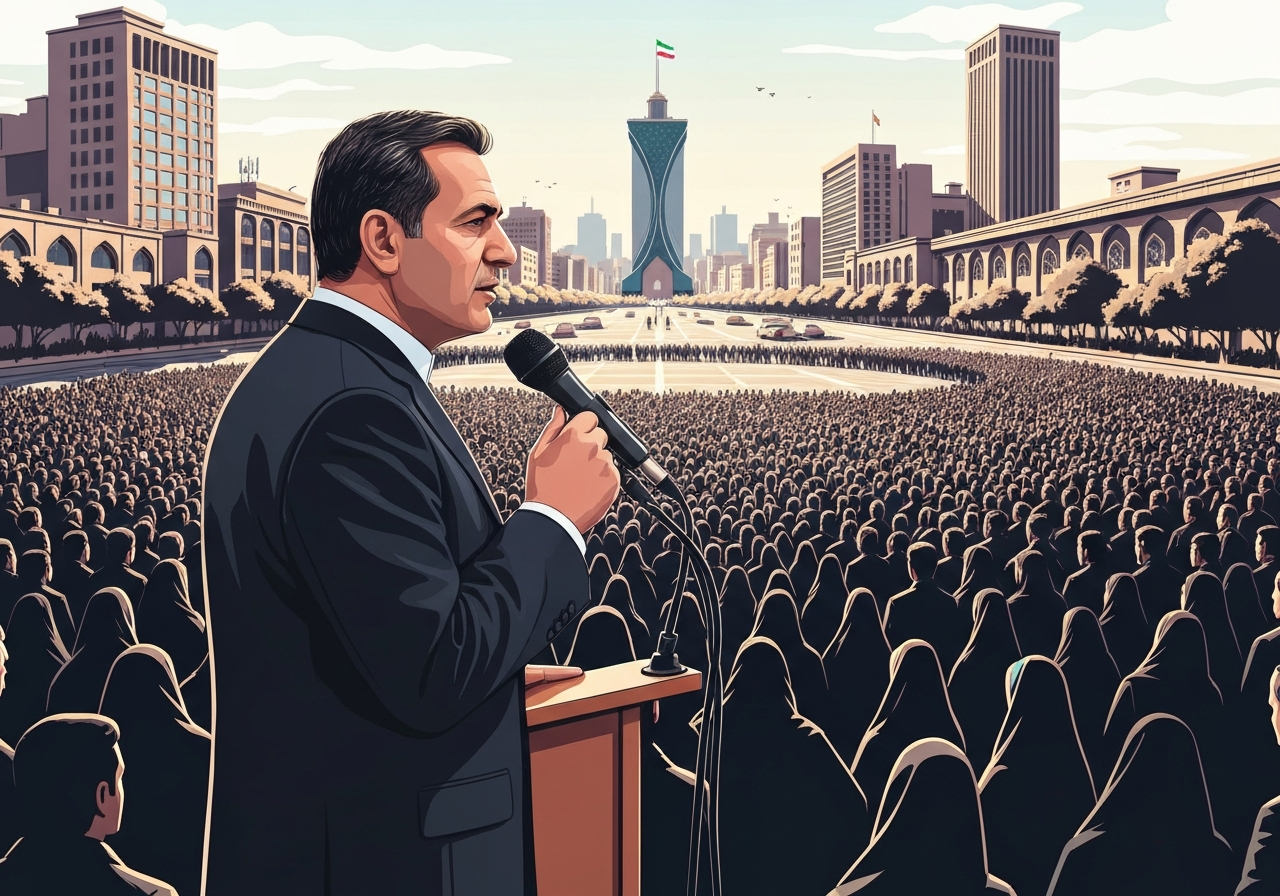
On March 7, 2026, in Dubai, Iran’s interim president, Masoud Pezeshkian, issued an apology for attacks on “neighboring countries” even as missiles and drones were reported heading for Gulf Arab cities. The message came one week into a conflict set off by the Feb. 28 airstrike that killed Supreme Leader Ayatollah Ali Khamenei and has since drawn hundreds of U.S. and Israeli strikes that officials say have weakened Iran’s leadership. Iran’s missiles and unmanned aerial systems disrupted flights at Dubai International Airport and hit targets in Saudi Arabia and Bahrain, while U.S. President Donald Trump warned Iran it would be “hit very hard.” Markets and regional governments reacted with alarm as Gulf partners said they received limited warning of the strikes.
Key Takeaways
- President Masoud Pezeshkian apologized on March 7, 2026, saying Iran should not have struck neighboring countries and urging diplomacy unless directly attacked.
- Missiles and drones originating from Iran disrupted flights at Dubai International Airport and targeted sites in Saudi Arabia and Bahrain; air defenses in the Gulf intercepted several threats.
- The conflict followed the Feb. 28 killing of Supreme Leader Ayatollah Ali Khamenei and a week of intensified U.S. and Israeli strikes against Iran’s military and nuclear-related targets.
- Casualty tolls reported by national officials include at least 1,230 dead in Iran, more than 200 in Lebanon, 11 in Israel and six U.S. service members killed.
- The U.S. approved a $151 million arms sale to Israel as officials signaled a continuing and intensified bombing campaign against Iranian capabilities.
- Contradictory statements from Iran’s leadership—Pezeshkian’s apology and spokesmen defending attacks—signal internal division in the interim governing council.
- An Iranian naval vessel, the IRIS Lavan, docked in Kochi, India, after reporting mechanical problems following the sinking of the IRIS Dena near Sri Lanka.
Background
The current crisis traces to a Feb. 28 airstrike that killed Supreme Leader Ayatollah Ali Khamenei and triggered the war now roiling the Middle East. Iran is being overseen by a three-member leadership council; that arrangement followed Khamenei’s death and seeks to manage state functions while Iran’s Assembly of Experts considers naming a new supreme leader. The paramilitary Islamic Revolutionary Guard Corps (IRGC) retains control of much of Iran’s missile inventory and expeditionary capabilities, and it has been the principal force directing strikes beyond Iran’s borders.
Since the war began, the U.S. and Israel have launched repeated strikes against Iranian military sites, leadership elements and facilities linked to Iran’s nuclear program. Those strikes have, in turn, prompted retaliatory launches of ballistic missiles and armed drones toward Israel and several Gulf states. Gulf governments, which host U.S. military forces, have said they received insufficient warning ahead of some Iranian launches, complicating their air-defense responses and raising diplomatic tensions with Washington.
Main Event
On March 7, 2026, Masoud Pezeshkian recorded a message in which he apologized “on my own behalf” to neighboring countries struck by Iranian forces and called for resolving disputes through diplomacy unless Iran was directly attacked. The address appeared hurried and underscored the limited civilian oversight of the IRGC, which answers historically to the supreme leader and not to the presidency.
Soon after Pezeshkian’s statement, Iran’s armed forces spokesman, Gen. Abolfazl Shekarchi, issued a separate clarification saying Tehran had not struck countries that did not provide logistical access to U.S. operations—comments that introduced mixed signals about Tehran’s targets and rules of engagement. Iran’s parliament speaker, Mohammad Bagher Ghalibaf, a former IRGC general, warned that a U.S. military presence in the region would prevent peace and framed defense actions as aligned with the late supreme leader’s guidance.
Operationally, Gulf states reported multiple inbound missiles and drones. Bahrain sounded sirens and reported interceptions. Saudi forces said they destroyed drones headed for the Shaybah oil field and shot down a ballistic missile toward Prince Sultan Air Base. In Dubai, explosions and activated air defenses forced passengers at Dubai International Airport into sheltered areas and led carriers including Emirates to temporarily suspend flights.
Meanwhile, Israel reported additional strikes inside Iran, including an attack on a Tehran airport it accused of transferring weapons and cash to militant groups. Associated Press video showed explosions over western Tehran; residents described fear even far from formal military targets. Clashes in Lebanon between Hezbollah and Israeli forces killed dozens and added to the regionwide toll.
Analysis & Implications
Pezeshkian’s apology and the contrasting statements from Iran’s military and political figures point to an emerging power struggle in Tehran. The IRGC’s operational autonomy—especially over ballistic missile launches—limits what the interim civilian council can control, complicating diplomatic signaling and de-escalation efforts. If the IRGC continues to select targets independently, Gulf states and Israel will face recurring, unpredictable strikes that raise the risk of wider escalation.
The Trump administration’s vow of intensified bombing and the approved $151 million arms sale to Israel suggest Washington intends to sustain pressure on Iran’s military capabilities. That posture may degrade Iran’s long-range strike assets over time but also risks provoking further retaliatory launches and drawing in proxy actors, particularly in Lebanon and Syria. Markets have already reacted to the conflict’s spread, with air-travel disruptions and energy-security concerns centered on Saudi oil infrastructure.
Diplomatic pathways remain constrained. Pezeshkian’s call for diplomacy signals a preference among some Iranian leaders to avoid widening the war, but internal divisions and external pressures reduce the chance of immediate, comprehensive talks. Gulf states’ complaints about insufficient warning to prepare defenses also complicate coordination with the U.S., which counts on regional partners for basing and intelligence support.
Comparison & Data
| Location | Reported Fatalities |
|---|---|
| Iran | At least 1,230 |
| Lebanon | More than 200 |
| Israel | 11 |
| U.S. forces | 6 killed |
The table above reflects counts reported by national authorities and officials during the course of the conflict. Casualty figures vary by source and are evolving as emergency services respond. The disruption of commercial aviation—most visibly at Dubai International Airport—adds indirect economic costs through delayed flights and logistical bottlenecks, affecting global travel and freight routes tied to the Gulf.
Reactions & Quotes
Iran’s interim president framed his apology as a unilateral step and a policy preference for diplomacy, a statement that some observers view as an attempt to reassure neighboring states while preserving domestic cohesion.
“I should apologize to the neighboring countries that were attacked by Iran, on my own behalf,”
Masoud Pezeshkian, interim president of Iran
U.S. political leadership framed its response in terms of deterrence and escalation of pressure on Iran’s military capacity, while regional partners privately criticized the timing and adequacy of warnings ahead of Iranian launches.
“Iran will be hit very hard,”
Donald Trump, U.S. President (social media post)
Iranian military spokesmen contested some external characterizations and suggested counter-narratives, including unverified claims that interceptions by U.S. systems may have altered strike outcomes.
“We have not hit countries that did not provide space for America to invade our country,”
Gen. Abolfazl Shekarchi, Iran’s armed forces spokesman
Unconfirmed
- The Iranian U.N. mission’s claim that strikes on nonmilitary sites “may have resulted from interception by U.S. electronic defense systems” has not been independently verified by open-source or third-party forensic analysis.
- Attribution of some explosions and infrastructure damage remains incomplete pending on-the-ground assessments and corroborating imagery or debris analysis.
- Precise casualty breakdowns by location and cause for several reported incidents are still being updated and vary across official statements.
Bottom Line
Pezeshkian’s apology marks a rare public effort by an interim civic leader to distance state policy from cross-border strikes, but the mixed messages from Iran’s military and political figures underscore limited civilian control over the IRGC’s operational decisions. That structural reality increases the risk of intermittent strikes against Gulf and Israeli targets even while some Iranian leaders seek de-escalation through diplomacy.
For regional and international actors, the immediate priorities are clear: protect critical infrastructure and civilians, secure timely intelligence and warning systems for air defenses, and pursue discreet diplomatic channels that can exploit divisions in Tehran. The next days will be decisive in determining whether the conflict contracts into targeted strikes or spirals into broader regional confrontation.