
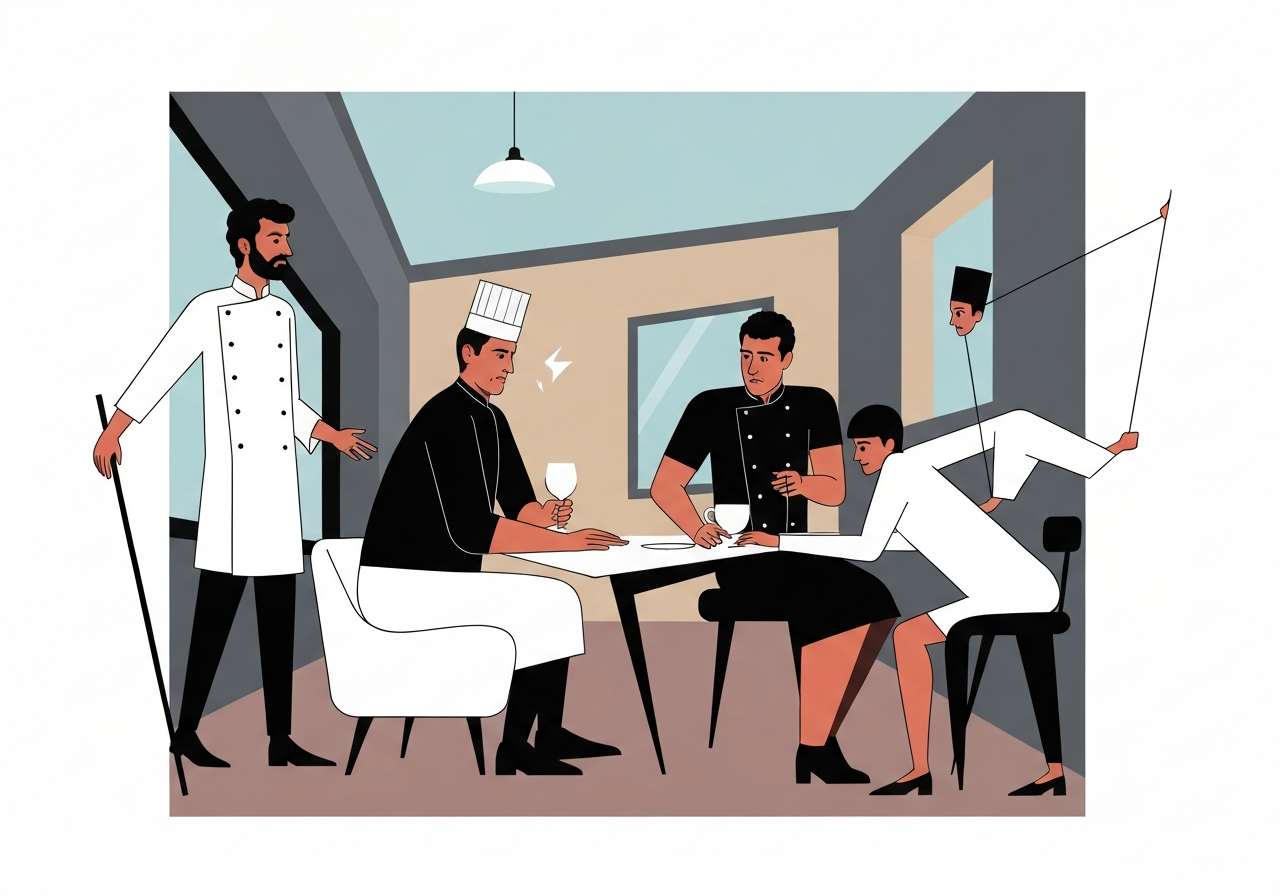
On March 7, 2026, reporting based on interviews with more than 35 former staff detailed allegations that the Copenhagen restaurant Noma, led by chef René Redzepi, fostered an environment of physical and psychological abuse. Former employees say incidents spanned years and included public shaming, physical assaults and sustained workplace silence, leaving a lasting impact on those who worked there. One episode described from February 2014 involved a public humiliation and a physical assault on a sous-chef that several witnesses said took place during a busy service. The allegations have prompted renewed scrutiny of high-pressure kitchen culture and raised questions about accountability at a restaurant long celebrated worldwide.
Key Takeaways
- More than 35 former Noma employees were interviewed for the reporting; dozens described violent or humiliating punishments while working at the restaurant.
- A detailed incident from February 2014 alleges that a sous-chef was punched in the ribs and forced to perform a public apology before returning to service.
- Former interns described unpaid, 16-hour workdays in the production kitchen where many of the alleged episodes took place.
- Multiple sources said silence and normalization followed violent incidents, with staff typically returning to work without formal remediation.
- The claims focus on René Redzepi’s conduct while building Noma’s global reputation, potentially affecting the restaurant’s standing and prompting industry discussion on labor practices.
- There is no public record in the reporting of criminal charges directly tied to the described incidents as of March 7, 2026.
Background
Noma, founded and led by René Redzepi, rose to global prominence for its role in the New Nordic culinary movement and for repeatedly ranking among the world’s top restaurants. Its acclaim attracted international diners, media attention and a pipeline of ambitious cooks seeking training and prestige. High-intensity kitchens are common at elite restaurants, where long hours and strict discipline are often framed as part of professional rigor. Over the past decade, the wider restaurant industry has faced growing scrutiny over abusive behavior, unpaid internships and workplace safety, spurred by media exposés and labor advocacy.
The allegations described by former Noma staff fit into that broader pattern: institutions celebrated for creativity and excellence can simultaneously cultivate coercive management styles. Stakeholders include current and former employees, restaurant management and owners, industry peers, customers, and regulators concerned with labor standards. For staff, the combination of rigorous expectations and public recognition can create pressure to tolerate mistreatment to protect careers. The historical prestige of Noma complicates public responses because the restaurant’s cultural influence has been tied closely to Redzepi’s leadership.
Main Event
Former employees recounted a series of episodes in which physical force and intimate humiliation were used as punishment during service or training. One detailed account from February 2014 describes Mr. Redzepi leading staff outside during a busy dinner service, where he allegedly shoved a sous-chef and then struck him in the ribs while demanding a public apology. Witnesses said about 40 cooks gathered, many wearing short sleeves and aprons, and that the incident ended only after the targeted staff member complied, after which everyone returned to work and the episode was not formally addressed.
Sources said similar patterns repeated over years: staff reported public shaming rituals, shouted reprimands and, in some accounts, physical contact used as discipline. Many described the production kitchen — where unpaid interns carried out repetitive tasks such as picking herbs and preparing garnishes — as a locus for mistreatment. Several former employees emphasized that silence was customary afterward, with no official investigation or record-keeping that resulted in corrective action.
Across the interviews, those who spoke described long-term consequences: psychological stress, disrupted careers, and ongoing reluctance to speak publicly for fear of retaliation or reputational harm. Some former staff requested anonymity to avoid professional repercussions. The pattern presented by multiple independent accounts contributed to a coherent portrait of normalized abuse rather than isolated incidents.
Analysis & Implications
The allegations, if substantiated, signal a significant reputational risk for Noma and for institutions that reward charismatic leaders without sufficient oversight. High-profile restaurants often operate with informal hierarchies and intense power imbalances that can enable abuse; this case underscores how prestige can shield problematic behavior. Beyond reputational damage, there are potential legal and regulatory implications if workplace violations — including labor-hour abuses or physical assault — are formally investigated by authorities.
For the culinary sector, the story adds momentum to calls for structural reforms: clearer codes of conduct, independent complaint mechanisms, enforceable labor contracts for trainees, and third-party audits at acclaimed establishments. Internationally, other top kitchens will face renewed pressure to disclose workplace policies and to demonstrate adherence to labor and safety standards. Restaurateurs and industry bodies may need to balance traditions of rigorous mentorship with enforceable protections for staff wellbeing.
The effect on individual careers should not be understated. Alumni networks and professional reputations are central to opportunities in fine dining; allegations like these can reshape hiring practices and how chefs vet prior workplaces. Culinary awards and ranking entities may also come under pressure to incorporate workplace conduct into their evaluation criteria, which would change incentives across the industry.
Comparison & Data
| Metric | Reported Figure |
|---|---|
| Former employees interviewed | More than 35 |
| Alleged incidents recounted | Dozens |
| Notable service incident date | February 2014 |
| Typical intern workday described | 16 hours (unpaid, production kitchen) |
The table above summarizes key quantitative details from the reporting. While precise totals of incidents remain unclear, the volume of independent accounts and consistent descriptions of setting and conduct strengthen the credibility of the pattern described by sources.
Reactions & Quotes
Several former staff described the emotional atmosphere after incidents and the pressure to remain silent. These remarks capture how employees experienced daily life in the kitchen and why many delayed or avoided speaking out publicly for years.
“Going to work felt like going to war.”
Former employee (Alessia, anonymized)
Another former staffer described the coping strategies that employees adopted to survive a demanding service environment, emphasizing endurance and emotional restraint as survival tactics.
“You had to force yourself to be strong, to show no fear.”
Former employee (anonymized)
Several sources said there was no formal, documented follow-up after the incidents described; management did not record or publicly acknowledge many of the individual episodes recounted to reporters. That absence of documented remediation is a central concern raised by those who spoke.
Unconfirmed
- The total number of distinct physical assaults across Noma’s history could not be independently verified from public records; reporting is based on former staff accounts.
- There is no publicly available evidence in the reporting of criminal charges directly linked to the February 2014 incident as of March 7, 2026.
- The internal awareness and responses by Noma management at the time of alleged incidents have not been fully corroborated by contemporaneous documents made available to reporters.
Bottom Line
The allegations against Noma and René Redzepi represent a rupture between a widely admired culinary institution and accounts from multiple former employees of persistent mistreatment. If corroborated, the claims illustrate how celebrated kitchens can conceal abusive practices behind a veneer of excellence. The story adds to broader industry debates about accountability, labor rights and the mechanisms necessary to protect staff in high-pressure workplaces.
For industry stakeholders, the immediate focus will likely be on whether independent investigations, internal reforms or regulatory reviews follow. For diners and the broader public, the episode invites a reassessment of how cultural prestige should be weighed against workplace conduct and whether awards and rankings ought to include staff wellbeing as an evaluative criterion.