
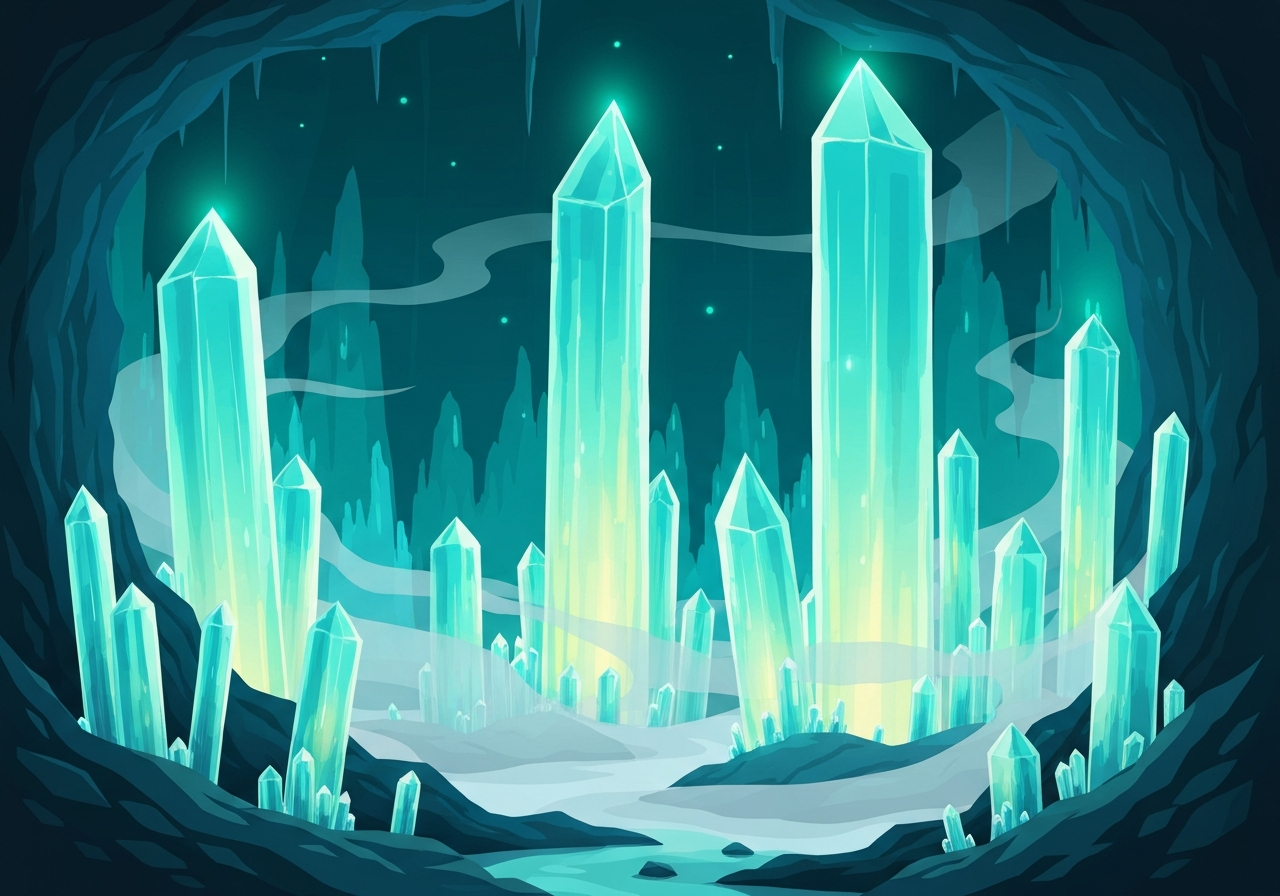
The Cave of Crystals in Chihuahua, Mexico, lies roughly 300 metres below the surface and contains gypsum crystals up to 11 metres long. The chamber has been nicknamed the “Sistine Chapel of crystals” for its overwhelming scale and beauty. Geological conditions that produced the formations also created extreme heat—around 58°C—and sustained humidity near 90%, making the site lethal to unprotected visitors and effectively viewable only via photographs and controlled study visits.
Key Takeaways
- The Cave of Crystals is located in Naica, Chihuahua, Mexico, about 300 metres beneath the surface and accessed through mine workings.
- Gypsum crystals within the cave reach lengths of up to 11 metres, among the largest known natural crystal formations.
- Temperatures inside stabilize at about 58°C; relative humidity measures roughly 90%, which prevents normal human thermoregulation by sweating.
- The crystals formed when mineral-rich, overheated groundwater rose into limestone caverns millions of years ago and cooled slowly, enabling exceptional crystal growth.
- Because of the cave’s heat and humidity, researchers require specialized suits and limited-duration protocols to work safely; uncontrolled visits present acute heat-stress risk.
- The site is scientifically valuable for understanding low-temperature crystallization, hydrothermal mineral transport and long-term preservation of mineral structures.
- Visual documentation—high-resolution photography and 3D scanning—has become the primary method for sharing the cave with the public while minimizing risk to people and the formations.
Background
The Cave of Crystals is part of a larger karst and hydrothermal system above a shallow magma chamber beneath the Naica mine. For millions of years, heat from ascending magma drove mineral-rich groundwater upward through limestone, dissolving and transporting sulfate and calcium that later precipitated as gypsum as the fluids cooled. The exceptional size of the crystals reflects an unusually long period of stable temperature and saturated chemical conditions that allowed unimpeded, uninterrupted growth over geologic timescales.
Human interaction with the cave has been indirect and sporadic because the chamber sits within commercial mine workings; miners initially encountered the space during excavation. Scientific access has been constrained since discovery by the chamber’s extreme environment, requiring short, well-equipped entry windows for research teams. Conservation concerns have also limited direct access: the crystals are fragile on their outer surfaces and can degrade if humidity, temperature or airflow regimes are disturbed by repeated human presence.
Main Event
The cave’s defining feature is the sheer scale of its gypsum crystals. Many individual crystals reach lengths near 11 metres and diameters of more than a metre, creating a cathedral-like interior with reflective, translucent surfaces. These structures are composed of selenite (a form of gypsum) and grew where warm, mineral-saturated groundwater remained chemically and thermally stable for extended intervals.
Temperature readings inside the cavity are consistently around 58°C; relative humidity sits at roughly 90 percent. At these levels, the human body cannot dissipate heat effectively by sweating because the evaporative cooling mechanism is suppressed. Without breathing and cooling apparatus, a person entering the cave would rapidly experience heat strain and risk heat stroke within minutes.
Because of the danger, most scientific work is planned in brief, instrumented sorties using protective gear and monitored exposure times. When researchers enter, they follow strict protocols—specialized cooling suits, buddy systems, and emergency support—to minimize physiological risk and avoid altering the cave environment. Outside the controlled visits, most public engagement with the cave has been through photography, film, and digital reconstructions that capture the scale without endangering people or the formations.
Analysis & Implications
The Cave of Crystals offers a rare empirical window into crystal growth under steady hydrothermal conditions. For mineralogists and geochemists, it serves as a natural laboratory for testing models of nucleation, solute transport and the kinetics of gypsum precipitation under supersaturated, high-temperature conditions. The size of the crystals challenges many standard lab-scale assumptions about growth limits and preservation over long periods.
From a conservation standpoint, the site highlights a frequent tension between scientific access and preservation. Direct human presence—even when brief—can change microclimates and introduce contaminants that may accelerate surface weathering of the crystals. Strict access controls and non-invasive imaging techniques are therefore necessary to protect the formations while enabling research.
There are also broader public-policy and tourism implications. The cave’s fame makes it an attractive candidate for controlled interpretation, but transforming it into a visitor attraction would require major engineering to mitigate heat and humidity risks and would risk damaging the crystals’ environmental stability. Policymakers and stakeholders must therefore weigh scientific value, heritage preservation and potential economic benefits from curated, off-site visitor experiences such as virtual tours.
Comparison & Data
| Metric | Cave of Crystals | Human safe range |
|---|---|---|
| Depth below surface | ~300 metres | N/A |
| Maximum crystal length | Up to 11 metres | N/A |
| Temperature | ~58°C | Generally safe <35°C for prolonged exposure |
| Relative humidity | ~90% | Comfortable 30–60% |
| Typical unprotected human survival | Minutes to an hour before heat stress | Hours with normal activity |
The table illustrates how the cave’s temperature and humidity far exceed human comfort thresholds and how its geomorphic metrics place it among the most extreme natural crystal environments known. Because heat stress onset depends on activity level and acclimatisation, exposure protocols for researchers are conservative and short.
Reactions & Quotes
Public and academic reactions underline both awe and caution around the site. The cave’s visual impact has been widely emphasised in media coverage, while experts stress the health risks and conservation needs.
“The chamber’s scale has led photographers and writers to liken it to a kind of ‘Sistine Chapel of crystals.’”
Discover Wildlife (media)
This short quote has been used repeatedly in coverage to convey the cave’s striking interior. While evocative, such comparisons can obscure the scientific specifics and the practical hazards that limit access.
“High temperature and nearly saturated humidity make extended human presence impossible without special equipment.”
Discover Wildlife (media)
That assessment captures the operational reality for researchers: tasks must be planned to minimize exposure times and to avoid altering the cave’s microenvironment. Media accounts and scientific summaries both emphasize remote documentation as the safest and most sustainable approach.
Unconfirmed
- Exact duration of uninterrupted crystal growth—estimates vary and precise age models for the largest crystals remain subject to geochronological study.
- Current access policy specifics at the Naica mine can change with mining operations and safety reviews; up-to-date entry rules should be confirmed with local authorities.
- Occasional popular claims that visitors once walked freely on the crystals are not supported by documented, controlled scientific access records and should be treated cautiously.
Bottom Line
The Cave of Crystals is a geologic wonder: a subterranean chamber about 300 metres down that houses gypsum crystals up to 11 metres long, formed by long‑term hydrothermal processes. Its combination of high temperature (≈58°C) and very high humidity (~90%) makes direct human access dangerous and restricts study to brief, well-equipped interventions and non-invasive imaging.
For scientists, the site yields unique insights into crystallisation under steady hydrothermal conditions and raises important conservation questions about how to balance research access with long-term preservation. For the public, the safest and most responsible way to experience the cave remains through photographs, scans and curated media that convey its scale without risking human health or the integrity of the formations.