
Lead
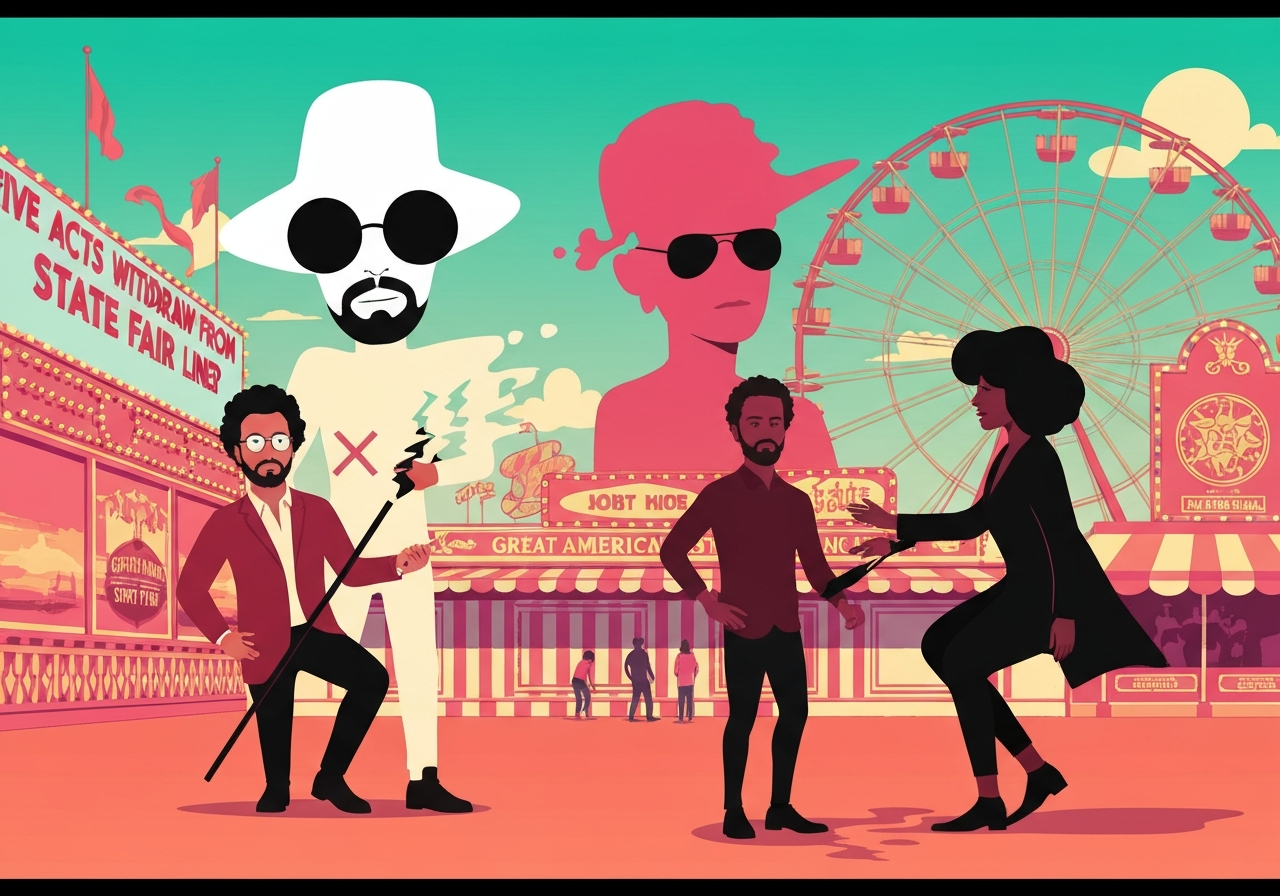
On Friday, May 29, 2026, five of nine scheduled performers pulled out of the Great American State Fair, a free concert series staged as part of the Trump administration’s Freedom 250 celebrations in Washington, D.C. The latest announced withdrawal came from Bret Michaels, who cited the event’s shift toward a more divisive tone and safety concerns. Other artists who have left include Martina McBride, The Commodores, Young MC and Morris Day & The Time. Organizers still list a reduced lineup for the late‑month event alongside speeches, flyovers and a fireworks finale.
Key Takeaways
- Five of nine originally billed acts have publicly withdrawn from the Great American State Fair; the departures were confirmed through artists’ social posts and band statements.
- Bret Michaels announced his exit on May 29, 2026, citing safety threats and that the event became “more divisive” than he was led to expect.
- Martina McBride said she was told the gig would be nonpartisan and later concluded that description was misleading.
- The Commodores stated they would not “publicly affiliate with any single political party,” marking another high‑profile pullout.
- Remaining performers announced by organizers include C+C Music Factory, Vanilla Ice, Milli Vanilli and Flo Rida; several acts issued public endorsements or explanations for staying.
- The fair is part of Freedom 250, one of multiple 250th‑anniversary initiatives; complementary events and rival festivals have emerged, including a fall protest festival announced by Tom Morello.
- Organizers describe the fair as free with registration encouraged; ancillary events will include speeches, flyovers and a fireworks finale as promoted on the Freedom 250 site.
Background
The Great American State Fair is a free concert series organized under the umbrella of Freedom 250, a task force created to mark the United States’ 250th anniversary. The broader Freedom 250 program has planned a slate of public events in Washington, D.C., combining entertainment with ceremonial elements such as speeches and military flyovers. State fairs and patriotic concerts historically attract a mix of civic groups, families and political actors; when such events are linked to federal initiatives, performer participation often draws heightened public scrutiny.
In recent weeks the fair’s billing became a focal point for debate over whether the concerts were nonpolitical celebrations or partisan events tied to a White House‑led initiative. Some artists say they were recruited with assurances of a broadly apolitical audience and purpose, while others say the public framing changed as the date approached. At the same time, competing events have been organized by artists and activists who present alternate narratives and ticketed alternatives near the capital.
Main Event
Bret Michaels, the Poison frontman, posted a lengthy message on social media on May 29, 2026, announcing his withdrawal and saying the engagement had been presented to him as “a celebration of our country through music.” He added that the project evolved into something he felt was “much more divisive,” and he referenced threats that raised safety concerns for fans, crew and family. Michaels said, in part, that he must prioritize safety despite generally avoiding politics in his performances.
Martina McBride also published a detailed social post explaining her decision to leave, asserting she had expected “a bigger version of so many state fairs”—a wholesome, nonpartisan setting—and claiming the reality diverged from what she had been told. The Commodores issued a statement across social platforms saying they would not publicly align with a single political party, and that stance underpinned their withdrawal. Earlier exits included Young MC and Morris Day & The Time, leaving the originally billed nine artists substantially reduced.
Among artists who remain listed, Vanilla Ice posted a short Instagram video expressing excitement to perform, describing the event as “celebrating America’s birthday” rather than a political platform. C+C Music Factory said it considered exiting but reversed course after facing backlash for the potential drop, while Milli Vanilli and Flo Rida remain on the published roster. Organizers continue to promote registration for the free event and list a planned fireworks finale and aerial demonstrations.
Analysis & Implications
Artist withdrawals from large, politically adjacent events reflect a broader tension in the music industry between commercial opportunities and reputational risk. For established performers, alignment—perceived or real—with a politically charged government initiative can provoke fan backlash, sponsor concerns and internal debate. The spate of pullouts here suggests many artists view the reputational downside as substantial enough to forgo high‑profile exposure.
For organizers, the departures create logistical and messaging challenges. A reduced lineup can dampen audience enthusiasm, complicate crowd management plans and force rapid contractual or promotional adjustments. Organizers must weigh whether to recruit replacement acts quickly, pivot messaging to emphasize nonpartisanship, or proceed with a smaller program that still meets public safety and production commitments.
Politically, the episode underscores how cultural events tied to government anniversaries can become proxy contests over national identity and political alignment. Rival events, such as the Power To The People festival announced for October by Tom Morello and others, amplify those divisions by offering artists and audiences an explicitly alternative framing. Over the medium term, partnerships between public initiatives and private entertainers may require clearer contractual language about event purpose and public framing to avoid similar disputes.
Comparison & Data
| Metric | Original | Withdrawn | Remaining |
|---|---|---|---|
| Scheduled acts | 9 | 5 | 4 |
| Notable withdrawals | — | Bret Michaels, Martina McBride, The Commodores, Young MC, Morris Day & The Time | C+C Music Factory, Vanilla Ice, Milli Vanilli, Flo Rida |
The table shows five of nine performers have exited as of May 29, 2026, leaving four acts publicly listed. That attrition rate—about 55 percent of the original bill—exceeds typical last‑minute lineup changes for comparable free civic events, where cancellations more commonly affect one or two acts. The withdrawals here are concentrated among veteran performers with broad fan bases, magnifying their reputational impact relative to the raw numbers.
Reactions & Quotes
“This isn’t about politics…Everyone is entitled to their own opinions…But as a father, friend and bandmate, I have to take threats and safety concerns seriously.”
Bret Michaels (social media statement)
Michaels framed his exit around threats and safety for his team, while also reiterating that his work has historically avoided political causes. His language emphasizes personal responsibility over political positioning.
“I was initially asked to perform at a nonpartisan event but that turned out to be misleading.”
Martina McBride (social media statement)
McBride positioned her withdrawal as a response to a mismatch between the event’s initial description and what she perceived unfolding, stressing her career focus on songs about everyday people.
“We will not publicly affiliate with any single political party.”
The Commodores (band statement)
The Commodores’ brief statement framed the decision as one of institutional neutrality, signaling concern about perceived alignment with partisan messaging.
Unconfirmed
- Whether organizers explicitly told each artist the event would be nonpartisan before booking has not been independently verified by public documents.
- The exact nature and source of the threats referenced by Bret Michaels have not been made public and remain unconfirmed.
- Internal Freedom 250 communications about outreach to artists and any incentives offered have not been released and are therefore unverified.
Bottom Line
The withdrawal of five headline acts from the Great American State Fair illustrates the reputational and operational hazards of staging large cultural events that intersect with politics. For performers, even a perceived affiliation with a government initiative can trigger fan backlash, safety concerns and career calculus that favors withdrawal over association.
For organizers, the incident is a reminder that transparency about event purpose and contractual clarity on public messaging and security responsibilities are essential. Observers should watch whether organizers recruit replacement acts, alter programming, or adjust promotional framing, and whether similar disputes influence artist participation in other Freedom 250 events.