
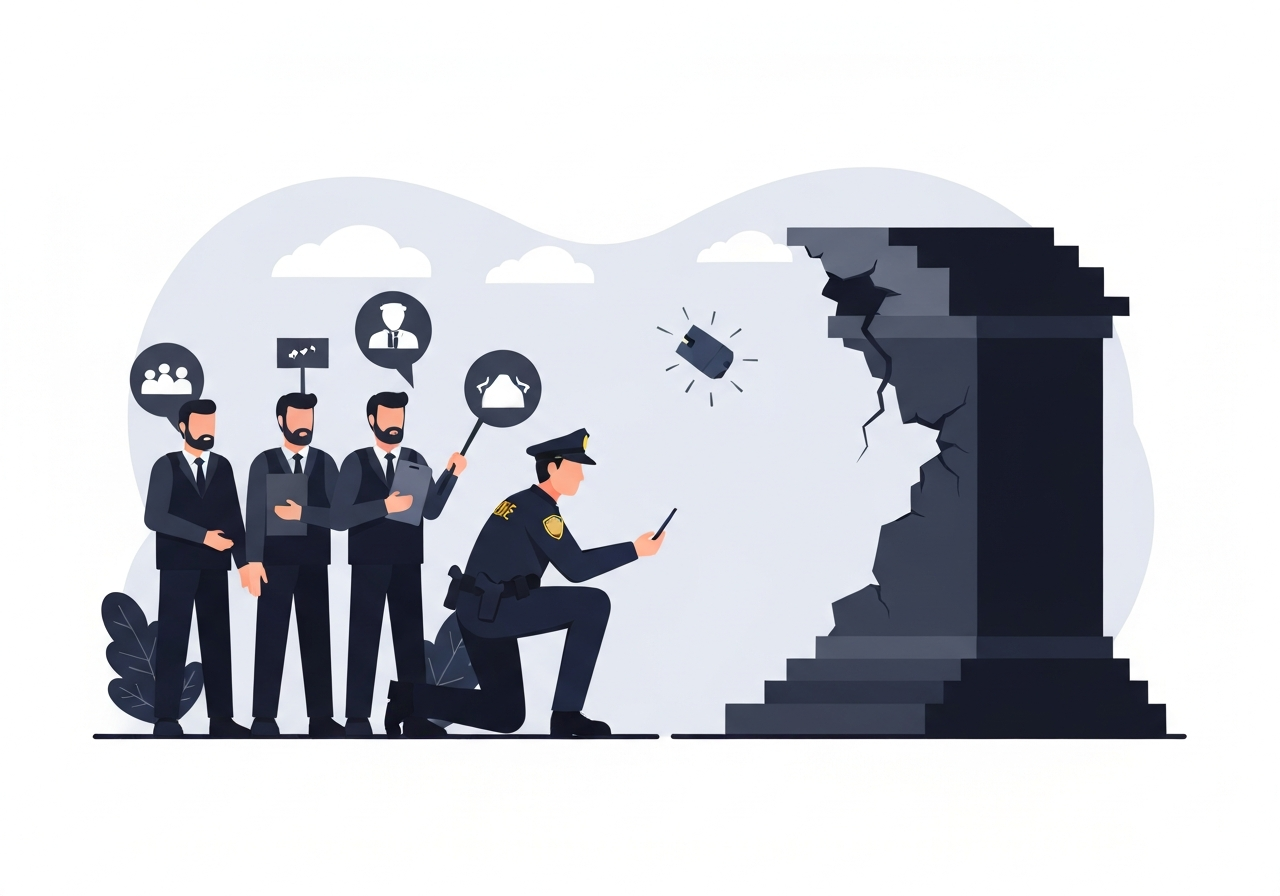
Lead: New York City police say an improvised explosive device was ignited and thrown outside the official residence of Mayor Zohran Mamdani on Saturday amid clashes between anti‑Islam demonstrators and counterprotesters near Gracie Mansion. The NYPD’s preliminary bomb‑squad assessment concluded the device was not a hoax and could have caused serious injury or death. Two men arrested at the scene, Emir Balat and Ibrahim Kayumi, remain in custody as investigators work with federal prosecutors and the FBI. Police reported no injuries and said Mayor Mamdani was believed not to be in the residence at the time.
Key Takeaways
- The NYPD says a device thrown during Saturday’s protest outside the mayoral residence was an improvised explosive device, not a smoke bomb, per preliminary analysis.
- Two men, Emir Balat and Ibrahim Kayumi, were arrested on scene and are in custody; six people in total were arrested in connection with the clashes.
- The confrontation occurred near Gracie Mansion, following a demonstration titled “Stop the Islamic Takeover of New York City” and a larger counterprotest.
- About 20 people reportedly attended the far‑right protest tied to an organizer known as Lang; the counterprotest peaked at roughly 125 participants.
- Police said one thrown device struck a barrier and extinguished a few feet from officers; devices were wrapped in black tape and packed with nuts, bolts and screws with a hobby fuse.
- The NYPD is coordinating with federal prosecutors and the FBI through a terrorism taskforce for further analysis and potential charges.
- No injuries were reported by police at a subsequent news conference, and investigators said they will test a second device recovered at the scene.
Background
Gracie Mansion is the official residence of New York City’s mayor and has been the focus of high‑profile demonstrations in past years. Zohran Mamdani is the city’s first Muslim mayor, and public protests targeting his administration have drawn heightened attention from law enforcement and community groups. The demonstration on Saturday was organized under an anti‑Islam banner, reflecting a pattern of increasingly visible far‑right actions in several U.S. cities in recent years.
Tensions between far‑right groups and counterprotesters have escalated in New York and elsewhere, especially around issues of immigration, religion and municipal politics. In this instance, the far‑right demonstration was reportedly associated with a figure identified as Lang, who has a criminal history including charges related to violence; Lang received clemency from former President Donald Trump for earlier Jan. 6–related convictions and is publicly running for the U.S. Senate in Florida. Organizers on both sides have used social media to mobilize supporters, complicating crowd management for city police.
Main Event
The clash began when a group gathered near Gracie Mansion for a protest titled “Stop the Islamic Takeover of New York City,” confronting a larger group of counterprotesters. According to police, an individual from the far‑right group used pepper spray against members of the counterprotest, sparking scuffles and physical confrontations. In response, a counterprotester lit and threw a device packed with nuts, bolts and screws toward the anti‑Muslim demonstrators; that device landed among the crowd and contributed to chaotic exchanges.
Police and witnesses said a second device was later lit and thrown into the protesting crowd of approximately 20 people. The device, described by the NYPD as smaller than a football, struck a barrier and went out a few feet from uniformed officers. After that, the person who threw it ran, and another person supplied him a second package, which he then dropped. Both packages were wrapped in black tape and contained similar metal fragments and a hobby fuse.
The NYPD’s bomb squad examined the ignited device at the scene and made a preliminary determination that it was an improvised explosive device and not a hoax or mere smoke device. Commissioner Jessica Tisch said further forensic analysis would be conducted, including testing a second device recovered at the location. Six arrests were made around the unrest; two men—Emir Balat and Ibrahim Kayumi—were specifically detained in connection with the devices and remain in custody as federal and local investigators review the evidence.
Analysis & Implications
Police declaring the item an improvised explosive device, even preliminarily, elevates the incident from a routine public‑order disturbance to a potentially criminal and terrorism‑related investigation. Coordination with federal prosecutors and the FBI’s terrorism taskforce signals prosecutors may consider charges beyond typical disorderly conduct, including use or possession of explosives and federal weapon statutes. Such charges would carry significantly higher penalties and prompt a broader review of the networks that mobilize and arm demonstrators.
The incident raises operational questions about protecting public officials’ residences while preserving the right to protest. Gracie Mansion has limited perimeter space and sits within a dense residential neighborhood, complicating crowd control when opposing groups converge. City officials will face pressure to reassess perimeter security, permit processes and de‑escalation tactics to prevent both violence and infringements on lawful assembly.
Politically, the event may harden partisan debate over public safety and free speech, particularly because the demonstration targeted Mayor Mamdani and involved a figure with a national profile and past Jan. 6 connections. Local and federal scrutiny could extend to online organizers and the pathways by which incendiary rhetoric translates into dangerous on‑the‑ground actions. For communities targeted by anti‑Muslim rhetoric, the incident underscores ongoing threats to safety and the need for protective measures and community outreach.
Comparison & Data
| Item | Count / Detail |
|---|---|
| Far‑right protesters (reported) | ~20 |
| Counterprotesters (peak) | ~125 |
| Devices recovered | 2 |
| Arrests | 6 |
| Reported injuries | 0 |
These figures show a small organized far‑right turnout confronted by a larger counterdemonstration, a dynamic that often increases the likelihood of clashes. The presence of two devices and multiple arrests underscores why authorities escalated the response to involve federal partners. While no injuries were reported, the presence of shrapnel‑laden packages expands the legal and safety stakes considerably compared with typical protest scuffles.
Reactions & Quotes
Police leadership framed the episode as both a public‑safety threat and a criminal matter requiring federal cooperation. At a public briefing, Commissioner Jessica Tisch described the preliminary bomb‑squad finding and emphasized interagency work.
“It is, in fact, an improvised explosive device that could have caused serious injury or death.”
Jessica Tisch, NYPD Commissioner
She also praised officers who intervened quickly as the devices were thrown, noting their actions likely prevented greater harm.
“I want to again thank the brave members of the NYPD who ran towards the danger without hesitation and quickly apprehended the suspects.”
Jessica Tisch, NYPD Commissioner
Community leaders and civil liberties groups are likely to emphasize accountability while urging restraint to protect lawful demonstration. Legal analysts note federal involvement typically means the case will be prosecuted with a focus on explosive devices and potential terrorism statutes.
Unconfirmed
- Whether the second recovered device was fully functional remains under forensic testing and has not been publicly confirmed.
- The motive of the individual who handed a second device to the thrower and whether the mayor was a specific target of the device have not been established by investigators.
- Any formal federal charges tied directly to terrorism statutes have not been announced as of the latest police statements.
Bottom Line
The NYPD’s preliminary determination that the item thrown was an improvised explosive device raises the stakes of what began as a local protest clash, prompting federal scrutiny and potential serious criminal charges. Immediate outcomes include two custody holds and a broader investigation that will examine device composition, intent and the roles of organizers and participants.
Going forward, authorities will likely tighten security around high‑profile residences and reassess permitting and crowd‑management strategies for contentious demonstrations. For residents and civic leaders, the episode is a reminder that rallies touching on religion and identity can escalate rapidly; policymakers and law enforcement face the twin tasks of protecting public safety while upholding lawful expression.
Sources
- The Guardian (news report)