
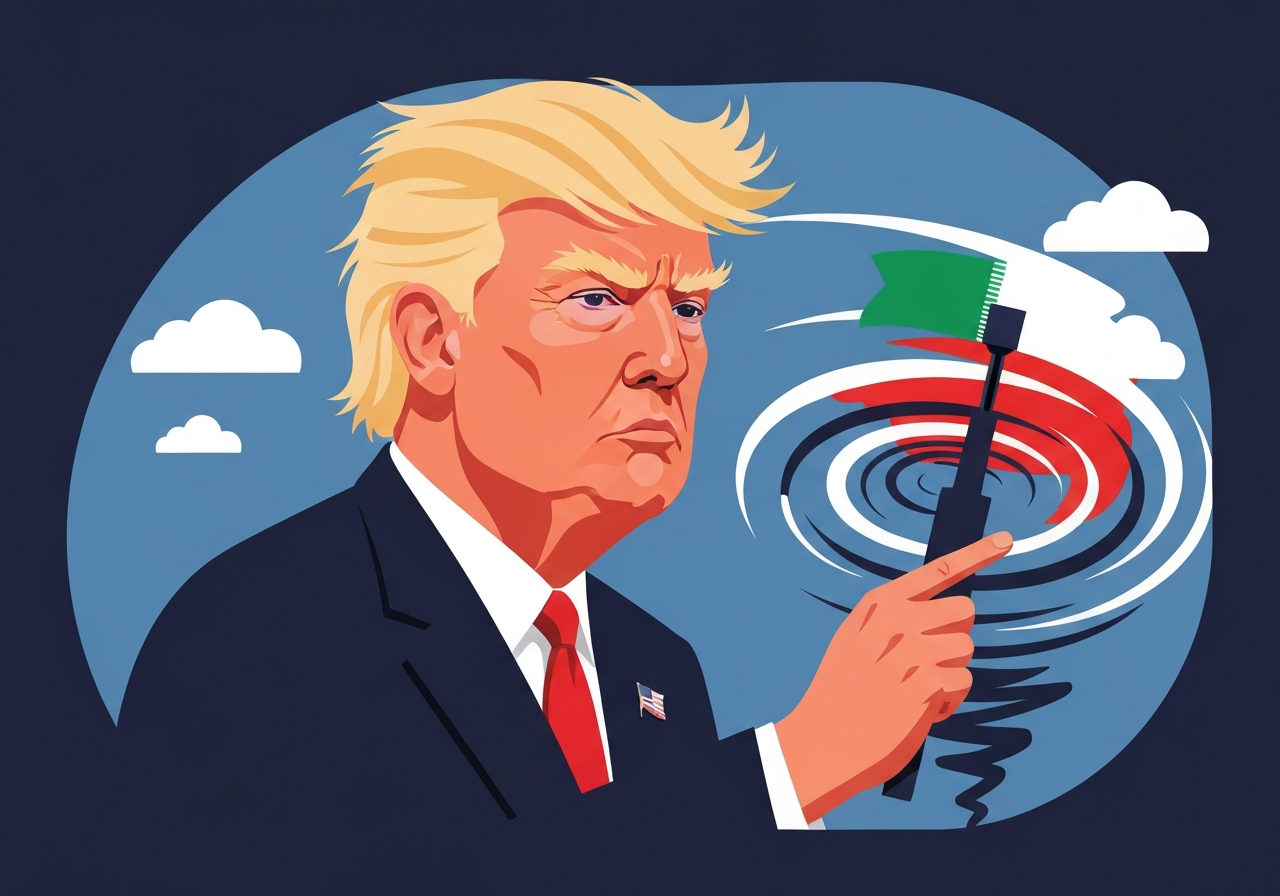
Lead: According to a Financial Times report, Donald Trump is weighing the option of deploying US ground forces to confront Iranian targets, a development that could sharply escalate tensions across the Middle East and within Washington. The proposal was discussed with senior advisers and military officials and has prompted concern among some Pentagon and diplomatic figures. If pursued, the move would mark a significant shift from recent US policy options that emphasized limited strikes and sanctions. The FT coverage says the idea is under active consideration rather than finalized.
Key Takeaways
- Financial Times reports that Donald Trump has raised the prospect of sending US ground forces to Iran; the discussion is described as exploratory rather than a formal order.
- The deliberations involved senior advisers, military planners and some White House contacts, according to the FT, prompting internal debate about risks and objectives.
- Officials cited by the FT warn the step would elevate the risk of wider regional conflict and complicate relationships with US allies in the Middle East.
- Military planners note that a ground deployment would require months of preparation, logistics and intelligence support, even for limited operations.
- Analysts say political implications at home could be substantial, potentially influencing domestic opinion and coalition-building ahead of any electoral or diplomatic timeline.
Background
US-Iran tensions have fluctuated for decades, punctuated by sanctions, proxy clashes and direct strikes. Since the 1979 Iranian Revolution, confrontations have periodically escalated as both sides pursue strategic aims in the Gulf and Levant. In recent years US responses to Iranian threats have favored targeted air strikes, naval deployments and cyber operations rather than large-scale ground commitments.
Policy debates in Washington have long grappled with the trade-offs of ground operations: kinetic effectiveness versus long-term occupation costs and regional blowback. US presidents and defence secretaries have historically weighed the scale of response against diplomatic and alliance considerations. The current reporting places this discussion in that institutional context, where military feasibility, legal authority and political consequences are central to decision-making.
Main Event
The Financial Times describes conversations within Mr Trump’s circle about the option of deploying ground units to counter Iranian forces or proxies. Sources told the FT that advisers outlined scenarios ranging from limited raids to more sustained ground operations, and that assessments of likely Iranian reactions were central to the debate. The idea reportedly emerged alongside other options under consideration, including intensified sanctions and expanded maritime patrols.
Military officials cited in the report urged caution, emphasizing that ground deployments carry a higher threshold of risk than air or naval strikes. They highlighted logistical needs—force protection, medical evacuation capabilities, secure supply lines—and the intelligence burden of operating on Iranian soil or in areas where Iranian-backed groups operate. Those constraints, officials said, affect both the feasibility and the timeline of any such mission.
Within Washington, the discussions have prompted mixed reactions. Some advisers framed a ground option as a way to impose direct pressure and achieve deterrent effects; others warned it could draw the US into prolonged engagement with uncertain exit conditions. The FT notes no formal authorization had been issued at the time of reporting and that public statements from official agencies remained circumspect.
Analysis & Implications
Military deployment of US ground forces to Iran would represent a major escalation from the limited-force posture the US has typically used since 2019. On a strategic level, such a step could reshape deterrence calculus in the region by signaling willingness to accept higher risk in pursuit of objectives. That signal could deter some Iranian actions but equally might provoke more aggressive asymmetric responses by Tehran and its proxies.
Diplomatically, a US ground presence would complicate relations with regional partners that prefer containment of conflict and continuity in energy supplies. Allies such as Israel and Gulf states may welcome decisive action in some scenarios, yet many are also mindful of the economic and humanitarian consequences that accompany expanded warfare. International institutions and neutral partners would likely call for de-escalation and a return to diplomatic channels.
Domestically, the political cost-benefit calculation is complex. A presidential figure publicly weighing ground options risks polarizing opinion at home, prompting legal and congressional scrutiny over war powers and funding. Public support for ground deployments tends to be lower than for limited strikes, meaning political leaders must weigh electoral and legislative consequences alongside military objectives.
Comparison & Data
| Option | Scope | Typical Risk Profile | Preparation Time |
|---|---|---|---|
| Air strikes | Targeted, tactical | Lower immediate occupation risk | Days–weeks |
| Naval operations | Maritime control, strikes | Moderate, depends on escalation | Weeks |
| Ground deployment | Territorial/kinetic control | High, occupation & insurgency risk | Months |
The table above summarizes typical operational characteristics of the principal military options under discussion. Ground deployments are markedly different in logistical scale and long-term commitments compared with air or naval responses; planners factor in force size, sustainment and political exit strategies when evaluating feasibility.
Reactions & Quotes
“Any discussion of ground forces in Iran raises the potential for a much broader conflict than currently exists.”
Senior US official, as reported by Financial Times
That remark, attributed to an unnamed official in the FT account, encapsulates concerns expressed across defence channels about unintended escalation. Officials emphasized that while planners can model many contingencies, the fog of war and political dynamics complicate predictable outcomes.
“Limited strikes carry different legal and diplomatic implications than boots on the ground; the consequences are not merely military but institutional.”
Policy analyst interviewed on background, media briefing
Analysts stress that a shift to ground operations implicates domestic legal frameworks, coalition politics and long-term strategy in ways that shorter-term measures do not.
Unconfirmed
- No independent confirmation that an operational order to deploy ground forces has been signed; the FT describes the matter as under consideration rather than executed.
- Specific force sizes, target lists or timelines for any ground mission remain unverified by official Pentagon or White House statements.
Bottom Line
The Financial Times report that Donald Trump is weighing deployment of US ground forces to Iran highlights a potentially pivotal shift in US posture toward Tehran. While presented as an option under review, the idea carries substantial military, diplomatic and political risks that advisers and partners are scrutinizing closely. Ground deployment would be a high-threshold move with long lead-times and far-reaching implications for regional stability.
Decision-makers will face a trade-off between decisive action and the prospect of prolonged engagement, and that balance will shape both short-term tactics and longer-term US strategy in the Middle East. Observers should watch for formal statements from the Pentagon, White House or congressional briefings to determine whether the option moves from deliberation to directive.
Sources
- Financial Times (news report)