
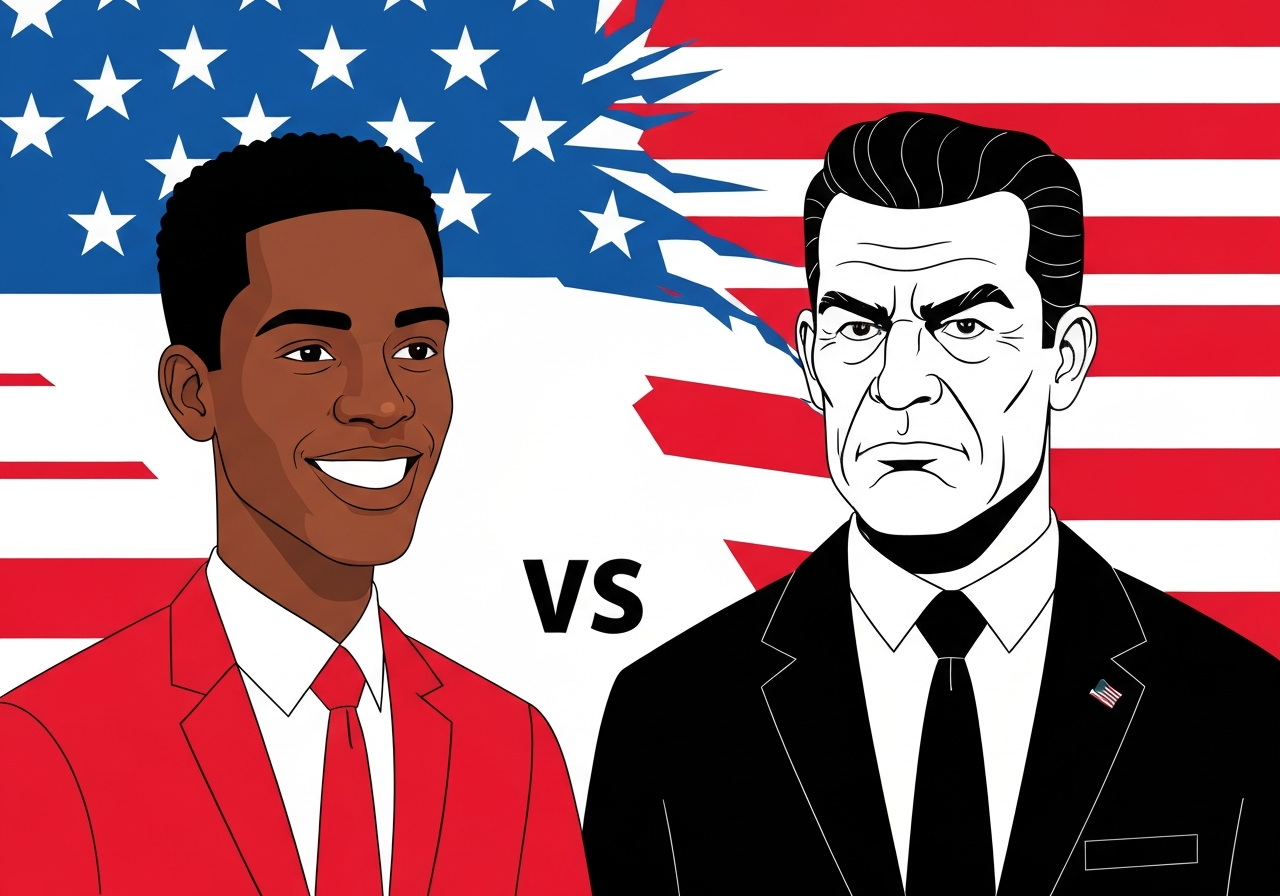
Lead: Democrat Shawn Harris and Republican Clay Fuller will meet in an April 7 runoff to fill the vacant seat in Georgia’s 14th Congressional District, CNN projects. The special election to replace former GOP Rep. Marjorie Taylor Greene produced no outright winner, forcing a head-to-head rematch between Harris and Fuller. Fuller secured a plurality after receiving former President Donald Trump’s endorsement in February, while Harris narrowly led Fuller in the initial count. The outcome leaves the seat open for another month as both parties prepare for a competitive runoff.
Key Takeaways
- Runoff date: April 7, 2026, for Georgia’s 14th Congressional District seat vacated by Marjorie Taylor Greene.
- Top two: Republican Clay Fuller and Democrat Shawn Harris advanced to the runoff; Harris led Fuller narrowly on election night.
- Trump endorsement: Fuller received Donald Trump’s backing in February after resigning as a district attorney to run.
- Spending gap: Pro-Fuller advertising exceeded $1.8 million, according to AdImpact, more than double the support for his nearest GOP rival.
- Fundraising: Harris has raised over $4 million since mid-2025, outpacing any single Republican in the special race.
- Partisan baseline: Trump carried the district by 37 percentage points in 2024, making it strongly Republican on paper.
- House math: The seat remains vacant until the April runoff, affecting a historically narrow GOP majority in the U.S. House.
Background
Marjorie Taylor Greene resigned from Congress earlier in 2026 after a public split with former President Trump; she criticized his focus on foreign policy and joined other Republicans in pressing for greater transparency on certain matters. Her departure triggered the special election in Georgia’s 14th District, a seat that had been reliably Republican and where Trump won handily in 2024. The vacancy set up a crowded GOP contest with more than a dozen hopefuls and a smaller Democratic field that saw Harris as the most established challenger.
The race tested the continuing potency of Trump’s endorsement inside the Republican Party. Some GOP candidates explicitly courted the former president’s favor, while others downplayed his influence, arguing the district’s voters prioritize local issues. At the same time, Democrats viewed the special as a rare opening to make inroads in a deep-red seat by emphasizing affordability and outsider credentials. National groups and outside spenders also treated the contest as an early indicator of how money and messaging will flow in closely divided House battles.
Main Event
On election night, Fuller emerged as the leading Republican after a crowded primary-style field split the GOP vote, securing enough support to force a runoff but not to win outright. Fuller entered the race after resigning his district attorney post and gained momentum when Trump publicly endorsed him in February. Despite that backing, the dozen-plus Republican contenders prevented any single candidate from reaching the majority needed to avoid a runoff.
Fuller framed his showing as validation that Trump’s endorsement mattered and urged Republicans to unite behind him ahead of April 7. Harris, a retired U.S. Army brigadier general who challenged Greene in 2024, said the result demonstrated a path for Democrats even in a heavily Republican district, capturing the bulk of the Democratic vote as the most recognizable Democratic option on the ballot.
Outside spending tilted toward Fuller: AdImpact tallied more than $1.8 million in pro-Fuller ads, including contributions from two outside groups that doubled the ad presence of his nearest GOP rival. Meanwhile, Harris out-raised any single Republican, reporting over $4 million raised since mid-2025, which helped fund a district-wide organizing effort and television and digital outreach aimed at persuadable voters.
Analysis & Implications
The runoff has implications far beyond this district. With Republicans holding a historically narrow House majority, the delay in seating a new member prolongs uncertainty about vote counts on close measures and committee organization. If Fuller wins, Republicans would regain a Trump ally and slightly strengthen their margin; if Harris pulls an upset, Democrats would notch a high-profile gain in a seat Trump won by 37 points in 2024.
Trump’s endorsement proved influential but not decisive: it elevated Fuller above other GOP contenders and helped attract outside spending, yet it did not consolidate Republican voters enough to deliver a majority. That split result underscores evolving dynamics within the GOP, where allegiance to Trump remains a powerful factor but not an absolute ticket to victory in multi-candidate fields.
For Democrats, Harris’s advance shows a strategic pathway: concentrate resources on a longtime name with cross-party appeal, emphasize pocketbook issues, and rely on superior fundraising and organization to capitalize on low-turnout runoffs. For outside groups and national strategists, the contest will be a test of whether heavy ad investment in a single candidate can overcome structural partisan disadvantages and local turnout patterns in April.
Comparison & Data
| Metric | Clay Fuller | Shawn Harris |
|---|---|---|
| Ad spending (pro) | $1.8M+ | Less (districtwide Democratic ads, smaller outside spend) |
| Fundraising (since mid-2025) | Less than $4M | $4M+ |
| 2024 presidential margin (district) | Trump +37 points | |
These figures show why the race is competitive in practice: Fuller benefited from concentrated outside ad spending and Trump’s endorsement, while Harris leads in campaign cash and name recognition among Democrats. The district’s 37-point 2024 Republican baseline still heavily favors a Republican in a two-way runoff, but turnout patterns and campaign resources will determine how close the April contest becomes.
Reactions & Quotes
Campaign statements and public posts highlighted both parties’ interpretations of the result and signaled how each will frame the April runoff.
“We know that the endorsement from President Trump made a difference in this race, and we’re going to go and win it.”
Clay Fuller
Fuller made the comment at a watch party, presenting the outcome as momentum and urging GOP unity after a split field. He described the night as an “absolute win” and pressed for consolidation behind his candidacy ahead of April.
“Yes, it’s ruby red. It won’t turn blue, but it’ll definitely turn pink.”
Shawn Harris
Harris used the comment to argue a Democrat can be competitive here, framing the special election as a unique opportunity and pointing to his fundraising and message on affordability as a path forward.
“Congratulations to Clay Fuller, of Georgia’s 14th Congressional District, on getting such a high percentage of the vote with 12 Republicans running.”
Donald Trump (Truth Social)
Trump celebrated Fuller’s plurality in a social post, underscoring his continued role in shaping Republican primary and special-election contests. Several GOP rivals, however, had earlier argued the seat belonged to local voters rather than being defined by any single endorsement.
Unconfirmed
- Whether Trump’s endorsement will fully unite the Georgia Republican electorate behind Fuller in the April runoff remains uncertain.
- The exact turnout composition for the April 7 runoff—especially which party’s voters will show up at higher rates—is not yet known.
- Claims about further outside groups planning additional six-figure ad buys for either candidate have not been independently confirmed.
Bottom Line
The April 7 runoff in Georgia’s 14th District pits a Trump-backed Republican who benefited from heavy ad spending against a well-funded Democrat who argues the seat is within reach. Structural Republican advantages—illustrated by Trump’s 37-point 2024 margin—make Fuller the favorite on paper, but fundraising, turnout and campaign organization will determine how competitive the race actually is.
Beyond the district, the contest is a small but meaningful test of Trump’s sway inside the GOP and of each party’s ability to mobilize voters in low-turnout runoffs. With the House majority narrow, the result will also carry immediate consequences for parliamentary math and messaging ahead of the fall congressional cycle.
Sources
- CNN (news report)
- AdImpact (ad-tracking firm)
- Truth Social (primary social post by Donald Trump)