
Lead
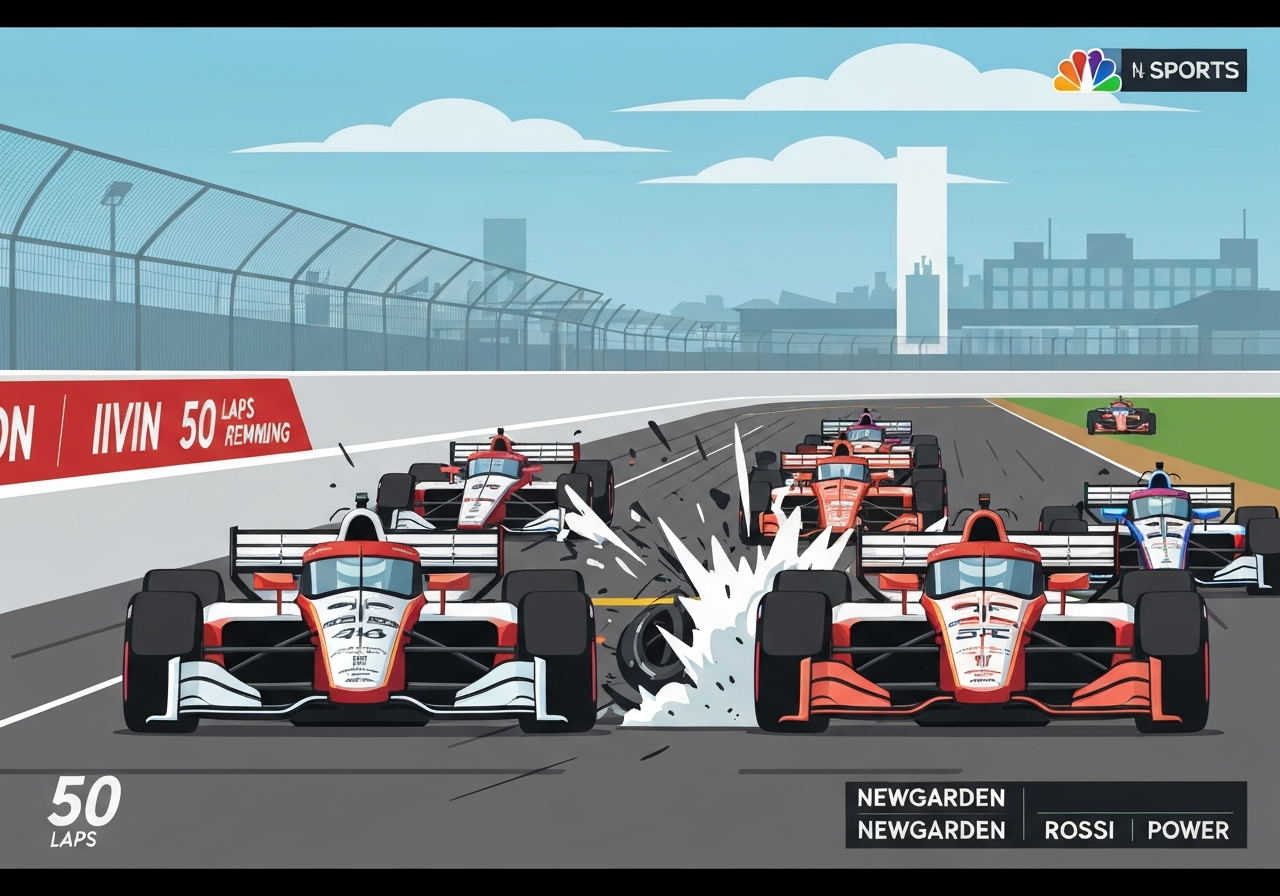
At the 110th Indianapolis 500 on May 24, 2026 at Indianapolis Motor Speedway, Scott Dixon held the lead with 50 laps remaining (Lap 150 of 200) after a chaotic day that included multiple crashes, a rain stoppage and strategic fuel gambits. Josef Newgarden was eliminated in a Turn 4 wreck on Lap 126, while Katherine Legge, Alexander Rossi and Will Power were all forced from contention earlier. A late red flag for a fiery crash involving rookie Caio Collet on Lap 194 reshaped endgame plans and made a short restart likely with only a handful of laps left. The result remained undecided as teams recalculated fuel and tire windows under caution.
Key Takeaways
- Scott Dixon led after Lap 150, with 50 laps remaining, during a complex mix of pit cycles and fuel strategies.
- Josef Newgarden crashed hard in Turn 4 on Lap 126 and retired from the race; he exited under his own power.
- Katherine Legge and Ryan Hunter-Reay collided on Lap 18; Legge was out and will pursue a planned NASCAR Cup start later the same day.
- Alexander Rossi retired and was classified 30th after mechanical trouble; he was seen leaving pits on crutches following earlier practice injuries.
- Will Power spun on Lap 92 after an apparent engine issue dropped fluid on track, producing a caution that reshuffled strategy.
- Rain produced a red flag on Lap 105 that briefly halted the race; the field returned to green on Lap 109.
- A late sequence featured Pato O’Ward and Felix Rosenqvist running on fuel-saving strategies, but a fiery crash by Caio Collet on Lap 194 forced a red flag and imperiled those gambits.
- The race featured more than 60 lead changes through the late stages, underscoring a highly competitive, strategy-driven event.
Background
The Indianapolis 500 remains the centerpiece of the IndyCar season and a focal point of motorsport tradition in the United States. The 110th running carried typical pageantry and a huge crowd, with pre-race ceremonies and a field of 33 cars. Rivalry between Team Penske and Chip Ganassi Racing shaped pre-race expectations; both organizations entered multiple proven contenders and had decisive influence on strategy throughout the afternoon.
Several storyline threads added texture to the event. Katherine Legge attempted to complete the historic ‘Double’ by racing both the Indy 500 and NASCAR’s Coca-Cola 600 on the same day, while Alexander Rossi was attempting to recover from practice injuries after qualifying strongly. Tribute paint and pre-race moments honored the late Kyle Busch. Weather and fuel-management tactics — perennial factors at Indianapolis — were prominent as teams balanced speed with mileage across long green-flag runs and intermittent caution periods.
Main Event
The race began with an immediate duel between pole-sitter Alex Palou and Alexander Rossi, who swapped the lead several times in the opening laps. On Lap 18, Ryan Hunter-Reay lost control in Turn 2 and clipped Katherine Legge, ending Legge’s Indy 500 bid and her attempt at the Double. Both drivers walked away from the incident, but Legge’s day was over.
Contact between Takuma Sato and Ed Carpenter on the Lap 26 restart sent Carpenter into the wall and produced another caution, further interrupting early rhythm. Pit-cycle strategy and fuel saving became central, with Chip Ganassi teammates Scott Dixon and Alex Palou repeatedly trading the front to manage consumption. Will Power’s No. 26 Dallara-Honda suffered an apparent engine problem on Lap 92, shedding fluid and bringing out another yellow.
Light rain stopped the race on Lap 105 and officials displayed a red flag while teams and drivers waited. Racing resumed at Lap 109 as skies cleared, and the order shuffled through a complex sequence of stops. Josef Newgarden, running as a contender for a third Indy 500 win, lost control and slammed the Turn 4 SAFER barrier on Lap 126 while attempting a restart, ending his run despite climbing from the car under his own power.
As the race entered its final quarter, fuel gambits by Pato O’Ward and Felix Rosenqvist put them in position to reach the finish without another stop; by Lap 164 O’Ward pitted for what looked like a decisive call, then cycled forward. Scott Dixon cycled back to the lead at Lap 150 during a pit sequence. With 20 laps remaining Pato O’Ward led; Rosenqvist took the lead on Lap 185, marking roughly the 67th official lead change of the day.
At Lap 194 a violent, fiery crash involving rookie Caio Collet brought out a red flag, pausing the race and scrambling the late-race calculus. Broad expectations among broadcasters and teams were for a short restart — perhaps three to four laps — but the exact timing and implications for fuel-limited cars remained in flux as cleanup and safety inspections proceeded.
Analysis & Implications
The late red flag fundamentally reshuffled the race’s strategic landscape. Drivers who had stretched fuel to reach the final laps without stopping — notably O’Ward and Rosenqvist — suddenly faced the risk that a short sprint to the finish would favor cars that had pitted more recently and therefore had cleaner rubber and fuller fuel loads. A restart with only a few laps left typically rewards track position and tire advantage over pure fuel economy.
Team Penske and Chip Ganassi Racing repeatedly demonstrated why they are season-defining operations: both teams combined racecraft with tactical pit calls that kept their drivers in contention. Dixon’s positioning at Lap 150 was the product of both pit timing and disciplined fuel management, but his margin for error narrowed once the late incidents compressed the field. Newgarden’s exit removed a high-speed competitor and altered how Penske would allocate remaining resources and tactics.
Beyond the immediate winner, the race’s incidents have championship and reputational consequences. A crash-forced retirement for established contenders reduces their points haul and hands an advantage to drivers who can finish high without damage. The weather stoppage and the final Collet incident will likely prompt post-race reviews about safety protocols and restart procedures, especially when a red flag occurs so close to the checkered flag.
Comparison & Data
| Metric | 2026 Indy 500 (through Lap 194) |
|---|---|
| Race distance scheduled | 200 laps / 500 miles |
| Laps completed at red flag | 194 |
| Late red flags | Lap 105 (rain), Lap 194 (Collet crash) |
| Reported lead changes (late race) | About 67 lead changes by Lap 185 |
| Notable retirements | Newgarden (Lap 126), Legge (Lap 18), Rossi (classified 30th), Power (Lap 92) |
The table frames why this running was atypical: multiple stops for weather and crashes compressed strategic windows and increased the weight of in-race decisions. Teams that had earlier conserved fuel lost advantage when the race restarted in short-run, wheel-to-wheel conditions.
Reactions & Quotes
I thought I spotted lightning. I think they should clear these stands. Get everybody home, call the race.
Emma Davies Dixon (wife of Scott Dixon)
Emma Davies Dixon’s remarks — delivered with a mix of anxiety and humor during the rain stoppage — reflected how quickly weather can shift both mood and strategy at Indianapolis.
I’m fine. I’m just gutted more than anything. Ryan spun in front of me and I tried to go low and just didn’t make it.
Katherine Legge
Legge described disappointment rather than injury after the Lap 18 contact; she intends to continue with planned NASCAR commitments later that day.
He climbed out and walked to medical, waving to fans while taking a moment. It looked like a big impact but he was conscious and moving.
Track reporter (on Josef Newgarden’s Lap 126 exit)
Onlookers noted Newgarden’s ability to exit the car under his own power, though the crash ended his challenge for a third Indy 500 victory.
Unconfirmed
- Exact timing of the final restart remained uncertain at the red flag on Lap 194; broadcasters and teams suggested a restart with 3-4 laps left but that was not yet official.
- Ongoing technical reviews were expected regarding the cause and severity of Caio Collet’s fiery crash; formal incident reports and post-race statements had not been released at the time.
Bottom Line
The 2026 Indianapolis 500 evolved into a strategy-first contest punctuated by high-stakes incidents: rain, multi-car contacts, and a late, race-stopping crash that erased many pre-finish calculations. Scott Dixon’s position with 50 laps to go underscored Chip Ganassi Racing’s combination of pace and pit discipline, but the final outcome hinged on the handling of a compressed restart and which teams had preserved margin for a short sprint finish.
Beyond who takes the trophy, the race will be remembered for its dramatic swings and the safety implications of the late red flag. Officials, teams and drivers will parse fuel windows, tire choices and restart protocols in debriefs; for fans, the most immediate memory will be a tense final sequence in which lap-by-lap decisions decided a historic race.
Sources
- NBC Sports live updates (media live coverage)
- INDYCAR official site (official series communications)
- Indianapolis Motor Speedway (event host, official notices)