
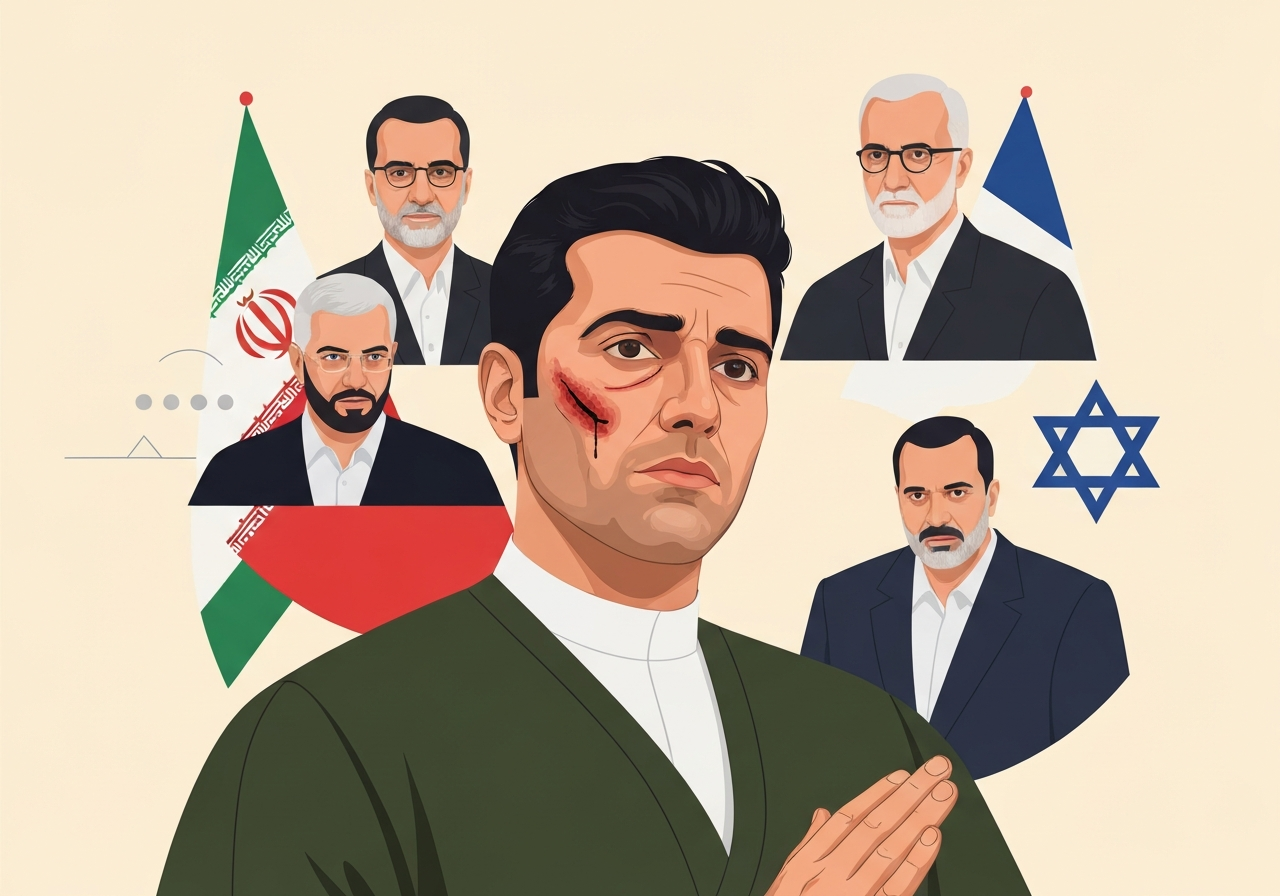
Iran’s newly proclaimed supreme leader, Mojtaba Khamenei, was reportedly wounded during the opening day of the Feb. 28 attack on Tehran and has remained out of public view since his selection on March 8, officials said. Iranian sources told reporters he suffered injuries to his legs but is conscious and sheltering at a highly secured location with restricted communications. Israeli defense officials independently told reporters that their intelligence also indicated leg injuries on Feb. 28. The full circumstances and medical extent of those wounds have not been confirmed publicly.
Key Takeaways
- Mojtaba Khamenei was named Iran’s supreme leader on March 8, 2026, three days before this report (NYT, March 11, 2026).
- Officials in Iran say he sustained leg injuries during the Feb. 28 daytime airstrike on a leadership compound in Tehran.
- Israeli military sources separately assessed on intelligence grounds that he was wounded on Feb. 28, a conclusion reached before his selection.
- Ayatollah Ali Khamenei, the previous supreme leader, was killed in the Feb. 28 strike along with his wife, mother, a son and several senior defense officials.
- Iranian officials describe the new leader as alert and in a highly secure shelter with very limited communications to avoid revealing his location.
- No public videos, written statements or appearances by Mojtaba Khamenei have been released since his appointment.
- The exact medical details, including severity and prognosis of the reported leg injuries, remain unclear and unverified by independent medical sources.
Background
The shock of the Feb. 28 airstrike on the heart of Tehran altered Iran’s leadership landscape overnight. The attack, attributed by Iran to Israeli forces and described by Iran as deadly to senior figures, included the killing of the sitting supreme leader, his close relatives and multiple top defense officials. That loss created an immediate succession question within Iran’s clerical and political institutions.
Iran’s system designates the supreme leader as the highest office, with the Assembly of Experts responsible for selecting a successor under extraordinary circumstances. The abruptness of the Feb. 28 strike forced accelerated decision-making by Iran’s inner circles and security bodies. In that volatile environment, authorities prioritized protecting key figures and preserving continuity of command while also managing public messaging and internal factional impacts.
Main Event
On Feb. 28, a daytime attack struck a leadership compound in central Tehran. Iranian authorities report that multiple senior figures were killed in the strike, and inside government channels officials have since conveyed that Mojtaba Khamenei sustained injuries to his legs. Sources speaking to reporters said the new leader has been kept in a secure, low-visibility location and has not issued public statements since his appointment on March 8.
Three Iranian officials, speaking on condition of anonymity because the matter is sensitive, told reporters they had been informed by higher-ranking figures of the injury reports. Separately, two Israeli military officials said their intelligence assessments also pointed to leg injuries sustained by Mojtaba on Feb. 28. Both sets of officials declined to provide medical records or photographic evidence.
Authorities in Tehran have limited the flow of visual or recorded material about the new supreme leader, citing operational security and the risk of revealing his whereabouts. State-organized rallies and official ceremonies have proceeded with other senior officials present, but the supreme leader himself has not appeared publicly or released written directives that are visible to outside observers.
Analysis & Implications
The reported wounding of a newly installed supreme leader has several practical and symbolic implications. Practically, it constrains how Iran projects continuity of command: a leader recovering from injury and isolating for security reasons reduces the options for visible central leadership in crisis moments. That can complicate decisions requiring public signaling, such as declarations of retaliation or national mobilization.
Politically, the incident may intensify jockeying among Iran’s factions. The selection process that elevated Mojtaba Khamenei will be scrutinized for legitimacy by both hard-line and pragmatic blocs inside Iran; any perception of a weakened or sidelined supreme leader could embolden rivals or influence policy direction in the near term.
Regionally, confirmation that senior Iranian leadership was physically impacted by strikes in Tehran raises the stakes for escalation between Iran and Israel — and for U.S. policy in the region, given the reported American participation in the operation. If the new leader remains secluded, Tehran’s visible responses may be delegated to military commanders or paramilitary proxies, increasing the chance of decentralized actions with variable control and risk of miscalculation.
For international actors, uncertainty about the new leader’s condition complicates diplomatic calculations. States weighing messages of deterrence, de-escalation, or mediation will have to factor in limited information and the potential for rapid changes inside Tehran’s decision-making apparatus.
Comparison & Data
| Date | Event | Publicly reported outcome |
|---|---|---|
| Feb. 28, 2026 | Airstrike on Tehran leadership compound | Ayatollah Ali Khamenei killed; several senior figures and family members killed; Mojtaba reportedly wounded |
| March 8, 2026 | Mojtaba Khamenei proclaimed supreme leader | No public appearances or written statements released |
| March 11, 2026 | Reporting by international media | Iranian and Israeli officials say Mojtaba suffered leg injuries; details unconfirmed |
The timeline shows a narrow window between the Feb. 28 strike and the formal selection on March 8. The lack of independent medical verification means casualty and injury details remain reliant on official statements and intelligence assessments.
Reactions & Quotes
Iranian officials described the new leader as alert but sheltering in a highly secure location with severely limited contact to reduce risk.
Iranian officials (anonym.)
Israeli defense personnel told reporters that intelligence collected pointed to leg wounds sustained by Mojtaba Khamenei during the Feb. 28 strikes, a conclusion reached before his selection.
Israeli military officials (anonym.)
Independent analysts warn that ambiguity over leadership visibility and health could increase the likelihood of decentralized or proxy actions that are harder to control.
Independent regional analyst (paraphrase)
Unconfirmed
- The precise medical diagnosis and recovery prognosis for Mojtaba Khamenei’s reported leg injuries have not been released by independent medical personnel.
- The exact number and identities of all officials killed or injured inside the compound beyond those named by Iranian sources remain partially unspecified in public records.
- The detailed chain of command and day-to-day decision-making arrangements while the new leader remains out of public view have not been publicly disclosed.
Bottom Line
Reports that Mojtaba Khamenei was wounded in the Feb. 28 strike add another layer of uncertainty to Iran’s fragile post-attack transition. Limited visibility of the new leader, combined with independent intelligence assessments that corroborate injury reports, heightens concerns about both internal political stability and the risk of regional escalation.
For now, policymakers and observers must treat the available accounts as provisional: the core facts — the Feb. 28 strike, the deaths of the prior supreme leader and several close figures, and Mojtaba’s selection on March 8 — are established; medical details and operational consequences remain to be independently verified. The coming days will be critical for signs of how Iran organizes leadership functions and whether visible public communications resume.
Sources
- The New York Times — U.S. news outlet reporting official statements and intelligence assessments