
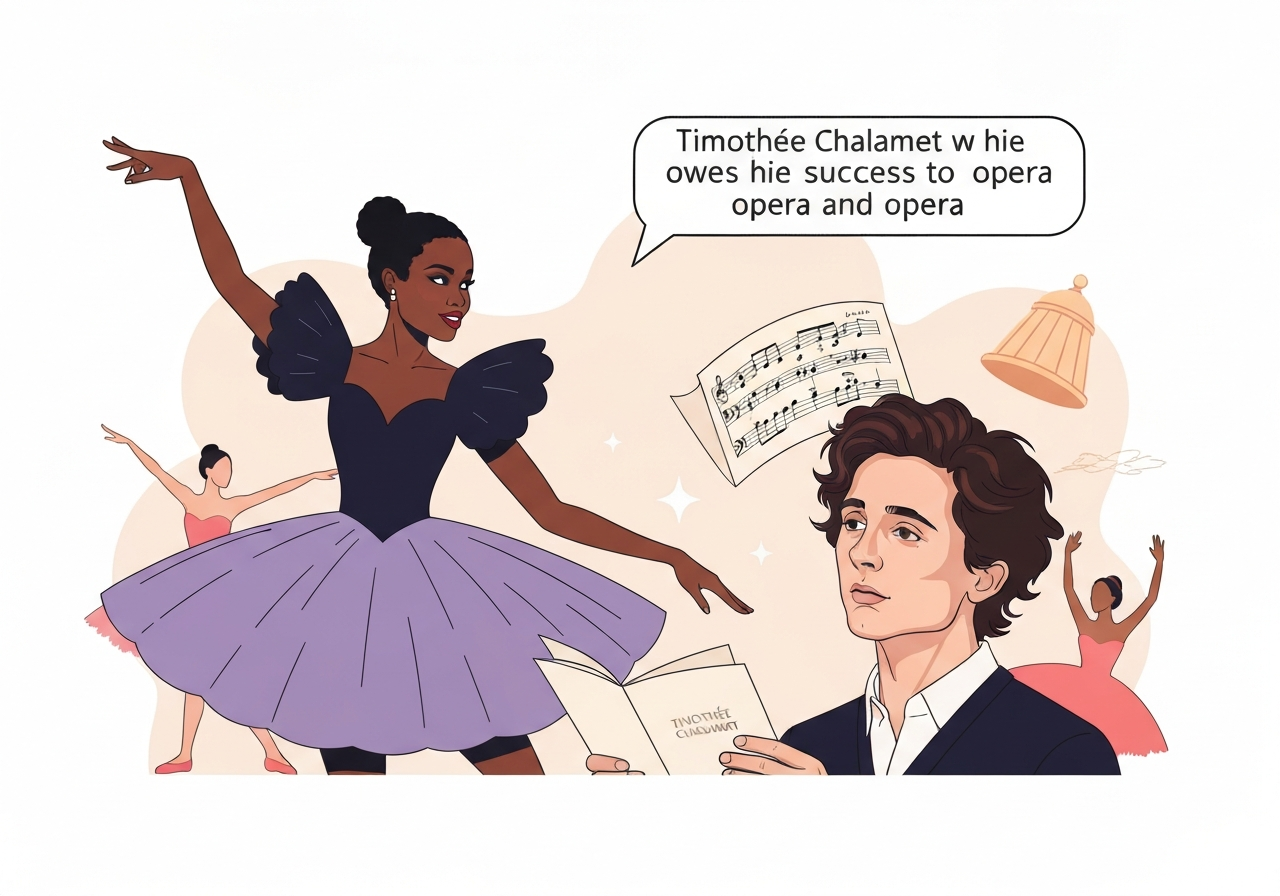
During a March panel appearance, ballerina Misty Copeland responded to recent comments by Timothée Chalamet about ballet and opera, noting her participation in promotional material for his film Marty Supreme. Copeland referenced a November 2025 Instagram post tied to the movie and argued that classical performing arts have enduring cultural value. She said those traditions helped shape the broader artistic language that film draws on, and suggested Chalamet’s rise is connected to that lineage. Both will appear at the Oscars ceremony on Sunday, March 15, 2026, where Chalamet is a Best Actor nominee and Copeland will take part in a performance.
Key Takeaways
- Misty Copeland publicly challenged Timothée Chalamet’s recent remarks about ballet and opera during an Aveeno panel in March 2026, citing her promotional involvement with Marty Supreme.
- Copeland pointed to a November 2025 Instagram post from the film’s official account showing her in Marty Supreme-branded clothing and a childhood ballet photo captioned “Dream Big.”
- She emphasized that opera and ballet have existed for more than 400 years, arguing for their continued cultural relevance and influence on other media.
- Copeland said Chalamet “wouldn’t be an actor” in the same way without the traditions and techniques that opera and ballet contribute to film performance and storytelling.
- Both figures are scheduled at the Oscars on March 15, 2026: Chalamet as a Best Actor nominee for Marty Supreme and Copeland as a performer for an Oscar-nominated song from Sinners.
Background
Ballet and opera occupy a long-established position in Western performing arts, with institutional histories that stretch back centuries. In recent decades these forms have faced questions about accessibility and popular visibility even as they continue to feed into film, theater and music. Prominent artists and cultural advocates have pushed to broaden audiences and diversify participation, with outreach and crossover projects becoming more common.
Marty Supreme, a high-profile film released in the 2025–26 awards season, has used cross-promotional strategies that connect cinema with other art forms. The film’s official Instagram account included a November 2025 post featuring Copeland wearing branded apparel alongside archival ballet imagery, an example of how studios leverage performing-arts figures to signal cultural lineage and reach different audiences.
Main Event
At an Aveeno-hosted panel in March 2026, Copeland addressed comments attributed to Chalamet about the place of ballet and opera in contemporary culture. She noted the unusual juxtaposition of being invited to promote Marty Supreme while those art forms are being publicly debated. Copeland framed her remarks around the idea that visibility does not equate to diminished artistic value.
She underscored the historical continuity of opera and ballet, arguing they have shaped conventions—movement, musical phrasing, dramatic timing—that filmmakers and actors draw upon. Copeland described her career as rooted in expanding public understanding of ballet’s relevance and its intersections with popular culture.
The dispute hinges less on personal animus than on contrasting views about cultural hierarchy: Copeland defended classical forms as foundational influences on cinema, while Chalamet’s reported comments prompted debate about whether ballet and opera are marginal or integral to contemporary film artistry. Both artists will be present at the Oscars on March 15, 2026, which concentrates attention on the exchange.
Analysis & Implications
Copeland’s response places the conversation within a longer debate about how high art and popular culture interact. When a leading film star is seen as minimizing classical disciplines, practitioners and advocates—particularly those who work to diversify audiences—are likely to push back, using media moments to reframe the issue. Copeland’s public reminder of her promotional role for Marty Supreme strengthens her standing in that exchange.
For the film industry, the incident highlights how marketing and cultural signaling matter: recruiting figures from opera or ballet to endorse a movie sends a message about artistic pedigree and seriousness. Studios often rely on such associations to cultivate prestige during awards season; pushback from those artists can complicate promotional narratives and public reception.
In a broader cultural sense, the exchange may revive conversations about funding, access and representation in classical arts. Advocates will likely point to the practical benefits of cross-disciplinary visibility—ticket sales, participation pipelines and new audiences—while critics may call for more concrete commitments rather than symbolic gestures.
Comparison & Data
| Item | Fact |
|---|---|
| Classical arts history | Opera and ballet traditions span over 400 years (historical lineage) |
| Marty Supreme Instagram post | November 2025: Copeland pictured in branded jacket with a childhood ballet photo captioned “Dream Big” |
| Oscars appearance | March 15, 2026: Chalamet nominated for Best Actor; Copeland performing a nominated song |
The table summarizes verifiable dates and connections cited in public remarks and promotional material. It frames Copeland’s intervention as tied to specific promotional activity (November 2025 post) and a timebound awards context (March 15, 2026 Oscars), rather than abstract debates about cultural value.
Reactions & Quotes
Copeland’s statements quickly circulated across entertainment and arts networks, prompting responses from fans and commentators who either defended classical disciplines or questioned whether the exchange was performative. The quotes below capture primary sources directly tied to the story.
“I think that it’s important that we acknowledge that, yes, this is an art form that’s not ‘popular’…but that doesn’t mean it doesn’t have enduring relevance in culture.”
Misty Copeland (Aveeno panel, March 2026)
“Dream Big.”
Marty Supreme — Official Instagram (November 2025 post)
After Copeland’s comments, social media threads showed a mix of support for classical arts and debate over celebrity statements; arts organizations and commentators are expected to weigh in more formally in the run-up to the Oscars.
Unconfirmed
- Whether Timothée Chalamet intended his earlier remarks as a slight toward ballet or opera specifically is not independently verified.
- Any private conversations between Copeland and Chalamet about the November 2025 Instagram promotion have not been publicly disclosed.
Bottom Line
The exchange between Misty Copeland and Timothée Chalamet frames a larger cultural conversation about the place of classical performing arts in contemporary media. Copeland’s public reminder of her promotional link to Marty Supreme and her defense of opera and ballet underscore how artists use awards-season visibility to assert cultural relevance.
As both will be at the Oscars on March 15, 2026, expect continued attention that may push arts institutions and entertainment companies to clarify how they value and represent classical forms. For observers, the episode is a reminder that promotional gestures and public comments can quickly become focal points for substantive debates about art, access and influence.