
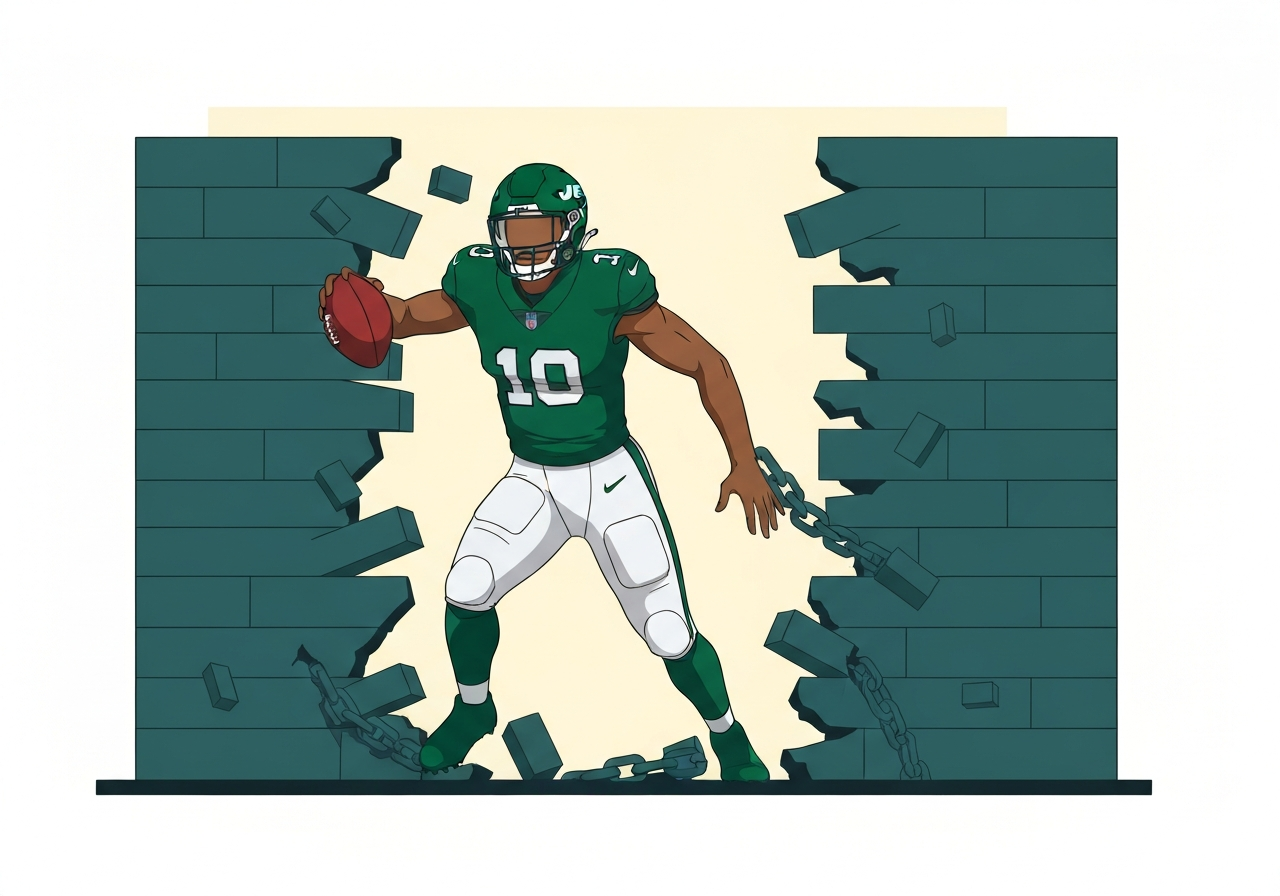
Geno Smith is set to rejoin the New York Jets as their presumed starting quarterback, closing a long chapter of instability that began after a locker-room assault on August 15 ended his run as the team’s QB1. Drafted in 2013, Smith started in each of his first two NFL seasons; technically he also made one start in 2016 during his final year with the Jets. Since that August 15 incident the franchise has used 13 different starting quarterbacks in regular-season games. The team acquired Smith for $3.3 million in 2026, and—barring a change in the pending trade—he is expected to take the reins immediately.
Key Takeaways
- Geno Smith was drafted in 2013 and started the Jets’ first two seasons of his career; he logged one additional start for the Jets in 2016.
- An on‑campus locker‑room assault on August 15 ended Smith’s initial tenure as QB1 and precipitated long‑term instability at the position.
- Since that event the Jets have deployed 13 different starting quarterbacks in regular‑season games: Ryan Fitzpatrick, Bryce Petty, Josh McCown, Sam Darnold, Luke Falk, Trevor Siemian, Joe Flacco, Mike White, Tim Boyle, Aaron Rodgers, Justin Fields, Tyrod Taylor, and Brady Cook.
- As of 2026, Justin Fields and Brady Cook are the only two quarterbacks on the roster currently under contract.
- The team acquired Smith for $3.3 million in 2026; roster moves involving Fields, a potential draft pick, or additional veteran signings remain possible.
Background
The Jets entered the 2010s searching for long‑term stability at quarterback, a problem that intensified after Geno Smith’s early career derailment. Smith, the 2013 draftee who started as a rookie and in his second season, saw his status as the franchise’s QB1 ended abruptly following a physical altercation on August 15 in the team facility. That moment forced the organization into a cycle of short‑term fixes—free‑agent signings, stopgap veterans and draft gambles—rather than developing a single long‑term answer.
Over the ensuing years the franchise mixed veteran reclamation projects with rookie investments, seeking a balance between immediate competitiveness and developmental patience. High‑profile additions such as Aaron Rodgers and draft investments like Sam Darnold and Justin Fields reflected differing philosophies: win‑now acquisitions versus building through the draft. The net effect for fans and front offices was persistent turnover at the position, with roster construction and cap management repeatedly reshaped by quarterback outcomes.
Main Event
The pivot point remains the August 15 incident that removed Geno Smith from his role as the Jets’ QB1. After that date the team turned to a succession of quarterbacks—veterans and inexperienced starters alike—hoping to find a sustainable solution. The list of 13 starters since then includes both journeymen and high‑profile names, illustrating the breadth of approaches tried by multiple regimes in the organization.
Technically, Smith did make a single start in 2016, but the broader narrative is one of a team that has not held a consistent, long‑term starter in place since his original tenure ended. The recent transaction bringing Smith back—reported as a 2026 acquisition for $3.3 million—signals a return to a known quantity and a front‑office bet on experience and familiarity with the organization’s culture.
Current roster economics matter: Justin Fields and Brady Cook remain the only quarterbacks under contract, making other moves likely if Smith is to be officially installed as the Week 1 starter. The front office can cut Fields, pursue a draft quarterback, or sign another veteran to provide depth; each option carries different cap and roster ramifications.
Analysis & Implications
Bringing Geno Smith back is a low‑cost, moderate‑risk attempt to supply the Jets with immediate competence and locker‑room stability. At $3.3 million for 2026, the move is inexpensive relative to top‑tier starter prices, which frees cap space for other roster needs. For a franchise that has cycled through 13 different starters, the priority appears to be minimizing short‑term volatility while the front office evaluates longer‑term options.
The decision also raises questions about asset management and talent development. If the Jets opt to cut Justin Fields, they will forfeit potential upside tied to a younger player with starting experience, while retaining a veteran who can stabilize performance now. Alternatively, drafting a quarterback would signal a fresh long‑term investment but likely requires patience and supportive roster construction around a rookie passer.
On the competitive landscape, a stable Week 1 starter can influence game planning, free‑agent interest and in‑season adjustments. Opponents will respond to the roster certainty; for the Jets, the short‑term metric will be whether Smith can deliver consistent production and availability. Long term, the move buys time for the front office to evaluate whether a developmental path or another acquisition better serves the franchise’s championship window.
Comparison & Data
| Quarterback | Notable detail |
|---|---|
| Geno Smith | Drafted 2013; starter first two seasons; acquired 2026 for $3.3M |
| Ryan Fitzpatrick | Veteran starter (used post‑2016 era) |
| Bryce Petty | Rostered rookie starter in interim periods |
| Josh McCown | Veteran stopgap starter |
| Sam Darnold | Draft investment at QB |
| Luke Falk | Emergency starter |
| Trevor Siemian | Short‑term starter |
| Joe Flacco | Veteran acquisition |
| Mike White | Interim starter with notable performances |
| Tim Boyle | Depth starter |
| Aaron Rodgers | High‑profile addition |
| Justin Fields | Under contract (2026) |
| Tyrod Taylor | Veteran backup starter |
| Brady Cook | Under contract (2026) |
The table above lists the 13 starters used since Smith’s initial tenure ended; it highlights a mix of veteran reclamation projects and internal draft experiments. That pattern underscores why the organization has sought a short‑term anchor while weighing longer strategic choices.
Reactions & Quotes
“This move gives us an experienced, steady option at the position while we evaluate our long‑term plan,”
Team statement (Jets organization)
“For a modest outlay, the Jets are buying familiarity and competence at quarterback—qualities that have been in short supply here,”
NFL analyst (media commentary)
“Fans want consistency; bringing back a known performer addresses that demand immediately,”
Local beat reporter (sports media)
Unconfirmed
- The trade bringing Geno Smith to the Jets is reported but could be altered or rescinded prior to official league approval.
- Whether Geno Smith will be formally named Week 1 starter remains unannounced by the team.
- Plans to release Justin Fields, draft a quarterback, or sign another veteran have not been confirmed and may change as the offseason progresses.
Bottom Line
The Jets’ acquisition of Geno Smith represents a pragmatic, low‑cost attempt to end a prolonged period of quarterback turnover that began after the August 15 incident. With 13 different starters used since that turning point, the franchise has cycled through nearly every short‑term remedy available—veterans, rookies and trade‑deadline moves—without establishing long‑term continuity.
Smith’s return buys the organization time: to stabilize on the field this coming season, to manage cap and roster decisions around younger quarterbacks, and to evaluate whether to pursue a developmental route or an immediate upgrade in future offseasons. Fans and decision‑makers should watch the front office’s next roster moves closely; those choices will determine whether this is a bridging solution or the start of a renewed plan at the position.
Sources
- NBC Sports — media coverage of Jets quarterback history and recent reports