
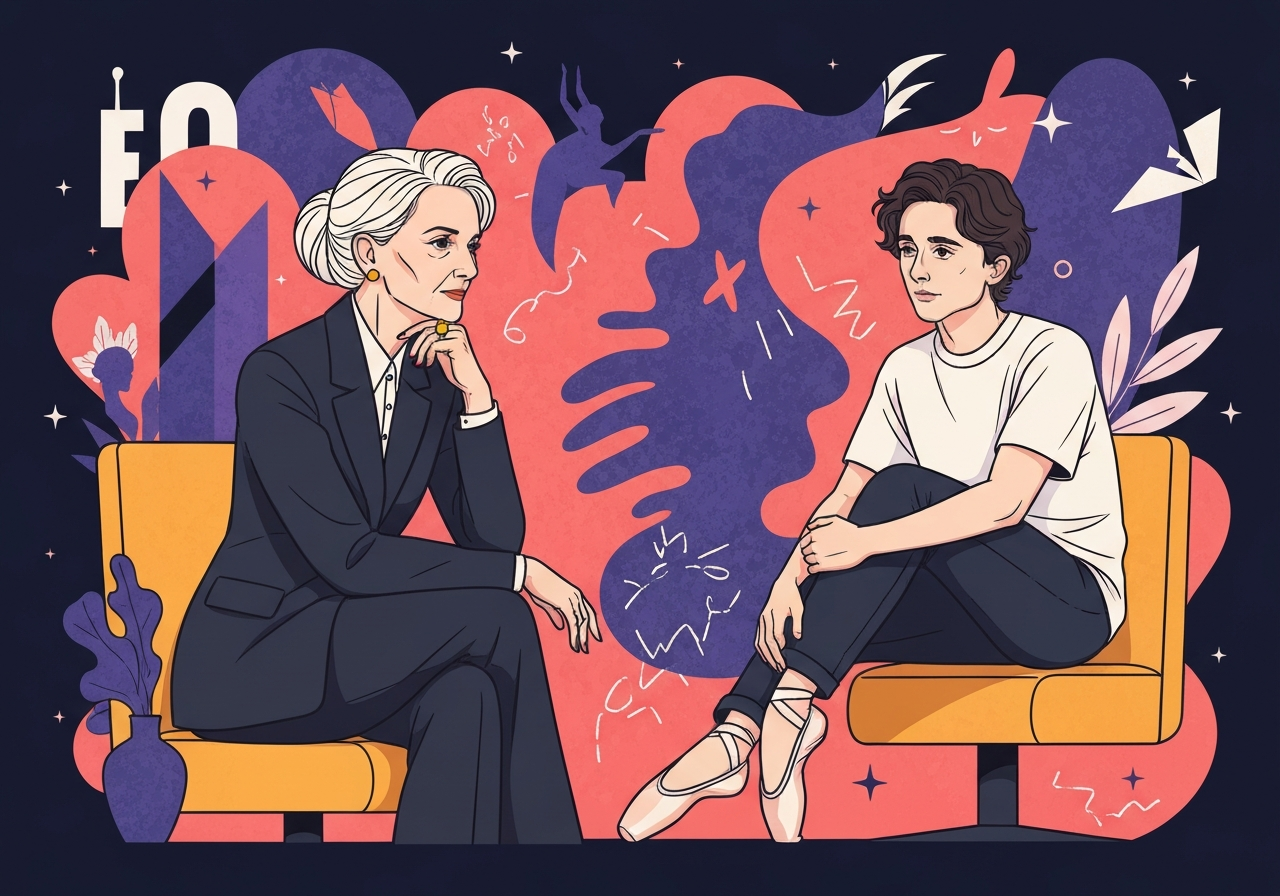
Lead: At a masterclass during the Thessaloniki International Documentary Festival on Wednesday, Academy Award–winning actor Juliette Binoche was asked about Timothée Chalamet’s recent comments dismissing ballet and opera. Binoche, in town to present her dance-centered directorial debut In-I In Motion, joked, “I thought cinema was a dying art,” then urged audiences to focus on what nourishes the soul. Her response came after Chalamet’s remarks at a CNN & Variety town hall last month sparked public pushback from institutions and commentators. The exchange highlights tensions over how contemporary artists talk about traditional performing arts and the wider debate on cultural relevance.
Key Takeaways
- Juliette Binoche addressed Timothée Chalamet’s viral comments during a Q&A at the Thessaloniki International Documentary Festival, which runs March 5–15.
- Binoche quipped, “I thought cinema was a dying art,” and emphasized the personal value of art that “nourishes your soul and life.”
- Chalamet’s original remark, made at a CNN & Variety Town Hall last month, likened theaters’ fate to ballet and opera, saying artists try to “keep this thing alive” though “no one cares.”
- Binoche’s film In-I In Motion premiered in San Sebastián in 2025 and is slated to screen next at CPH:DOX in Copenhagen; the film was compiled from rehearsal footage and live recordings of a 2008 stage production.
- She credited Robert Redford—who died last September—for encouraging her to adapt the stage performance to film, and noted producers Ola Strøm and Solène Léger helped secure production resources.
- Binoche paid tribute to the late documentary filmmaker Frederick Wiseman, who died last month, and called documentarians “warriors” for preserving on-the-ground reality despite limited financial reward.
Background
Timothée Chalamet’s comments about ballet and opera, voiced at a high-profile CNN & Variety town hall last month, triggered rapid responses across cultural institutions and media personalities. Reaction ranged from formal statements by performing-arts organizations to critical commentary on television and social platforms, reflecting how a single remark can broaden into a cultural debate. Juliette Binoche arrived in Thessaloniki to promote In-I In Motion, a project rooted in a 2008 stage collaboration with British choreographer Akram Khan; the film documents rehearsals and the finished production rather than staging a conventional narrative feature.
The Thessaloniki International Documentary Festival has become a forum for filmmakers to discuss process and practice; Binoche used her masterclass to trace a near two-decade arc from stage project to screen. Her journey touches established festival circuits—San Sebastián last year and an upcoming CPH:DOX screening—illustrating how documentary and dance cross over into international arthouse programming. The broader context includes an ongoing conversation about the public appetite for classical and experimental forms amid shifting audience habits and industry economics.
Main Event
During an hour-long masterclass on Wednesday morning, Binoche spoke candidly about directing In-I In Motion and was later asked directly about Chalamet’s widely circulated remark. After a brief pause while the moderator summarized the controversy, Binoche dismissed the fuss: “It doesn’t matter what he’s saying. It doesn’t matter. Don’t make it big.” Her answer shifted the focus back to individual experience, arguing that what matters is whether an artwork nourishes one’s heart and soul.
The exchange came near the end of a packed-session Q&A in Thessaloniki where Binoche recounted the film’s origins and technical approach: the movie was assembled almost entirely from rehearsal footage and live performance recordings, some material shot by her sister, Marion Stalens. She described the logistic hurdles she faced—no production company, no initial funding, and uncertainties about editors—until producers Ola Strøm and Solène Léger stepped in to move the project forward.
Binoche also reflected on mentorships and influences, citing directors such as Leos Carax, Abbas Kiarostami and Olivier Assayas for shaping her approach to risk and intuition. She praised Robert Redford for urging her to turn the stage performance into film, recounting Redford’s simple admonition: “You’ve got to make a film out of this show.” In the same session she honored the late Frederick Wiseman and emphasized the precarious economics of documentary filmmaking.
Analysis & Implications
Binoche’s measured, slightly jocular response reframed a media skirmish into a conversation about the purpose of art and who decides its value. Chalamet’s language—suggesting certain art forms are being kept alive by practitioners despite dwindling public interest—struck a nerve because it implicitly ranks cultural practices by perceived mass appeal. Binoche countered that such judgements miss the intimate, often noncommercial reasons people sustain artistic practices, whether film, dance or opera.
The incident underscores a generational and institutional friction: younger, high-profile performers may assess cultural formats through metrics of mass engagement, while established practitioners argue for intrinsic artistic worth. For festivals and documentary programmers, the reaction magnifies pressure to justify niche programming in an entertainment ecosystem dominated by streaming and blockbuster economics. Documentaries like In-I In Motion serve both archival and pedagogical roles, preserving creative processes that mainstream distribution often overlooks.
Economically, the debate has limited immediate impact on box-office or institutional funding, but it affects public perception and fundraising narratives that influence grants, sponsorships and programming priorities. Artists and institutions will likely need to articulate clearer value propositions—audience development, educational outreach, digital engagement—to sustain forms perceived as specialized. Binoche’s emphasis on the nourishing quality of art suggests one route: prioritize depth of engagement over raw audience numbers.
Comparison & Data
| Year / Event | Milestone |
|---|---|
| 2008 | Original stage collaboration between Juliette Binoche and Akram Khan |
| 2025 | In-I In Motion premiered at San Sebastián |
| March 5–15, 2026 | Thessaloniki International Documentary Festival screening / masterclass |
| 2026 (upcoming) | Scheduled screening at CPH:DOX in Copenhagen |
The table maps key dates mentioned in Binoche’s account and the film’s festival trajectory. That chronology illustrates the long lead time—nearly two decades—between an originating stage project and a completed documentary film, demonstrating the resource and relationship investment required for such adaptations. Festivals remain critical windows for visibility and distribution conversations for art-house and documentary projects.
Reactions & Quotes
“I thought cinema was a dying art.”
Juliette Binoche, Thessaloniki masterclass
Binoche used the line wryly to defuse tension and redirect attention to the emotional impact of art rather than media spectacle.
“It doesn’t matter what he’s saying. It doesn’t matter. Don’t make it big.”
Juliette Binoche, on Chalamet’s comments
She urged the audience not to amplify controversy and stressed individual response to art as the primary measure of value.
“You’ve got to make a film out of this show.”
Robert Redford (recollected by Binoche)
Binoche invoked Redford’s encouragement as a decisive moment compelling her to pursue the documentary despite practical obstacles.
Unconfirmed
- Whether Chalamet intended his remark as a broad dismissal of ballet and opera remains unclear; context and tone have been debated in media summaries.
- The full extent of institutional responses described as coming from London’s Royal Ballet and Opera, TV hosts, and individual dancers is summarized in reports but individual statements vary in tone and content.
- Any long-term effect of this specific exchange on funding, ticket sales or institutional policy for ballet, opera or arthouse cinema has not been demonstrated and remains speculative.
Bottom Line
Juliette Binoche’s brief but pointed reaction to Timothée Chalamet’s comments redirected a viral controversy into a defense of artistic nourishment and the slow work of cultural preservation. Her masterclass emphasized process, mentorship and the long timelines often required to translate live performance into film—an arc that in her case extended from 2008 to festival screenings nearly two decades later. The episode reveals fault lines in how public figures speak about art forms and how those remarks reverberate across institutions and audiences.
For practitioners and programmers, the practical takeaway is consistent: sustain modes of storytelling that may not command mass markets but provide deep cultural value, and invest in outreach that explains that value to broader publics. For audiences, Binoche’s message is simple—personal resonance, not popularity metrics, is the truest gauge of an artwork’s worth.