
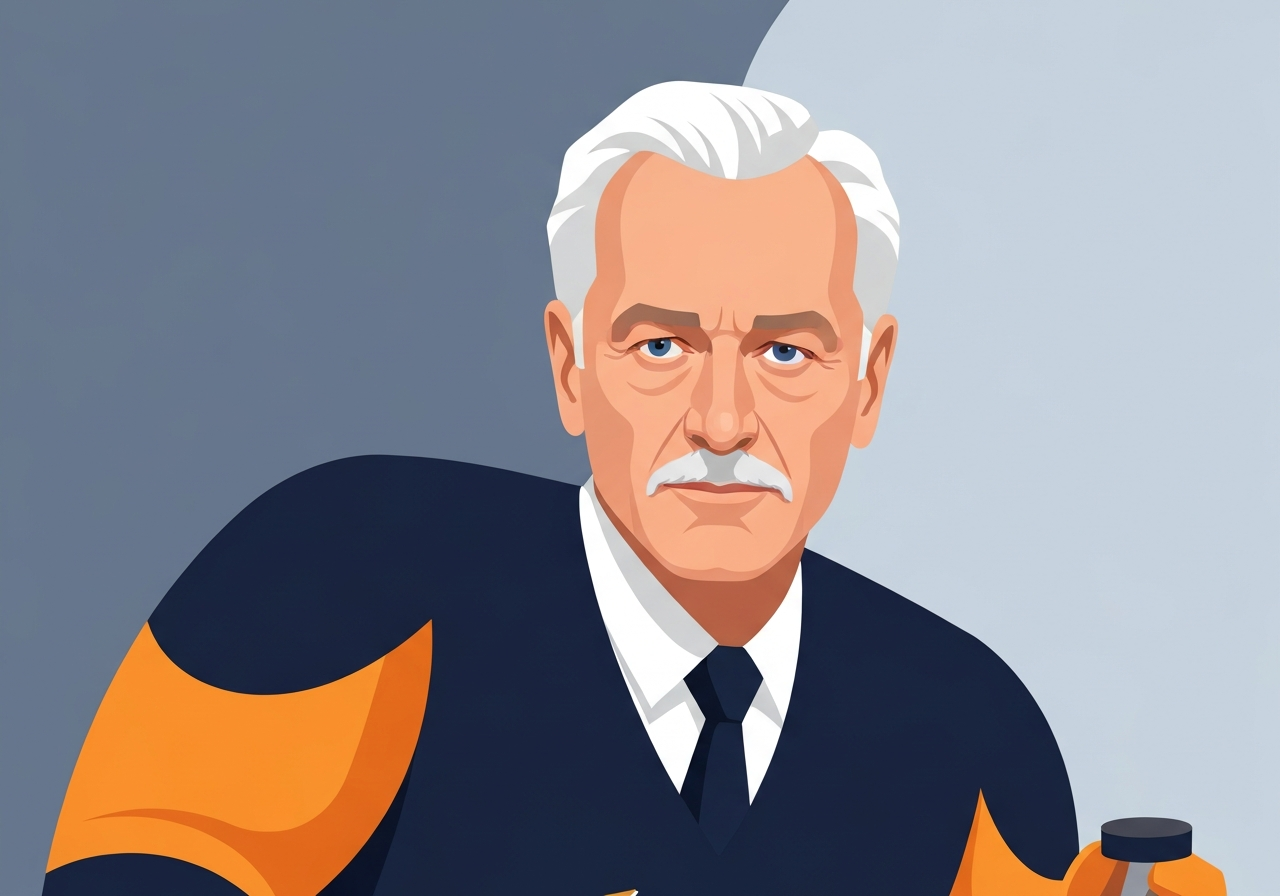
Claude Lemieux, the four-time Stanley Cup winner and one of the NHL’s most feared playoff performers, has died at 60, the NHL Alumni Association said Thursday, May 28, 2026. Authorities say deputies responded early that morning to an incident at a furniture showroom in Lake Park, Florida, owned by Lemieux and his wife; the Palm Beach County Medical Examiner’s Office confirmed his death but has not released a cause. Over a 21-season NHL career Lemieux won the 1995 Conn Smythe Trophy, scored 80 playoff goals and built a reputation as an agitator whose physical play changed pivotal postseason moments. The hockey community responded with immediate tributes while questions about the circumstances of his death remain under investigation.
Key takeaways
- Claude Lemieux, 60, was confirmed dead on May 28, 2026; the NHL Alumni Association announced the news.
- Lemieux played 21 NHL seasons, appearing in 1,215 regular-season games with 379 goals, 786 points and 1,777 penalty minutes.
- He won four Stanley Cups (two with New Jersey, one with Colorado, one with Montreal) and the 1995 Conn Smythe Trophy as playoff MVP.
- Lemieux scored 80 playoff goals (ninth in NHL history) and recorded 158 playoff points (tied for 27th).
- He amassed 529 playoff penalty minutes, third-most in league history, and was suspended two games in 1996 after a high-profile hit on Kris Draper.
- Officials say deputies responded to a reported suicide attempt at a showroom he owned in Lake Park, Florida; the medical examiner confirmed death but has not released records.
- Former teammates and NHL leaders, including Joe Sakic and Geoff Molson, publicly mourned him and highlighted his clutch playoff performance and competitive intensity.
Background
Claude Lemieux broke into the NHL as a young forward and over two decades became synonymous with playoff intensity and timely scoring. He first drew wide attention in 1986 as a rookie when he scored an overtime Game 7 winner against Hartford, a moment that foreshadowed his postseason pedigree. Lemieux’s style combined goal-scoring ability with an agitator’s physical edge; that mix helped him lift multiple franchises to championship seasons and earned him the Conn Smythe Trophy in 1995. Teams and executives often weighed his on-ice value against disciplinary risks tied to his aggressive play.
Across stints with Montreal, New Jersey, Colorado and other clubs, Lemieux consistently elevated his play in late-season and playoff situations, a pattern recognized by teammates, coaches and rivals. His playoff numbers—80 goals and 158 points—place him among the most productive postseason performers in NHL history. Off the ice he transitioned into player representation after retiring in 2009, managing clients including several current NHL players, and remained involved in hockey communities in North America and Europe. He also maintained close family ties: he is survived by four children, including Brendan Lemieux, who has been an NHL forward.
Main event
The NHL Alumni Association announced Lemieux’s death on Thursday, and local law enforcement confirmed deputies had been dispatched early that morning to a furniture showroom in Lake Park, Florida, that Lemieux and his wife own. The Palm Beach County Medical Examiner’s Office acknowledged the death but declined to release records, citing a Florida statute that exempts suicide cases from certain public-records requirements. Investigators secured the business as part of a routine death inquiry; officials have not yet released a formal cause of death pending any further findings.
News of Lemieux’s passing prompted immediate statements from NHL leaders and former teammates. Geoff Molson, owner and CEO of Groupe CHI, called it a “dark day for the Canadiens family,” praising Lemieux’s relentlessness and leadership in championship moments. Joe Sakic, now Colorado’s president of hockey operations and a former teammate, described Lemieux as a loyal friend and a player who rose in big games. NHL Commissioner Gary Bettman said Lemieux was among the greatest big-game players in the sport’s history.
The on-ice timeline of Lemieux’s career is marked by signature playoff episodes: his Conn Smythe-winning run with the Devils in 1995, a controversial check that broke Kris Draper’s facial bones in the 1996 Western Conference final while Lemieux played for Colorado, and crucial overtime goals that swung series and franchises. That physical brand of hockey prompted disciplinary action at times—Lemieux was suspended for the first two games of the 1996 Stanley Cup Final—but it also produced clutch scoring that teammates credit with championship runs.
In his post-playing career Lemieux worked as an NHL player agent representing established and emerging players. He regularly remained visible at major NHL events, including a brief return to Montreal this week when he carried the torch into the Bell Centre ahead of Game 3 of the Eastern Conference final, a gesture that underscored his ongoing connection to the Canadiens organization and its fans.
Analysis & implications
Lemieux’s death reverberates across several layers of hockey: historical records, team legacies and conversations about player well-being after retirement. Statistically, he is firmly embedded in playoff history—his 80 goals place him behind only eight players in playoff scoring—and those numbers will anchor his legacy in debates about the greatest postseason performers. Teams that benefited from his late-game scoring—New Jersey in 1995 and 2000, Colorado in 1996, Montreal in 1993—will likely revisit archival footage and oral histories that feature his defining moments.
His reputation as both scorer and instigator complicates how different constituencies remember him. Teammates and executives emphasize his clutch contributions and leadership in championship contexts, while rivals and some fans remember the physical incidents that led to suspensions and retaliation. That duality is part of a broader pattern in hockey history where highly effective playoff performers also push the boundaries of acceptable physicality.
The law-enforcement details reported so far—deputies responding to an apparent attempt and the medical examiner confirming death without releasing records—raise questions about disclosure rules and the timing of public information. Florida’s statute limiting access to suicide records means some details may remain inaccessible to the public; investigators and family statements, if any are issued, will determine how much additional context emerges. The situation also refocuses attention on mental health resources for current and former players, and on how leagues and players’ associations support transitions after retirement.
Comparison & data
| Player | Playoff goals |
|---|---|
| Wayne Gretzky | 122 |
| Mark Messier | 109 |
| Jari Kurri | 106 |
| Brett Hull | 92 |
| Glen Anderson | 83 |
| Mike Bossy | 85 |
| Joe Sakic | 116 |
| Maurice “Rocket” Richard | 82 |
| Claude Lemieux | 80 |
The table above places Lemieux’s 80 playoff goals in historical context: he ranks ninth all-time, trailing Hall of Famers and franchise icons. These totals reflect both opportunity—extended playoff runs—and performance in high-pressure situations. Lemieux’s 529 playoff penalty minutes, the third-most in NHL history, further distinguish him as an intense competitor who often combined scoring with physicality. When measuring postseason impact, analysts weigh goals, points and the situational importance of scoring; by those metrics Lemieux remains one of the era’s most consequential performers.
Reactions & quotes
Team executives and former teammates issued immediate condolences and framed Lemieux’s legacy in terms of competitive urgency and clutch play.
“Today is a dark day for the Canadiens family and the entire hockey community.”
Geoff Molson, owner and CEO, Groupe CHI
Molson’s statement tied Lemieux’s identity to Montreal’s traditions, emphasizing leadership and courage in championship moments; the comment was part of an early wave of team and league remembrances.
“A fierce competitor who rose to the occasion in big moments.”
Joe Sakic, Colorado president of hockey operations and former teammate
Sakic highlighted both the personal loss and the professional respect teammates felt for Lemieux, noting his loyalty and the role he played in Colorado’s championship history.
“One of the greatest big-game players in hockey history.”
Gary Bettman, NHL Commissioner
Bettman’s brief remark reflected the league’s formal recognition of Lemieux’s playoff record and the imprint he left on postseason hockey.
Unconfirmed
- Whether the medical examiner’s final report will formally list suicide as the cause of death has not been publicly released.
- Specific circumstances inside the Lake Park furniture showroom and any timeline of events leading to the response are under investigation and have not been fully disclosed.
Bottom line
Claude Lemieux’s death marks the loss of one of hockey’s most effective postseason performers—an athlete whose goals and physical presence helped deliver four Stanley Cups and shaped several franchise histories. His statistical place in playoff records (80 goals, 158 points) cements a legacy of clutch production that will be revisited in retrospectives and Hall of Fame-era discussions.
At the same time, immediate questions about the circumstances of his death and the limits on public records in Florida mean that a full public account may take time to emerge. In the shorter term, the hockey world is grappling with mourning a complex figure: a champion, an agitator, a family man and a former player-agent who remained involved in the sport he helped define.
Sources
- The Athletic via The New York Times (sports journalism)
- NHL Alumni Association (official alumni organization announcement)
- Palm Beach County Sheriff’s Office (local law enforcement)