
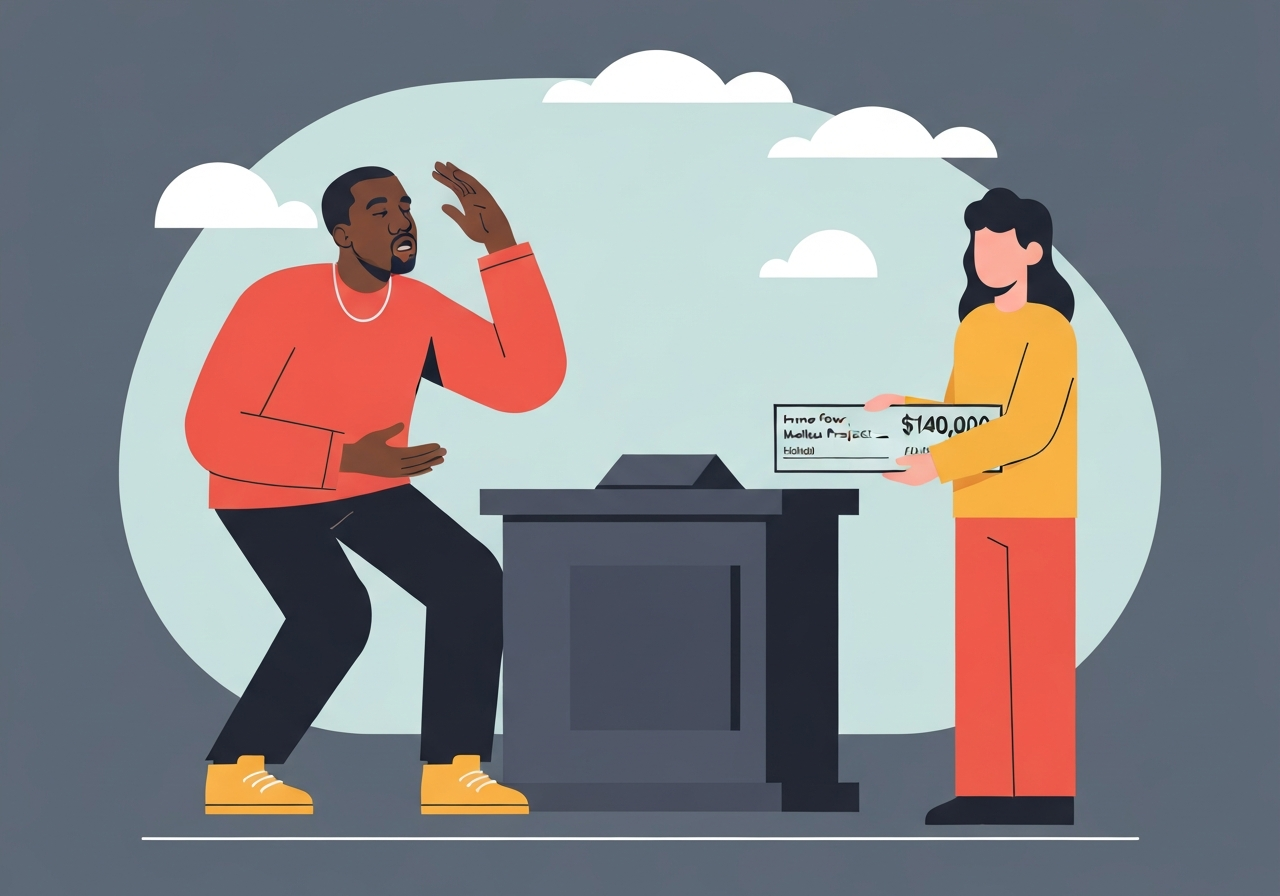
Lead: A Los Angeles jury on March 11, 2026 found in favor of a former employee in a lawsuit against Kanye West (who now goes by Ye), ordering the musician to pay $140,000 for medical costs and lost wages. The verdict resolves a suit brought by Tony Saxton, who had sought roughly $1.7 million alleging unpaid wages, unsafe working conditions and wrongful termination tied to work at Ye’s Malibu estate. The dispute centers on a short employment stint during renovations of Ye’s reported $57 million property in Malibu. The jury’s award is a small fraction of the amount Saxton requested, concluding the trial phase of the claim.
Key Takeaways
- The jury awarded $140,000 to former project manager Tony Saxton on March 11, 2026, covering medical expenses and lost wages.
- Saxton had asked for about $1.7 million in damages after alleging nonpayment, unsafe conditions and wrongful termination.
- Saxton says he was hired for work on Ye’s $57 million Malibu estate, worked seven weeks and received only a single payment.
- Court testimony and local reporting noted Ye was the final witness and appeared inattentive during questioning, with one outlet reporting he fell asleep on the stand.
- Bianca Censori, Ye’s spouse, also testified that she interacted with Saxton only briefly while overseeing parts of the project.
- The award is limited to quantifiable costs rather than the broader sum Saxton sought, suggesting the jury found some but not all of his claims compensable.
Background
The case began when Tony Saxton filed suit alleging he was hired as a project manager for renovations at Ye’s Malibu residence and then terminated after roughly seven weeks while being paid only once. Saxton’s complaint sought more than $1 million in unpaid wages and additional damages tied to alleged unsafe working conditions and wrongful termination. The property at issue is widely reported to be a multimillion-dollar estate; news reports cite a $57 million valuation for the Malibu home tied to Ye.
Worksite disputes involving high-profile property projects are not uncommon, and they often raise questions about hiring practices, subcontracting and on-site safety oversight. In California, wage-and-hour and workplace-safety claims can be pursued by employees or contractors who contend they were misclassified or not fully compensated. The parties in this case presented competing accounts of who hired Saxton, the scope of his duties, and the circumstances of his dismissal.
Main Event
The trial culminated on March 11, 2026 when a jury issued a verdict in favor of Saxton, awarding $140,000. During the proceedings, court testimony and press coverage described Ye as the last witness called; reporting indicated he struggled to recall details about Saxton and the hiring process. Saxton’s counsel framed the claim around unpaid wages and alleged hazardous conditions on the site that the plaintiff said contributed to his need for medical care.
Ye’s defense emphasized uncertainty about who formally engaged Saxton and questioned the extent and documentation of the claimed damages. According to local reporting, Ye told the court he had only a vague memory of Saxton and did not know who officially signed off on his hire. Bianca Censori, who was also on the project team according to testimony, said she had worked with Saxton only briefly.
The jury’s award—substantially lower than Saxton’s demand—indicates jurors assigned liability for a portion of the claimed losses but declined to grant broader compensation sought. The ruling resolves the monetary claim at trial; it does not, by itself, address any potential appeals or separate administrative claims that might follow under state wage-and-hour enforcement processes.
Analysis & Implications
The decision highlights how juries can parse complex employment disputes in the context of high-profile employers and large construction projects. The $140,000 award appears focused on concrete, documented losses (medical bills and lost wages) rather than broader punitive or speculative damages. For plaintiffs, the verdict illustrates both the possibility of recovery and the challenge of proving larger damage claims absent strong evidentiary support.
For artists and property owners who hire temporary crews and managers, the case underscores the importance of clear hiring records, written contracts and documented payments. Disputes over who is the formal employer or contracting party increase legal risk, particularly when projects involve multiple subcontractors and household staff. Employers on similar projects may reassess onboarding, supervision and safety compliance to reduce liability exposure.
From a reputational standpoint, the trial attracted media attention because of Ye’s celebrity and courtroom demeanor; reports that he appeared disengaged—the claim that he fell asleep during questioning—may shape public perception even though they do not alter legal liability. Operationally, the relatively modest award compared with the amount sought could encourage settlements in future cases where documentary proof is mixed.
Comparison & Data
| Item | Requested/Reported | Jury Award |
|---|---|---|
| Saxton’s total demand | $1.7 million | — |
| Awarded for medical costs & lost wages | — | $140,000 |
| Duration of employment (claimed) | 7 weeks | — |
| Malibu estate value (reported) | $57 million | — |
The table shows the gap between the damages sought and the amount the jury found compensable. That divergence is common in civil litigation where plaintiffs seek broader relief but juries only award losses they view as substantiated by evidence. The case may factor into future disputes over contractor classification and documentation for work on high-value residential projects.
Reactions & Quotes
Saxton’s legal team framed the verdict as a vindication of the worker’s documented losses, emphasizing the medical bills and missed pay that the jury accepted. They signaled the award does not fully match the total damages sought but provides monetary recognition of harm the jury concluded was proven.
“The jury recognized the concrete losses our client documented and awarded compensation accordingly,”
Tony Saxton’s attorney (plaintiff counsel)
KABC and other local outlets reported on courtroom moments that drew attention, including testimony about who hired Saxton and Ye’s reported difficulty recalling specifics. Those reports have shaped media narratives about the trial beyond the legal issues at stake.
“I don’t recall who officially hired him,”
Ye (court testimony, per KABC)
Bianca Censori’s testimony, according to coverage, urged that her interactions with Saxton were limited and short-lived, a line of testimony the defense used to challenge claims of sustained supervision or responsibility.
“I worked with Mr. Saxton only briefly on the project,”
Bianca Censori (court testimony, per KABC)
Unconfirmed
- Reports that Ye fell asleep on the stand come from local coverage and were described in press accounts; the court record’s precise characterization of that behavior has not been independently verified here.
- The identity of the individual who formally hired Saxton remains contested in testimony; multiple witnesses provided differing recollections and the hiring chain has not been fully documentary-confirmed in public reporting.
Bottom Line
The jury awarded $140,000 to a former project manager after finding some of his claims deserved compensation, but it rejected the bulk of the $1.7 million he sought. The ruling centers on provable economic losses—medical bills and lost wages—rather than broad liability for all claimed damages. For employers, especially high-profile homeowners and their teams, the case underscores the legal value of clear contracts, payroll records and safety documentation when using temporary or project-based staff.
While the verdict resolves the trial, it may not be the final chapter: appeals or related administrative claims remain possible, and both sides may weigh settlement or further legal steps. The case also illustrates how courtroom conduct and media coverage can influence public understanding even when legal outcomes hinge on documentary evidence and jury assessments.