
Lead
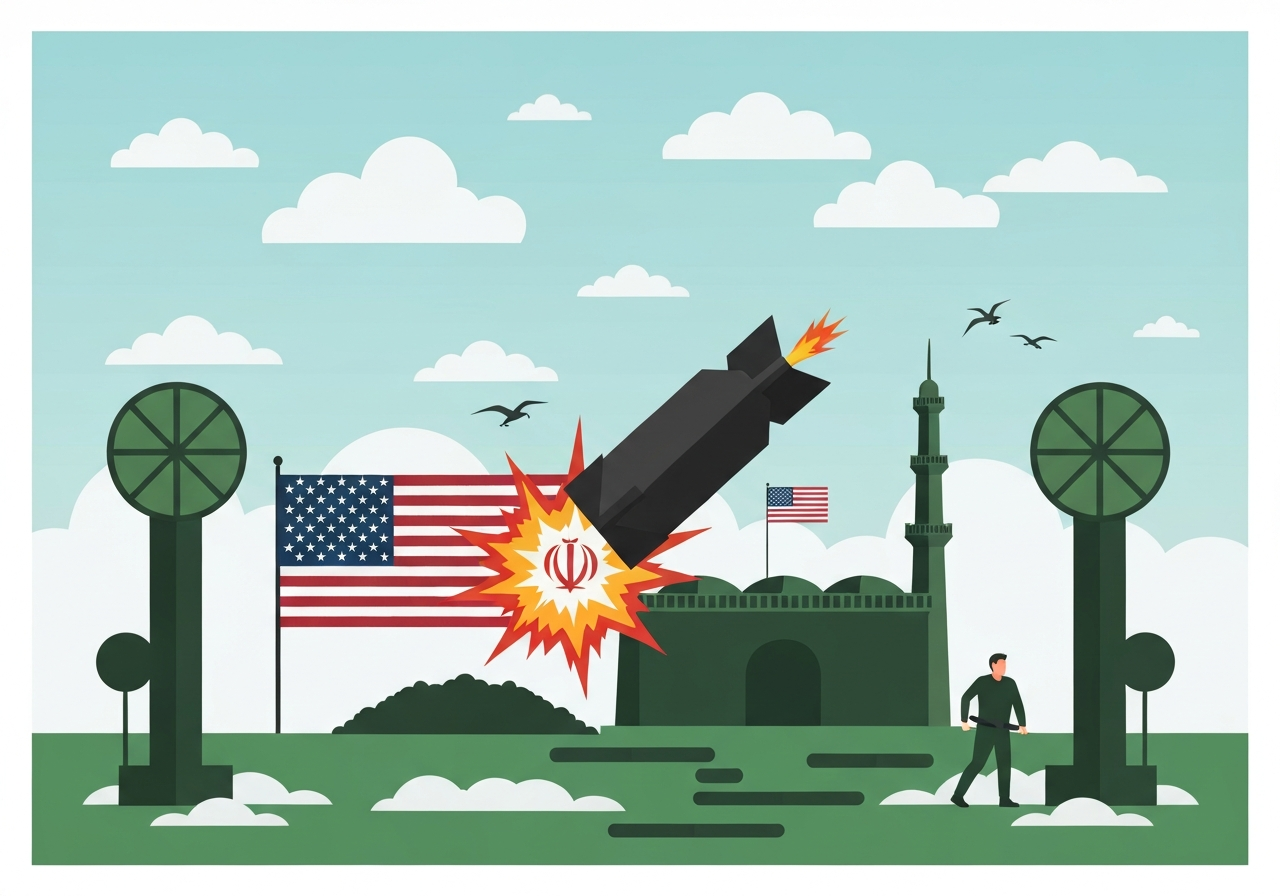
The US military struck a target in Bandar Abbas on Wednesday, saying the site was preparing to launch a fifth one-way attack drone. Iran’s Islamic Revolutionary Guard Corps (IRGC) responded by announcing it had targeted a US air base, without naming its location. Kuwait reported its air defences were intercepting hostile missile and drone threats as tensions heightened around the Strait of Hormuz. The action marks a second US strike on Iranian territory in three days and threatens a fragile ceasefire amid ongoing negotiations to end the three-month war that began on 28 February.
Key Takeaways
- The US Central Command (Centcom) said its forces struck a military site in Bandar Abbas that was preparing to launch a fifth one-way attack drone.
- Centcom also reported shooting down four Iranian one-way attack drones that it said posed a threat around the Strait of Hormuz.
- The IRGC said it had targeted a US air base but gave no location; Kuwait said its air defences were intercepting missiles and drones.
- This is the second US strike on Iran in three days; an earlier round targeted missile sites and boats alleged to be laying mines in the Strait.
- The US Treasury imposed sanctions on the Persian Gulf Strait Authority, warning payments to that body could expose vessels to sanctions.
- About one-fifth of global liquefied natural gas and oil normally transit the Strait of Hormuz; its disruption has pushed global fuel prices higher.
- Negotiations to end the conflict have continued despite intermittent strikes; both sides have reported progress but stopped short of announcing a deal.
Background
The current conflict dates to 28 February, when the US and Israel launched strikes on Iran, and has since evolved into a broader confrontation involving proxy forces and maritime incidents. Over roughly three months, attacks and counterattacks have disrupted commercial traffic through the Strait of Hormuz, a choke point through which about 20% of the world’s liquefied natural gas and oil normally passes. Governments and commercial operators have scrambled to reroute ships, while insurance and shipping costs have risen, adding pressure to global energy markets.
Diplomatic efforts to halt hostilities have been intermittent. Negotiators have held protracted talks aimed at a ceasefire and the reopening of shipping lanes, with both Tehran and Washington reporting snippets of progress at different times. Domestic political considerations—most visibly in the United States, where President Donald Trump framed parts of the approach around electoral timing—have complicated negotiators’ room for maneuver. Regional actors, including Gulf states that host US bases, have become focal points for missile and drone warning reports as militaries on all sides seek to deter further escalation.
Main Event
On Wednesday, US Central Command said it struck a site in Bandar Abbas, a strategic port in southern Iran, after determining the facility was on the verge of launching a fifth one-way attack drone. Centcom characterized the strike as measured and defensive, intended to maintain the existing ceasefire rather than expand the conflict. Iranian state media reported explosions to the east of the city on the same day.
The IRGC immediately declared it had targeted a US air base in retaliation, but did not identify the base or provide corroborating evidence. Kuwait, which hosts a US air base, reported that its air-defence systems were intercepting missile and drone threats; it did not attribute the incoming threats publicly. Centcom additionally reported shooting down four Iranian attack drones it said posed an imminent danger around the Strait of Hormuz.
Earlier in the week, US forces carried out strikes on southern Iranian missile sites and on boats the US said were trying to lay mines in the Strait. Washington described those actions as necessary to protect personnel and commercial navigation. Tehran condemned the Wednesday strike as a grave violation of the ceasefire and warned it would not leave hostile acts unanswered, signaling a risk of further tit-for-tat attacks unless diplomacy advances.
Analysis & Implications
The strikes underscore how fragile the ceasefire has become: both sides appear willing to use limited force to blunt perceived imminent threats, yet each strike carries a real risk of wider escalation. The US framing of strikes as defensive aims to contain international criticism, but repeated kinetic responses can harden Tehran’s incentives to demonstrate deterrence, raising the likelihood of reciprocal strikes or proxy eruptions in Lebanon, Iraq or the Gulf maritime environment.
For global energy markets, any prolonged disruption of the Strait of Hormuz carries immediate consequences. With roughly one-fifth of global LNG and oil transiting the waterway, even short interruptions push freight, insurance and commodity prices higher. The US sanctions on the Persian Gulf Strait Authority intend to deter Iran from monetizing the transit disruption, but they may also complicate efforts to normalize payments for navigation if negotiators are close to a compromise.
Politically, the timing weighs on both capitals. In Washington, President Trump has publicly tied aspects of the negotiating stance to broader strategic goals and domestic politics, saying Iran is “negotiating on fumes” while reiterating the option to resume large-scale bombing if talks fail. In Tehran, public messaging must balance showing firmness to domestic constituencies and preserving leverage in talks. That dual pressure reduces the margin for error during any miscalculation at sea or in the air.
Comparison & Data
| Date | Location | Target | Reported Result |
|---|---|---|---|
| 28 Feb | Iran (multiple) | Initial US & Israeli strikes | Marks start of current conflict |
| Earlier this week | Southern Iran / Strait area | Missile sites and boats | US said sites targeted to prevent mining |
| Wednesday | Bandar Abbas | IRGC military site (drone launch facility) | US strike; Centcom says fifth drone prevented |
The table shows recent escalation points and the stated aims behind each action. While the US emphasizes force protection and safe navigation, Iran frames responses as defence of sovereign territory and maritime control. The data so far point to limited, targeted strikes rather than full-scale campaigns, but the tempo has accelerated over days rather than weeks.
Reactions & Quotes
US military spokespeople framed actions as defensive and selective, seeking to avoid broad escalation even as they act to remove immediate threats. The messaging aims to reassure allies and shipping interests while signaling deterrence to Tehran.
“Measured, purely defensive, and intended to maintain the ceasefire.”
US Central Command (official statement)
Iran condemned the US strike and warned of consequences, emphasizing that it would answer hostile acts. Tehran’s language underscores a posture of reciprocity, though officials have so far avoided pinpointing a single retaliatory target in public statements.
“A grave violation of the ceasefire… we will not leave any act of hostility unanswered.”
Islamic Revolutionary Guard Corps (IRGC statement)
Regional states and maritime operators expressed concern about shipping safety and the legal exposure of vessels paying Iranian collection fees for transit. Kuwait’s public note that its defences were intercepting threats highlighted the operational spillover for Gulf host nations.
Unconfirmed
- The IRGC’s claim that it targeted a specific US air base has not been independently verified and the location was not disclosed.
- Claims that the IRGC downed a US drone and fired on a fighter jet and another drone were reported without precise timing or corroborating evidence.
- Details reportedly published on Iranian state television about a draft agreement—including reopening the Strait and US force withdrawal—were branded a fabrication by the White House and remain unverified.
Bottom Line
Wednesday’s strikes illustrate how quickly a tenuous ceasefire can be tested: targeted US action to prevent an imminent drone launch was met with immediate Iranian claims of retaliation. Both sides couch moves as defensive, but repeated kinetic responses narrow diplomatic space and raise the odds of miscalculation that could widen the war.
For commercial shipping and global energy markets, the immediate risk is continued disruption at the Strait of Hormuz; for regional security, the risk is that limited strikes become normalized as tools of bargaining rather than exceptions. Observers should watch whether negotiators can seize recent contacts to secure verifiable measures that reduce the day-to-day risk of strikes and clarify rules for maritime passage.