
Lead
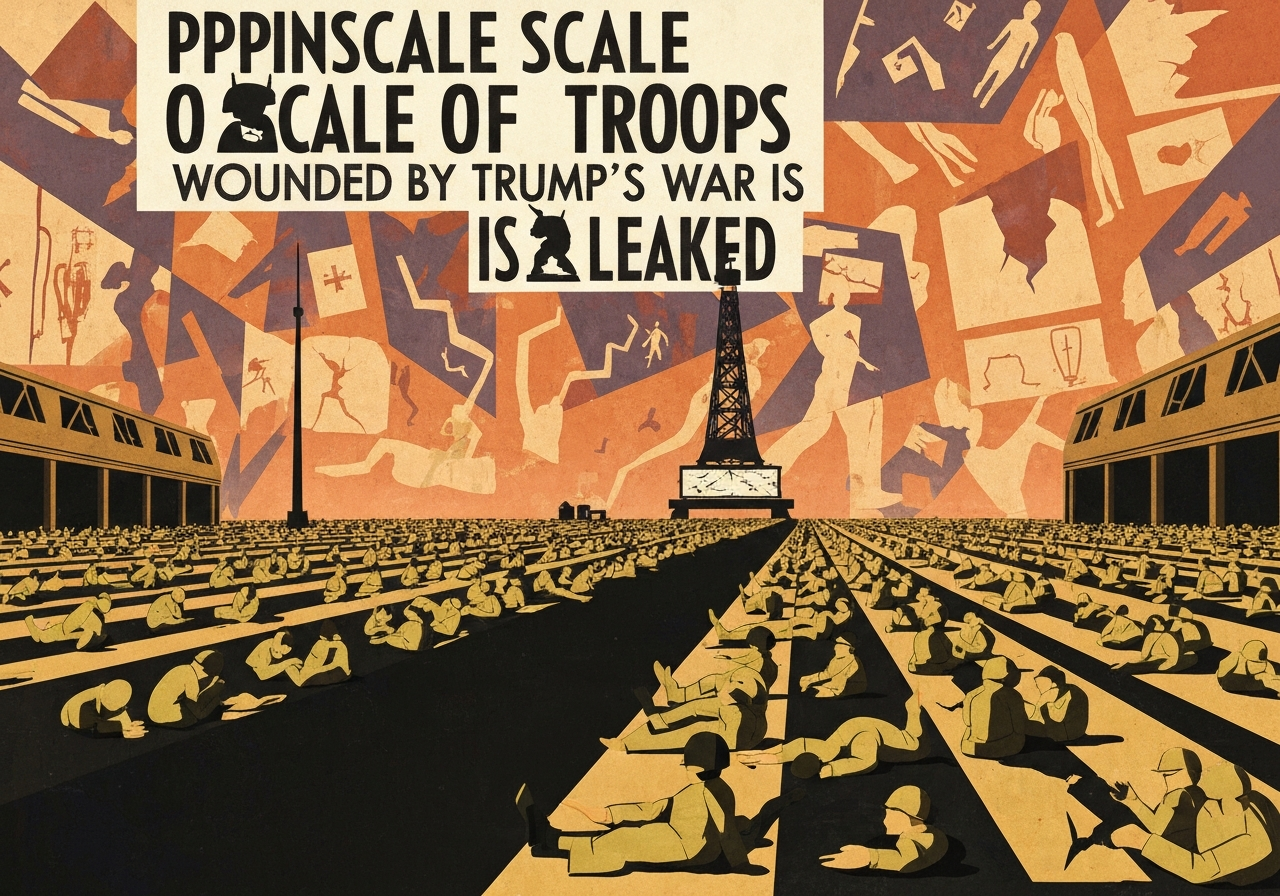
U.S. military hospitals have received a far larger number of casualties than early public statements indicated after President Donald Trump ordered surprise strikes that prompted Iran’s counterattack on March 1. The blast at a tactical operations center near the Shuaiba port outside Kuwait City killed six U.S. service members and sent dozens more to treatment facilities, including Landstuhl Regional Medical Center in Germany and Walter Reed in Washington, D.C. As of Tuesday night, more than 30 service members remained hospitalized, and Pentagon figures later placed total U.S. injuries at roughly 140 across multiple incidents. The confirmed fatalities and mounting wounded — many with traumatic brain injuries and other urgent conditions — have intensified scrutiny of battlefield reporting and the political narrative around the campaign.
Key Takeaways
- Six U.S. service members were killed on March 1 in the strike on a tactical operations center at the Shuaiba port outside Kuwait City; all six were members of the 103rd Sustainment Command.
- More than 30 U.S. service members remained hospitalized as of Tuesday night, with 20 arriving at Landstuhl on one day and designated as having “urgent” injuries.
- The Pentagon later confirmed roughly 140 U.S. service members injured in the campaign, while officials said 108 have returned to duty.
- Medical staff surged to handle casualties: roughly 25 patients from the Kuwait attack were sent to Landstuhl and more than 100 medical personnel were dispatched to assist.
- At least one other American was killed in a separate strike in Saudi Arabia (Sgt. Benjamin N. Pennington, 26).
- Within the first 48 hours of the campaign, the Pentagon used approximately $5.6 billion in advanced munitions, according to figures shared with Congress.
- Survivors report chaotic rescue scenes and severe blast injuries, including traumatic brain injury, memory loss, internal organ damage, shrapnel wounds and facial fractures.
Background
The March 1 strikes followed a rapid escalation after President Trump ordered operations against Iranian targets. U.S. forces struck what they identified as a tactical operations center at Shuaiba port outside Kuwait City; Iran then launched counterattacks that included drones and missiles. The campaign has unfolded over roughly two weeks, drawing parallel diplomatic, military and political consequences in the region and at home.
U.S. medical evacuation and treatment protocols routed critically wounded personnel to Landstuhl Regional Medical Center in Germany — the largest U.S. military hospital outside the United States — and to major facilities such as Walter Reed in Washington, D.C. Landstuhl has historically handled large-scale evacuations from Middle East conflicts and was mobilized again as casualty numbers rose quickly in the days after the Shuaiba strike.
Political actors at the White House and Pentagon have offered differing public characterizations of the toll. White House press secretary Karoline Leavitt initially cited a ballpark figure near 150 wounded; the Pentagon later provided a revised figure of about 140 injured, emphasizing most were minor wounds and many had returned to duty. Those differing statements have prompted questions about how battlefield casualty counts are gathered and released.
Main Event
On March 1, an explosion ripped through a tactical operations center at the Shuaiba port complex outside Kuwait City. U.S. accounts say the blast and the chaotic rescue scene that followed produced both immediate fatalities and a substantial number of injured service members requiring urgent care. Witnesses and fellow service members described smoke, collapsing structures and rescue teams struggling to reach people amid fires and debris.
Six U.S. service members were confirmed killed in the attack: Capt. Cody A. Khork, 35; Sgt. 1st Class Noah L. Tietjens, 42; Sgt. 1st Class Nicole M. Amor, 39; Sgt. Declan J. Coady, 20; Maj. Jeffrey R. O’Brien, 45; and Chief Warrant Officer 3 Robert M. Marzan, 54. Another U.S. service member, Sgt. Benjamin N. Pennington, 26, was killed in a separate strike in Saudi Arabia.
Survivors evacuated from the Shuaiba strike reported traumatic injuries and confused, smoke-filled scenes. Sgt. First Class Cory Hicks, among those wounded and evacuated to Walter Reed, described seeing an incoming nose cone — an object he took to be a missile or drone — moments before a blast that destroyed the building. Hicks sustained multiple internal and facial injuries and was one of roughly a dozen patients moved to Walter Reed from the broader set of casualties.
Landstuhl received a concentrated portion of the wounded. On one day, approximately 20 patients arrived there with injuries classified by the military as “urgent.” Overall, roughly 25 service members from the Kuwait attack were consolidated at Landstuhl while other injured personnel were treated at regional U.S. military hospitals or returned to duty after triage.
Analysis & Implications
The gap between initial public statements and later Pentagon figures highlights the fog of war that surrounds casualty reporting. Triage, evacuation chains and medical classification (urgent vs. minor) can shift day to day, which complicates timely, precise public accounting. Still, discrepancies between statements from the White House and later Pentagon updates have political implications: they affect public perception, congressional oversight and families’ understanding of risk.
Medically, the prominence of traumatic brain injuries (TBIs), memory loss and other neurological complaints among the wounded will shape long-term care needs and service resources. TBIs can have persistent cognitive and psychiatric consequences, stretching military medical budgets and rehabilitation services for months or years. The concentration of patients at specialized centers like Landstuhl and Walter Reed reflects both the severity and complexity of required care.
Strategically, the use of high-cost munitions — roughly $5.6 billion reported spent in the first 48 hours — underscores the campaign’s financial toll on top of the human cost. That expenditure, paired with rising casualty figures, could influence debate in Congress over further funding, rules of engagement and oversight of executive wartime decisions. Internationally, these events may alter regional dynamics by hardening positions or prompting recalibrations of force posture among allies in the Gulf.
Comparison & Data
| Metric | Reported Figure |
|---|---|
| Confirmed U.S. fatalities (March 1 strike) | 6 (all 103rd Sustainment Command) |
| Additional U.S. fatality (Saudi Arabia) | 1 (Sgt. Benjamin N. Pennington, 26) |
| U.S. service members injured (Pentagon) | ~140 |
| Returned to duty (Pentagon) | 108 |
| Patients at Landstuhl from Kuwait attack | ~25 (20 arrived with “urgent” injuries on one day) |
| Advanced munitions cost (first 48 hours) | $5.6 billion |
The data above shows the contrast between battlefield fatalities, the broader pool of wounded and the immediate logistical response. The concentration of urgent cases at Landstuhl and the number of service members returned to duty after triage both affect how policymakers and military leaders assess operational sustainability and medical readiness.
Reactions & Quotes
“I can’t confirm the exact number. I know it’s within that ballpark, but I would defer you to the Pentagon for a specific number.”
Karoline Leavitt, White House press secretary
Leavitt’s remark acknowledged an approximate figure near 150 wounded but explicitly deferred to the Department of Defense for precise accounting, a point that contributed to public confusion when the Pentagon later issued a separate total.
“You have air defenses, and a lot’s coming in, and you hit most of it. Every once in a while, you might have one… that makes its way through.”
Pete Hegseth, Secretary of Defense (remarks to the Pentagon)
Defense officials stressed the challenge of intercepting incoming threats during mass attacks and framed some hits as unavoidable despite defensive measures; their language was cited to explain how a fortified center could nonetheless suffer a fatal strike.
“Everything was just smoke and fire and crazy and chaos.”
Sgt. First Class Cory Hicks (survivor, KSTP interview)
Hicks’ firsthand description highlights the human experience behind the statistics — a chaotic scene with severe, multi-system injuries now in need of long-term care.
Unconfirmed
- Exact broken-down injury types and long-term prognoses for each hospitalized service member have not been publicly detailed by military medical officials.
- Some on-scene descriptions of rescue delays and precise rescue timelines remain based on witness accounts and are not yet corroborated by an official after-action report.
- Initial White House and later Pentagon counts differ; a definitive consolidated casualty count may change if additional injured personnel are identified or reclassified.
Bottom Line
The March 1 strike at Shuaiba and subsequent Iranian counterattacks produced both confirmed fatalities and a larger-than-previously-publicized pool of wounded, many with urgent and potentially long-lasting injuries. Discrepancies between early public statements and Pentagon reporting underscore the difficulty of real-time casualty accounting and the political sensitivity of casualty disclosures during active operations.
Beyond the human toll, the campaign’s financial cost and the strain on military medical infrastructure will be central to congressional and public debates in the weeks ahead. Close tracking of medical outcomes, transparent reporting and oversight of operational decisions will determine how policymakers and the public evaluate the conduct and consequences of this campaign.
Sources
- The Daily Beast — news report (original linked article).