
Lead
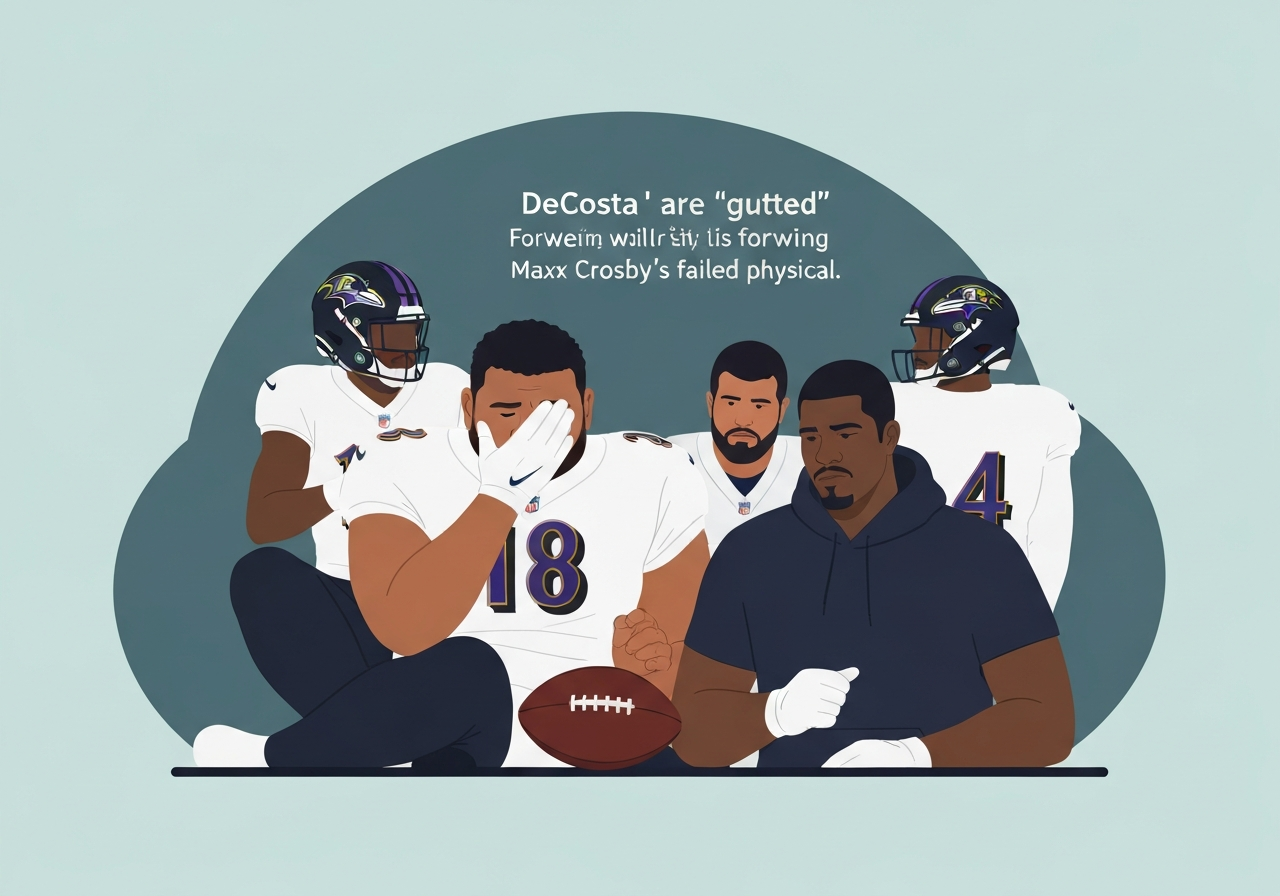
Ravens general manager Eric DeCosta said on the day of the report that Baltimore had actively pursued a trade to acquire Raiders defensive end Maxx Crosby, but the transaction collapsed after Crosby failed the Ravens’ physical because of a knee issue. DeCosta described the outcome as painful for all parties, saying he followed medical advice and therefore could not complete the deal. He singled out Raiders GM John Spytek and Crosby as affected by the outcome while stressing his responsibility to the team. The failed physical ended talks that had shown meaningful traction between the two clubs.
Key Takeaways
- Baltimore engaged in direct trade discussions with Las Vegas over Maxx Crosby; talks reached an advanced stage before a physical halted progress.
- DeCosta said Crosby failed the Ravens’ physical due to a knee injury; the medical assessment prevented the trade from closing.
- Raiders GM John Spytek was involved in the negotiations; both clubs were reportedly optimistic before the medical review.
- DeCosta followed the advice of Ravens medical staff and cancelled the deal, citing his duty to the franchise.
- DeCosta said he felt “gutted” and called the outcome a personal regret, indicating the team saw Crosby as a significant potential addition.
Background
The NFL trade process routinely includes a medical examination after clubs agree on terms, and failing that exam can void or allow teams to reopen negotiations. Teams use physicals to assess injury risk and short- and long-term availability, which in turn affects how they value a potential acquisition. Maxx Crosby is a high-profile edge defender for the Las Vegas Raiders whose role as a primary pass rusher has made him a frequent subject of trade speculation in recent windows.
For the Ravens, improving the edge pass rush has been a recurring roster priority in recent seasons; adding an established veteran like Crosby would have addressed that need immediately. The Raiders, managing their own roster and cap considerations, engaged in talks with Baltimore through their GM John Spytek. When negotiations reach the physical stage, the acquiring club typically brings the player in for evaluation and medical staff input becomes decisive.
Main Event
DeCosta described the sequence: preliminary discussions with Raiders GM John Spytek developed into substantive talks and produced a working agreement in principle. As per customary procedure, the Ravens then sought to gather comprehensive medical information, including a physical examination of Crosby. That exam, DeCosta said, revealed a knee issue that, in the Ravens’ medical staff’s judgment, changed the club’s willingness to finalize the trade.
Because the medical assessment created uncertainty about Crosby’s availability and long-term risk, DeCosta said he had to decline completing the deal despite mutual interest. He acknowledged the difficulty for all involved — Crosby, the Raiders’ front office and the Ravens — and emphasized that the decision stemmed from following the medical advice his team received. The failed medical effectively halted the transaction that had been moving forward.
DeCosta framed the decision as a responsibility to protect the Ravens’ roster and resources, noting that medical clearance is a non-negotiable step before a trade is consummated. He expressed personal disappointment and regret, underscoring how rare but consequential failed-physical outcomes can be in high-profile negotiations. The teams subsequently returned to their separate roster plans after the collapse.
Analysis & Implications
The immediate effect is that Baltimore will not add Crosby to its defensive front, leaving the team to pursue alternate paths to bolster its pass rush — via internal depth, free agency, or different trade targets. Losing the chance to land an established edge rusher shifts short-term schematic and personnel planning, particularly on downs where veteran pass-rush play is critical.
For Las Vegas, Crosby remains under their control. A failed trade can change how a team approaches future discussions: other clubs may press for independent medical reviews or structure conditional elements into offers. Crosby’s trade market could narrow until his medical status is clarified publicly or until he demonstrates health and availability on the field.
The episode also highlights the strong weight NFL teams place on medical opinions when making acquisition decisions. Clubs face a balance between the on-field upside a player offers and the financial and roster risk posed by injury history. DeCosta’s choice reflects a conservative, risk-management approach that prioritizes team-wide obligations over a single high-profile addition.
Comparison & Data
Failed physicals have ended or altered multiple NFL trades historically, particularly when an acquiring team discovers structural injuries or chronic conditions during evaluation. While not common relative to the total number of trades, such outcomes are significant because they can void multi-asset deals and reshape team plans. In this case, the determining factor was a knee issue identified by Baltimore’s medical staff; the precise medical details have not been publicly disclosed.
Reactions & Quotes
“We were really excited about adding Maxx, potentially adding Maxx to our team…we were really thinking that we were getting some traction.”
Eric DeCosta, Baltimore Ravens GM
“I’ve got a responsibility to the Ravens…Nobody’s more upset about this than me. Gutted by it, actually, a big regret for me.”
Eric DeCosta, Baltimore Ravens GM
Unconfirmed
- The exact medical diagnosis or imaging findings behind Crosby’s failed physical have not been publicly released.
- It is not confirmed whether Las Vegas was offered opportunities for second opinions or alternative medical evaluations before the deal was called off.
- Any specific compensation that had been agreed in principle (players or draft picks) has not been publicly disclosed beyond the fact that trade talks had progressed.
Bottom Line
The collapsed Crosby trade is a clear example of how medical clearance can override even well-advanced personnel deals in the NFL. DeCosta’s decision reflects a franchise-level judgment to prioritize long-term roster integrity over a single high-profile acquisition, despite the evident disappointment.
For Baltimore, the front office now needs to pivot to other ways to improve its pass rush or rely on internal solutions. For Las Vegas and Crosby, questions about medical status and tradeability will likely persist until clearer public information about the knee issue or a subsequent on-field demonstration of health emerges.