
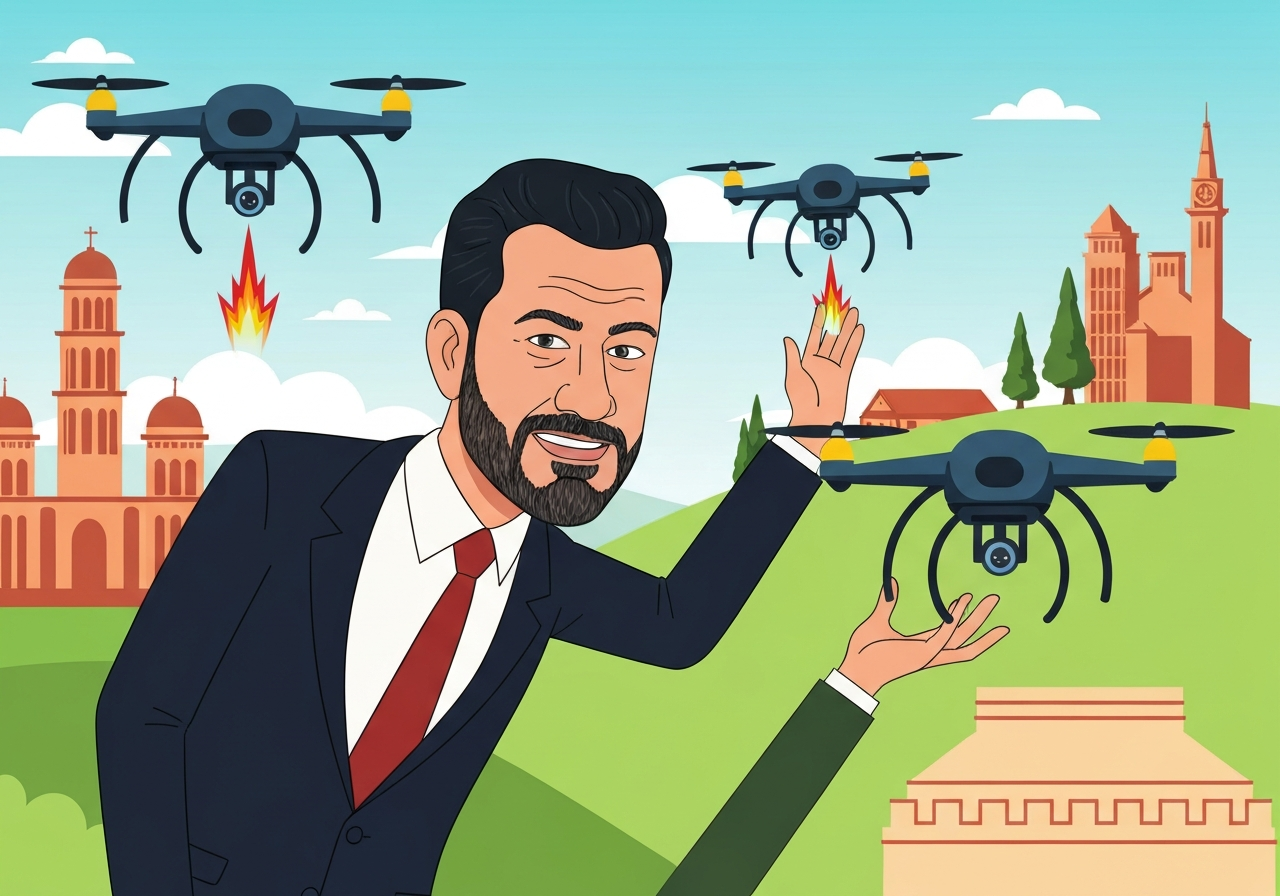
— On Wednesday night, late-night host Jimmy Kimmel addressed a Federal Bureau of Investigation warning that state and local officials in California should prepare for the possibility of a retaliatory Iranian drone strike on the West Coast. The warning arrived as the Academy Awards were set to take place at the Dolby Theatre in Los Angeles that coming Sunday, prompting heightened security measures. Kimmel treated the alert as material for satire, but his commentary underscored public unease about safety and political leadership amid evolving threats. His monologue mixed jokes about Hollywood resilience with barbs aimed at national politics, reflecting the tension between entertainment and genuine security concerns.
Key Takeaways
- The FBI informed California officials on March 11, 2026, to prepare for a possible retaliatory Iranian drone strike on the West Coast ahead of the Oscars in Los Angeles.
- Governor Gavin Newsom publicly relayed the FBI advisory; law enforcement and event organizers increased security at the Dolby Theatre for the Academy Awards scheduled that Sunday.
- Jimmy Kimmel addressed the advisory on his March 12, 2026 show, using satire to both downplay panic and criticize political leadership.
- Kimmel juxtaposed recent industry disruption, such as the 2023 writers strike, with the new security alert to highlight local anxieties in Los Angeles.
- Authorities have treated the advisory as credible enough to prompt precautionary measures, though public officials emphasize preparedness rather than confirmed imminent attack.
Background
The advisory stems from a period of heightened tension following regional hostilities in early March 2026. U.S. officials have been tracking potential retaliatory actions after escalatory events overseas, and federal agencies periodically share threat assessments with state and local partners. In this case, Governor Gavin Newsom said the F.B.I. notified California authorities and law enforcement to prepare for the contingency of an attack directed at the West Coast.
Los Angeles hosts some of the nation’s most visible public gatherings, with the Academy Awards at the Dolby Theatre drawing domestic and international attention. That visibility routinely generates layered security planning, from routine crowd control to responses for more sophisticated threats. The advisory arrived against that backdrop of already-elevated planning for the ceremony.
Main Event
On his March 12 broadcast, Jimmy Kimmel opened his monologue by referencing the FBI advisory and the Oscars’ proximity to Los Angeles neighborhoods and landmarks. He used humor to frame public anxiety, invoking movie tropes to make light of the scenario while noting the seriousness of a federal warning. The segment balanced comedic timing with explicit references to the security measures being taken for the awards show.
Kimmel contrasted the prospect of a drone attack with recent disruptions in the entertainment industry, saying locals had only recently endured major disruptions and that the community was still recovering. He also directed sharp satirical remarks at national political figures, suggesting that political dynamics at the federal level were part of the broader context shaping public reaction to the threat advisory.
The on-air treatment of the advisory reflects a common late-night pattern: converting current events into sketchable material that simultaneously informs and diffuses anxiety. Producers and network security teams confirmed they were coordinating with local authorities, and the Dolby Theatre and Los Angeles law enforcement publicly emphasized layered precautions for the event.
Analysis & Implications
The advisory reveals how modern asymmetric threats, such as armed drones, can quickly alter the security calculus for high-profile public events. Intelligence sharing between federal and state agencies is designed to trigger precautionary steps, and even low-probability warnings can produce significant operational responses because of the stakes involved and the symbolic nature of targets like the Oscars.
Politically, the episode underscores the domestic consequences of foreign policy tensions. Public perception of governmental competence in responding to threats influences civic confidence, and comedians like Kimmel often channel that sentiment into punchlines that double as critique. The intersection of entertainment, politics, and security can amplify public debate about preparedness and leadership.
Economically, precautionary measures for major events carry costs for organizers and city services. Heightened security, possible rerouting, and contingency staffing increase operational expenses, and prolonged threat environments can chill attendance at cultural gatherings. The advisory served as a reminder that geopolitical developments can have immediate local economic effects.
For homeland security planning, the advisory highlights the evolving threat landscape where nontraditional delivery systems raise new protective requirements. Agencies must weigh intelligence credibility against the disruption that public warnings can cause, striking a balance between transparency and avoiding undue alarm.
Comparison & Data
| Event | Year | Primary Impact |
|---|---|---|
| Writers strike | 2023 | Industry-wide production delays and awards-show changes |
| FBI drone advisory | 2026 | Increased security posture for West Coast events, including the Oscars |
The table places the March 2026 advisory in context with a recent, widely felt disruption in 2023. Both incidents forced industry and civic actors to adapt rapidly, although their causes and operational responses differ: labor actions required negotiation and work stoppages, while security advisories require defensive planning and coordination among public safety agencies.
Reactions & Quotes
Isn’t this how Iron Man three started
Jimmy Kimmel, host
Kimmel used a film reference to underscore the surreal feeling of discussing real-world drone threats amid Hollywood pageantry. The line was delivered to introduce a segment that mixed levity with a critique of contemporary politics.
We can barely handle the last few years, and now this.
Jimmy Kimmel, host
This remark echoed local frustration about back-to-back disruptions—from industry labor disputes to sudden security advisories—framing them as compounding stressors for residents and cultural workers in Los Angeles.
The FBI alerted state and local partners so they could prepare; this is a precautionary step.
Governor Gavin Newsom, as reported
The governor’s communication, relayed through an official briefing and media reports, emphasized that the advisory was intended to spur readiness rather than announce a confirmed strike.
Unconfirmed
- No public official has confirmed a specific, imminent Iranian plan to target the Oscars; attribution in such advisories can evolve as intelligence is vetted.
- Details on specific capabilities, intended targets, or timelines related to the advisory have not been publicly released and remain under review.
Bottom Line
The March 11 advisory that the FBI shared with California officials prompted precautionary steps around the Academy Awards and generated a late-night conversation about safety and leadership. Jimmy Kimmel’s on-air response blended satire and concern, a common late-night response to high-stakes news that also serves as a barometer of public sentiment.
Authorities framed the advisory as a preparedness measure rather than evidence of an imminent attack. Going forward, officials will need to balance public information with operational security, while local communities and event organizers assess how to proceed under elevated threat awareness.
Sources
- The New York Times (news report)