
Lead
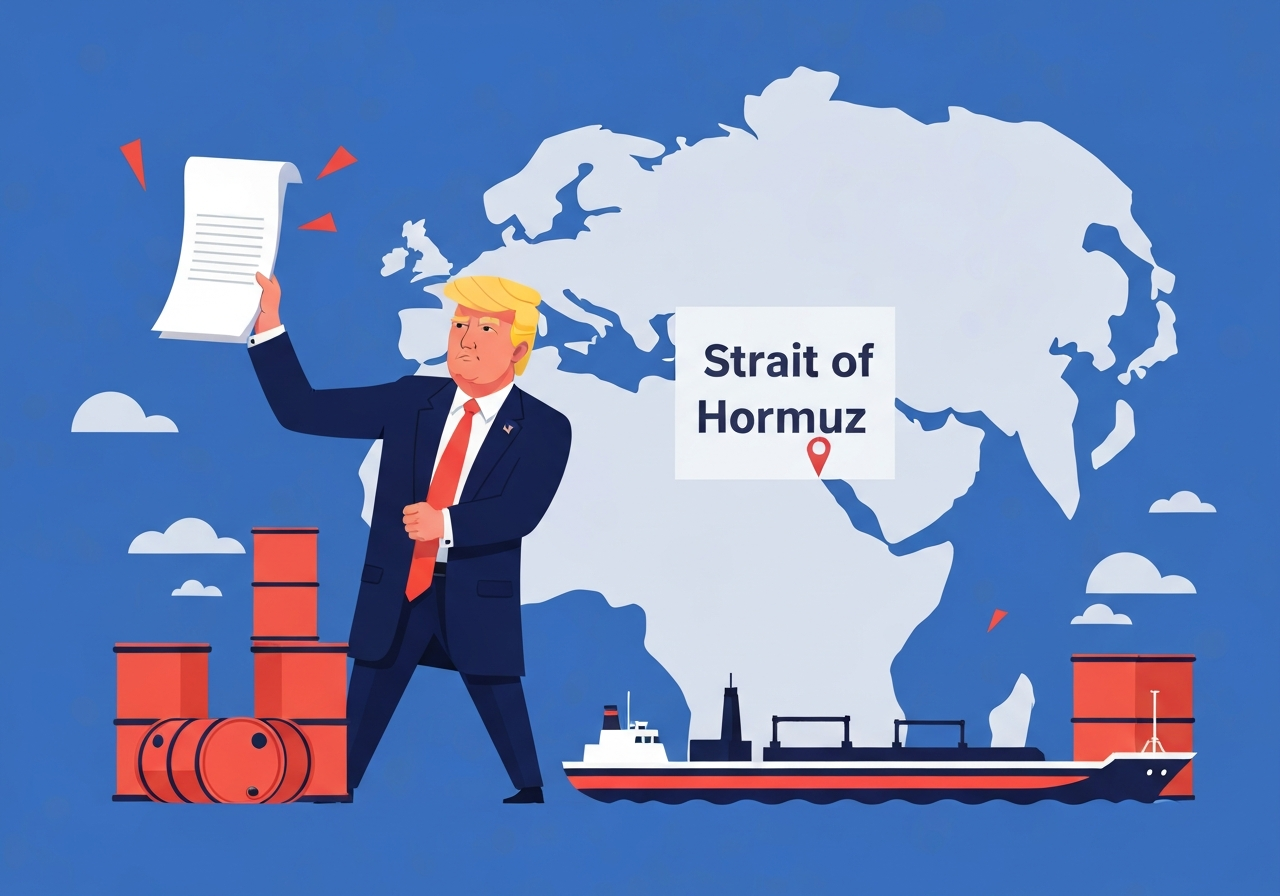
In Washington this week, President Donald Trump shifted from celebrating low domestic gasoline prices to arguing that higher oil prices can benefit the U.S. after a war with Iran sent crude and pump prices sharply higher. The move follows a spike in global benchmark crude to about $100 a barrel and a surge in U.S. retail gasoline from $2.30 a gallon in his State of the Union address to roughly $3.60, according to AAA, an increase of more than 50%. Administration officials have taken a series of short-term steps — including temporary sanctions waivers and coordinated reserve releases — even as they struggle to guarantee safe passage through the Strait of Hormuz. The reversal highlights an emerging tension between Trump’s domestic political messaging and his administration’s geostrategic posture.
Key Takeaways
- U.S. retail gasoline jumped from $2.30 per gallon at the time of the president’s State of the Union to a national average near $3.60 per gallon, a rise of over 50% (AAA).
- Global benchmark Brent crude climbed to about $100 a barrel amid threats to traffic through the Strait of Hormuz, a waterway that normally carries roughly 20 million barrels per day.
- The White House granted a one-month Treasury waiver to ease sanctions on Russian oil shipments and earlier allowed temporary purchases by India; analysts estimate about 125 million barrels were loaded on tankers at sea.
- Goldman Sachs forecasts that higher oil prices will push inflation up, slow growth and raise the unemployment rate by year-end, based on historical patterns and its models.
- Officials floated several responses — tapping strategic reserves with partners, waiving Jones Act limits on U.S.-flagged vessels and signaling possible naval escorts — but offered no firm timeline for restoring regular traffic through Hormuz.
- Energy Secretary Chris Wright acknowledged a “significant disruption” to near-term fuel costs while framing a long-term benefit if Iran’s threat is diminished.
- Treasury Secretary Scott Bessent described the sanctions waiver as narrowly tailored and meant to limit windfalls to the Russian government while easing market congestion.
Background
The Strait of Hormuz is a choke point for global energy flows: about 20 million barrels of oil typically transit it each day. Recent hostilities involving Iran have prompted insurers and shippers to avoid the route, producing sharp price swings for Brent crude and regional supply dislocations. Historically, disruptions in Hormuz have had outsized effects on short-term volatility because alternate routes and spare capacity are limited.
At home, low pump prices were a political talking point for President Trump as recently as his State of the Union address, where he cited an average of $2.30 per gallon. The sudden climb to roughly $3.60 has tested that message. Midterm politics add pressure: fuel costs are a salient pocketbook issue for voters, and the administration must balance domestic sensitivities with a willingness to confront Iran militarily.
Main Event
This week the administration delivered mixed signals about how it will secure the Hormuz corridor. On one occasion the president insisted the strait “is going to remain safe,” citing U.S. naval presence and insurance mechanisms; days later he warned via social media of “military consequences” at a scale “never seen before” if Iran mined the route. Those statements reflect a simultaneous effort to deter Iran and reassure markets and allies.
Officials also announced immediate market-oriented steps. The Treasury issued a one-month waiver to ease U.S. sanctions on Russian oil shipments stuck at sea, building on a prior temporary allowance for India to purchase Russian crude. The White House raised the prospect of coordinated releases from strategic reserves with partner governments and briefly signaled possible Jones Act waivers to shift domestic tonnage for coastal transfers.
Not every operational claim stood up to scrutiny: a social-media post from Energy Secretary Chris Wright that the Navy had escorted a tanker through Hormuz was deleted after it proved incorrect. Wright later said escorts would be provided “relatively soon” but offered no firm timeline because military assets remain focused on degrading Iran’s offensive capabilities.
Market responses were immediate. Benchmark crude prices swung sharply as traders priced the uncertainty of how long the strait would remain under de facto disruption, while forecasters warned that higher energy costs would feed into broader inflation and growth forecasts.
Analysis & Implications
Politically, the president’s rhetorical about-face underscores the tension between short-term voter concerns over fuel costs and strategic objectives in the Middle East. Emphasizing U.S. energy production as a counterweight to price pain is an attempt to recast higher oil as a net positive for American producers, but it does little to blunt the immediate burden on consumers paying more at the pump.
Economically, higher oil raises near-term inflationary pressures and tends to slow demand and growth, per Goldman Sachs’ analysis that projects higher inflation and a higher unemployment rate by year-end if prices stay elevated. For households and businesses, that translates into tighter budgets and potential slowing in consumer-facing sectors.
Strategically, moves to free up Russian barrels and to contemplate tactical measures in Hormuz signal a focus on market stabilization rather than rapid military reopening of the strait. Waivers and coordinated reserve releases are stopgap tools: they can blunt acute shortages or panic but are unlikely to permanently lower global crude prices while the route remains risky.
Comparison & Data
| Metric | Then | Now / Recent |
|---|---|---|
| U.S. national gasoline (avg) | $2.30 / State of the Union | ~$3.60 (AAA) |
| Change in pump price | Increase >50% (national average) | |
| Brent crude | — | ~$100 per barrel (recent spike) |
| Strait of Hormuz flow | ~20 million barrels per day typically | Most tankers avoiding the route; traffic disrupted |
| Barrels loaded at sea (estimate) | — | ~125 million barrels (analysts’ estimate) |
The table summarizes core, sourced figures cited by officials and market analysts: the large swing in U.S. pump prices, the jump in Brent’s benchmark level, the normal throughput of Hormuz and the estimated volume of oil stranded on tankers. Together these data points explain why policymakers reached for waivers and reserve releases as temporary market interventions.
Reactions & Quotes
Officials and analysts provided sharply different framings of the situation. Below are representative statements with context.
“The United States is the largest Oil Producer in the World, by far, so when oil prices go up, we make a lot of money.”
President Donald Trump, social media post
This comment was offered as the president sought to reframe higher global crude as a net benefit to U.S. producers, even as consumers face higher pump prices. It contrasts with his State of the Union reference to lower gas costs earlier this year.
“Such a move will slow rather than stop rising oil prices and offer a temporary salve to the searing burn of rising gasoline prices.”
Joe Brusuelas, Chief U.S. Economist, RSM (economics consultancy)
Brusuelas’ assessment captures economists’ prevailing view that releases from strategic stockpiles and short-term waivers can reduce acute volatility but are unlikely to fully reverse broad price pressures while supply-route risks persist.
Unconfirmed
- The precise extent and duration of the strait’s operational closure remain unclear; some analysts describe it as effectively closed while details vary by route and insurer policies.
- The reported figure of about 125 million barrels loaded on tankers is an analyst estimate and may be revised as tracking and confirmations improve.
- A deleted Energy Department claim that the U.S. Navy had already escorted a tanker through Hormuz has not been corroborated by independent operational logs released publicly.
Bottom Line
The administration’s pivot — celebrating higher oil gains for domestic producers while maneuvering to stabilize markets — reflects competing short-term political and strategic priorities. Tactical steps such as waiving sanctions for limited periods, coordinating reserve releases and exploring Jones Act flexibilities are meant to temper immediate market stress, not to resolve the underlying security risk to Hormuz.
For consumers and markets, higher oil and gasoline prices are likely to add upward pressure on inflation and to weigh on growth if the security situation persists. Policymakers can blunt volatility with temporary measures, but durable relief depends on either a sustained decline in crude or a credible, lasting reduction in the security threat to the strait.
Sources
- Associated Press (news organization — original reporting on administration actions and market responses)
- AAA Gas Prices (industry data source for U.S. average retail gasoline)
- Oxford Economics (economic consultancy — market analysis cited on crude volatility)
- Goldman Sachs (investment bank — research and forecasts referenced on macro effects)
- U.S. Department of the Treasury (official — sanction-waiver actions and statements)