
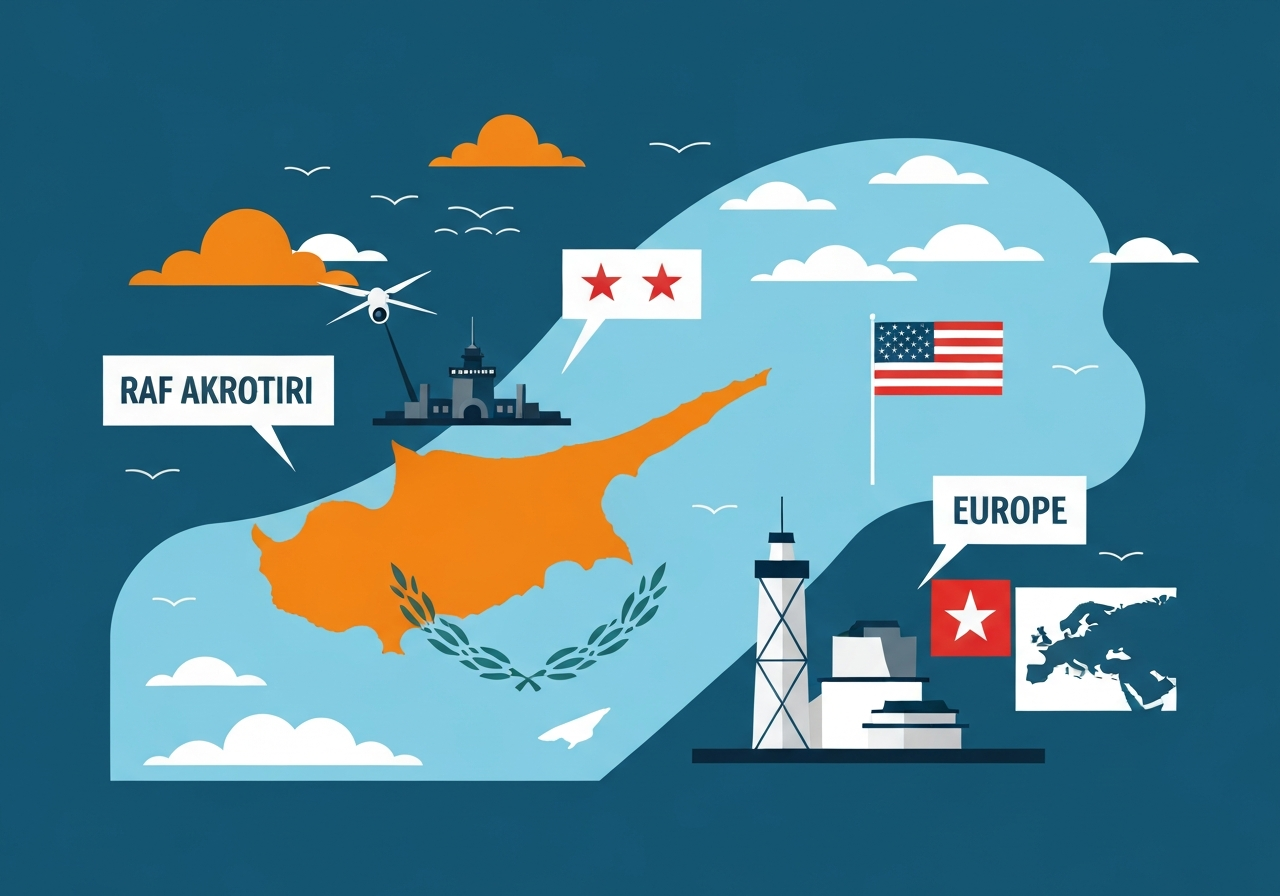
Lead: On March 13, 2026, a drone struck the British air base RAF Akrotiri in Cyprus around midnight on the second night of the war in Iran, triggering alarms, civilian evacuations and rapid responses from allies. Local authorities and base officials reported thousands of service members and family members on or near the base, and two additional drones were intercepted and sent into the sea. The incident has heightened security concerns across the Eastern Mediterranean and prompted urgent diplomatic and military coordination among NATO partners. Residents and local officials described widespread panic and an erosion of the sense that the bases were an impregnable presence on the island.
Key Takeaways
- Attack date and location: The strike occurred around midnight on March 13, 2026, at RAF Akrotiri, a sovereign British base on Cyprus.
- Casualties and damage: Initial reports did not confirm mass casualties; evacuated families were relocated to hotels and emergency shelters near the base.
- Additional threats: Two more drones approached Akrotiri and were shot down into the sea by base defenses or allied assets.
- Force posture: RAF Akrotiri hosts thousands of British personnel and families and serves as a staging area for UK and US operations across the Eastern Mediterranean and the Middle East.
- Proximity to conflict zones: Akrotiri lies about 150 miles (approximately 240 kilometers) west of Lebanon, heightening vulnerability to spillover from nearby hostilities.
- Attribution: Officials have said the drones were launched by Hezbollah; independent verification of that attribution was not publicly available at first reporting.
- Regional response: Allies and NATO partners moved quickly to reassure Cyprus and reinforce regional surveillance and defense measures.
Background
RAF Akrotiri is one of two British Sovereign Base Areas on the island of Cyprus, alongside Dhekelia. These bases have long been strategic nodes for British and allied air operations across the Eastern Mediterranean, the Middle East and parts of Africa, providing logistics, refueling and reconnaissance capability. Their presence dates to the postwar settlement that left Britain holding sovereign territory on the island, a subject that has periodically provoked political debate in Cyprus about sovereignty and local impacts.
The strike comes amid a broader eruption of hostilities tied to the war in Iran that began days earlier; the escalation has produced cross-border risks and raised the prospect of proxy actors striking targets beyond immediate combat zones. Cyprus’s geographic position—150 miles from Lebanon and within shorter flight time to parts of Syria and Israel—makes it a convenient staging area but also exposes installations there to heightened risk. Civilian communities near the bases have for decades lived with the tension between economic ties to base personnel and periodic security anxieties.
Main Event
Shortly before and after midnight on March 13, a drone impacted the perimeter of RAF Akrotiri, prompting an immediate siren response and expedited evacuation of families and nonessential civilians to temporary accommodations. Local officials described chaotic scenes as residents fled and as base liaison officers coordinated with Cypriot authorities. Two additional unmanned aerial vehicles were detected approaching the base later that night; defensive systems engaged and the craft crashed into the sea without reaching populated areas.
Base officials and visiting defense analysts emphasized that Akrotiri supports rotating deployments and houses both short- and long-term personnel assigned to air defense and Middle East operations. Commanders ordered heightened alert levels across the installation and restricted movement for dependents while damage assessments were completed. Emergency services in nearby municipalities assisted with logistics for displaced families and monitored for secondary hazards such as unexploded ordnance or debris fields.
Cypriot municipal leaders, responding to calls from base and British officers, coordinated shelters and temporary housing for hundreds of evacuees. Local hospitals were placed on standby, though initial reports indicated no mass casualties. The island’s central government summoned diplomatic conversations with London to clarify steps for civilian safety and to demand fuller briefings on protective measures for communities living near sovereign base areas.
Analysis & Implications
The strike on RAF Akrotiri marks a significant escalation in how the regional war is manifesting beyond primary battle zones, exposing allied infrastructure on third-party territory to direct attack. For the United Kingdom, the incident complicates force posture choices: maintaining forward basing provides operational advantage but raises political and humanitarian costs when local populations are imperiled. British planners now face pressure to increase local air defenses, improve early-warning coordination with Cyprus, and reassess family housing policies during heightened tensions.
For Europe and NATO, the event sharpens debates over burden-sharing for regional security. Allies must balance deterrence—through increased patrols, intelligence sharing and defensive deployments—with de-escalatory diplomatic channels to prevent a broader conflagration. The presence of proxy groups or transnational nonstate actors increases ambiguity; attribution and proportional response options are legally and politically fraught, especially when actions occur on sovereign territories of NATO members or partners.
Domestically in Cyprus, the strike is likely to intensify public scrutiny of the British base arrangement and prompt calls from some quarters to revisit the scope and visibility of foreign military installations. Economically, short-term impacts include disruptions to tourism and local services adjacent to bases; in the medium term, sustained insecurity could depress investment in vulnerable coastal regions. Strategically, the attack may trigger shifts in NATO surveillance assets in the Mediterranean and accelerate deployment of layered air defenses around vital bases.
Comparison & Data
| Metric | Value |
|---|---|
| Distance from Akrotiri to Lebanon | ~150 miles (240 km) |
| Number of UK Sovereign Base Areas on Cyprus | 2 (Akrotiri, Dhekelia) |
| Reported additional drones intercepted | 2 shot down into the sea |
| Date of strike | March 13, 2026 |
The table above places the Akrotiri strike in geographic and operational context: the base’s proximity to Lebanon reduces warning time and increases the challenge of intercepting small, low-flying drones. Historically, attacks on fixed installations in third countries have prompted a mix of enhanced defenses and diplomatic moves; the immediate challenge after this incident is restoring civilian confidence and ensuring uninterrupted operational capability for ongoing missions.
Reactions & Quotes
Local elected leaders and national authorities responded with urgency, underscoring the human impact on communities near the base.
“Everyone was in a panic,”
Pantelis Georgiou, Mayor of Kourion
Mayor Georgiou’s account echoed widespread reports of sirens and hurried evacuations; he traveled to the site after being notified by a British officer. His description underscored how the strike shattered residents’ assumptions about safety near the bases and accelerated calls for clearer contingency plans for civilians.
British government and military spokespeople framed their immediate priorities as protection of personnel and clarity on attribution while coordinating with allies.
“We are taking measures to protect our people and are coordinating with partners to establish the facts,”
Ministry of Defence (statement)
The Ministry of Defence message emphasized defense posture and investigation; details on any planned military response were withheld pending further verification. NATO officials also issued reassurances about collective monitoring, while urging restraint to prevent unintended escalation.
Unconfirmed
- Attribution to Hezbollah: Officials have said the drone was launched by Hezbollah, but independent, public verification of the chain of custody and launch site had not been confirmed at first reporting.
- Intent and target selection: Whether the strike aimed specifically at military assets, personnel, or to send a political message remains subject to further intelligence assessment.
- Casualty totals and damage extent: Initial emergency accounts emphasized evacuations and readiness; comprehensive casualty and structural-damage reports were incomplete at the time of first reporting.
Bottom Line
The drone strike on RAF Akrotiri on March 13, 2026, is both a tactical incident and a strategic signal: it demonstrates how localized infrastructure on allied territory can become entangled in broader regional wars. For Cyprus, the immediate priority is civilian safety and clear communication from both London and Nicosia about protection steps. For the UK and its partners, the episode will trigger reviews of basing policies, force protection measures and crisis-management plans to limit civilian exposure while preserving operational capability.
What to watch next: independent verification of who launched the drones, any follow-on attacks or defensive redeployments, and whether Cyprus’s political debate over the sovereignty and presence of foreign bases intensifies. How allies calibrate deterrence without accelerating escalation will shape the conflict’s wider trajectory in coming weeks and months.
Sources
- The New York Times — News report and on-the-ground reporting
- Royal United Services Institute (RUSI) — Think tank background on regional air defense roles