
Lead
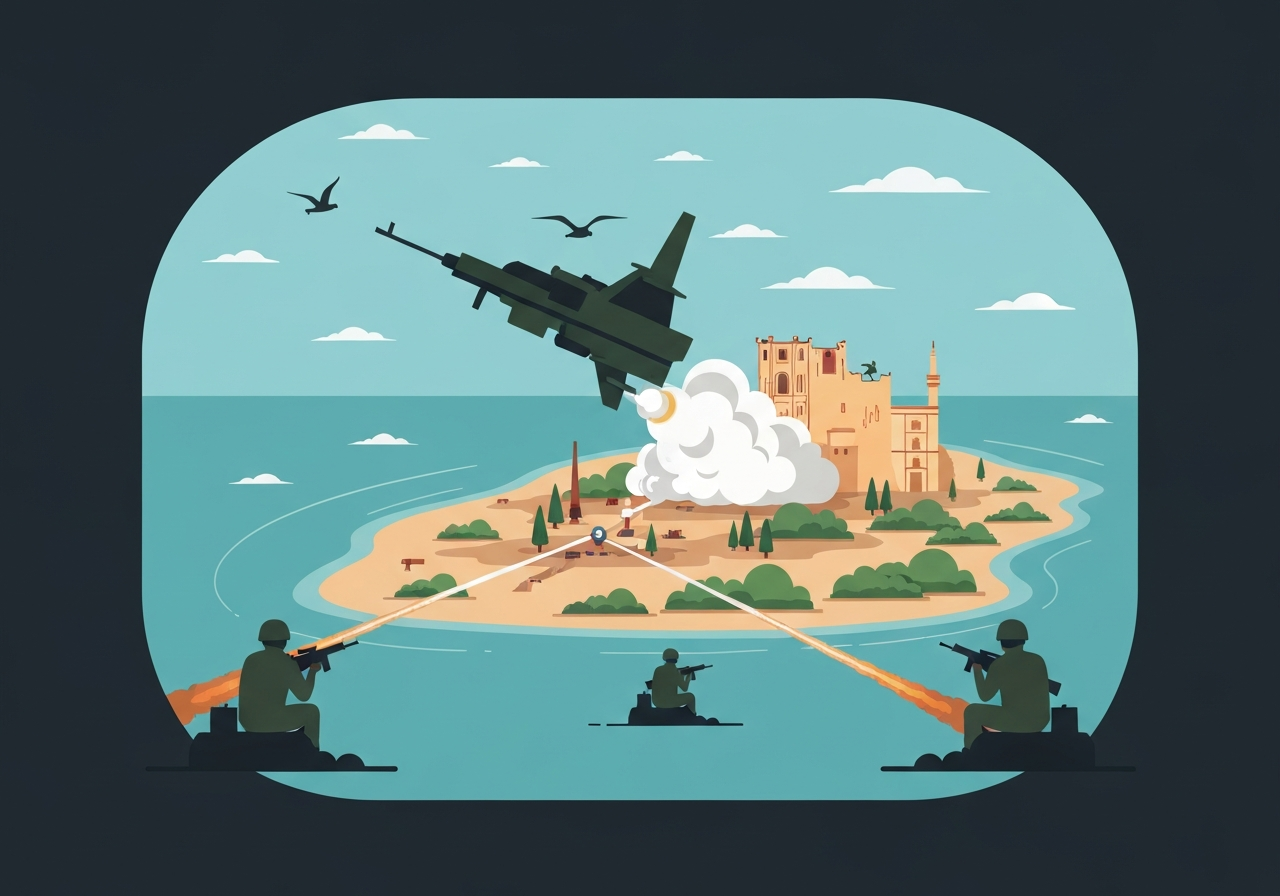
U.S. forces conducted large-scale precision strikes on Kharg Island, Iran’s principal crude export hub, late Friday, destroying military storage and defensive sites while, officials say, avoiding oil-export infrastructure. Iran responded with a public warning that damage to its energy facilities would prompt retaliatory strikes on U.S. allies’ oil and gas sites across the region. The strikes followed days of Iranian interference with shipping through the Strait of Hormuz and came amid heightened rhetoric from both Washington and Tehran. U.S. Central Command and Iranian state media offered sharply different accounts of the scope and effects of the operation.
Key Takeaways
- U.S. Central Command reported 90 Iranian military targets struck, including naval mine storage and missile storage bunkers, in a precision operation on Kharg Island.
- Kharg Island handles roughly 90% of Iran’s oil exports and is the main physical gateway for the country’s crude shipments to global markets.
- Iran’s armed forces warned they would “set on fire and destroy” oil and gas infrastructure belonging to U.S. allies if Iran’s energy assets are hit.
- State-linked Fars News reported more than 15 explosions on Kharg and listed damage to air defenses, a naval base, a control tower and a helicopter hangar, while Energy Intelligence said the island’s oil terminal remained undamaged.
- About one-fifth of global oil supplies transit the Strait of Hormuz; the disruption pushed oil prices back above $100 per barrel.
- International bodies have recorded casualties from recent regional attacks: the IMO reports eight seafarers and shipyard workers killed and four missing in the past two weeks.
Background
Kharg Island sits roughly 15 miles off Iran’s southern coast in the Persian Gulf and functions as the country’s principal crude export terminal. Because pipelines and domestic storage feed the island’s marine terminals, its facilities are critical for turning Iranian crude into export cargoes that reach global markets. Over decades, the site has been fortified with air defenses, naval installations and buried mine storage—blending civilian export infrastructure with military capability in a single, high-value location. That dual-use reality complicates any military action: strikes aimed at military targets risk collateral damage to export terminals, which would exacerbate global energy volatility.
In recent weeks Tehran has tightened pressure on commercial traffic through the Strait of Hormuz, prompting threats and interdictions that have raised alarm among oil importers and naval powers. The new statement from Iran’s supreme leader, Mojtaba Khamenei, explicitly framed continued disruption of Hormuz as a tool of state policy, and Tehran-linked outlets have emphasized willingness to escalate. At the same time the U.S. has publicly signaled readiness to defend freedom of navigation and has moved additional forces into the region; U.S. officials told media that roughly 5,000 more Marines and sailors were being dispatched to support operations, according to multiple U.S. sources.
Main Event
U.S. Central Command described the Friday operation as a precision strike that targeted and destroyed naval mine storage facilities and missile storage bunkers on Kharg Island, and said the strikes hit approximately 90 Iranian military targets while preserving oil-export infrastructure. President Donald Trump posted on Truth Social that U.S. forces had “totally obliterated every MILITARY target” on the island’s military sites, while reiterating that oil facilities were spared for now but could be struck if Iran impeded shipping. Iran’s Fars News Agency reported more than 15 explosions during the overnight action and listed damage to several military-related structures on the island.
Local officials in Bushehr province, near Kharg, reported that exports, imports and company operations on the island were continuing, suggesting no immediate disruption to loading activities. Energy market intelligence firm Energy Intelligence assessed that the island’s oil terminal remained intact after the strikes, a finding that market actors watched closely given Kharg’s role in delivering roughly 90% of Iran’s exported crude. Still, Iran’s armed forces issued a broad and severe warning: if any Iranian energy infrastructure is attacked, Tehran pledged to target oil and gas facilities tied to the U.S. and its partners elsewhere in the region.
The strikes follow a pattern of tit-for-tat attacks and counterattacks between Tehran and Gulf states that has intensified since earlier assaults on tankers and Gulf infrastructure. U.S. officials and analysts note the operation’s limited aim: degrading Iran’s capacity to store and deploy sea mines and certain missile systems rather than destroying export terminals outright. Nevertheless, the island’s mixture of military and commercial sites raises the risk of inadvertent damage and wider economic consequences if the campaign expands or if Iran retaliates against third-party facilities.
Shipping through the Strait of Hormuz has been disrupted in recent days as a result of Iranian actions; the waterway normally carries about one-fifth of the world’s crude and associated products. The U.N. Security Council passed a resolution condemning attacks on Gulf states and urging de-escalation. Market reactions were immediate: Brent crude returned to trading above $100 per barrel, and Washington moved to ease some sanctions on Russian oil to moderate price spikes— a step that drew criticism from Ukraine and some European partners.
Analysis & Implications
Strategically, Kharg Island represents the physical linchpin of Iran’s export economy: analysts estimate Iran earned about $53 billion in net oil export revenues in 2025, roughly 11% of its GDP, with Kharg responsible for the bulk of those flows. Striking at military facilities there can degrade Iran’s ability to interfere with regional shipping or deploy sea mines, but it also risks undermining international confidence in the safe transit and handling of crude from the Gulf. Even a narrowly tailored military action can produce outsized economic effects by spooking markets and prompting insurance and shipping firms to reroute or decline voyages through Hormuz.
Politically, the operation places U.S. partners in a fraught position. Iran’s warning to target third-party energy infrastructure if its own facilities are hit creates direct pressure on Gulf states and other nations hosting or relying on Gulf hydrocarbon terminals. That threat increases the diplomatic and military costs of escalation: allies must balance the immediate security benefit of supporting U.S. action with the risk their own energy assets become targets. Countries such as China, France, Japan, South Korea and the U.K.—which the U.S. mentioned as possible contributors to maritime security—face a live calculation about committing warships or other forces to the strait.
Operationally, seizing or permanently neutralizing Kharg Island would require ground forces and an extended occupation to secure export terminals and the surrounding infrastructure, a commitment this administration appears reluctant to make. Analysts note that while seizure would provide leverage in negotiations over Iran’s oil sales, it would also create a long-term stabilization and reconstruction obligation. Short of occupation, repeated strikes that avoid terminals might degrade military capabilities but still leave Iran able to reconstitute or adapt, sustaining a cycle of intermittent escalation.
Comparison & Data
| Metric | Value |
|---|---|
| Share of Iran exports via Kharg | ~90% |
| Iran net oil export revenue (2025) | $53 billion (≈11% of GDP) |
| Global oil transiting Strait of Hormuz | ~20% |
Those figures help explain why Kharg has high strategic value: the island is both the revenue conduit for Tehran and a chokepoint for global crude flows. Disruption on Kharg can have immediate and measurable effects on national income and global prices, even if physical damage to export berths is averted. The regional economic fallout would be magnified by insurance surges, rerouting of tankers, and temporary shutdowns at other Gulf terminals in response to security fears.
Reactions & Quotes
U.S. and Iranian authorities framed the strikes differently, each emphasizing narratives that support their strategic aims and domestic messaging. U.S. leaders focused on degrading military threat vectors tied to maritime interdiction; Iranian sources emphasized national resilience and retaliatory resolve.
“Totally obliterated every MILITARY target in Iran’s crown jewel, Kharg Island,”
Donald J. Trump (Truth Social post)
The president’s post underlined a public justification for the operation and reiterated the caveat that oil infrastructure was spared for now. U.S. officials also signaled readiness to escort commercial shipping through the strait and asked allies to contribute to maritime security.
“If this happens, all oil and gas infrastructure in the region in which the U.S. and its allies have interests will be set on fire and destroyed,”
Iranian armed forces (statement via Fars News)
Tehran’s warning highlighted the asymmetric response options available to Iran, which can threaten a wide set of targets across the Gulf without committing to large-scale conventional deployments. State-linked outlets amplified the message to domestic and regional audiences.
“We’re on plan to defeat, destroy, disable all of their meaningful military capabilities at a pace the world has never seen before,”
U.S. Defense Department official (Pentagon briefing)
The Defense Department language stressed a long-term campaign to degrade Iranian military capacity, reflecting a view that precision strikes can be sustained without necessarily hitting export terminals. Officials emphasized that current actions aim to protect navigation and reduce the threat to commercial shipping.
Unconfirmed
- Precise extent of underground damage: independent verification of the reported destruction of mine stores and missile bunkers on Kharg is not yet publicly available beyond U.S. and Iranian official statements.
- Scope of any planned retaliatory strikes against allied oil facilities: Tehran’s broad warning lacks operational details and has not been substantiated with confirmed target lists or timetables.
- Duration and scale of reported additional U.S. troop deployments: media reports cite approximately 5,000 Marines and sailors, but formal Department of Defense confirmation remains limited in public releases.
Bottom Line
The strikes on Kharg Island mark a significant escalation in a conflict whose economic and geopolitical stakes extend far beyond the immediate battlefield. By targeting military components while asserting restraint toward export terminals, the U.S. sought to degrade Tehran’s ability to threaten shipping without inflicting the kind of damage that would sharply intensify global market panic. Iran’s pledge to hit allied energy assets if its infrastructure is damaged raises the prospect of widened conflict that would directly threaten third-party nations and raise energy prices further.
For markets and policymakers, the central question is whether this phase of strikes and warnings will produce a short, contained cycle of action and deterrence or evolve into a sustained campaign with broader regional blowback. Immediate priorities for international actors will include protecting commercial navigation, deconflicting military actions around choke points such as the Strait of Hormuz, and pressing for diplomatic channels that can reduce the risk of miscalculation.
Sources
- NBC News — media report summarizing U.S. and Iranian accounts and regional reactions.
- U.S. Central Command — official military statements and operational summaries (official).
- Energy Intelligence — energy market research and assessment of terminal damage and exports (industry research).
- Royal United Services Institute (RUSI) — expert analysis on strategic implications and energy security (think tank).
- Fars News Agency — Iran state-linked reporting on explosions and Iranian official statements (state media).
- International Maritime Organization (IMO) — casualty and shipping disruption reports (intergovernmental organization).
- United Nations Security Council — resolution texts and press statements on recent regional attacks (intergovernmental).