
Lead
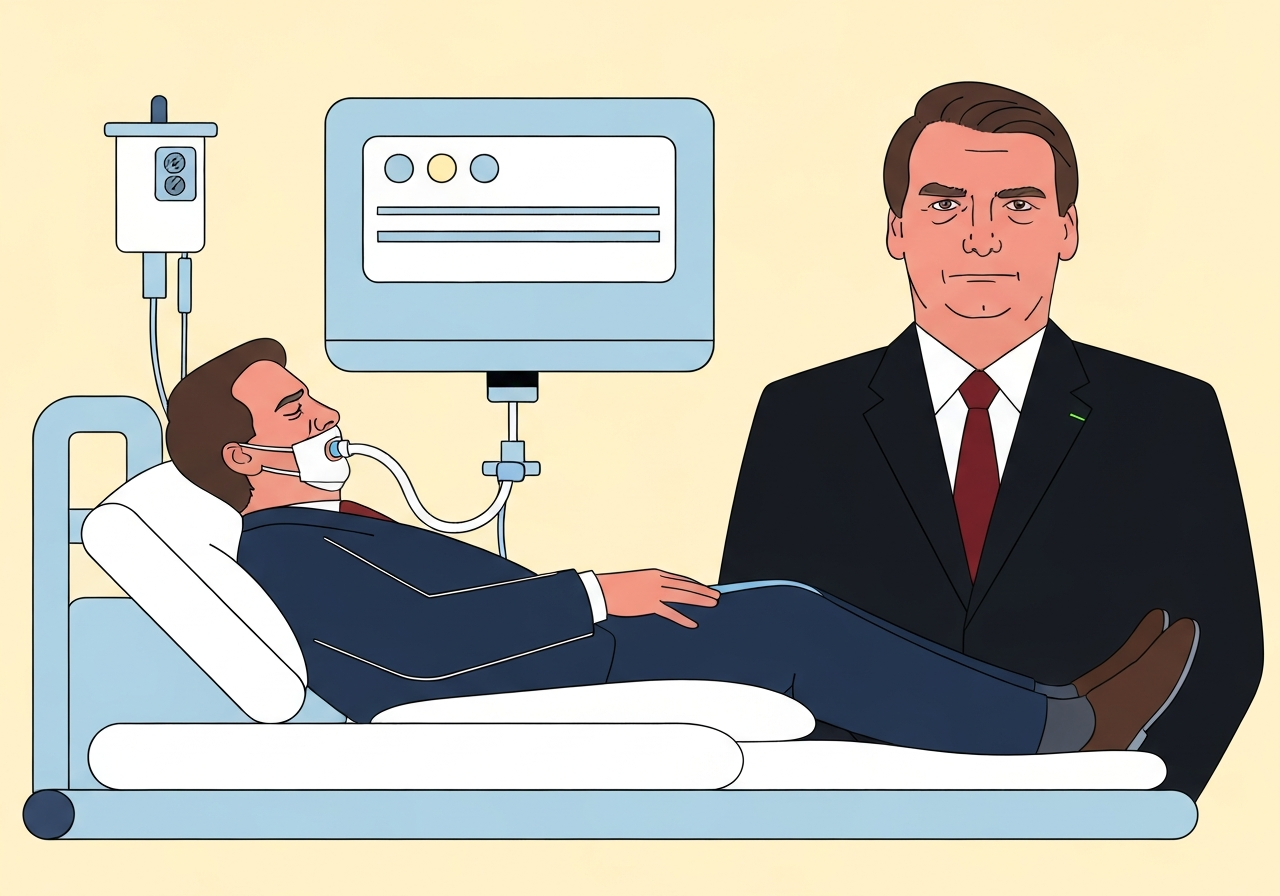
Former president Jair Bolsonaro, 70, has been admitted to an intensive care unit in Brasilia with bronchopneumonia, hospital officials said on Friday. He was transferred from prison after waking with chills and vomiting and is receiving IV antibiotics and non‑invasive respiratory support. Doctors described his condition as serious and said treatment is likely to require continued inpatient care. Bolsonaro is serving a 27‑year sentence after a Supreme Court panel convicted him last year for attempting to overthrow democratic institutions.
Key takeaways
- Bolsonaro, 70, was moved from prison to DF Star Hospital in Brasilia and placed in an ICU after symptoms including high fever, low oxygen, sweating and chills were reported.
- Clinical exams identified bronchopneumonia likely caused by aspiration; the hospital said he is on IV antibiotics and receiving non‑invasive support.
- One treating physician, cardiologist Brasil Caiado, called the situation serious and warned of septicemia risk in patients over 70.
- Bolsonaro is serving a 27‑year sentence following his 2025 conviction by a panel of Supreme Court justices for attempting to overthrow Brazil’s democratic order.
- Family members, including sons Flávio and Carlos Bolsonaro, have publicly pressed for house arrest and alleged inadequate prison medical care; the Court has rejected those requests.
- Bolsonaro has a history of repeated hospitalizations dating to a 2018 campaign stabbing and a January 2026 fall that prompted brain tests at the same hospital.
- The ex‑president denies wrongdoing; his trial and sentence attracted international attention and were cited in U.S. trade actions earlier this year.
Background
Jair Bolsonaro, a former army captain who led Brazil from 2019 to 2022, has remained a polarizing national figure since losing re‑election. After nationwide unrest following the 2022 vote, Brazilian authorities opened investigations into efforts to subvert the post‑election transition. A panel of Supreme Court justices convicted Bolsonaro in 2025 on charges that include leading an armed criminal organization and attempting the violent abolition of democratic rule, handing him a 27‑year prison term.
Prison authorities moved Bolsonaro to a larger cell in January 2026 amid mounting public scrutiny of his detention conditions and repeated family appeals for house arrest on medical grounds. Relatives have repeatedly argued he has been denied adequate care; courts have so far refused those petitions, citing security and legal considerations. Bolsonaro’s medical record includes multiple hospital stays since he was stabbed during the 2018 campaign, and a January 2026 incident that required brain imaging at the same Brasilia hospital.
Main event
On the morning he was taken to hospital, Bolsonaro reportedly woke with chills and vomiting; prison medical staff arranged a transfer to DF Star Hospital in Brasilia. Hospital statements said examinations confirmed bronchopneumonia likely related to aspiration, and clinicians placed him in the intensive care unit for close monitoring and intravenous antibiotics. The hospital described his care as non‑invasive clinical support combined with antimicrobial therapy.
Cardiologist Brasil Caiado, one of Bolsonaro’s treating physicians, informed reporters that pneumonia in patients over 70 carries heightened risk because bacteria can enter the bloodstream and trigger septicemia. Caiado also indicated that the intravenous nature of the treatment made an immediate return to the prison infirmary unlikely. The hospital statement and physician comments framed the admission as precautionary but serious.
Family members quickly publicized the transfer. Flávio Bolsonaro posted on X that his father had been moved to hospital after waking unwell and asked for public prayers; Carlos Bolsonaro later accused the system of attempting to harm the former president. The Supreme Court has publicly disputed family allegations of mistreatment and continues to uphold the detention decision while legal appeals proceed.
Analysis & implications
The admission adds a complex, medical layer to an already charged legal and political situation. Bolsonaro’s health now intersects with high‑stakes legal proceedings and an election cycle in which his family remains politically active—Flávio Bolsonaro has announced a presidential bid and polls show a close race with incumbent Luiz Inácio Lula da Silva. Any prolonged hospitalization could affect courtroom scheduling, appeal logistics and detention plans, and would likely intensify political rhetoric from Bolsonaro’s allies.
Clinically, bronchopneumonia from aspiration is common among older, acutely ill patients and can progress rapidly if bacteria enter the bloodstream. For the judiciary, the need for hospital‑level care bolsters the family’s arguments for house arrest on compassionate grounds; however, courts weigh such requests against public safety, security logistics and legal precedent. Brazilian justices have so far declined to transfer him to home detention.
Internationally, Bolsonaro’s conviction and detention already drew diplomatic attention and trade tensions earlier this year; his hospitalization is likely to revive external commentary. Policymakers in Brasília and foreign capitals will monitor whether health complications disrupt legal processes or fuel street demonstrations. For public health authorities, the incident underscores the vulnerability of jailed older adults to infectious complications requiring advanced care.
Comparison & data
| Event | Date | Details |
|---|---|---|
| 2018 stabbing | 2018 | Campaign stabbing led to multiple hospitalizations and ongoing gastrointestinal issues. |
| Conviction | 2025 | Panel of Supreme Court justices convicted him of plotting to overthrow democratic institutions; 27‑year sentence. |
| January hospital visit | Jan 2026 | Escorted for brain tests after falling from bed; treated at same Brasilia hospital. |
| Current hospitalization | Mar 14, 2026 | Admitted to ICU with bronchopneumonia; IV antibiotics and non‑invasive support. |
The table above places the current admission in the context of Bolsonaro’s medical history and legal timeline. Recurrent hospital care has been a feature since 2018, and the 2025 conviction is the proximate cause of his incarceration. Observers will watch whether this episode prompts procedural changes to how high‑profile detainees receive care.
Reactions & quotes
Several political allies and family members reacted immediately; official institutions offered measured replies. Below are representative public remarks with context.
“Pneumonia in patients over 70 is always serious because it can progress to septicemia.”
Brasil Caiado, treating cardiologist
This comment was delivered by a treating physician to journalists, highlighting the medical rationale for ICU admission and the risks that guided clinical decisions.
“I ask for prayers that it not be anything serious.”
Flávio Bolsonaro, son and politician (post on X)
Flávio Bolsonaro posted the remark while announcing his father had been transferred to hospital; he has also announced a presidential candidacy and is cited in recent polls as a competitive contender.
“The system, literally and insistently, (is) trying to kill”
Carlos Bolsonaro, son (post on X)
Carlos Bolsonaro’s post accused authorities of deliberate neglect. The Supreme Court has publicly rejected claims of institutional mistreatment and maintained its detention rulings.
Unconfirmed
- Allegations that prison staff intentionally mistreated Bolsonaro remain unproven and are contested by court authorities.
- The exact source of the aspiration event—what was aspirated and when—has not been publicly verified by independent medical records.
- Any immediate impact of this hospitalization on upcoming legal deadlines and transport protocols for high‑security inmates is pending formal court rulings.
Bottom line
Bolsonaro’s ICU admission for bronchopneumonia places a medically fragile, politically prominent prisoner under intensive care and intensifies debates over detention conditions and legal procedure. Clinicians characterize the case as serious given his age and aspiration‑related lung infection; the hospital has begun IV antibiotic therapy and non‑invasive support. The situation is likely to produce further legal filings from his family and renewed political messaging from both supporters and opponents.
Observers should monitor three developments: official medical bulletins for updates on his clinical trajectory, any Supreme Court or detention‑authority decisions about temporary transfer or house arrest, and political fallout in the run‑up to this year’s election cycle. Each will shape how Brazil balances detainee health, public safety and the rule of law in a highly charged environment.
Sources
- NPR (news report)
- Supreme Federal Court of Brazil (STF) (official judiciary site)
- The Associated Press (international news agency)