
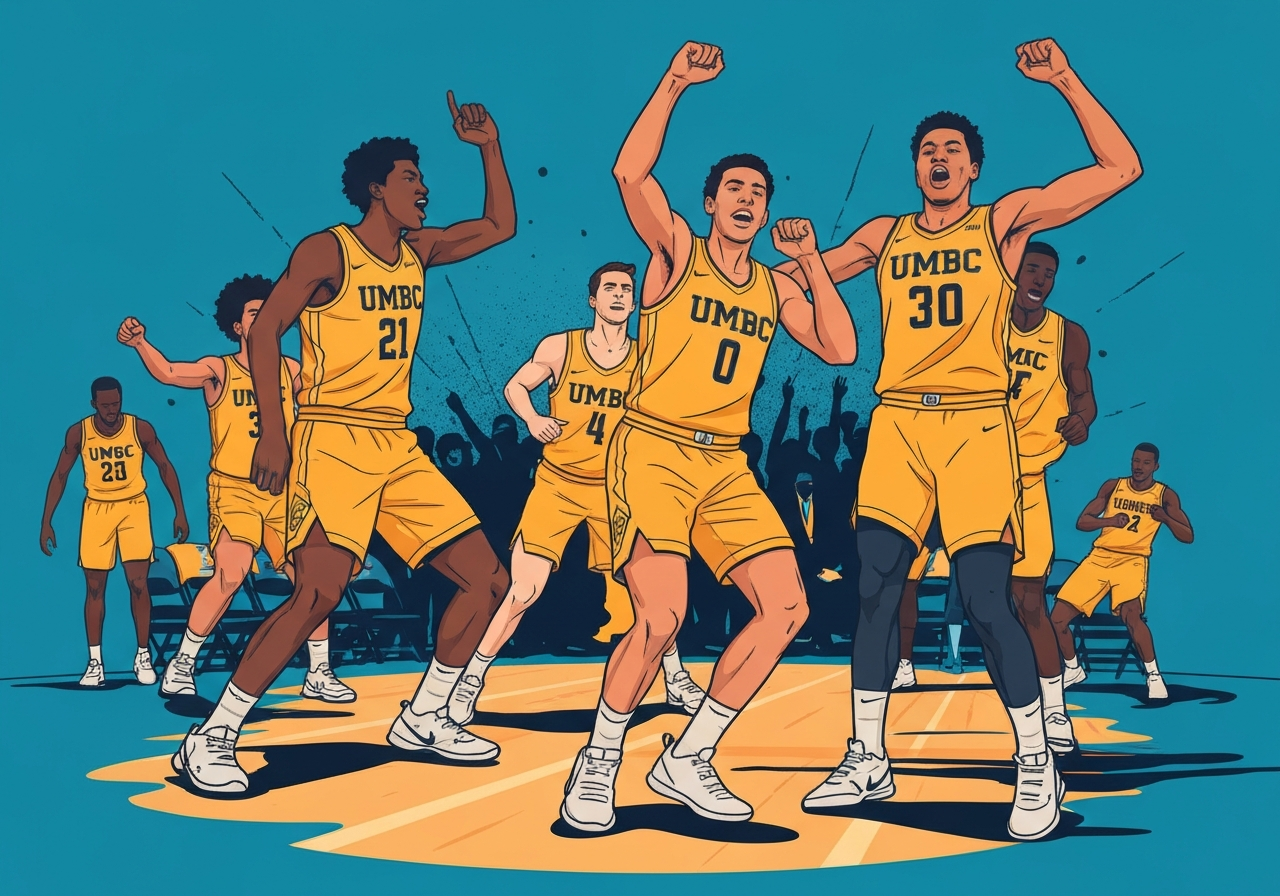
With Selection Sunday looming, 31 of the 68 spots in the 2026 men’s NCAA Tournament have been decided by conference champions. Championship week produced a cascade of automatic qualifiers across midmajors and smaller conferences, with programs from Howard to Gonzaga clinching berths. UMBC — the Retrievers who shocked Virginia in 2018 — secured the America East crown and arrive at the Big Dance riding a program-record 12-game winning streak. This tracker summarizes clinched bids, key results, and what each automatic qualifier brings into March.
Key Takeaways
- Thirty-one automatic bids are now set; 37 at-large spots remain to be decided ahead of Selection Sunday.
- UMBC (24-8, 14-2 America East) beat Vermont 74-59 and enters the NCAA Tournament on a 12-game winning streak; they are projected as a No. 16 seed.
- Gonzaga (30-3, 16-2 WCC) won the WCC title 79-68 over Santa Clara; the Zags qualified for their 27th NCAA Tournament under Mark Few.
- McNeese (28-5, 19-3 Southland) earned a third straight auto-bid, defeating Stephen F. Austin 76-59 and extending a 10-game win streak.
- Idaho (21-14, 9-9 Big Sky) captured its first Big Sky title and first NCAA trip since 2000 with a 77-66 win over Montana.
- Several programs return after long droughts: Hofstra (first appearance since 2001), Tennessee State (first since 1994) and Northern Iowa (first since 2016) all punched tickets.
- Seed projections vary widely: Hofstra projects near a 13-seed, North Dakota State around a 14, and multiple schools are expected near the 16 line, keeping upset-watchers busy.
Background
The NCAA Tournament field is made up of 32 conference automatic qualifiers and 36 at-large teams; this year, 31 of those automatic spots were claimed during the conference-championship window leading into Selection Sunday. These weeklong tournaments are often the most chaotic stretch of college basketball: single-elimination formats and condensed schedules create conditions ripe for both expected winners and surprise champions. For many midmajor programs, the conference tournament is the only realistic path into March, so winning at this stage can rewrite a season in a single weekend.
History and narrative frequently color March results. UMBC’s 2018 upset of Virginia remains a cultural touchstone — that program memory hangs over the Retrievers as they return to the field. Coaches who have rebuilt programs through recruiting, transfers and design changes—such as Jim Ferry at UMBC, Nolan Smith at Tennessee State and Speedy Claxton at Hofstra—are being judged on conference finals and whether their teams can translate league success into NCAA relevance. Simultaneously, power-conference outcomes and bubble-team fates will determine the remaining at-large allocations.
Main Event
America East: UMBC completed a dominant run through its conference tournament, topping Vermont 74-59 in the final. The Retrievers’ 12-game winning streak is a program record; Jim Ferry’s roster reversed course after a 13-19 season in 2024-25 and now returns to the Big Dance with momentum and experience. UMBC’s schedule included just one power-conference opponent this season — a 90-81 loss at Georgetown — and the team is likely to draw a low seed again, which places them in an upset-or-bust historical position.
West Coast and midmajors: Gonzaga handled Santa Clara 79-68 to claim the WCC crown despite dealing with injuries, notably big man Braden Huff’s lingering left-knee issue. The Zags, 30-3 on the year, have qualified for March under Mark Few for the 27th time, but questions about depth and consistency—especially on offense versus defense—will shape expectations. Idaho secured the Big Sky, beating Montana 77-66 to reach the NCAA Tournament for the first time since 2000, while McNeese steamrolled Stephen F. Austin 76-59 to extend a 10-game win streak and notch a third consecutive appearance.
Smaller conferences and breakthrough programs: Several narratives of program turnaround or first-time success emerged. Queens (ASUN) won its first-ever bid after an overtime thriller over Central Arkansas; High Point (Big South) followed last year’s breakthrough with another title; and Hofstra (CAA) ended a long drought to clinch its first Tournament entry since 2001. Tennessee State’s 93-67 win over Morehead State delivered the program’s first NCAA berth since 1994 under Nolan Smith, while LIU and Northern Iowa also captured automatic spots with conference final victories.
Analysis & Implications
The automatic-bid crop this year reinforces the tournament’s dual identities: it is both a stage for historic upsets and a reward for sustained conference dominance. Teams like UMBC and High Point enter with long winning streaks and clear identities, but seed projections (UMBC toward 16, Hofstra near 13, NDSU around 14) will heavily influence their matchup paths. Low seeds that draw high-ranked opponents will need elite preparation and favorable matchups to advance; historically, 13-over-4 upsets are increasingly common, while true 16-over-1 upsets remain rare.
Coaching narratives matter for both short-term performance and longer-term program trajectories. Nolan Smith’s rapid turnaround at Tennessee State and Speedy Claxton’s Hofstra resurgence are likely to draw attention from larger programs if their teams post NCAA success. Conversely, programs like Gonzaga that have sustained expectations face scrutiny when injuries or depth concerns emerge; how they adapt defensively will dictate whether they can reach the Sweet 16 again.
From a bracketology perspective, the dozen-plus midmajors and smaller-conference champions complicate at-large calculus — fewer at-large spots will be available than some bracket models anticipated. That dynamic elevates every conference final and intensifies the bubble drama for power-conference teams. Fans and analysts should watch non-conference resumes, quadrant wins and late-season trends when final seeds are announced.
Comparison & Data
| Team | Record | Conference | Last NCAA Appearance | Final/Score |
|---|---|---|---|---|
| UMBC | 24-8 | America East | 2018 | Beat Vermont 74-59 |
| Gonzaga | 30-3 | WCC | 2025 | Beat Santa Clara 79-68 |
| McNeese | 28-5 | Southland | 2025 | Beat SFA 76-59 |
| Idaho | 21-14 | Big Sky | 1990 | Beat Montana 77-66 |
| Hofstra | 24-10 | CAA | 2001 | Beat Monmouth 75-69 |
The table above highlights a cross-section of automatic qualifiers: records, conference, most recent tournament appearances and championship-game scores. Several teams (UMBC, McNeese, Gonzaga) enter with double-digit win streaks or exceptional records, while others (Idaho, Hofstra) are notable for ending long NCAA droughts. Seed projections and bracket locations — to be released on Selection Sunday — will provide clearer context for matchup probability and upset potential.
Reactions & Quotes
Coaches and fans reacted across social platforms and in postgame remarks, framing conference titles as both culmination and beginning.
“Legends are made in March‼️ #GeauxPokes | #BayouBandits”
McNeese Men’s Basketball (team social account)
Fan and broadcast responses to dramatic moments also amplified narratives about program resurgence.
“DID WE JUST SEE WHAT WE THINK WE JUST SAW?!”
CBS Sports (broadcast reaction to Furman’s previous upset)
Team accounts celebrated milestones and program staff emphasized development and culture after clinches.
“Fins up!”
LIU Athletics (fan chant / team account)
Unconfirmed
- Final NCAA seedings and region placements are not yet announced and may alter matchup difficulty for several auto-bid teams.
- Braden Huff’s left-knee status is described as lingering; his exact availability and minutes in the NCAA Tournament remain uncertain.
- Some seed projections for teams like Hofstra, North Dakota State and UMBC are preliminary bracketology estimates and are subject to change when the committee releases the official bracket.
Bottom Line
Thirty-one automatic qualifiers now lock in a wide-ranging field of entrants: programs with historic pedigree, midmajors on hot streaks, and teams breaking multi-decade droughts. UMBC’s return is the most resonant narrative given its 2018 history and current 12-game run, but the field includes numerous storylines worth watching — from Gonzaga’s injury questions to Hofstra’s long-awaited return.
Selection Sunday will resolve seed lines and matchups that determine which of these automatic qualifiers have realistic paths beyond the first weekend. Until then, bracket-watchers should track injury reports, committee chatter, and how at-large results shake out in order to assess upset probability and tournament balance.
Sources
- The New York Times — media coverage and game recaps.
- NCAA.com — official NCAA tournament information and rules (official).
- ESPN Scoreboard — live results and scheduling (media).
- CBS Sports college basketball — broadcast reaction and highlights (media).