
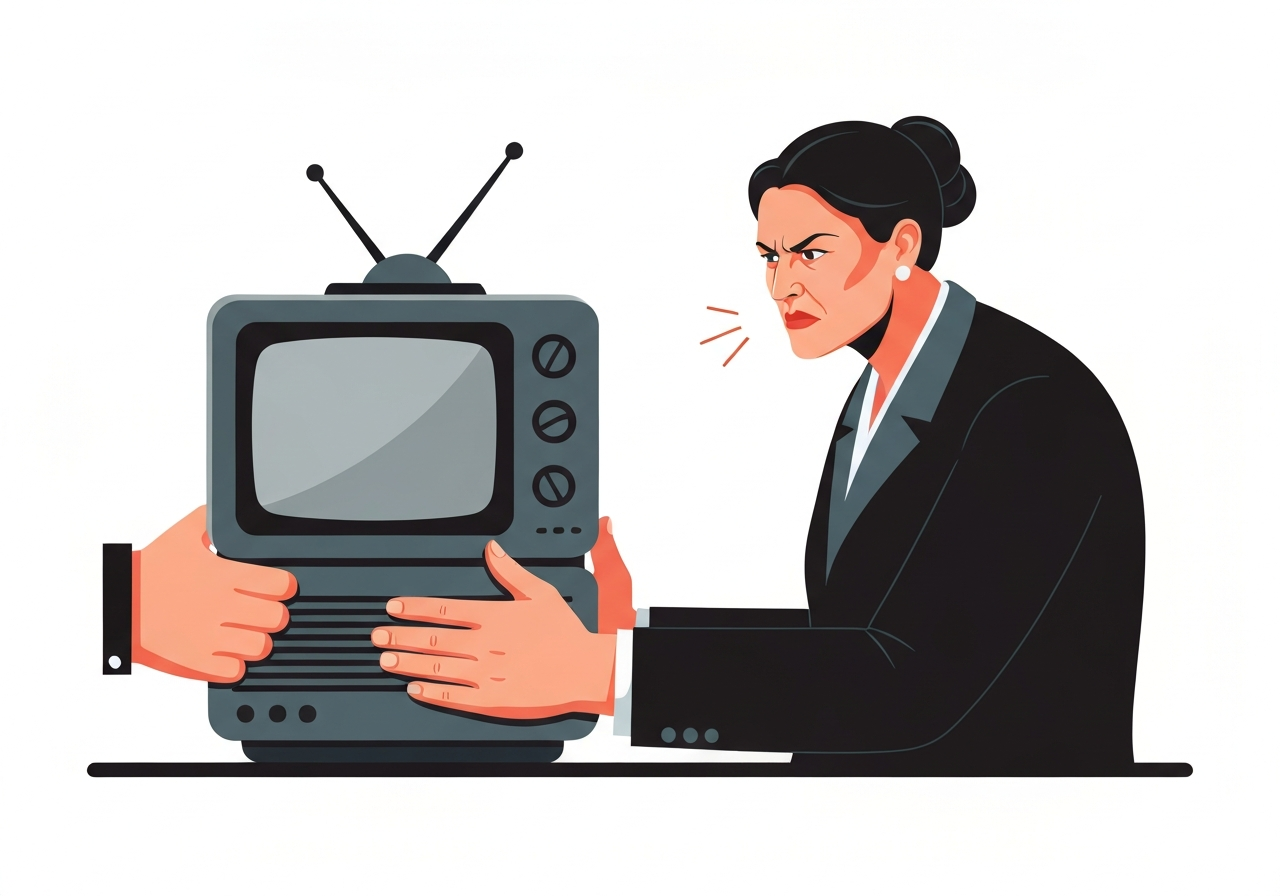
Lead: Federal Communications Commission chair Brendan Carr on Saturday warned US broadcasters that stations airing what he called “hoaxes and news distortions” about the war involving Iran could face cancellation of their spectrum permits when licenses come up for renewal. Carr copied a Truth Social post from former president Donald Trump complaining of misleading coverage and pointed to what he described as collapsing trust in legacy news outlets. The statement comes amid repeated complaints from Trump administration allies about mainstream media coverage of the Iran conflict and follows public comments from Pentagon and media figures. Carr framed access to the airwaves as a public subsidy that could be conditioned on truthful reporting.
Key Takeaways
- FCC chair Brendan Carr posted on social media on March 14, 2026, warning that broadcasters airing “hoaxes and news distortions” about the Iran war risk losing spectrum permits at renewal.
- Carr referenced a Truth Social post by Donald Trump criticizing headlines about an incident involving five tanker planes and the wider Iran conflict.
- The FCC’s statutory control over spectrum stems from the Communications Act of 1934 and covers commercial and non-commercial broadcast, wireless and satellite services.
- Carr claimed legacy media trust has fallen to an all-time low of 9% and labeled ratings “disasters,” a figure he presented without accompanying evidence in his post.
- Conservative figures including defense secretary Pete Hegseth have publicly criticized media reporting and suggested editorial changes at major networks.
- The exchange follows ownership changes cited in discussion—media consolidation and executive comments about editorial independence at CNN were noted as part of the broader debate.
- Legal experts say revoking broadcast licenses is legally complex and rarely exercised, meaning Carr’s threat could set up protracted regulatory and court battles.
Background
The FCC regulates access to the electromagnetic spectrum under rules derived from the Communications Act of 1934, which assigns authority over broadcast television and radio, commercial and non-commercial wireless services, satellite links and related services. That legal framework requires broadcasters to operate in the public interest as a condition of holding spectrum-based licenses, a long-standing expectation that has been invoked in debates over content and ownership. In recent months, the Iran war and related regional incidents have become a flashpoint, with political leaders publicly disputing mainstream coverage and accusing outlets of bias or inaccuracy. Those complaints have intensified after high-profile changes in media ownership and repeated public interventions from administration-aligned figures.
Historically, the FCC has used license renewals, fines and adjudication to respond to broadcast violations, but full license cancellation is exceptional and typically follows extended administrative and judicial proceedings. The agency’s leverage over spectrum access is significant because airwaves are treated as a public asset; broadcasters hold time-limited authorizations that require periodic renewal and compliance with regulatory obligations. That backdrop helps explain why a public comment by the FCC chair threatening license consequences can rapidly escalate tensions between regulators, media organizations and political actors.
Main Event
On March 14, 2026, Carr posted on social media asserting that broadcasters airing falsehoods about the Iran conflict should “correct course before their license renewals come up,” adding that the law is clear and stations operating against the public interest would lose authorizations. He framed the issue as both a matter of public trust and of government stewardship of a subsidized public resource, writing that Americans have effectively subsidized broadcasters through free access to the nation’s airwaves. Carr’s post repeated criticisms leveled by Trump on Truth Social and amplified administration grievances about perceived hostile coverage.
Donald Trump’s Truth Social post, which Carr copied into his message, accused some outlets of publishing “intentionally misleading” headlines about an episode involving five tanker planes said to have been struck at a Saudi airport. Trump singled out the New York Times and the Wall Street Journal and used sharp language to describe reporters and editors he said were damaging national interests. Those comments followed earlier critiques from defense secretary Pete Hegseth, who publicly dissected what he termed “fake news” surrounding US and allied actions related to Iran.
Hegseth criticized broadcast headlines and visuals that, he argued, framed Iran in ways that exaggerated its effectiveness and undercut US messaging. He suggested alternative framings and also commented on network leadership and ownership changes, favoring new stewardship that he said might produce more favorable editorial lines. Separately, discussion has centered on recent transactions in the media sector—changes in parent company ownership for major cable news brands have generated staff anxiety and public statements about maintaining editorial independence, remarks echoed by new corporate leaders.
Analysis & Implications
Carr’s public warning merges regulatory authority with political pressure in a way that raises constitutional and administrative questions. Legally, the FCC must apply objective standards and follow due process in any license enforcement action; subjective determinations about “truth” in news coverage risk colliding with First Amendment protections. If the agency were to condition renewal on content judgments, broadcasters and civil liberties groups are likely to challenge such decisions in court, arguing they amount to viewpoint discrimination or impermissible prior restraint.
Politically, the statement serves multiple functions: it signals alignment with administration critics of the press, it pressures broadcasters to adjust editorial decisions amid a charged security story, and it mobilizes a regulatory tool historically used sparingly. For broadcasters, the prospect of regulatory scrutiny could chill investigative reporting or encourage conservative editorial shifts, particularly at outlets with vulnerable license renewals or corporate owners sensitive to political risk. Conversely, aggressive enforcement threats could provoke legal backlash and bipartisan concern about agency overreach.
Economically, the dynamics intersect with media ownership and market competition. Broadcasters reliant on ratings and advertising may respond to regulatory pressure by altering content to avoid perceived risk, affecting news diversity and local reporting. Consolidation and ownership changes raise questions about editorial independence—executive assurances of noninterference, such as recent comments by a new corporate chief promising to preserve newsroom autonomy, will be scrutinized against subsequent editorial outcomes.
Comparison & Data
| FCC Spectrum Authority (as referenced) | Scope |
|---|---|
| Broadcast television and radio | Commercial and non-commercial licensed channels |
| Fixed and mobile wireless services | Cellular, fixed wireless point-to-point services |
| Satellite services | Licensed satellite uplinks/downlinks and related services |
| Other communications services | Ancillary licensed services operating in allocated bands |
The table outlines the categories of services the Communications Act and FCC rules treat as spectrum-dependent and therefore subject to licensing and public-interest obligations. While the FCC controls access and technical conditions, enforcement that targets content is constrained by statutory limits and constitutional safeguards. Observers note that license revocation for broadcasters is rare and normally follows prolonged administrative processes, including opportunities for hearings and judicial review.
Reactions & Quotes
FCC chair Brendan Carr framed his post as a restoration of public trust and a defense of the public-interest requirement for spectrum holders. He presented regulators’ stewardship as a reason to expect compliance from licensees.
“Broadcasters must operate in the public interest, and they will lose their licenses if they do not.”
Brendan Carr, FCC chair
Former president Donald Trump castigated mainstream outlets for what he described as deliberately misleading headlines about the Iran-related incident, naming specific publications and arguing coverage undermined national objectives.
“An intentionally misleading headline by the Fake News Media… they actually want us to lose the War.”
Donald Trump, former president (Truth Social)
Defense secretary Pete Hegseth criticized headline framing and visuals used by broadcasters, urging alternative narratives and expressing a preference for different network leadership to change editorial tone.
“Some in this crew, in the press, just can’t stop. Allow me to make a few suggestions.”
Pete Hegseth, Secretary of Defense
Unconfirmed
- Carr’s claim that trust in legacy media has dropped to exactly 9% and that outlets are “ratings disasters” was asserted in his post without accompanying verifiable source or citation in that message.
- The specific details and independent verification of the reported incident involving five tanker planes at a Saudi airport were contested publicly and not fully corroborated in the statements highlighted by Carr and Trump.
- Suggestions that ownership changes will immediately produce a particular editorial stance remain speculative; corporate pledges of newsroom independence have been made but outcomes depend on future management and editorial decisions.
Bottom Line
The FCC chair’s public threat to use spectrum authority to police broadcast reporting marks an escalation in the long-running friction between political actors and mainstream media over coverage of national security issues. While the FCC does hold substantive regulatory power over spectrum access, conditioning license renewals on determinations about news accuracy would face legal and political barriers and likely prompt litigation. Broadcasters and civil-liberty groups should watch for any rulemaking or enforcement steps that turn rhetoric into formal regulatory action.
For audiences, the episode underscores how regulatory structures and media ownership debates intersect with information wars during international crises. Readers should expect continued friction between the administration, regulators and newsrooms, and policymakers, courts and industry actors will shape how far regulatory pressure can go without violating constitutional protections or established administrative norms.
Sources
- The Guardian — news report summarizing Carr’s post and political reactions (media)
- Federal Communications Commission — What We Do — official agency description of spectrum authority and functions (official)
- Truth Social — social media platform where Donald Trump’s post was published (social media)