
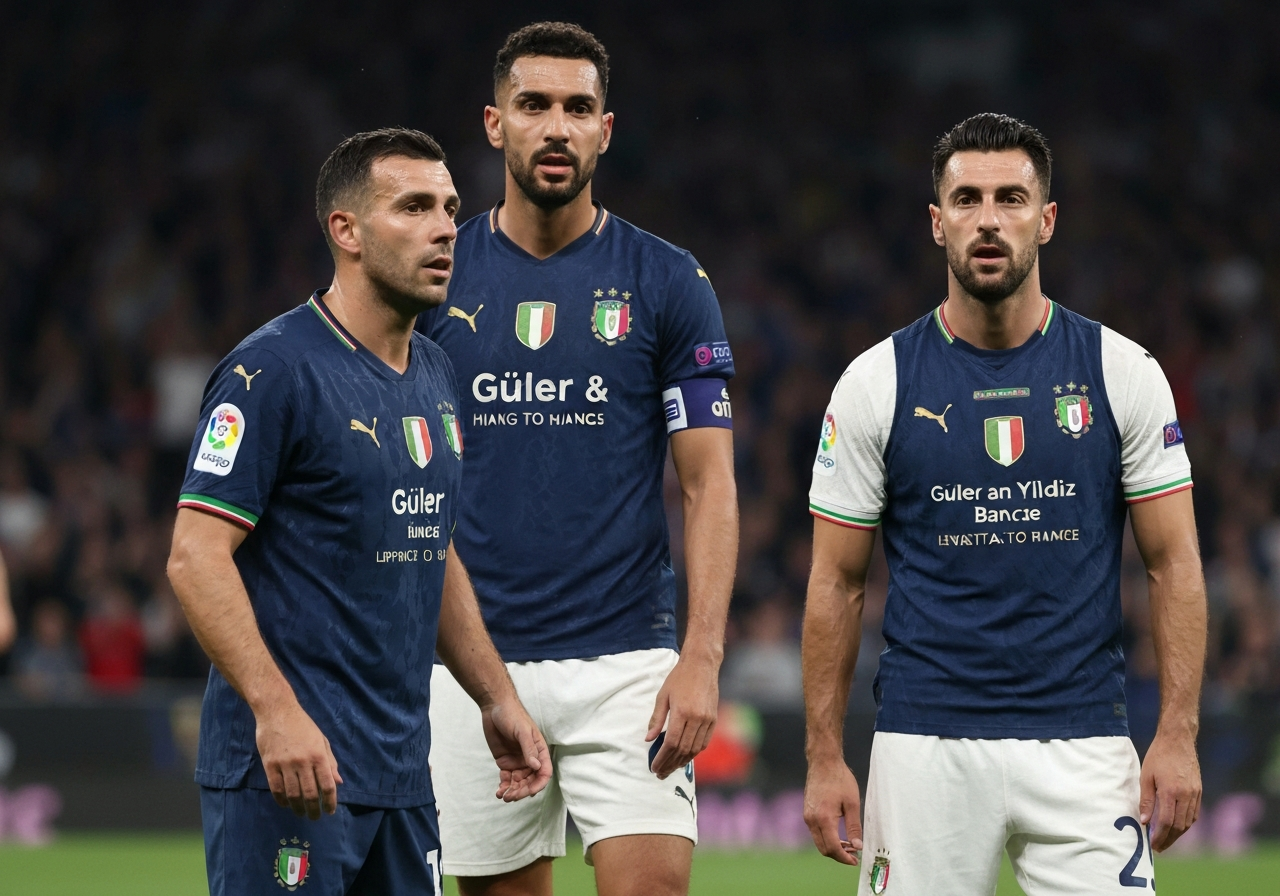
Lead: The closing stages of qualification for the expanded 2026 World Cup will be decided in a series of play-offs over the next weeks, with six final places still undecided. Hosts Canada, Mexico and the United States are already confirmed among 48 teams, and 39 other nations secured spots through qualifying routes, leaving two intercontinental slots and four European play-off places to be won. Matches range from heavyweight ties involving Italy and Poland to long-shot intercontinental fixtures featuring teams such as New Caledonia and Bolivia. Journalists and analysts are split on likely winners, with names from Viktor Gyokeres to Robert Lewandowski and young Turks Arda Guler and Kenan Yildiz singled out as potential match-winners.
Key Takeaways
- 2026 World Cup expansion: The tournament will include 48 teams; 42 have been confirmed and six spots remain to be decided via play-offs.
- Play-off structure: Two intercontinental slots will be decided from six teams, and four UEFA spots will come via 16 European teams playing eight semis and four finals.
- High-profile head-to-heads: Potential marquee match-ups include Viktor Gyokeres versus Robert Lewandowski should Sweden meet Poland in a deciding game.
- Italy’s uncertainty: Italy must navigate two one-off fixtures and faces questions over tactical identity despite a squad with Sandro Tonali, Gianluigi Donnarumma, and Nicolo Barella.
- Turkey’s youthful core: Arda Guler and Kenan Yildiz (both 20) are highlighted as players who could change outcomes if Turkey progress through a tricky Path C.
- Intercontinental favorites: Observers generally favor DR Congo and Bolivia to win their CONCACAF/Intercontinental brackets over minnows such as New Caledonia.
- Home advantage matters: European single-leg home ties give host nations a measurable edge, prompting debate about fairness in the format.
Background
The 2026 World Cup will be the first edition with 48 teams, a change that altered qualification dynamics and created additional play-off routes. FIFA’s format assigns final spots through a mix of intercontinental fixtures and expanded UEFA play-offs: six teams will contest intercontinental ties for two spots, while 16 European sides will compete for four slots across eight semi-finals and four finals. These single-match deciders, many played on the host nation’s turf, compress stakes into one-off performances rather than two-legged campaigns.
Historically, one-off play-offs increase the possibility of upsets and dramatic finishes; smaller nations can leverage a single great performance or a favorable draw. For established football powers such as Italy or Poland, the format amplifies pressure — there is no aggregate buffer. Meanwhile, rising sides and nations with strong home support view the setup as an opportunity to overturn expectations. The mix includes heavyweights who underperformed in qualifying and lesser-known teams dreaming of rare World Cup appearances.
Main Event
This week’s fixtures span continents and footballing pedigrees. In UEFA, Italy could face two home-nation opponents on paper easier than earlier qualifying rounds but still capable of producing shocks, such as Wales. Sweden, which failed to win their qualifying group and remains without Alexander Isak and Dejan Kulusevski for now, rely on Viktor Gyokeres and service from Anthony Elanga and Lucas Bergvall to overturn Ukraine and possibly Poland. A Sweden–Poland meeting would pit Gyokeres against Lewandowski in a high-stakes finishing duel.
Turkey’s Path C features young attacking talent and experienced operators like Hakan Calhanoglu; they meet Romania and could face Slovakia or Kosovo in deciding matches. Analysts name Arda Guler and Kenan Yildiz as potential breakout stars who could tip tight matches in Turkey’s favor. The Republic of Ireland, riding momentum from late qualifying results, are also seen as live contenders with home advantage a likely factor if they reach a final in Dublin.
The intercontinental side is less glamorous on paper: six teams will be narrowed to two to claim Path 1 and Path 2, and bookmakers and writers generally favor DR Congo and Bolivia over underdogs such as New Caledonia. Jamaica, despite a draw with Curacao and a managerial change, are expected to beat New Caledonia in CONCACAF’s bracket but still face a tough route to the World Cup. Bolivia’s recent results in South American competition — including wins over Brazil, Chile and Colombia in qualifying — mark them as dangerous in decisive matches.
Analysis & Implications
Single-leg play-offs on home soil amplify variance: a tilted pitch, partisan crowd and tactical conservatism can equalize differences in squad depth. For traditional powers like Italy, the format reduces margin for error and puts a premium on match-day management and psychological resilience. If Italy advance, it will likely be thanks to late-game control and individual class rather than sustained superiority across two legs.
For emerging or transitional teams, the play-offs act as both a test and a showcase. Sweden’s choice of coach and recent signings suggest a medium-term rebuild, but Gyokeres’ form and supply lines will determine immediate success. Turkey’s youthful core offers upside but also inconsistency; their path will test whether promising attackers can perform under knockout pressure. A breakout tournament for 20-year-olds like Guler or Yildiz would accelerate their club careers and reshape scouting narratives.
On a continental scale, the intercontinental play-offs highlight the gulf between confederations and the limited opportunities for smaller nations to access the World Cup under expanded formats. Should DR Congo and Bolivia progress, it will reinforce South American and African strength in do-or-die fixtures; if minnow sides advance, the tournament field will gain fresh storylines and market interest. Policymakers at FIFA will watch competitive balance closely as they assess whether single-leg, home-hosted play-offs are delivering the intended drama without compromising fairness.
Comparison & Data
| Metric | Statistic |
|---|---|
| World Cup teams (2026) | 48 total, 42 confirmed, 6 decided by play-offs |
| UEFA play-off entrants | 16 teams competing for 4 spots |
| Intercontinental entrants | 6 teams competing for 2 spots |
| Bolivia recent qualifying note | Notable wins vs Brazil, Chile, Colombia; last World Cup 1994 |
The table above synthesizes the format and a few headline data points. Though purely numerical comparisons can’t capture match-day variables such as injuries, form, or managerial decisions, they do clarify how many do-or-die slots remain and which confederations contribute most of the remaining entrants.
Reactions & Quotes
Several commentators and officials have framed the play-offs as equal parts opportunity and risk. Coverage of Italy vs Northern Ireland is running live via The Athletic, underscoring media attention on marquee European ties.
“Single-game eliminators on home turf create huge emotional swings — the advantage is real and can decide outcomes,”
Match analyst, The Athletic (media)
Players and coaches have publicly emphasized focus and preparation as decisive. Observers of Turkey highlight the blend of youth and experience as a possible X-factor.
“We trust our youngsters to rise in big moments; a single moment can change the path to the World Cup,”
Turkey national team coaching staff (official)
Fans and local media in nations such as Ireland and Wales point to home stadiums as vital assets; analysts note that passionate crowds can materially influence refereeing and momentum in close fixtures.
“There’s something about a packed stadium that lifts players beyond their individual limits,”
Supporters’ forum moderator (media/community)
Unconfirmed
- Exact availability of Alexander Isak and Dejan Kulusevski for Sweden’s fixtures is not fully confirmed; squads may change close to kick-off.
- Whether home advantage will be decisive in any given tie remains uncertain; statistical edges exist but do not guarantee results.
- Predictions that Arda Guler and Kenan Yildiz will be tournament stars are speculative and depend on form, selection, and match conditions.
Bottom Line
The remaining play-offs combine high drama with structural quirks: single-leg, home-hosted matches concentrate pressure and create fertile ground for both surprises and expected outcomes. For heavyweights such as Italy, the tests are immediate and unforgiving; for younger sides and less-fancied nations, the format is an attainable gateway to a rare World Cup appearance. Individual performers — from Gyokeres and Lewandowski to Guler and Yildiz — could decisively tilt tight contests.
Fans should expect close, tense games where small margins decide qualification. Media coverage will focus on tactical choices, set-piece moments and late-game management; for neutral observers, the play-offs offer some of the most watchable, consequential fixtures in the international calendar. In short: expect drama, and prepare for both the established names and a few surprise stories to emerge.