
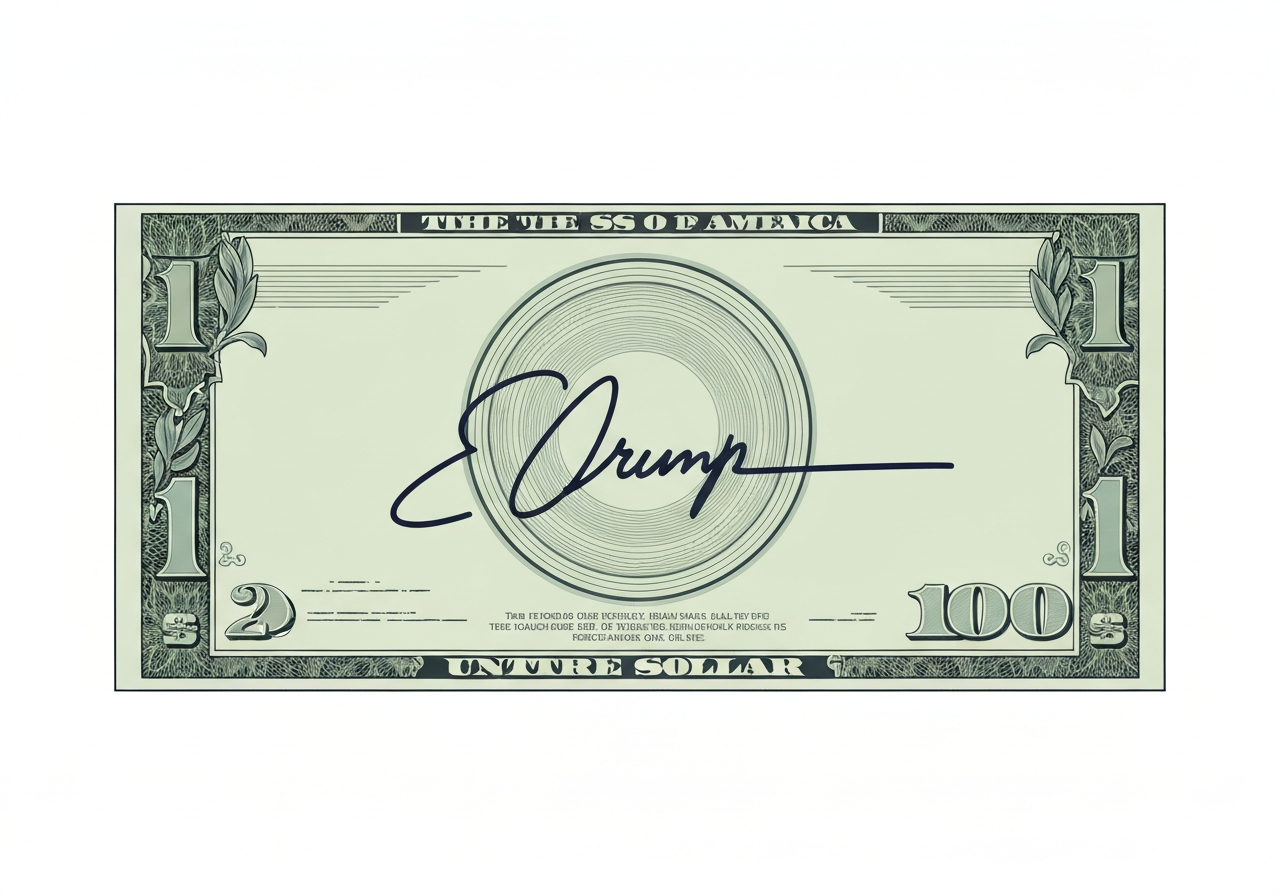
Lead: On Thursday, March 26, 2026, the US Treasury announced that President Donald J. Trump’s signature will be printed on American paper currency, marking the first time a sitting president’s signature will appear on legal tender. The change, announced in Washington, D.C., will remove the Treasurer’s signature from notes for the first time since 1861 and is being presented as a commemoration of the nation’s 250th anniversary. Treasury officials said the first $100 notes bearing the president’s signature and that of Treasury Secretary Scott Bessent will be printed in June 2026, with other denominations following in subsequent months. The decision has prompted immediate debate about precedent, legal norms, and the symbolism of currency design.
Key Takeaways
- The Treasury announced on March 26, 2026, that President Trump’s signature will appear on US paper currency, a historic first for a sitting president.
- To make room, the Treasurer’s signature will be removed from notes for the first time since 1861; Treasury officials say this is to mark the Semiquincentennial (250th anniversary) in 2026.
- The administration says the initial run of $100 bills with signatures of President Trump and Treasury Secretary Scott Bessent will be printed in June 2026; other denominations will be issued in the months that follow (Reuters reported).
- Treasury Secretary Scott Bessent framed the move as recognition of economic and fiscal achievement; Treasurer Brandon Beach issued a separate statement highlighting national symbolism.
- The change follows other actions by the administration to place the president’s name or likeness on public institutions and commemorative items, including approved designs for 24-carat gold commemorative coins bearing Trump’s image.
- Legal and historical experts note this is an unusual alteration to currency practice and have raised questions about statutory limits and customary norms governing who may appear on US money.
Background
Signatures on US currency have long reflected two official offices: the Secretary of the Treasury and the Treasurer of the United States. That pairing has been a feature of Federal Reserve notes since the 19th century; removing or replacing one of those signature lines is rare and historically significant. The Treasury says the modification is tied to national commemoration of the Semiquincentennial in 2026 and frames the move as a ceremonial recognition rather than a permanent redesign of other security features.
Presidential names and images on US currency have historically been restricted; federal law and longstanding practice have generally prevented living presidents from appearing on circulating legal tender. The administration’s announcement follows a series of prior moves that inserted the president’s name or likeness into public cultural and commemorative contexts, a trend that has renewed scrutiny of norms separating official symbols from living officeholders. Congress, courts, and administrative agencies have overlapping roles in currency design and authorization, which adds layers of legal and procedural complexity to the change.
Main Event
The Treasury’s announcement on March 26, 2026, stated that printing operations will begin with $100 notes in June 2026. Officials specified that the newly printed $100s will carry signatures attributed to President Donald J. Trump and Treasury Secretary Scott Bessent; other denominations will follow over the coming months, according to news reports. The statement described the action as part of a Semiquincentennial program, intended to link the currency to national celebrations marking 250 years since the United States’ founding.
Treasury Secretary Scott Bessent issued a statement framing the change as recognition of economic performance and dollar strength. The announcement also noted a procedural adjustment: the Treasurer’s signature line will be removed from the notes, an alteration the Treasury said has not been made since 1861. Officials characterized the decision as administrative and commemorative rather than a shift in monetary policy or the legal status of the dollar.
Press coverage has highlighted both procedural and symbolic aspects of the move. Reuters reported the printing timetable and quoted Treasury officials; the administration emphasized the commemorative intent while some critics questioned whether the change blurs historic norms separating currency design from active political leadership. The Treasury did not, in its public statement, cite new enabling legislation authorizing the president’s signature to appear on circulating notes.
Analysis & Implications
The immediate implication is symbolic: currency is a daily public symbol of national identity, and altering whose name appears on banknotes changes that symbol. By placing a sitting president’s signature on legal tender, the administration has shifted a longstanding visual and institutional boundary. That shift may affect perceptions of institutional neutrality and could set a precedent for future occupants of the presidency to use currency as a platform for personal commemoration.
Legally, the change raises questions about the statutory framework that governs currency design. Federal statutes and Treasury regulations control the production and appearance of currency, and while the Treasury has broad administrative authority over designs and inscriptions, longstanding restrictions—especially those limiting depictions of living persons—have informed practice. If challenged, courts would likely examine whether existing law permits the alteration and whether any enabling authority was properly invoked.
Politically, the decision is likely to deepen partisan debate. Supporters may view the change as fitting for a Semiquincentennial celebration and as recognition of a presidential legacy. Opponents are likely to characterize it as politicization of a national symbol. Beyond politics, there are operational considerations: redesigning plates, adjusting anti-counterfeiting measures, and coordinating Federal Reserve distribution all require logistical planning and expense, even for signature changes.
Comparison & Data
| Year | Change | Notes |
|---|---|---|
| 1861 | Treasurer signature introduced/standardized | Historic practice established for Treasurer’s signature line. |
| 2026 | President’s signature added; Treasurer’s removed | Announced March 26, 2026; $100s to be printed June 2026; other denominations later. |
The table highlights the two inflection points cited by officials: the 19th-century standardization of the Treasurer’s role on paper money and the administration’s 2026 alteration. While the change affects only signature lines rather than core security features, it is symbolically large because signatures link currency to institutional offices. The Treasury’s timetable—beginning with $100 notes in June 2026—suggests a staged rollout rather than a single coordinated redesign of all denominations.
Reactions & Quotes
Officials framed the decision as commemorative and celebratory, while critics raised concerns about precedent and propriety.
“There is no more powerful way to recognize the historic achievements of our great country and President Donald J. Trump than US dollar bills bearing his name,”
Scott Bessent, Treasury Secretary (statement)
Secretary Bessent’s language emphasized economic and symbolic themes; the Treasury positioned the measure within a broader Semiquincentennial celebration. His statement was presented by the department as recognition of fiscal stewardship and dollar strength.
“As the 250th anniversary approaches, American currency will continue to stand as a symbol of prosperity and the unshakable spirit of the American people,”
Brandon Beach, Treasurer of the United States (statement)
Treasurer Beach’s statement reiterated the commemorative framing. Independent experts and some lawmakers responded cautiously, noting the distinction between ceremonial commemoratives and circulating legal tender and questioning the administrative path taken to enact the change.
Unconfirmed
- Whether new enabling legislation or a formal change to Treasury regulations was adopted to permit a sitting president’s signature on circulating legal tender has not been documented in the Treasury’s public release.
- Reports that the federal arts panel approving commemorative coins was composed entirely of presidential appointees and that the approval violated federal law remain described in media reports and have not been the subject of a definitive legal ruling.
- The long-term plans for distribution volumes and whether old bills without the president’s signature will be withdrawn or coexist with new notes were not detailed in the announcement.
Bottom Line
The Treasury’s March 26, 2026 announcement represents a notable break with recent practice by placing the signature of a sitting president on US paper currency and removing the Treasurer’s signature for the first time since 1861. The administration frames the move as a Semiquincentennial commemoration and a symbolic recognition of national achievement, with an initial printing of $100 notes scheduled for June 2026.
Beyond symbolism, the decision raises legal, procedural, and political questions that are likely to play out in public debate and possibly in legal forums. Observers should watch for formal legal explanations from the Treasury, any congressional responses, and practical details about printing, distribution, and whether similar changes will be pursued by future administrations.
Sources
- The Guardian — News report summarizing the Treasury announcement (media).
- Reuters — News agency reporting on printing timetable and Treasury comments (media).
- US Department of the Treasury — Official department website for statements and press releases (official).