
Lead
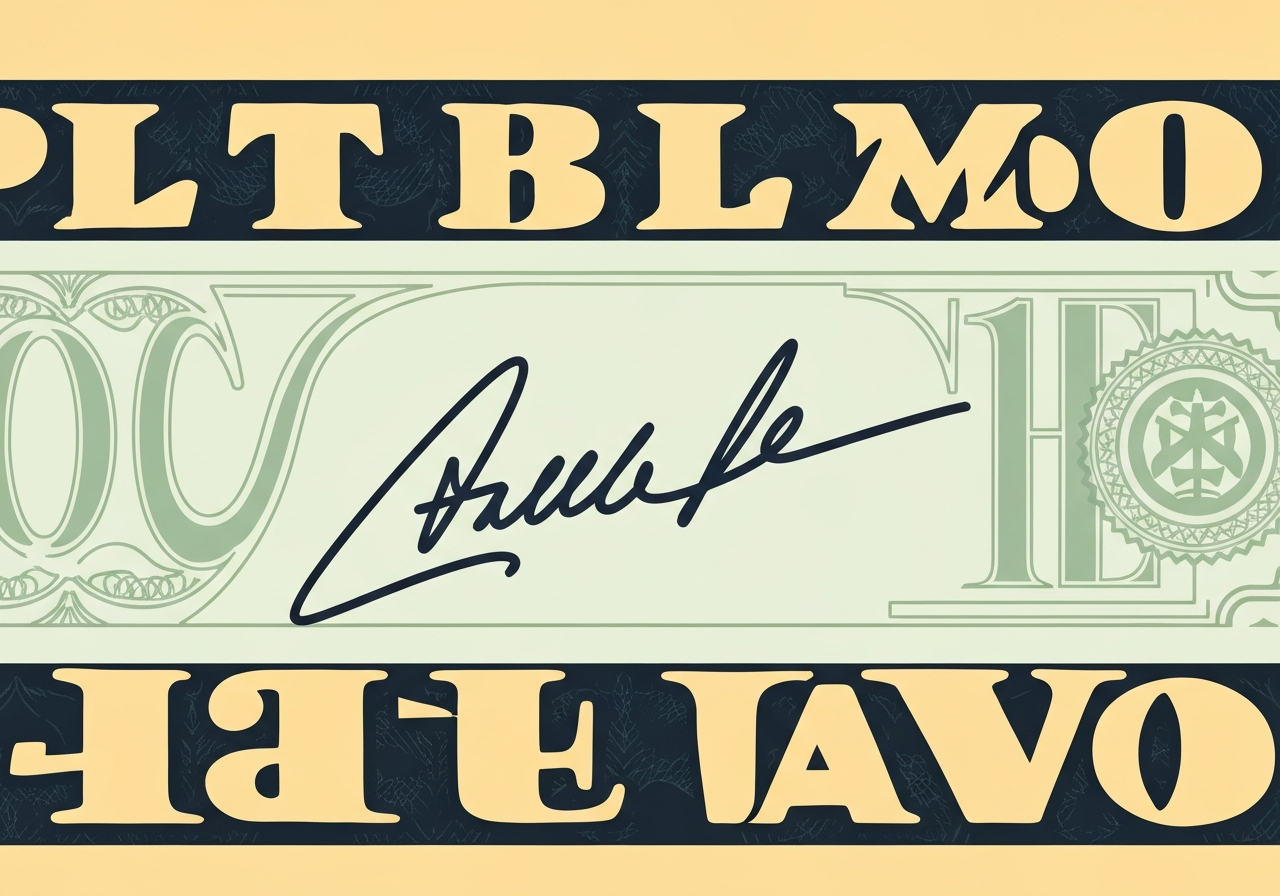
The Treasury Department announced Thursday that President Donald Trump will have his signature printed on U.S. paper currency, marking the first time a sitting president’s autograph will be included on bills. The move is presented as part of celebrations for the nation’s 250th anniversary, the Treasury said. Historically, U.S. notes have carried the signatures of the treasury secretary and the treasurer rather than the president. The department framed the change as a commemorative initiative tied to the milestone anniversary.
Key Takeaways
- The Treasury announced on Thursday that President Donald Trump’s signature will appear on U.S. paper currency to honor the country’s 250th anniversary.
- This would be the first instance of a sitting president’s signature on circulating paper bills; U.S. notes have borne treasurer and treasury secretary signatures since 1861.
- A federal commission of Trump-appointed members has also approved a design for 24‑karat commemorative gold coins bearing Trump’s image; that design still requires Treasury approval.
- The Treasury Secretary, Scott Bessent, issued a statement praising the decision and framing it as recognition of the president’s economic record.
- Polling cited in coverage shows voter discontent over the economy, including concerns about inflation and the cost of living; oil prices have risen since the start of the Iran war, a factor cited by analysts.
- Trump’s name already appears on other federal initiatives and institutions, including the Kennedy Center and the U.S. Institute of Peace, and featured on 2020 COVID stimulus checks.
Background
Signatures on U.S. paper currency have been a formal element of note design since the first federal issues in 1861, when the treasurer’s and treasury secretary’s names were printed to validate notes. That convention became an established part of the visual and institutional identity of U.S. money; changes to those elements have historically been rare and administratively managed by the Treasury. Commemorative currency and coins are a separate tradition, often used to mark anniversaries or national milestones and frequently draw interest from collectors as well as the public.
President Trump’s broader approach to branding federal projects and initiatives during and after his presidency has included placing his name on buildings, programs and policy proposals in ways that previous presidents rarely have. The announcement comes amid economic concerns among voters—rising inflation and higher living costs have been recurring themes in recent polling—and against the backdrop of geopolitical developments that have pushed oil prices higher since the Iran war began. Those economic conditions shape how symbolic gestures are received by different constituencies.
Main Event
The Treasury’s Thursday announcement said Trump’s signature will appear on dollar bills as part of the 250th-anniversary commemorations. Officials described the decision as unique in modern practice because it places a sitting president’s signature on paper notes rather than the conventional treasurer/secretary combination. The Treasury did not in its initial release specify exact denominations, print runs or the timeline for circulation, leaving several operational details to be confirmed in follow-up guidance.
The statement quoted Treasury Secretary Scott Bessent characterizing the change as recognition of the president’s role in what Bessent called an era of economic revival. A separate federal commission composed of Trump-appointed members has approved a design for 24‑karat commemorative gold coins that would depict the president; that coin design still needs formal Treasury sign-off before minting can proceed. The administration pointed to prior examples of presidential names or endorsements on federal programs—such as the imprint on 2020 COVID stimulus checks—to situate this action within a pattern of legacy-focused branding.
Operationally, updates to paper currency design and production are handled through established processes at the Treasury and the Bureau of Engraving and Printing. Any change that affects circulating notes typically requires coordination on security features, production scheduling and distribution. The Treasury’s initial announcement framed the change as commemorative; it did not assert that signature-bearing notes would immediately enter broad circulation without further logistical steps.
Analysis & Implications
Symbolically, placing a sitting president’s signature on paper money breaks a long-standing convention and elevates the act of presidential branding into the material iconography of daily life. For supporters, the addition will likely be treated as a high-profile acknowledgment of the administration’s narrative about the economy; for critics, it may be seen as an unprecedented personalization of national symbols. The political messaging value is high because currency circulates widely and is photographed or displayed as part of public discourse and collectibles markets.
From a governance and precedent perspective, the change raises questions about how future administrations might use currency design to signal priorities or cement legacies. Although commemorative coins and special-issue notes have precedent, they are generally framed as distinct from routine redesigns intended for anti-counterfeiting or denomination changes. If the Treasury treats this as a limited anniversary run, the practical effect on day-to-day commerce could be minimal while the symbolic impact remains large.
There are also practical implications for collectors, the Bureau of Engraving and Printing and financial institutions. Numismatic interest in anniversary notes and gold coins can drive secondary-market premiums; at the same time, central banks and cash-handling businesses will want clear guidance on which notes are legal tender in full circulation versus those intended primarily for collectors. Internationally, the move may prompt commentary about the personalization of state symbols in other democracies, but it is unlikely to affect the dollar’s status as the primary reserve currency absent broader macroeconomic shifts.
Comparison & Data
| Aspect | Traditional Practice (since 1861) | Announced Change |
|---|---|---|
| Signatures printed | Treasury secretary and treasurer | Includes sitting president’s signature (announced) |
| Use case | Validation and official signatory of Treasury | Commemorative recognition for 250th anniversary |
| Coin precedent | Commemorative coins issued by U.S. Mint | 24‑karat gold commemorative coin design approved by commission (pending Treasury) |
The table shows the distinction between long-standing signatory practice and the announced commemorative change. While the traditional model centers on Treasury officials, the new plan places a presidential mark alongside those institutions for an anniversary commemoration. Analysts will watch whether the Treasury limits the run to collectors or moves notes into general circulation.
Reactions & Quotes
“Printing his signature on the American currency is not only appropriate, but also well deserved.”
Treasury Secretary Scott Bessent
This Treasury statement frames the decision as an act of recognition for the president’s economic policies and situates it within an administration narrative of national achievement.
“Commemorative additions often become collector items rather than routine circulating notes; the numismatic market will be closely attentive.”
American Numismatic Association (industry group)
The numismatic community is likely to treat anniversary issues as separate market events, which could limit immediate circulation impact but elevate the notes’ secondary-market value.
Unconfirmed
- It is not yet confirmed whether the president’s signature will appear on all denominations or be limited to select notes; the Treasury has not specified denominations or print runs.
- The timetable for printing and whether signature-bearing bills will enter broad circulation or be issued primarily as commemoratives remains unspecified in the Treasury announcement.
- The approved gold‑coin design requires final Treasury approval; the minting schedule and sale terms for those coins are not yet public.
Bottom Line
The Treasury’s announcement marks a symbolic break from more than 160 years of currency signatory convention by placing a sitting president’s signature on paper money for the nation’s 250th anniversary. The immediate effects will depend on whether the Treasury limits the initiative to commemorative runs or authorizes widespread circulation of signature-bearing notes. Absent details on denominations and production, much of the operational impact remains to be clarified.
Politically and culturally, the decision amplifies presidential branding into a widely seen national artifact and will be interpreted differently across partisan and civic lines. Observers should watch for follow-up Treasury guidance on distribution, collector sales, and any legal or Congressional responses that could shape how the change endures beyond the anniversary period.