
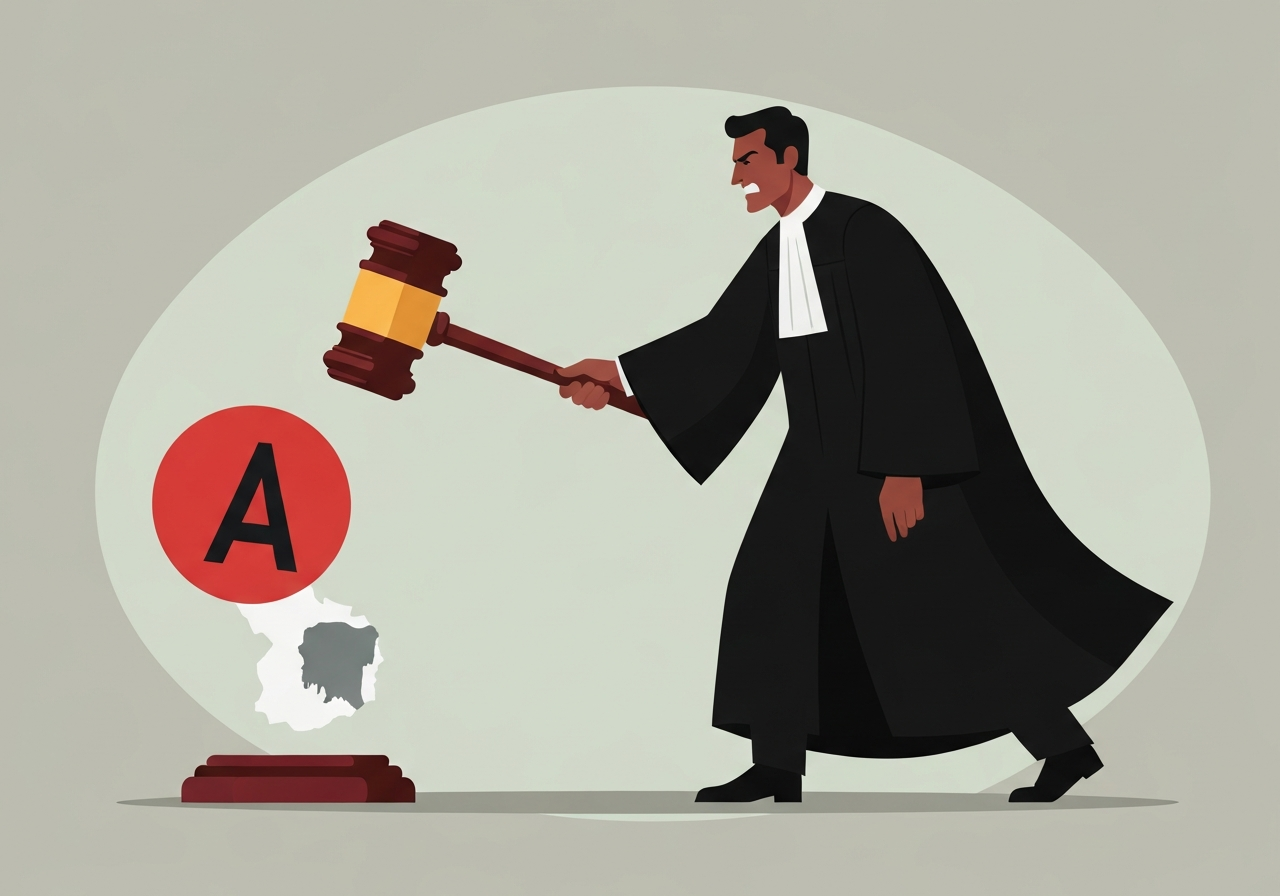
On March 26, 2026, a federal judge in San Francisco issued a preliminary injunction that pauses the Pentagon’s designation of Anthropic as a “supply chain risk” and a presidential directive halting federal use of the company’s AI, Claude. The order, from Judge Rita F. Lin of the U.S. District Court for the Northern District of California, halts the measures while the court evaluates the legal claims. Anthropic, founded in 2021, sued the government, arguing the designation and mandate amount to unlawful retaliation and will harm its business. The injunction leaves in place only a temporary legal stay as the case proceeds on the merits.
Key Takeaways
- On March 26, 2026, Judge Rita F. Lin granted a preliminary injunction pausing the Pentagon’s supply chain risk designation and President Trump’s agency-wide restriction on Anthropic’s technology.
- The case centers on the company’s AI model, Claude, and whether Anthropic can restrict military uses such as autonomous weapons and domestic surveillance.
- Anthropic filed two federal lawsuits claiming the designation is retaliatory, violates the First Amendment, and will block Pentagon contractors from using its services.
- The injunction notes the supply chain risk label is typically applied to foreign intelligence actors or terrorists, not U.S. firms vetted by the military.
- Supporters filing amicus briefs for Anthropic include Microsoft, the ACLU and retired military officials, broadening the legal and political context.
- The Pentagon argued the company’s limits on use make it untrustworthy and warned of hypothetical future updates that could create security risks.
- Judge Lin described the designation as likely unlawful and possibly arbitrary and capricious while the court determines the legal issues.
Background
Anthropic, a U.S.-based AI company founded in 2021, developed Claude as a large-language AI intended for commercial and institutional customers. In early 2026 the company publicly stated it would refuse requests to use Claude for autonomous weapons and for surveillance of U.S. citizens, a stance rooted in its AI-safety commitments. The Pentagon and Anthropic negotiated contracts and underwent security vetting before relations deteriorated as the parties disputed permissible uses. In response to Anthropic’s constraints, the Defense Department designated the company a “supply chain risk,” and President Trump issued a directive to federal agencies to stop using Anthropic technology.
The designation carries concrete procurement consequences: it can bar the company from government contracts and prevent contractors who support the military from working with Anthropic. Anthropic alleges those effects will cause immediate commercial harm, disrupting customer relationships and revenue streams. The company filed two suits in federal court alleging unlawful retaliation and First Amendment violations, seeking judicial relief to prevent implementation of the ban while litigation proceeds. The dispute has drawn attention from technology firms, civil liberties groups and former military leaders, framing the case as a test of both procurement authority and corporate speech rights.
Main Event
Judge Lin’s preliminary injunction instructs the Pentagon and federal agencies to suspend enforcement of the supply chain risk label and the White House directive pending further court consideration. In her written order she emphasized that the supply chain risk tool has historically targeted foreign adversaries and non-state actors, not domestically incorporated vendors that had previously passed security vetting. The order reasons that if the concern were narrow operational control, the Department of Defense could simply decline to deploy Claude in sensitive chains of command rather than broadly blacklisting the vendor.
The litigation timeline began publicly in February 2026, when contract disagreements surfaced between Anthropic and the Pentagon. Anthropic’s CEO, Dario Amodei, publicly reiterated limits on how the company will permit Claude to be used, drawing a sharp response from defense officials who said purchasers—not vendors—set lawful usage in many cases. In its public statement when designating Anthropic a supply chain risk, the Pentagon said a vendor should not restrict lawful use of critical capabilities in ways that could put warfighters at risk.
In court hearings leading to the injunction, government lawyers argued the company’s protective measures rendered it untrustworthy and that the designation flowed from security concerns tied to possible future changes to Claude. Judge Lin pushed back in oral remarks and in writing, noting the timing of the designation followed Anthropic’s public safety stance and that the breadth of the measures seemed inconsistent with how the designation is usually applied. The injunction does not resolve the underlying claims but prevents the government actions from taking effect while courts evaluate legality.
Analysis & Implications
Legally, the case tests the boundary between the executive branch’s procurement and national-security discretion and constitutional protections for corporate speech. Anthropic claims the designation functions as punishment for protected expression—its refusal to allow certain military applications—raising First Amendment questions about government retaliation. If the court ultimately agrees with Anthropic, agencies may face limits on using supply chain designations as leverage in policy disputes with vendors.
Policy-wise, the decision signals judicial willingness to scrutinize classifications that carry severe commercial penalties, particularly when applied to U.S. companies with prior vetting. For defense procurement, the ruling could constrain a broad administrative tool, prompting the Pentagon to rely more on contractual terms and operational choices rather than blacklisting firms. Conversely, if the government prevails later, agencies could retain a powerful lever to enforce compliance with military use expectations.
Economically, the designation alone risked immediate revenue loss for Anthropic by excluding it from defense-related contracts and affecting partnerships with government contractors. A sustained ban could chill companies’ willingness to set public guardrails on AI use, altering product development and vendor-customer dynamics across sectors. Internationally, other governments and vendors will watch whether courts curtail executive authority in tech procurement—potentially influencing global norms on arms-related AI controls and vendor responsibilities.
Comparison & Data
| Designation | Typical Targets |
|---|---|
| “Supply chain risk” | Foreign intelligence services, terrorists, or adversarial vendors |
| Blacklisting a U.S. vendor | Rare; usually follows failed vetting or clear security breach |
The table highlights why Judge Lin found the Anthropic designation notable: historically, supply chain risk labels target actors tied to foreign threats, not domestic firms that had undergone vetting. This divergence underpins the court’s concern that the classification may be legally misplaced or procedurally deficient. The broader context includes rising government scrutiny of AI providers and parallel debates about export controls, procurement rules and vendor accountability in advanced technologies.
Reactions & Quotes
“These measures appear designed to punish Anthropic.”
Judge Rita F. Lin, U.S. District Court for the Northern District of California
Judge Lin’s brief quotation, drawn from her written order, framed the injunction and suggested the court viewed the government’s actions as disproportionate given the prior relationship between the parties.
“We’re grateful to the court for moving swiftly and pleased the record shows Anthropic is likely to succeed on the merits.”
Anthropic spokesperson (company statement)
Anthropic welcomed the ruling as a necessary step to protect its business and customers while saying it remains committed to working with government partners on safe AI deployment.
“The injunction raises classic questions about retaliation for speech and adequate due process when government actions can cripple a business.”
Jennifer Huddleston, Senior Fellow, Cato Institute (technology policy)
Huddleston characterized the order as legally significant beyond the immediate parties, underscoring concerns about process and constitutional limits on punitive administrative designations.
Unconfirmed
- Whether the Pentagon has documented evidence of an actionable, present vulnerability tied to Claude beyond hypothetical future updates remains unpublicized and unconfirmed in court filings.
- The precise financial loss Anthropic will suffer if the designation were to remain in place has not been quantified publicly and therefore remains uncertain.
- It is not confirmed that all federal agencies had fully complied with the White House directive before the injunction; implementation varied and was not comprehensively documented in public materials.
Bottom Line
The preliminary injunction is a significant, though temporary, check on executive and defense procurement power in a high-profile technology dispute. By pausing the supply chain risk designation and the presidential directive, the court preserved the status quo while it considers whether the government’s actions exceeded legal bounds or functioned as retaliation for Anthropic’s public safety posture.
For stakeholders—vendors, the Defense Department, and policy makers—the case is a bellwether. A final ruling for Anthropic could limit how agencies use administrative labels to enforce compliance; a government victory could affirm broad discretion in protecting perceived operational integrity. Either outcome will shape how companies approach public commitments on AI safety and how governments balance security with vendor relations.
Sources
- NPR — news reporting and court-order summary