
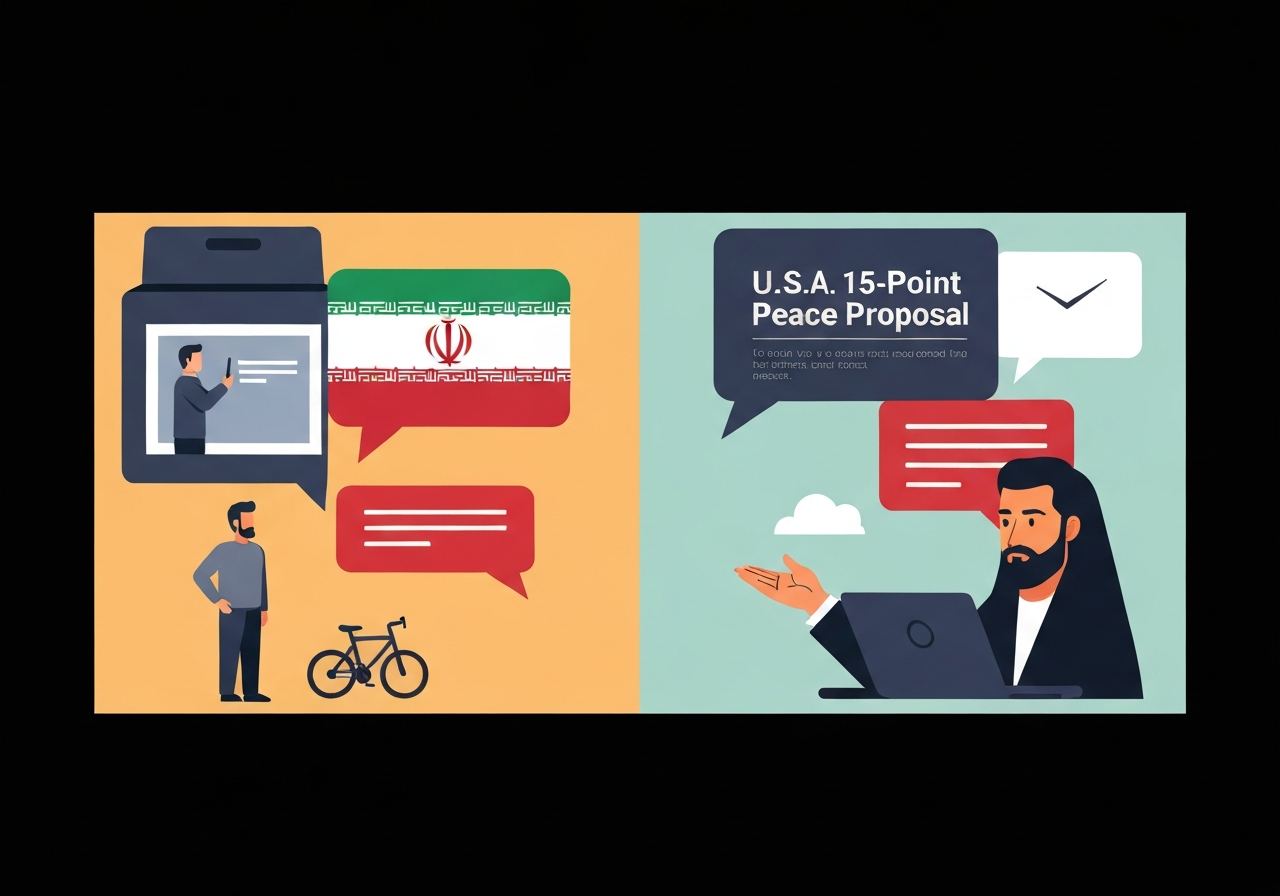
Multiple sources told CBS News that Iran’s formal response to a U.S. 15-point framework for a possible peace deal was expected Friday, March 27, 2026. The White House has been briefed that Iran may transmit a counter-proposal through intermediaries, though intermediaries had not confirmed receipt at the time of the update. U.S. officials described cautious optimism about breakthrough signs even as U.S. military operations continue in parallel. Key actors named by sources include U.S. special envoy Steve Witkoff, Secretary of State Marco Rubio, Vice President JD Vance, and Pakistan acting as an intermediary between Washington and Iran’s security establishment.
Key Takeaways
- U.S. negotiators presented a 15-point framework to Iran via Pakistan, according to U.S. special envoy Steve Witkoff and multiple sources.
- Iran’s response was reported as expected Friday, March 27, 2026; intermediaries had not confirmed delivery by 11:30 AM EDT on that date.
- The White House cited cautious hope but emphasized that Operation Epic Fury remains active alongside diplomacy.
- President Trump named Marco Rubio and Vice President JD Vance among advisers working the negotiations, alongside Witkoff and Jared Kushner.
- Pakistan is reported to have direct contacts with Iran’s security establishment, not solely its foreign ministry, per a regional source.
- Iran’s UN mission in New York declined to comment on active diplomacy; Iran has repeatedly stated it is not pursuing a nuclear weapon, consistent with the 2015 accord and public statements in 2026.
- IAEA Director-General Rafael Grossi said he has maintained contact with both the White House and Iran’s top diplomat Abbas Aragchi during the recent outreach.
Background
The proposed exchange follows two earlier, unsuccessful rounds of diplomacy between U.S. envoys and Iranian representatives, where most interactions were routed through third parties. The United States and Iran lack formal diplomatic relations, so intermediaries such as Pakistan and international organizations routinely mediate messaging. The 2015 multilateral nuclear agreement (the JCPOA) remains a reference point: Iran agreed at that time to limits on nuclear activity, and Tehran has reiterated in 2026 that it does not seek a nuclear weapon.
Regionally, states including Turkey and Pakistan have kept channels open with Iranian officials, notably Abbas Aragchi, who serves as a top Iranian diplomat for external engagement. The International Atomic Energy Agency has maintained lines to both sides, reflecting its role as a neutral technical monitor. Against this diplomatic backdrop, U.S. domestic politics and ongoing military objectives shape the administration’s public posture and internal coordination.
Main Event
On Thursday, U.S. special envoy Steve Witkoff informed officials that the administration had transmitted a 15-point peace framework to Iran via Pakistan. White House briefings to senior officials — including President Trump — indicated that intermediaries expected a reply by Friday. Multiple sources familiar with the matter described the expected reply as a counter-proposal rather than an immediate acceptance.
President Trump publicly identified key advisers involved in the outreach: Secretary of State Marco Rubio, Vice President JD Vance, Witkoff, and Jared Kushner. The White House also emphasized that while diplomacy is being pursued, military operations (cited as Operation Epic Fury) continue to press the administration’s stated objectives. White House press secretary Karoline Leavitt underscored the sensitivity of the talks and said the U.S. would not negotiate through the press.
Regionally sourced reporting suggests Pakistan contacted officials within Iran’s security establishment — the bodies that have operational control over some decision-making — rather than confining communications to the foreign ministry. Iran’s mission to the United Nations in New York declined to comment on active negotiations, a routine response in situations of delicate, unfolding diplomacy.
Analysis & Implications
If Iran returns a substantive counter-proposal, it would mark the most direct, organized response to U.S. proposals since the latest rounds of indirect talks failed. A formal Iranian reply could create an opening for sequential confidence-building measures, verification steps, and potentially outside monitoring by bodies such as the IAEA. However, sequencing diplomacy alongside ongoing military operations complicates trust-building and raises risks of miscalculation on the ground.
Diplomatic use of Pakistan as an intermediary signals regional stakeholders’ willingness to broker or at least facilitate communication. That may expand the set of actors able to influence terms or to provide guarantees, but also creates multiple lines where messages can be delayed, altered, or rejected. The role of Iran’s security apparatus in such contacts suggests negotiations may require buy-in from institutions beyond the foreign ministry to produce durable commitments.
Domestically in the U.S., naming high-profile political figures in the negotiating team (the secretary of state and the vice president) is double-edged: it signals seriousness and top-level attention but also raises partisan scrutiny and media attention that can limit negotiators’ flexibility. Internationally, any movement toward a deal would affect regional energy flows—cited by U.S. officials as a sign of warming—and could change calculations in neighboring states that have been balancing security and economic interests.
Comparison & Data
| Event | Approx. Date | Outcome |
|---|---|---|
| JCPOA (multilateral accord) | 2015 | Iran agreed to nuclear restrictions and monitoring |
| Two recent rounds of diplomacy | Prior to 2026 | Did not produce agreement; largely conducted via intermediaries |
| U.S. 15-point framework | March 2026 | Sent via Pakistan; Iranian reply expected by March 27, 2026 |
The table situates the current outreach alongside the 2015 agreement and two failed recent efforts. Those prior failures underline that even with an exchanged framework, bridging technical, security, and political gaps will require follow-on verification and concessions by multiple actors.
Reactions & Quotes
These are sensitive diplomatic discussions and the United States will not negotiate through the news media.
White House press secretary Karoline Leavitt (statement)
Leavitt’s comment framed the administration’s effort as private and ongoing while reiterating that military operations continue. The line signals an attempt to manage public expectations and preserve negotiating space.
Some concrete progress has been made.
Secretary of State Marco Rubio (public remark)
Rubio linked increased commercial activity through the Strait of Hormuz to diplomatic momentum, using economic indicators to suggest easing tensions even as formal agreement remains elusive.
I have been in touch with both sides to monitor developments.
IAEA Director-General Rafael Grossi (comment)
Grossi’s involvement reflects the IAEA’s monitoring and verification role; his contacts with both Tehran and Washington are consistent with the agency’s mandate to track nuclear-related commitments.
Unconfirmed
- Whether Pakistan had already transmitted Iran’s official written counter-proposal to U.S. intermediaries by 11:30 AM EDT on March 27, 2026 remains unconfirmed.
- Reports that Pakistan contacted Iran’s security establishment rather than only the foreign ministry are based on a regional source and have not been independently verified.
- President Trump’s assertion that Iran “agreed they will never have a nuclear weapon” is a restatement of long-standing Iranian denials and past commitments but lacks a newly published legal instrument confirming such an absolute, irreversible pledge.
Bottom Line
The expected Friday reply would be a significant, if preliminary, development: a formal Iranian counter-proposal would move talks from exploratory messaging into concrete text requiring detailed review. Yet the coexistence of diplomacy and active military operations means any forward movement will need careful sequencing, trust measures, and technical verification to avoid unravelling.
Regional intermediaries and international monitors like the IAEA are poised to play central roles if a negotiation track opens. Policymakers should treat an initial reply as the start of a potentially lengthy process that will test the capacity of intermediaries to translate political signals into enforceable, verifiable steps.
Sources
- CBS News (media report citing multiple on-the-record and background sources)
- International Atomic Energy Agency (IAEA) (international organization official communications)
- The White House (official statements and press briefings)