
Lead
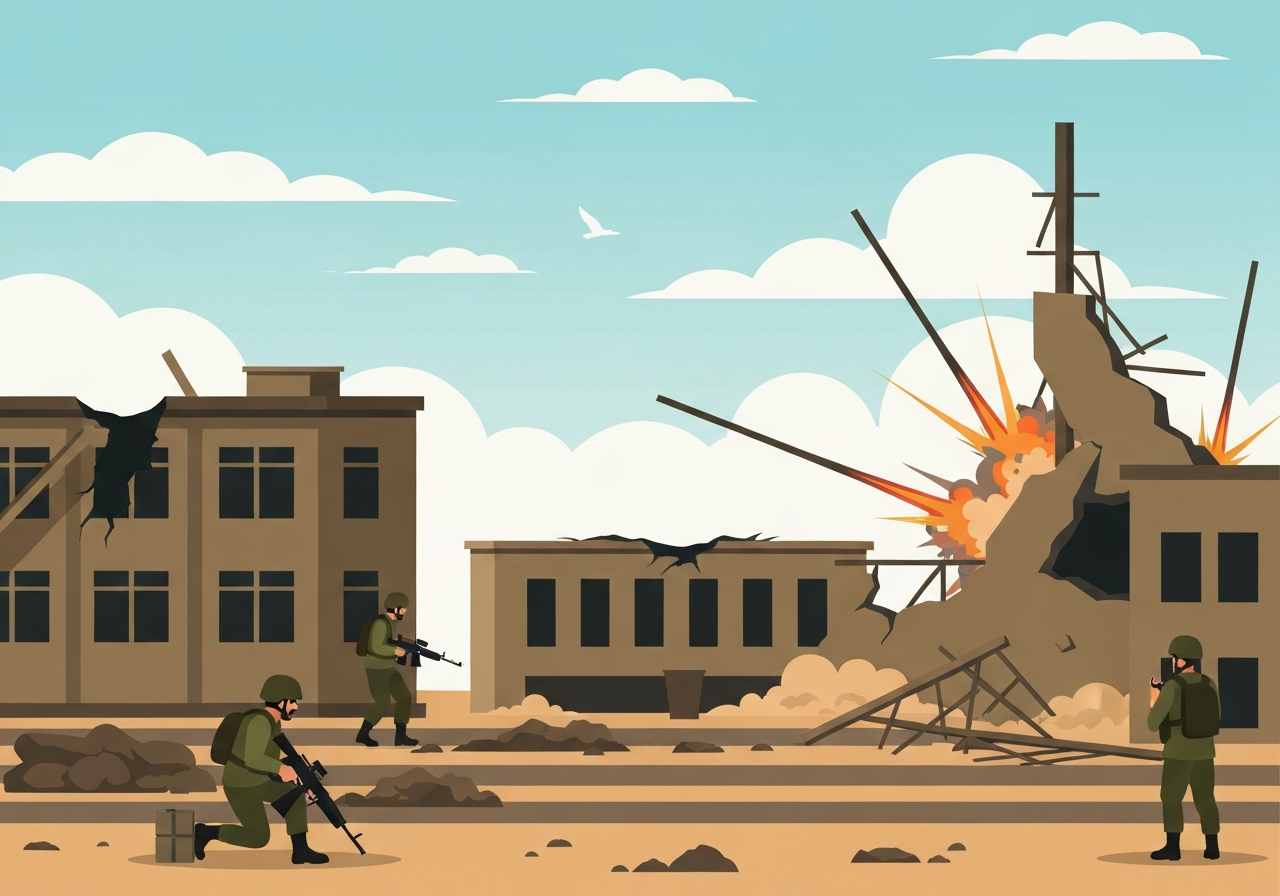
On March 27, 2026, a combined missile-and-drone strike hit Prince Sultan Air Base in Saudi Arabia, injuring 12 U.S. service members, two of them seriously, U.S. officials said. The attack—one of the most significant breaches of American air defenses during the monthlong conflict with Iran—also caused substantial damage to at least two KC-135 aerial refueling aircraft. U.S. Central Command released cumulative casualty figures for the war while officials and analysts warned the strike underscores persistent defensive vulnerabilities. The episode comes as President Trump alternates between signaling diplomatic talks and authorizing stronger strikes on Iranian infrastructure.
Key Takeaways
- 12 U.S. service members were injured in the March 27 strike on Prince Sultan Air Base; two were reported in serious condition.
- At least two KC-135 aerial refueling tankers sustained significant damage, degrading local refueling capacity.
- The incident is described by U.S. officials as among the most serious penetrations of U.S. air defenses in the monthlong war.
- Since the conflict began, U.S. Central Command reports nearly 300 American troops injured, about 225 with traumatic brain injuries; roughly 35 personnel have not yet returned to duty.
- Earlier attacks have killed U.S. service members, including six Army reservists at Shuaiba port in Kuwait and one U.S. service member at Prince Sultan on March 1, bringing the U.S. military death toll to 13.
- Human Rights Activists News Agency reported more than 1,492 civilian deaths in Iran as part of over 3,300 total fatalities in the conflict; Lebanese authorities reported more than 1,110 deaths in Lebanon.
- President Trump has threatened strikes on Iranian power plants and set, then extended, a deadline now running to the evening of April 6 for a negotiated outcome.
Background
The strike occurred amid a monthlong war between Iran and a U.S.-led coalition that has involved extensive missile and unmanned aerial system (UAS) exchanges. Iran has used ballistic missiles and a wide array of drones, including commercial-style Shahed-class UAS, to retaliate against American and allied air operations. The relative affordability and expendability of many Iranian drones complicate defense: intercept systems are more sophisticated and costly, and cannot be produced quickly enough to replace expended interceptors.
U.S. forces have dispersed personnel and equipment across the region and beyond to reduce concentration risk, sending some units as far as Europe. Despite those precautions, high-tempo barrages have damaged multiple bases and logistics nodes. Early in the war, an Iranian drone strike destroyed an Army tactical operations center at Shuaiba port in Kuwait, killing six Army reservists, and a separate March 1 attack at Prince Sultan resulted in one U.S. fatality.
Politically, the conflict has unfolded alongside competing messages from the U.S. administration: public overtures toward negotiations have been paired with stepped-up deployments and pledges to target critical Iranian infrastructure if Tehran does not meet U.S. demands. Tehran has disputed U.S. characterizations of any talks and continued its campaign of strikes on bases it deems supporting operations against Iran.
Main Event
According to two U.S. officials who spoke on condition of anonymity, the March 27 assault combined missile salvoes and strike drones to overwhelm local defenses at Prince Sultan Air Base, a major logistics and air-refueling hub in eastern Saudi Arabia. The base sustained damage to infrastructure and aircraft; the two KC-135 tankers were reported to have significant damage, affecting air-refueling operations that support regional sorties.
U.S. medical and command units transported and treated the injured service members; two were described as seriously wounded. U.S. Central Command’s public accounting of war casualties places the incident in the context of nearly 300 wounded U.S. personnel since the conflict escalated, most of whom have returned to duty. Command officials have emphasized force protection adjustments while investigating how the strike evaded or saturated defensive layers.
Iranian forces have repeatedly tested allied air defenses with mixed-range missiles and swarms of low-cost drones, exploiting gaps in sensor coverage and interceptor availability. While many incoming weapons have been intercepted, occasional successful strikes have shown that layered defenses can be stressed by simultaneous attacks and novel attack profiles. At Prince Sultan, investigators are examining impact patterns and the weapons used to determine whether new countermeasures or operational changes are required.
Analysis & Implications
The attack highlights a persistent operational dilemma: defending fixed bases against high-volume, low-cost drone and missile attacks is expensive and technically difficult. Systems that can reliably defeat ballistic threats are not always optimized for small, low-signature UAS; conversely, counter-UAS systems are often overwhelmed by sheer quantity. That calculus pressures commanders to disperse assets and complicates sustained air operations in the theater.
Damage to KC-135 tankers has immediate operational consequences. A reduced refueling posture constrains sortie generation rates for manned strike and surveillance aircraft and can force mission planners to reroute or postpone operations, increasing reliance on allied tankers or airfields further from the front. Repair timelines for large tanker airframes can be lengthy, stressing logistics chains already under strain.
Politically, the strike places added pressure on the U.S. administration’s dual approach of signalling diplomacy while preparing for escalation. If attacks on bases continue or intensify, domestic and allied calls for a stronger military response may grow, even as leaders publicly seek a negotiated settlement. Conversely, an aggressive U.S. campaign against Iranian infrastructure could widen the geographic scope of hostilities and increase civilian harm, with attendant legal and humanitarian scrutiny.
Comparison & Data
| Metric | Reported Total |
|---|---|
| U.S. service members killed | 13 |
| U.S. service members injured (total) | ~300 |
| U.S. traumatic brain injuries (TBI) | ~225 |
| Civilian deaths reported in Iran (HRANA) | 1,492+ |
| Civilian deaths reported in Lebanon (health ministry) | 1,110+ |
The table condenses publicly reported casualty totals cited by U.S. Central Command, the Human Rights Activists News Agency, and Lebanese health authorities. Differences between sources and reporting periods mean headline figures can shift as new confirmations arrive; analysts caution against equating short-term reports with final tallies. Still, the scale and distribution of casualties indicate heavy effects both inside Iran and in neighboring states, alongside significant U.S. military non-fatal injuries, many with long-term consequences such as TBI.
Reactions & Quotes
Official and civil-society responses have varied between calls for stronger defense measures and concern about escalation. Context for each response is summarized below.
“Peace talks are underway, and going well,”
President Donald J. Trump (public statement reported by news outlets)
President Trump has publicly framed diplomatic engagement as active even as the administration has authorized additional strikes and deployments. Iranian officials have disputed the characterization of progress in talks.
“Nearly 300 American troops have been injured since the start of the war,”
U.S. Central Command (official casualty accounting)
Central Command’s figures have been used by Pentagon officials to explain the human cost to U.S. forces and to justify adjustments in force posture and medical support. The command emphasizes ongoing medical care and tracking for personnel with blast-related injuries.
“More than 1,492 civilians have been killed in Iran,”
Human Rights Activists News Agency (reporting)
Human-rights and health-agency tallies have been cited by humanitarian organizations to underscore civilian suffering and to press for protections and access for relief efforts.
Unconfirmed
- Whether the strike was directed by Iran’s central command structure or by a proxy unit has not been independently verified.
- The exact type and serial identification of all weapons used in the Prince Sultan attack remain under investigation and have not been publicly released.
- Full repair assessments and projected return-to-service dates for the damaged KC-135 tankers have not been confirmed by the U.S. Air Force.
Bottom Line
The March 27 strike on Prince Sultan Air Base, which injured 12 U.S. troops and damaged key aerial-refueling assets, underscores persistent vulnerabilities in defending forward bases against coordinated missile-and-drone attacks. Operational impacts—particularly loss of tanker capability—can ripple through mission planning and allied support, potentially degrading air operations in the short term.
Politically, the incident complicates parallel tracks of diplomacy and military pressure. Continued successful penetrations of U.S. defenses increase the likelihood of escalatory responses, while aggressive U.S. strikes against Iranian infrastructure carry the risk of broader regional damage and higher civilian tolls. Commanders and policymakers face hard trade-offs between force protection, sustaining operations, and minimizing civilian harm as the situation evolves.
Sources
- The New York Times — Major news outlet reporting original incident and details.
- U.S. Central Command — Official military command casualty accounting and public statements (official).
- Human Rights Activists News Agency (HRANA) — Civil-society monitoring group reporting civilian casualties in Iran (non-governmental reporting).