
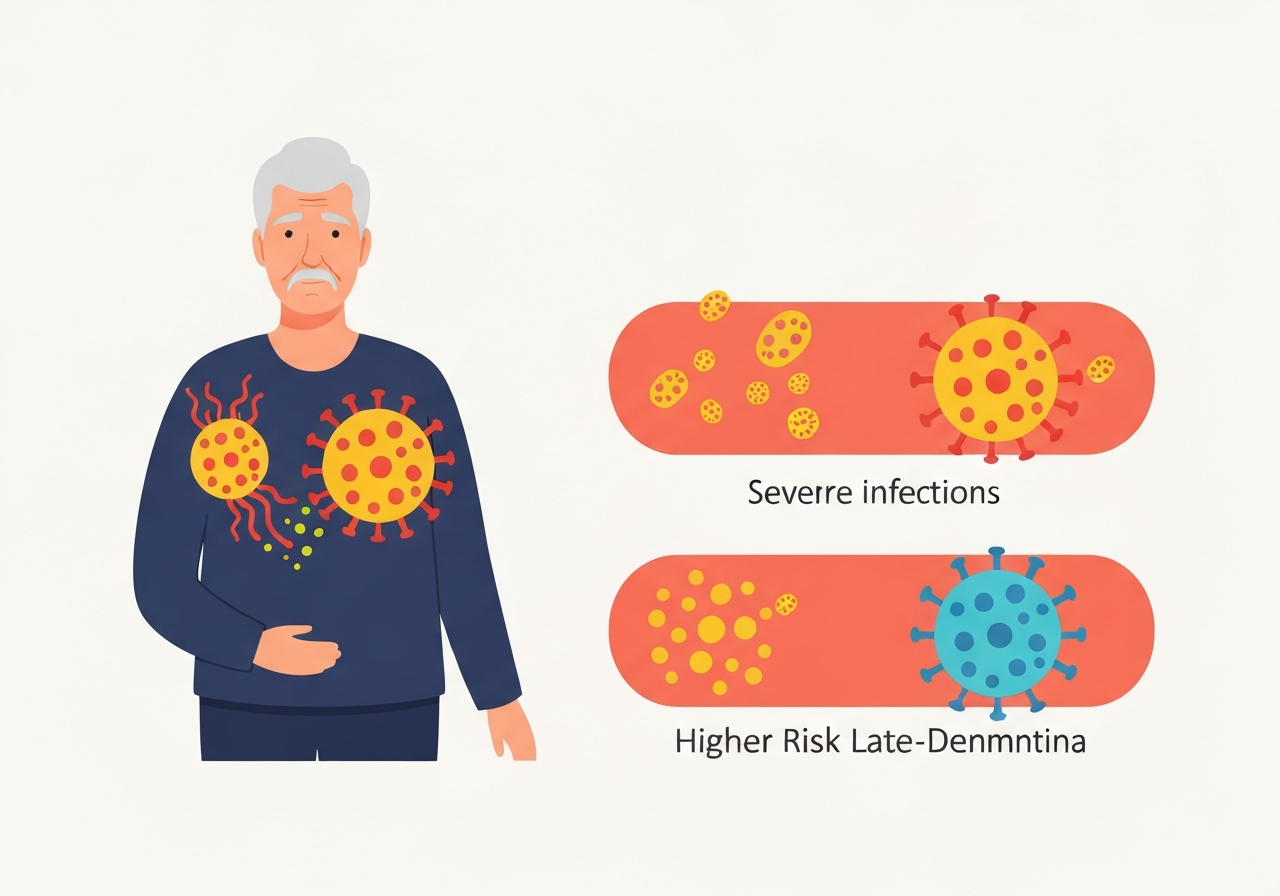
Lead: A large Finnish study published in PLOS Medicine finds a statistical association between certain hospital-treated illnesses — including bacterial urinary tract infections and other bacterial infections — and a higher rate of late-onset dementia. Researchers at the University of Helsinki analyzed records for more than 65,000 people aged 65 and older and evaluated 170 hospital-treated conditions occurring one to 21 years before dementia diagnosis. After narrowing the list to 29 conditions most strongly linked to dementia, two were infectious (cystitis and general bacterial infection); these infections typically appeared about five to six and a half years before dementia diagnosis. The team reports that those hospitalized for cystitis or bacterial infections had about a 19% higher rate of late-onset dementia, while nearly 47% of dementia cases followed one of the 29 identified conditions.
Key takeaways
- The study used Finnish national health registers to evaluate 170 hospital-treated diseases occurring 1–21 years before a dementia diagnosis in 65,000+ patients aged 65 and over.
- Researchers shortlisted 29 diagnoses most strongly associated with later dementia; two of these were infections: cystitis (UTI) and general bacterial infection.
- About 47% of dementia cases had at least one of the 29 conditions prior to diagnosis.
- Hospital-treated cystitis and bacterial infections were associated with an ~19% higher rate of late-onset dementia compared with those without such infections.
- On average, the infections identified occurred roughly 5 to 6.5 years before the dementia diagnosis.
- The study is observational and cannot establish causation; it lacked baseline cognitive testing and detailed infection treatment data, which the authors note as key limitations.
- Authors and outside experts suggest severe infections might accelerate pre-existing cognitive decline through inflammation or immune pathways, but controlled intervention trials are needed.
Background
Interest in infection–dementia links has increased as researchers probe nontraditional risk pathways for late-onset dementia. Past work has implicated systemic inflammation, herpesviruses, and other pathogens as potential contributors to neurodegeneration, but evidence has been mixed and often limited by small samples or short follow-up. Large-scale register studies, like the Finnish analysis, use long medical-record histories to search for patterns across many diagnoses and long preclinical windows.
The University of Helsinki team examined hospital-treated conditions appearing between one and 21 years before dementia onset to capture both proximate triggers and earlier contributors. By considering 170 distinct diagnoses, the researchers aimed to separate conditions that commonly precede dementia because they are part of the same aging trajectory from those that may have independent associations. Stakeholders include clinicians, public-health authorities, and researchers designing prevention trials.
Main event
The study, published in PLOS Medicine, employed national inpatient data and dementia diagnoses among individuals aged 65 and older. Investigators first screened 170 hospital-treated diseases recorded in the one-to-21-year window before dementia diagnosis and then focused on the 29 conditions showing the strongest statistical associations. Notably, two of those 29 were infections: cystitis (a bacterial urinary tract infection) and a category labeled general bacterial infection.
Timing emerged as a key detail: the infections most commonly occurred about five to six and a half years before dementia was documented. When the team adjusted for the presence of the 29 conditions, the association between infections and dementia persisted, suggesting infections were not simply proxies for other illnesses on the list. Quantitatively, people with hospital-treated cystitis or bacterial infections had approximately a 19% higher rate of late-onset dementia compared with those without those infections.
Researchers acknowledged important data gaps. The registers did not include baseline cognitive assessments or standardized clinical examinations before dementia diagnosis, and the dataset lacked detailed information on how infections were treated (for example, outpatient antibiotics versus multi-day hospital courses). These limits mean the observed timing and strength of associations require cautious interpretation.
Analysis & implications
The findings support the hypothesis that severe infections might be one contributing factor among many that shape late-life cognitive trajectories. One plausible biological explanation is that systemic infections provoke inflammatory or immune responses that accelerate neuronal injury or unmask existing neurodegenerative processes. However, the register-based design only demonstrates temporal association rather than direct causation.
Clinically, the study underscores that hospitalization for an infection in older adults may mark a point of increased vulnerability. For public-health planning, the results suggest value in infection prevention — including vaccination and improved infection control — especially for populations at elevated dementia risk. But whether preventing those infections would reduce dementia incidence requires randomized or interventional evidence, which the authors call for.
At the population level, the observation that nearly half of dementia cases had one of the 29 preceding conditions highlights the multifactorial nature of dementia. Cardiovascular disease, metabolic disorders, mental-health conditions and injuries also featured among the 29 diagnoses, reaffirming that dementia prevention will likely require broad strategies addressing multiple risk domains.
Comparison & data
| Metric | Value |
|---|---|
| Study population | 65,000+ patients aged ≥65 |
| Diagnoses screened | 170 hospital-treated diseases (1–21 years pre-diagnosis) |
| Conditions with strongest link | 29 diagnoses (2 infections) |
| Share of dementia cases with one of 29 | ~47% |
| Typical lag from infection to dementia | ~5 to 6.5 years |
| Relative rate increase with hospital-treated cystitis/bacterial infection | ~19% |
Putting these numbers in context: a 19% relative increase does not mean most people with such infections will develop dementia. Absolute risk depends on age, baseline cognitive status, comorbidities and competing risks. The lack of baseline cognitive testing in the registers means some individuals may already have had undetected cognitive decline at the time of hospitalization for infection.
Reactions & quotes
“This study is observational, so we cannot prove cause and effect between severe infections and dementia,”
Pyry N. Sipilä, MD, PhD — University of Helsinki (study co-author)
Context: Sipilä emphasized the need for intervention trials to determine whether preventing infections reduces or delays dementia onset.
“Severe infections appear to play an independent role rather than merely marking general frailty; that points to biologically meaningful processes such as inflammation affecting the brain,”
Joel Salinas, MD — Behavioral neurologist, Isaac Health (external expert)
Context: Salinas, not involved in the study, noted other major dementia risk factors — heart disease, hypertension, diabetes, depression and head injuries — and urged viewers to see infections as one element among many.
Unconfirmed
- Whether preventing hospital-treated infections (for example, through vaccination or other measures) will lower dementia incidence remains unproven and requires randomized trials.
- The precise biological mechanisms linking bacterial infections such as cystitis to later dementia — e.g., direct pathogen invasion versus systemic inflammation versus hospitalization-related decline — are not established by this study.
- How different treatment approaches for infections (outpatient vs. inpatient, antibiotic regimens) influence subsequent dementia risk is unknown because treatment details were not available in the registers.
Bottom line
This large register-based study from the University of Helsinki adds weight to the view that severe, hospital-treated infections are associated with a modestly increased rate of late-onset dementia, with infections often preceding diagnosis by about five to six and a half years. The result does not prove infections cause dementia, but it highlights infections as a potentially modifiable element in a multifactorial risk profile.
For clinicians and public-health practitioners, the pragmatic takeaway is to prioritize established prevention strategies — cardiovascular risk management, fall and head-injury prevention, mental-health care, and infection control including recommended vaccinations — while researchers pursue intervention trials to test whether reducing severe infections can alter dementia trajectories.
Sources
- AOL News — Media report summarizing the study (news coverage)
- PLOS Medicine — Peer-reviewed journal where the study was published (academic)
- University of Helsinki — Institutional affiliation of lead researchers (academic/official)