
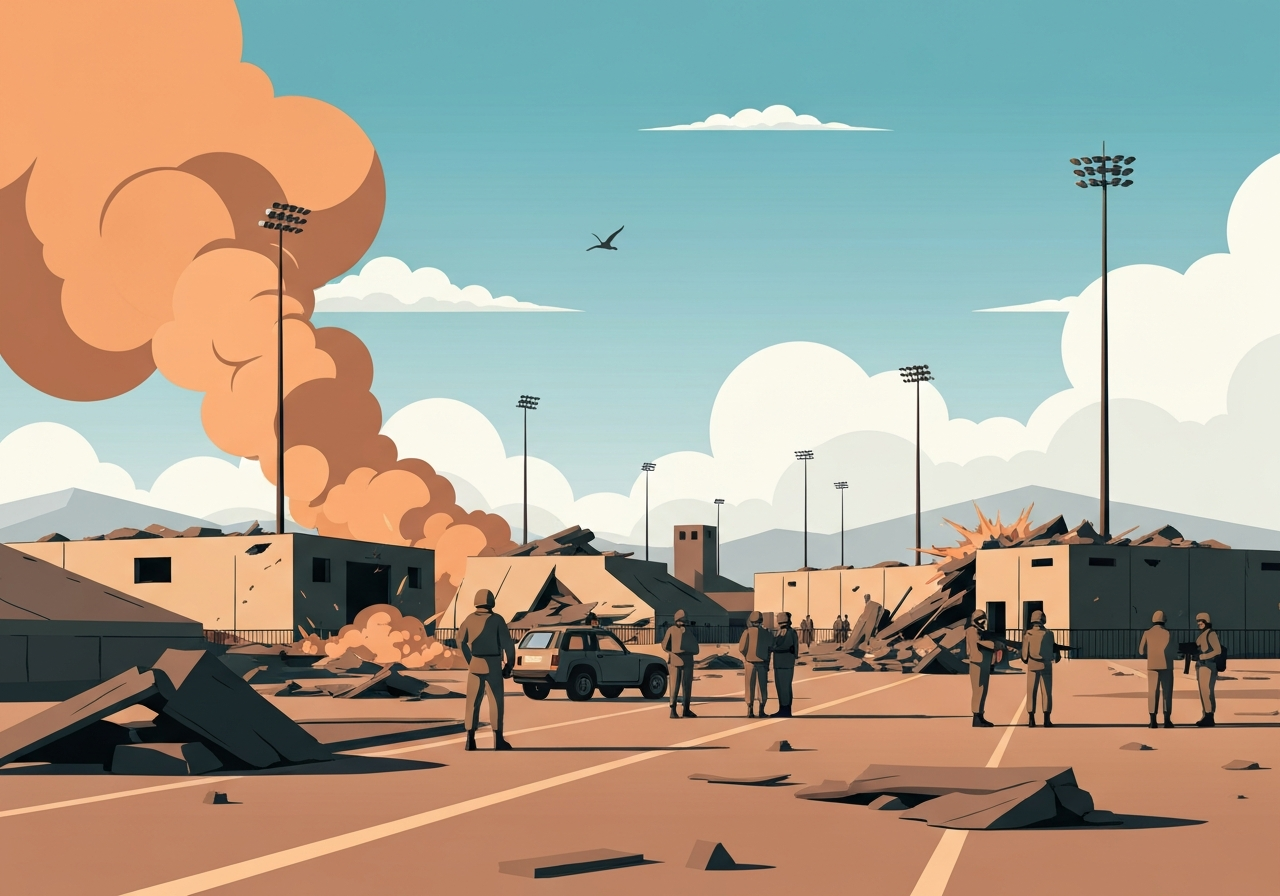
Lead: On March 28, 2026, an Iranian missile-and-drone strike on Prince Sultan Air Base in Saudi Arabia injured 12 U.S. service members, two critically, U.S. officials said, as the monthlong war that began on February 28 widened across the region. The attack also damaged at least two KC-135 refueling aircraft and came amid new Houthi missile launches toward Israel and strikes on Gulf infrastructure. Diplomats have intensified shuttle diplomacy, with Pakistan hosting senior regional foreign ministers to seek de-escalation.
Key Takeaways
- 12 U.S. troops were injured in the strike on Prince Sultan Air Base on March 28, 2026; two are reported in serious condition.
- The attack combined ballistic missiles and drones and significantly damaged at least two KC-135 aerial refueling tankers, U.S. officials said.
- The Houthis in Yemen launched a ballistic missile toward Israel the same day, marking the groups first direct strike in this phase of the conflict.
- Multiple Gulf states reported incoming drones and missiles: the U.A.E. engaged dozens of threats, Abu Dhabi sustained five injuries from falling debris, and Salalah port in Oman was hit, injuring one worker.
- Nearly 300 American service members have been reported injured since the war began, with about 225 diagnosed with traumatic brain injuries, U.S. Central Command said.
- Humanitarian and economic consequences are mounting: more than 1,492 civilian deaths reported in Iran and over 1,110 killed in Lebanon amid wider disruptions to shipping and fertilizer supplies.
- Pakistan is hosting foreign ministers from Saudi Arabia, Turkey and Egypt to press for de-escalation and to shuttle messages between Washington and Tehran.
Background
The conflict began on February 28, 2026, when U.S. and Israeli strikes against Iranian targets triggered a sustained Iranian retaliation campaign using ballistic missiles and armed drones across the region. Since then, a cascade of reciprocal strikes has broadened the fighting beyond direct U.S.-Iran exchanges, drawing in proxies and regional states. Iran has also effectively limited traffic through the Strait of Hormuz, a chokepoint that normally carries about one fifth of global oil flows, compounding energy market volatility.
The Houthis, a Shia movement that controls large swaths of Yemen since seizing Sanaa in 2014, have periodically targeted shipping lanes and Israeli territory in prior rounds of regional tension. U.S. forces previously launched more than 1,100 strikes against Houthi targets in response to attacks on commercial vessels, and a 2025 cease-fire reduced but did not eliminate Houthi operations. The current phase has again exposed vulnerabilities in air defenses and in the protection of forward-deployed logistics and refueling assets.
Main Event
U.S. officials reported that on March 28 an Iranian salvo of missiles and drones struck Prince Sultan Air Base in Saudi Arabia, injuring 12 American personnel and causing substantial damage to at least two KC-135 refueling tankers. The officials, speaking on background because they were not authorized to comment publicly, described the incident as among the most serious penetrations of U.S. defenses in the monthlong campaign.
The same 24-hour period saw a Houthi-launched ballistic missile headed toward Israel, intercepted by Israeli air defenses, and multiple strikes across the Gulf that damaged critical infrastructure. Kuwait International Airport reported radar damage after drones struck, and the port of Salalah in Oman sustained damage and one injury. The U.A.E. said its forces had engaged 20 ballistic missiles and 37 drones over the prior day, and falling debris from an interception ignited fires in Abu Dhabi, injuring five people.
Iran and its proxies framed these attacks as coordinated reprisals for U.S.-Israeli operations against Iranian military and industrial sites, including recent strikes on steel plants and facilities described by Tehran as dual use. Israeli strikes on infrastructure in cities such as Tehran and Isfahan were reported by residents and state media, and international agencies warned of risks to civilian infrastructure and nuclear facilities.
Analysis & Implications
The strike on Prince Sultan underscores a shift in risk to forward logistics and aerial refueling capabilities that are critical to sustained U.S. air operations. KC-135 tankers are high-value, limited assets; damage to multiple aircraft simultaneously degrades sortie rates and complicates force posture across the region. U.S. commanders have already dispersed forces and moved units out of high-risk locations, but attrition to support platforms can force operational trade-offs.
Regionally, Houthi attacks on Israeli territory and maritime routes magnify the conflicts economic ripple effects. The Red Sea and Strait of Hormuz are vital trade arteries; repeated disruptions have already pushed shipowners to reroute around Africa, increasing costs and delivery times. That dynamic raises the prospect of prolonged supply chain pressure, particularly for energy and fertilizer markets, with implications for food security in import-dependent countries.
Diplomatically, Pakistans role as host for Saudi, Turkish and Egyptian ministers signals an attempt to create space for talks even as kinetic exchanges continue. Mediation channels between Washington and Tehran remain active but opaque; quick breakthroughs appear unlikely while military operations target industrial and nuclear-related facilities. The longer the kinetic campaign persists, the harder it will be to restore confidence among insurers, ship operators and energy markets.
Comparison & Data
| Category | Reported Figure |
|---|---|
| Civilian deaths in Iran | 1,492+ |
| Total reported deaths in conflict zone | 3,300+ |
| Fatalities in Lebanon | 1,110+ |
| U.S. service members killed | 13 |
| U.S. service members injured | ~300 (about 225 TBIs) |
The figures above compile reported casualty totals and U.S. casualty tallies disclosed by official and media sources. They illustrate both the concentrated civilian toll inside Iran and Lebanon and the accumulating cost to U.S. forces, where traumatic brain injuries from blast exposure account for a large share of nonfatal harm. These numbers are likely to change as local authorities and international monitors update counts.
Reactions & Quotes
U.S. defense officials characterized the Prince Sultan strike as a serious breach that will prompt a reassessment of asset protection and basing patterns; they stressed continued efforts to protect personnel while maintaining operational tempo.
‘The attacks from Yemen will continue until the aggression ends’, said a Houthi military spokesman, framing the group’s actions as part of a broader resistance campaign.
Yahya Saree, Houthi military spokesman
Pakistan’s leadership emphasized mediation and de-escalation as its objective while underlining the humanitarian risks of further strikes on civilian infrastructure.
‘We are working to facilitate dialogue and reduce tensions’, Pakistan’s prime minister said after speaking with Iran’s president, reflecting Islamabad’s dual role as interlocutor and regional neighbor.
Prime Minister Shehbaz Sharif (statement)
International officials from the International Atomic Energy Agency cautioned that strikes near nuclear facilities raise the risk of a radiological incident, even when no abnormal releases have been reported.
‘Strikes near nuclear sites increase the danger of a major radiological incident’, the agency’s director said in a public appeal for restraint.
International Atomic Energy Agency (IAEA)
Unconfirmed
- Precise attribution and direct command-and-control links between Iran and the Houthi missile launch toward Israel remain publicly unverified.
- The full extent of damage to Iranian nuclear and industrial sites reported in multiple locations is still being assessed; independent confirmation of some strikes is limited.
Bottom Line
The March 28 strikes underline how quickly the conflict has expanded beyond bilateral strikes to threaten logistics hubs, commercial shipping, and regional infrastructure. Damage to U.S. aerial refueling assets and injuries among service members raise immediate operational concerns for coalition air operations in the region.
Diplomatic circuits are active but fragile: Pakistans mediation talks and European planning to escort ships through the Strait of Hormuz reflect complementary approaches to limit economic fallout even as military steps continue. The coming days will be decisive in whether these measures reduce escalation or whether the conflict sustains a wider, more disruptive regional trajectory.
Sources
- The New York Times (news live coverage)
- U.S. Central Command (official military statements)
- International Atomic Energy Agency (international organization)
- Ministry of Foreign Affairs, Pakistan (official government statement)
- Reuters (independent news agency)