
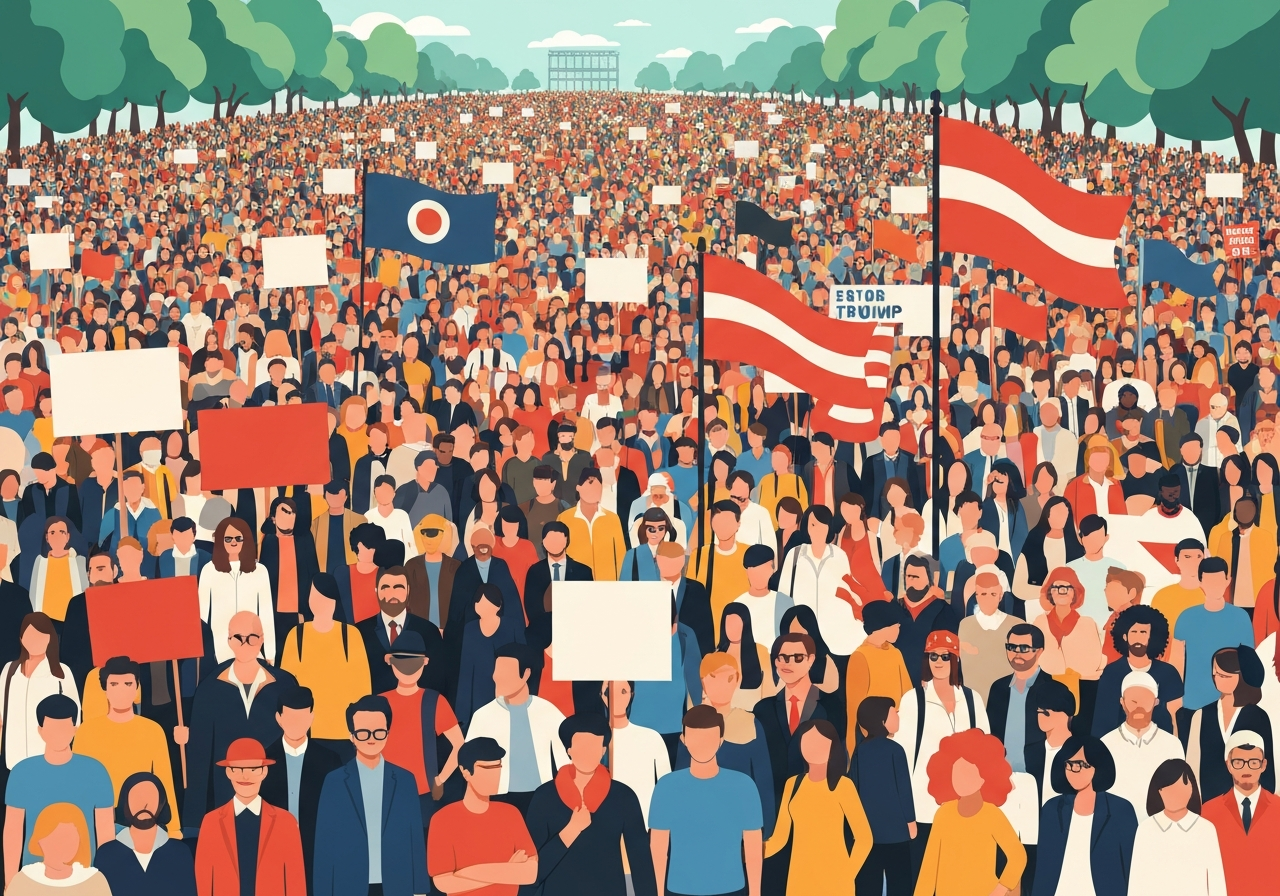
Organizers of the No Kings demonstrations said they expected the largest turnout yet on Saturday, March 28, 2026, with events staged across the United States and in some neighboring countries. The coalition—formed from progressive activist groups—planned more than 3,000 local actions aimed at protesting President Trump’s immigration enforcement, the administration’s conduct toward Iran, and what participants describe as authoritarian tendencies. Organizers called the day a national rebuke of policies they consider brutal at home and abroad and urged mass, nonviolent turnout. The movement framed the day as the third nationwide wave of No Kings actions since the campaign began.
Key takeaways
- No Kings planned over 3,000 events on March 28, 2026, across U.S. cities and several international locations, organizers said.
- The group described the Saturday actions as the third nationwide series; its previous October mobilization allegedly drew about 5 million participants at roughly 2,600 demonstrations, per No Kings figures.
- Demonstrators cited immigration enforcement and the war in Iran as primary grievances driving turnout, and attendees traveled multiple hours in some cases to join local rallies.
- White House spokesperson Abigail Jackson dismissed the protests as “Trump Derangement Therapy Sessions” and questioned their significance.
- Voices within the movement emphasized intergenerational participation, with older activists such as Third Act’s Bill McKibben highlighted as organizers and mobilizers.
- Organizers and participants repeatedly called for nonviolent action, public visibility and continued civic engagement beyond large events.
Background
No Kings formed as a progressive coalition pushing mass street protests against what it characterizes as undemocratic behavior by President Trump. The movement has staged multiple nationwide days of action, asserting parallels between the administration’s behavior and historical authoritarian tendencies. Its organizers argue that public demonstrations are a corrective to a perceived decline in civic engagement limited to periodic voting.
The coalition counts a variety of affiliated groups, including senior-focused networks such as Third Act, local grassroots teams like Visibility Brigade, and a range of community activists. No Kings’ public messaging emphasizes solidarity across generations, immigrant communities, and political backgrounds, aiming to translate street presence into sustained political pressure. Organizers cite prior turnout figures to justify ambitious targets for March 28.
Main event
On Saturday, crowds appeared in city plazas, state capitols and neighborhood intersections from St. Paul and Kansas City to Fort Myers and Austin. Participants carried signs and staged scripted performances—some drawing on imagery from Margaret Atwood’s The Handmaid’s Tale—to dramatize concerns about civil liberties and executive power. Local organizers reported large, steady turnouts throughout the daytime hours.
Speakers and marchers described the U.S. posture toward Iran and aggressive immigration enforcement as immediate motivators for attendance. One attendee, Carina Kagan, said she drove more than two hours to protest what she called the prospect of U.S. ground deployment in the region and cited fear for service members and families. Organizers emphasized peaceful conduct and coordination with local authorities in many locations.
The White House response framed the demonstrations as marginal and politically motivated. Abigail Jackson, a White House spokesperson, dismissed the events and pointed to donors she described as “major leftist” backers, saying coverage of the protests outstrips public interest. Organizers rejected that characterization and sought to highlight broad-based grievances among attendees.
Local variations were visible: some rallies drew thousands in major metropolitan thoroughfares, while smaller towns hosted focused gatherings. Photographs from public radio partners and local outlets documented dense crowds on Benjamin Franklin Parkway in Philadelphia, marches through Kansas City’s Country Club Plaza, and local rallies in places such as Sioux City and Macon, Georgia.
Analysis & implications
The No Kings mobilization underscores persistent polarization in U.S. political life and the role protest movements continue to play in framing national debate. Large, visible demonstrations can pressure elected officials, drive media coverage and strengthen activist networks, but converting episodic turnout into policy change remains difficult without legislative allies and sustained organizing.
On foreign policy, the protests signal public unease about potential escalation in the Middle East and skepticism about plans that might involve ground troops. Organizers’ focus on Iran reflects broader questions about objectives and exit strategies that the administration has articulated, including the stated aim of degrading Iran’s missile capability and preventing a nuclear program.
Domestically, immigration enforcement remains a mobilizing issue. Demonstrators emphasized the human impact of ICE actions and the chilling effect those actions can have on immigrant communities. For many participants, visible protest is meant to counter both policy choices and an atmosphere of fear that organizers say suppresses civic participation among vulnerable populations.
Looking ahead, the movement’s influence will depend on its ability to sustain engagement between mass days of action, build coalitions with institutions that can legislate change, and translate symbolism into measurable political outcomes such as votes, local ordinances, or litigation outcomes.
Comparison & data
| Event | Organizers’ reported turnout | Number of demonstrations (organizers) |
|---|---|---|
| October national actions (previous year) | ~5,000,000 (No Kings) | ~2,600 |
| March 28, 2026 actions | Planned: >3,000 local events (organizers) | Planned: >3,000 |
The organizers’ own figures are the primary source for the tallies above; independent verification of nationwide attendance totals is typically delayed and uneven. Media outlets and local authorities often provide congregated estimates for individual cities, which can vary from organizer reports. Even with uncertainty in absolute numbers, the scale of local demonstrations indicates continued organizational capacity.
Reactions & quotes
Coverage included both official pushback and participant testimony. The White House framed the actions as politically trivial, while activists portrayed them as a moral and civic imperative.
“The only people who care about these Trump Derangement Therapy Sessions are the reporters who are paid to cover them.”
Abigail Jackson, White House spokesperson
Jackson’s dismissal followed the organizers’ call for mass turnout; the comment was part of an official attempt to minimize the protests’ perceived political impact. Organizers responded by emphasizing turnout among diverse constituencies and highlighting personal testimony from attendees.
“It’s just a useless, vain war by a demented, old man… all these Americans might die for that — it’s just top of mind.”
Carina Kagan, protest attendee
Kagan’s remarks captured one strand of sentiment at rallies: deep anxiety about possible escalation in Iran and the human cost of military action. Many speakers connected foreign policy concerns to domestic priorities and civil liberties.
“People of all kinds are outraged by what’s happening in the country right now… there’s never been any that I thought were fascist, and I think that that’s very clear what we’re now starting to deal with in this country.”
Bill McKibben, Third Act founder (affiliated with No Kings)
McKibben and allied organizers framed intergenerational participation as a strategic and moral asset for the movement, urging older Americans to join younger actors in public protest.
Unconfirmed
- Organizer claims that March 28 would be “the biggest protest in U.S. history” are assertions by No Kings and were not independently verified at the time of reporting.
- The figure of about 5 million attendees for the prior October actions is reported by No Kings; independent, consolidated counts of nationwide attendance were not available immediately.
- Public statements about potential U.S. ground troop deployments in Iran remain contingent on policy decisions and were not confirmed as imminent by administration officials.
Bottom line
The March 28 No Kings mobilization reinforced the movement’s capacity to organize broadly across the United States and to center issues that cut across generations, including immigration enforcement and the risk of military escalation in Iran. While organizers sought to project a historic scale, verification of nationwide totals requires time and multiple independent sources.
Regardless of exact numbers, the protests matter politically as a signal of persistent grassroots energy and as a barometer of public anxiety about both foreign policy and domestic civil liberties. The long-term effect will hinge on whether the coalition can convert episodic visibility into institutional influence and sustained civic participation.