
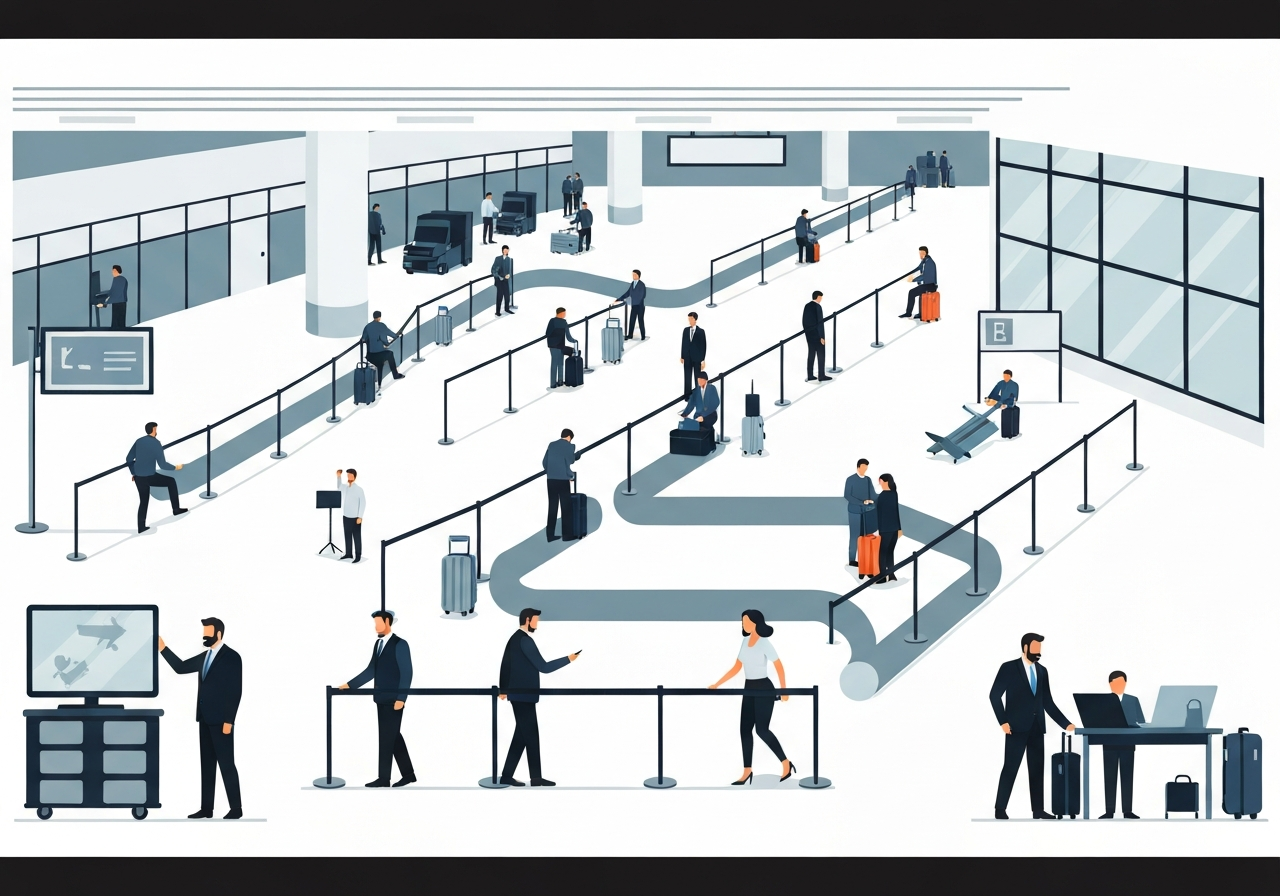
Lead: Travelers facing long airport security lines should not expect an immediate fix even after President Donald Trump signed an executive order to restart pay for Transportation Security Administration officers following a partial government shutdown that left many workers unpaid for more than 40 days. The Department of Homeland Security said paychecks could begin arriving as early as Monday, March 30, but former TSA Administrator John S. Pistole warned the move is a temporary remedy. Staffing gaps — including more than 500 officers who quit and callout rates that peaked at 12.35% — have already disrupted flights and lengthened wait times at checkpoints. How quickly lines return to typical levels depends on how many employees actually return and how long airports take to rebuild schedules.
Key Takeaways
- The White House executive order signed Thursday directs federal officials to ensure TSA employees receive pay despite the shutdown; DHS said payments could start Monday, March 30.
- DHS reported more than 500 TSA officers resigned during the shutdown; high callout rates hit 12.35% of the workforce (about 3,560 employees) on Friday.
- Disruptions have already caused missed and canceled flights, longer security waits and traveler uncertainty at multiple U.S. airports.
- Former TSA Administrator John S. Pistole called the payroll action a “temporary fix,” noting the main question is how many officers return to duty.
- If a majority of staff resume work, wait times could ease within several days to a couple of weeks; persistent attrition could prolong delays.
- Some officers who left may have taken new jobs, meaning restorations of staffing levels are uncertain even after pay restarts.
Background
The partial federal government shutdown stretched beyond 40 days, during which many TSA officers worked without pay. Transportation Security Administration personnel continued operating airport checkpoints through the shutdown, providing essential security services despite missing regular wages. Historically, TSA experiences an annual attrition rate of about 7%, and extended unpaid periods can accelerate departures and reduce retention. The combination of resignations, short-term callouts for economic reasons and ordinary turnover created staffing shortfalls that affected airport operations nationwide.
On Thursday, President Donald Trump signed an executive order directing federal officials to ensure TSA employees are paid despite the lapse in appropriations. The Department of Homeland Security announced it had begun the process to restore pay under the president’s direction and under the supervision of the department’s leadership named in public statements. DHS said officers “should begin seeing paychecks as early as Monday, March 30.” But operational recovery at airports depends on personnel availability, rostering, and local managerial decisions. Travelers and carriers have already adjusted plans amid increased uncertainty about checkpoint wait times.
Main Event
During the shutdown, DHS recorded high callout rates that limited checkpoint staffing; the department reported a peak callout rate of 12.35%, representing more than 3,560 employees absent on a single day. In addition, DHS said more than 500 TSA officers formally quit their positions during the shutdown period. Those losses forced airports and airlines to adapt shifts and sometimes cancel or delay flights due to inadequate security screening capacity.
DHS officials stated they began immediate steps to restore payroll after the executive order. The agency’s public statements indicated that payment processing would start promptly so employees could receive paychecks beginning Monday, March 30. Airport managers face the operational task of reassigning staff, updating schedules and ensuring checkpoint equipment and secondary screening lanes are staffed to match passenger volumes. Some facilities reported significant lines and wait times while they operated with reduced staff levels.
Former TSA Administrator John S. Pistole told reporters the payroll action is only a stopgap and that the critical issue is return-to-work behavior among officers. Pistole noted several variables: how many call back in after receiving pay, whether some former employees have already taken other work, and how long it will take to re-establish normal staffing patterns. He suggested that, even with pay resumption, airports might still experience delays for days or weeks depending on these factors and on local demand surges.
Analysis & Implications
The immediate financial restoration removes a key barrier that kept some officers from reporting to work: lack of funds for essentials such as rent and transportation. Reinstating pay should reduce short-term callouts caused by acute financial hardship, but it does not instantly reverse resignations or replace staff who have taken new jobs. Hiring and training replacement officers takes time, and managers must balance operational needs with regulatory training requirements for screeners.
Operational recovery will vary by airport. Major hubs with flexible staffing reserves and robust rostering systems may rebound faster, while smaller airports or those with a higher concentration of resignations could lag. Airlines and airport operators will monitor checkpoint throughput metrics and may adjust flight schedules or open contingency screening lanes while staffing stabilizes. For travelers, that means localized variability: some airports could see near-normal wait times within days, others could face stretched delays for several weeks.
There are broader political and market implications. The incident highlights how prolonged funding disputes can ripple into transportation reliability and consumer confidence. Frequent or prolonged operational disruptions can influence traveler behavior—shifting some demand to driving, rail or bus—and could affect airline on-time performance metrics and costs tied to delays and cancellations. Policymakers may face renewed pressure to secure more durable funding solutions to reduce vulnerability to future shutdowns.
Comparison & Data
| Metric | Reported Value |
|---|---|
| Shutdown duration (reported) | More than 40 days |
| Resignations (reported) | More than 500 officers |
| Peak callout rate | 12.35% (~3,560 employees) |
| Earliest payroll restart | Monday, March 30 |
The table summarizes figures cited by DHS and public statements. Those numbers explain why airport checkpoints experienced operational strain: an absence of thousands of screeners and hundreds of resignations reduces redundancy and flexibility in schedules. Restoring pay removes one impediment but cannot instantly rebuild staffing levels lost to permanent departures.
Reactions & Quotes
DHS characterized the payroll action as an immediate step to mitigate strains at checkpoints and restore normal operations. Agency spokespeople emphasized that payroll processes had begun and that officers “should begin seeing paychecks” starting March 30.
“It’s a temporary fix — the real question is how many people actually come back to their posts once pay resumes.”
John S. Pistole, former TSA Administrator (media interview)
Pistole’s remarks framed the issue as behavioral and operational rather than purely financial. He noted that some former employees may have accepted other work and could delay notifying TSA of their decisions until after they receive a paycheck, complicating immediate staffing forecasts.
“TSA has immediately begun the process of paying its workforce.”
Department of Homeland Security spokesperson (official statement)
The DHS statement stressed action on payroll while acknowledging that logistical steps remain for restoring checkpoint capacity. Airport managers and carriers indicated they would continue to adjust operations until staffing and throughput reach acceptable levels.
Unconfirmed
- Exact number of officers who will return to duty after receiving paychecks is not yet verified.
- Whether some of the more than 500 officers who quit already secured permanent alternative employment remains uncertain.
- Timing for full restoration of pre-shutdown checkpoint staffing at specific airports is not confirmed and will vary by location.
Bottom Line
Resuming payroll for TSA employees removes an immediate barrier that forced some staff to miss shifts, but it is not an instant cure for longer-term staffing shortages caused by resignations and normal attrition. Travelers should plan for continued variability in wait times over the coming days and possibly several weeks, depending on how many officers return and how quickly airports can rebuild rosters.
Practical steps for travelers include allowing extra time at airports, checking airline and airport updates before travel, and considering alternative transportation modes if schedules are tight. For policymakers and managers, the episode underscores the operational risks of funding disruptions and the importance of contingency planning to preserve travel reliability.