
Lead
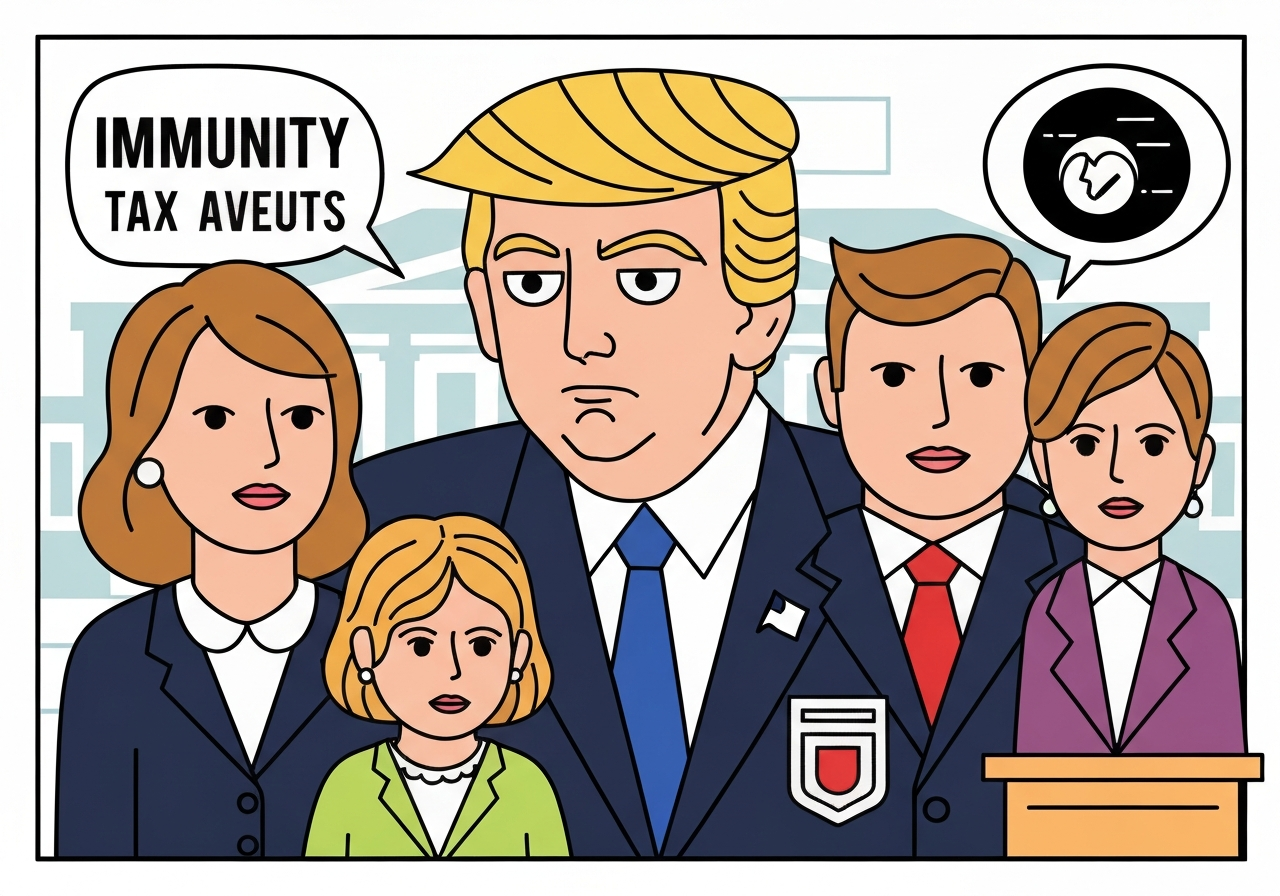
On , the US Department of Justice issued a one-page directive that bars prosecution or pursuit of tax claims against President Donald Trump, members of his family and his businesses. The order, signed by acting Attorney General Todd Blanche, was posted on the Justice Department website as an addendum to a $10 billion settlement with the Internal Revenue Service over leaked tax records from 2018–2020. The directive states authorities are “FOREVER BARRED and PRECLUDED” from pursuing audits that are “currently pending or that could be pending,” triggering immediate criticism from Democratic lawmakers and ethics experts.
Key Takeaways
- The DOJ directive was posted 20 May 2026 and signed by acting Attorney General Todd Blanche, a Trump appointee.
- The action was added to a Thursday agreement resolving a $10bn lawsuit against the IRS over leaked tax returns from 2018–2020.
- The document states individuals named—including Trump, family members and related businesses—are “FOREVER BARRED and PRECLUDED” from audit prosecutions.
- Congressional Democrats, led publicly by Senator Adam Schiff, condemned the move as corrupt and self-dealing.
- Experts call the directive “unprecedented,” arguing it departs from standard audit and enforcement practice for US taxpayers.
- The settlement also created a $1.776bn “Anti-Weaponization Fund,” with payouts to be decided by a five-member commission largely appointed by Blanche.
- Blanche has denied the fund is partisan and says applicants from across the political spectrum may apply.
Background
Federal tax enforcement in the United States typically subjects all taxpayers to audits, penalties and potential prosecution when returns are found deficient. Presidents are legally required to file tax returns and enjoy the same privacy protections as other taxpayers, although nominees have often released returns voluntarily since 1980; President Trump broke that custom in 2016. The IRS sued over a leak of Trump’s tax information to media between 2018 and 2020, a dispute that produced a $10bn settlement announced in mid-May 2026.
As part of that settlement, the Department of Justice appended a brief directive that extends beyond the leak case itself to immunize Trump and associated parties from current or potential tax audits. The move sits alongside the settlement’s creation of an “Anti-Weaponization Fund,” sized at $1.776bn, intended to compensate individuals who claim politically motivated legal targeting. The fund’s structure—decisions by a five-member commission, four members appointed by Blanche—has raised alarm among critics who fear politicized distribution.
Main Event
On 20 May 2026 the Justice Department uploaded a one-page document, signed by acting Attorney General Todd Blanche, declaring that federal authorities are “FOREVER BARRED and PRECLUDED” from prosecuting or pursuing tax claims against President Trump, family members and his businesses. The short directive explicitly covers “inquiries that are currently pending or that could be pending,” and includes tax returns filed prior to the settlement.
The directive was posted without an accompanying press release or formal announcement, according to the Justice Department posting. That absence of broader context compounded concern among lawmakers who said the scope and permanence of the bar depart from precedent. Democratic senators questioned whether an acting AG should issue such a sweeping protection tied to a settlement negotiated with a sitting president.
Blanche defended the settlement and the fund in hearings and public remarks, saying the mechanism is open to all who claim to have been victims of politically motivated prosecutions. He denied any direction from President Trump to establish the fund, while stressing that applicants across the political spectrum could seek relief. Nonetheless, the composition of the commission—four appointees tied to Blanche—was highlighted by critics as a key vulnerability.
Analysis & Implications
Legally, the directive challenges conventional enforcement norms. Tax audits and potential prosecutions are ordinarily matters for the IRS and the Department of Justice to pursue under established rules; a blanket bar tied to a civil settlement is rare and, experts say, unprecedented. That raises questions about separation of powers and whether an executive-branch settlement can effectively insulate a private citizen—or a sitting president and affiliates—from routine enforcement actions.
Constitutional concerns were voiced by ethics attorneys who argue that exempting the president or his family from financial obligations could implicate the domestic emoluments clause and equal-protection principles. Those arguments would likely face review in federal courts if challenged. Separately, the political optics are significant: opponents see the package as an extraordinary executive advantage, while allies frame it as redress for alleged politically motivated investigations.
The $1.776bn fund adds a governance and accountability dimension. Because four of five commission members will be appointed by Blanche, critics warn of a feedback loop in which payments could reward allies or critics’ opponents. Even if intended as a remedy for genuine victims of “lawfare,” the fund’s scale and appointment power create incentives for politicized claims and litigation over distribution bylaws and eligibility.
Comparison & Data
| Typical US Taxpayer | As of DOJ Directive for Trump & Family |
|---|---|
| Subject to audit, penalties, possible prosecution | Directive states prosecution/pursuit barred for pending or potential inquiries |
| IRS enforcement governed by internal rules and criminal statutes | Immunity issued as settlement addendum, posted by DOJ |
| Audit exposure regardless of political status | Directive creates an exception tied to settlement |
The table highlights the departure between standard IRS enforcement and the protections spelled out in the DOJ posting. While settlements can include releases or covenants not to sue, the use of a Justice Department directive to foreclose future audit prosecutions for a named group is an outlier. Legal challenges or congressional oversight could test the durability and legality of that approach.
Reactions & Quotes
Democratic lawmakers were swift and vocal in condemning the directive. Senator Adam Schiff (D-CA) framed the action as corrupt and self-serving, saying the president had effectively secured preferential treatment.
“The tax-dodging President gets himself and his whole family a tax break, thanks to Todd Blanche.”
Senator Adam Schiff (D-CA)
Academics and former administration lawyers described the move as without precedent and constitutionally fraught. Nathan Goldman, an accounting and tax professor, emphasized the break with routine enforcement; Richard Painter, who served as chief White House ethics lawyer under President George W. Bush, warned of potential constitutional violations.
“The clause … breaks from current tax policies and makes them different from other US taxpayers.”
Nathan Goldman, NC State University (tax expert)
“If the president or his family owe the IRS money, this raises serious constitutional concerns.”
Richard Painter (former White House ethics lawyer)
Unconfirmed
- Whether the directive’s immunity can block future civil suits by state authorities remains unclear and has not been publicly tested.
- Claims that the fund will be used exclusively for partisan payouts are alleged by critics but lack confirmed examples of partisan distributions as of 20 May 2026.
- Any internal DOJ memos or discussions that guided Blanche’s decision have not been released and remain unverified.
Bottom Line
The Justice Department’s directive marks a significant and unusual expansion of a civil settlement’s scope by appearing to bar federal tax prosecution of a sitting president, his family and businesses. The combination of a $10bn settlement over leaked tax records and a $1.776bn fund raises legal, constitutional and political questions that are likely to prompt litigation, congressional scrutiny and intense public debate.
For now, the directive stands as written on the DOJ website; its durability will depend on legal challenges and oversight actions. Observers should watch for court filings, formal DOJ explanations, and the first decisions by the fund’s commission to gauge whether this measure reshapes expectations for accountability and enforcement at the highest levels of US government.
Sources
- Al Jazeera (international news media)
- United States Department of Justice (official federal government site)