
Lead
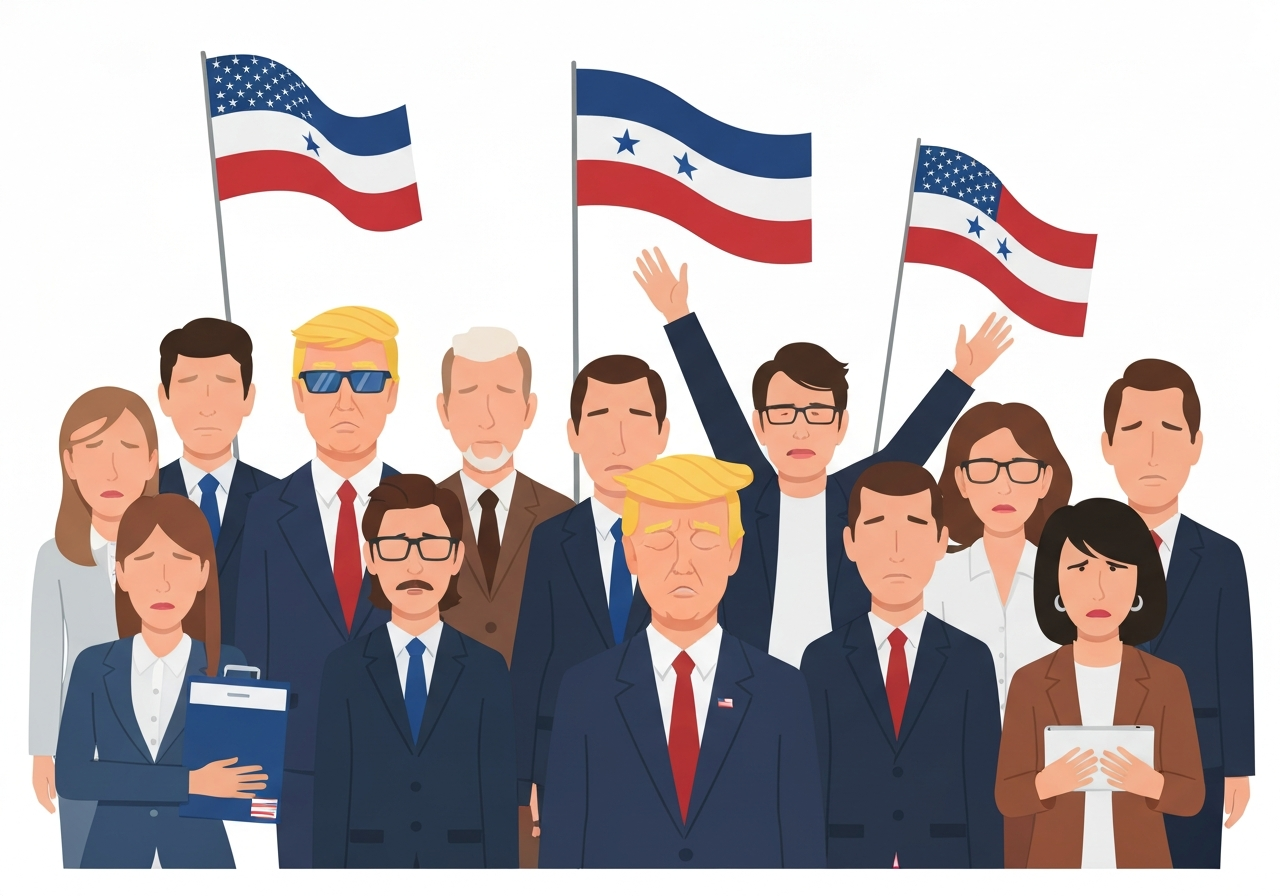
On March 28, 2026, in Grapevine, Texas, attendees at the Conservative Political Action Conference expressed steady loyalty to President Trump while voicing anxiety about the fallout from the U.S. strikes on Iran. Many said the campaign could be justified if it ends quickly, lowers gasoline prices and avoids sending American troops to Iran — outcomes they called optimistic but possible. At the same time, several activists and candidates described real financial strain at home and uncertainty over whether the GOP can hold unity ahead of the November 2026 midterm elections. The conflict, now in its fifth week, hung over panels and hallway conversations throughout the conference.
Key Takeaways
- Support for Trump remained strong among CPAC attendees, even as the Iran campaign entered its fifth week and sparked debate within the conservative movement.
- Economic concerns figured prominently: attendees cited higher fuel costs, with one participant noting a $120 fill-up and others reporting per-gallon prices rising from the $50–$60 range to around $70 for a full tank in Texas.
- Many voiced opposition to a ground invasion — a repeated refrain was resistance to repeating protracted wars like Iraq and Afghanistan.
- Speakers encouraged a rapid political change inside Iran, but protesters and speakers acknowledged that a large-scale uprising has not materialized yet.
- GOP strategists warned the war’s economic effects could affect performance in the November 2026 congressional elections if inflation and fuel pain persist.
- Some attendees displayed pro-monarchy symbols and chants, and a minority promoted the acronym MIGA (Make Iran Great Again) at the event.
- High-profile conservative figures — including evangelist Franklin Graham, Steve Bannon and exiled Iranian figure Reza Pahlavi — framed the action as strategically necessary while admitting significant risks.
Background
The aerial campaign against Iran has reopened long-simmering debates about U.S. interventions overseas. President Trump once campaigned on avoiding prolonged foreign wars, contrasting his stance with the ground wars of the 2000s; the current operation has forced Republicans to reconcile that posture with a show of force aimed at degrading Iranian capabilities. For many in Trump’s base, the administration’s stated objective — to prevent an Iranian nuclear threat and to support political change inside Iran — resonates with decades of hostility dating to the 1979 revolution.
At the same time, memories of extended, casualty-heavy occupations in Iraq and Afghanistan make some conservatives wary of entering another prolonged conflict. Economic channels are also a concern: supply disruptions and market uncertainty can quickly translate into higher gasoline and grocery prices at home, which voters feel directly. CPAC, as a long-standing gathering of the conservative movement, therefore has become a venue where support for military measures is tested against domestic political and economic realities.
Main Event
Across panels and informal conversations, CPAC delegates repeatedly voiced conditional support for the administration’s strikes. Republican strategist Kyle Sims, 61, said he backs Trump’s handling of the campaign but has “mixed emotions,” stressing that he does not want U.S. ground forces deployed. Others, like congressional candidate Ron Eller of Mississippi, endorsed the strikes while warning that the surge in oil and gas prices has strained voters’ pocketbooks.
Onstage and in side sessions, speakers alternated between rallying and cautioning. Evangelist Franklin Graham signaled alignment with the base, while moderator Mercedes Schlapp and panelist Hiva Wallace debated the risks of a prolonged engagement; Wallace argued the Iranian populace is prepared to return to the streets, a claim that some attendees received with hope and others with skepticism. Exiled royalist Reza Pahlavi told followers to persist in pressing for regime change, urging the U.S. not to provide the regime respite.
Prominent conservative figures amplified divergent messages. Steve Bannon warned that the conflict could entail difficult tactical commitments in the Strait of Hormuz, telling the audience that future deployments could place young service members at strategic maritime locations. Dean Cain and other public personalities stressed that Iran has long been hostile to the United States and framed the strikes as defensive. At the same time, visible dissent surfaced in hallways: some attendees feared the domestic political cost, and a faction openly displayed pre-1979 Lion and Sun flags and chanted in Farsi in support of regime change.
Analysis & Implications
The immediate political implication is a widening fissure inside the Republican coalition. CPAC demonstrated that while core loyalty to Trump remains strong, pragmatic concerns about gasoline prices and everyday costs could erode voter enthusiasm if economic pain persists through the November 2026 midterms. Voters who “vote with their wallet,” as several attendees put it, may punish incumbents or the party perceived as responsible for escalating costs.
Strategically, the administration faces a high-risk calculus: avoiding ground troops would limit American casualties and align with Trump’s earlier anti-interventionist rhetoric, but it may also constrain the ability to secure enduring political change in Tehran. Conversely, any decision to send troops raises the prospect of a quagmire that could last years and damage Republican standing among voters who oppose large-scale deployments.
Regionally, disruption of the Strait of Hormuz would have outsized economic consequences: even limited interference there can spike global oil prices and amplify inflationary pressure worldwide. That economic channel is the primary pathway by which a geographically distant conflict translates into domestic political vulnerability for the U.S. administration and its allies in Congress.
Comparison & Data
| Metric | Typical (Local Example) | CPAC Observations / Current Conflict |
|---|---|---|
| Conflict duration | — | Entering week 5 (as of March 28, 2026) |
| Reported fuel cost at fill-up | $50–$60 (normal cited range) | Examples at CPAC: ~$70 per tank; one attendee reported a $120 fill-up |
The simple comparisons above show how quickly economic effects can be felt: within weeks of the strikes, attendees reported noticeably higher local fueling costs. While these are anecdotal figures from conference participants, they reflect broader concerns about inflation and pocketbook politics that analysts say can influence voter turnout and sentiment.
Reactions & Quotes
Delegates and leaders offered a mix of steadfast support and guarded worry.
I don’t think we should put boots on the ground. I don’t want to have another Iraq or Afghanistan.
Kyle Sims, Republican strategist
Sims framed his support conditionally: he favors decisive action that avoids long-term occupation. That sentiment was echoed by others who praised the strikes’ objective but feared mission creep.
I will back Trump until the day they put him in the ground.
Douglas Hoyt, CPAC attendee
Hoyt’s remark illustrated the deep personal loyalty some attendees feel toward the president, even as they discussed practical concerns about the war’s domestic effects.
Your sons, daughters… could be on Kharg Island and holding a beachhead on the Strait of Hormuz.
Steve Bannon, former White House official
Bannon used vivid imagery to remind the audience of the possible escalation costs, urging supporters to weigh the human implications of expanded operations.
Unconfirmed
- Whether a broad, sustained street uprising inside Iran will materialize as some speakers predicted remains unconfirmed and lacks independent on-the-ground verification.
- Claims that U.S. forces will definitely avoid any troop deployments are contingent on future political and military decisions and are not settled.
- The timeline for reopening and securing the Strait of Hormuz without further escalation is uncertain and depends on evolving operational and diplomatic developments.
Bottom Line
CPAC made clear that Trump’s political base broadly supports the administration’s strikes on Iran so long as the campaign remains limited, succeeds quickly and does not require American ground troops. But support is conditional: rising fuel prices and other immediate economic pressures are eroding patience among some voters and could translate into political costs for Republicans in November 2026 if conditions do not improve.
For policymakers, the central challenge is managing a narrow military campaign while minimizing economic fallout and avoiding mission creep that would draw the U.S. into a prolonged land war. For activists and the Iranian diaspora at CPAC, the conflict is both a strategic and moral moment — one that many hope will end with political change in Iran, but that also carries clear domestic risks.
Sources
- NBC News — news media report on CPAC interviews and panels (March 28, 2026)