
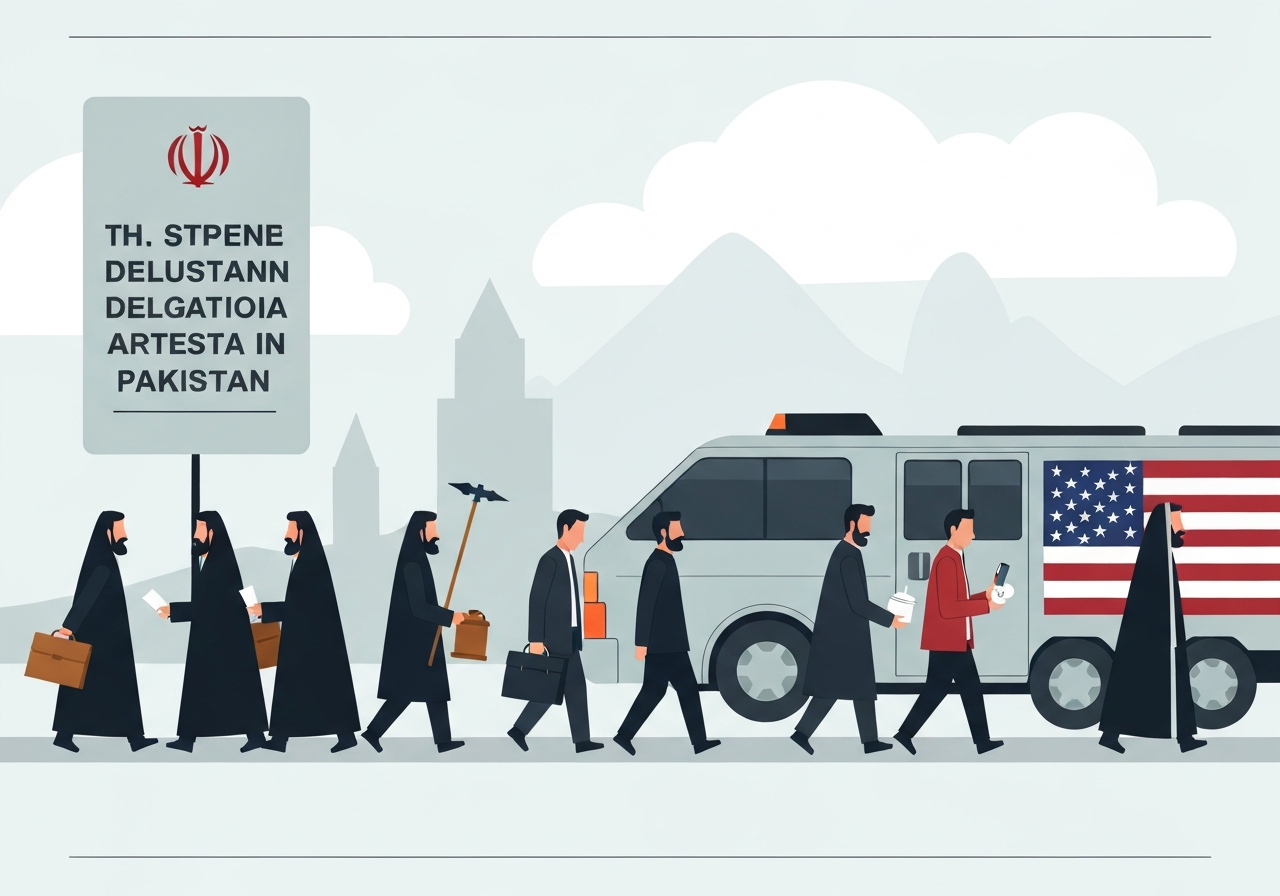
Lead: A high-level Iranian delegation has arrived in Islamabad ahead of scheduled talks with a U.S. team led by Vice‑President JD Vance, aiming to build on a fragile ceasefire and prevent wider regional escalation. The meetings come after a two‑week pause in major hostilities and amid separate U.S.-brokered preparations for Israel-Lebanon discussions in Washington. Both sides entered the talks with preconditions: Iran has demanded sanction relief and a Lebanon ceasefire, while U.S. negotiators have warned that bad faith would end constructive engagement. The outcome will test whether diplomacy can stabilize several theatres shaken since 28 February.
Key Takeaways
- The Iranian delegation arrived in Islamabad on the eve of talks with a U.S. team led by Vice‑President JD Vance, joined by Jared Kushner and Special Envoy Steve Witkoff.
- Iran’s team is headed by Parliament Speaker Mohammad Bagher Ghalibaf and includes Foreign Minister Abbas Araghchi and central bank governor Abdolnaser Hemmati, signaling Tehran’s focus on political, diplomatic and economic demands.
- Main Iranian preconditions reportedly include a Lebanon ceasefire and the unfreezing of billions in assets; the U.S. has set clear negotiating guidelines from the president.
- A 14‑day ceasefire was announced on 7 April; violations and contested terms have already strained its durability.
- More than 1,700 people have been reported killed in Lebanon since the wider campaign began; an Israeli strike on 8 April reportedly killed at least 303 people and wounded about 1,150.
- Iran has experienced an internet blackout since 28 February; connectivity was reported to have passed 1,000 hours during the outage.
- Key sticking points include Iran’s nuclear enrichment stance, control or rules for the Strait of Hormuz, sanctions relief and guarantees against future attacks.
Background
The talks in Islamabad follow weeks of shuttle diplomacy in which Pakistan has positioned itself as an intermediary, leveraging longstanding ties with Tehran and working with Washington to open direct channels. The sudden onset of the broader conflict on 28 February — which regional reporting says included strikes on Tehran and cascading attacks across the region — dramatically raised the stakes and prompted urgent international efforts to halt escalation. Washington and Tehran have little institutional trust after years of sanctions, the 2018 U.S. withdrawal from the JCPOA framework, and recurrent confrontations across the Gulf.
Iran’s delegation composition — a mix of political, diplomatic and economic figures — reflects priorities beyond battlefield cessation: Tehran seeks removal of sanctions and economic relief, diplomatic recognition of its rights to enrich uranium for civilian use, and assurances it will not be attacked while negotiating. The U.S. team’s inclusion of senior advisers who previously worked on ceasefires highlights Washington’s interest in pairing immediate de‑escalation with longer-term security commitments. Meanwhile, Israel and Lebanon are preparing separate, U.S.-mediated talks in Washington, complicating regional sequencing.
Main Event
Vice‑President JD Vance traveled to Islamabad to head the U.S. delegation, and told reporters before departure that the U.S. would offer an “open hand” if Tehran negotiates in good faith, while warning those who try to “play us” that the team would be unresponsive. His delegation includes Jared Kushner and Steve Witkoff, both of whom have been active in prior ceasefire and mediation efforts. Vance’s plane made a routine refuelling stop in Paris en route to Pakistan.
The Iranian delegation, led by Parliament Speaker Mohammad Bagher Ghalibaf, arrived in the Pakistani capital after internal debate in Tehran about whether to attend. Iran’s foreign minister Abbas Araghchi — a veteran of nuclear negotiations — and central bank governor Abdolnaser Hemmati were also present, underlining Tehran’s insistence on economic relief, including access to frozen assets, as part of any agreement. Iranian posts on social platforms from senior figures signalled public scepticism about U.S. intentions even as Tehran engaged diplomatically.
Negotiators face several immediate flashpoints: the precise terms and enforcement of the ceasefire, mechanisms to unfreeze funds, and whether Lebanon’s conflict with Israel must be settled before wider progress with Iran. Israel has publicly said the ceasefire does not cover Lebanon, and has continued strikes there; Lebanon and Israel agreed to begin talks in Washington this week, although Israel stated Hezbollah would not participate. The meetings in Islamabad and Washington will run on parallel tracks, each affecting the prospects of regional stability.
Analysis & Implications
At their core, these talks test whether fragile, transaction‑by‑transaction diplomacy can bridge decades of mutual distrust. For Tehran, negotiating without significant sanctions relief would be politically costly; for Washington, offering concessions without firm safeguards risks domestic and regional backlash. The presence of senior Iranian economic officials signals that Iran prioritises immediate economic relief as leverage to calm domestic turmoil and fund reconstruction where needed.
Strategically, any arrangement that affects freedom of navigation in the Strait of Hormuz would have global economic implications. Iran has used access to the Strait as leverage and has proposed new rules for shipping that some Gulf states and trading partners would likely reject. Even limited disruption to tanker traffic would push global oil prices and prompt rapid diplomatic and military responses from affected states.
Domestically in the U.S., the administration’s approach — combining high‑level political figures and advisers with known roles in past negotiations — suggests a desire to achieve a visible diplomatic result. But political timelines and divergent regional interests (notably Israel’s posture toward Lebanon and Hezbollah) make a comprehensive deal unlikely in the short term. The best immediate outcome may be a durable pause in large‑scale hostilities rather than a sweeping political settlement.
Comparison & Data
| Item | Reported figure / date |
|---|---|
| War onset | 28 February (strikes on Tehran) |
| Ceasefire announced | 7 April (14‑day ceasefire) |
| Lebanon reported deaths since campaign began | More than 1,700 |
| 8 April strike in Lebanon | At least 303 killed, ~1,150 wounded |
| Iran internet blackout | Exceeded 1,000 hours since 28 February |
These figures compile public reporting and official statements cited during live coverage. The casualty counts and timeline points frame why negotiators are under pressure to produce concrete, verifiable steps that can be implemented quickly, particularly measures addressing humanitarian access, payments, and verification for any concessions.
Reactions & Quotes
“If the Iranians are willing to negotiate in good faith, we are certainly willing to extend an open hand.”
JD Vance, U.S. Vice‑President
Vance offered a mix of conciliation and warning before departure, stressing that the U.S. team expects sincerity. His remarks set a public standard against which Tehran’s negotiating posture will be measured.
“You don’t need a back up plan,”
Donald J. Trump, U.S. President
President Trump expressed optimism and said he wished the vice‑president luck, while emphasizing firm goals, notably preventing a nuclear weapon and reopening the Strait of Hormuz. His high‑level comments frame U.S. political expectations for negotiators.
“Israel refused to discuss a ceasefire with the Hezbollah terrorist organization, which continues to attack Israel and is the main obstacle to peace between the two countries.”
Michael Leiter, Israeli Ambassador to the U.S.
Israel’s public line that Hezbollah will not be part of ceasefire negotiations with Lebanon complicates U.S. mediation and Lebanon’s position that Hezbollah’s role must be addressed to secure a lasting pause.
Unconfirmed
- Reports that the initial strikes killed Iran’s Supreme Leader Ayatollah Ali Khamenei are cited in some timelines but remain contested and were not confirmed by independent authoritative sources at the time of reporting.
- Leaked descriptions of Iranian “10‑point” and U.S. “15‑point” proposals circulated publicly; neither side had formally published full texts before the Islamabad talks.
- Suggestions that Mohammad Bagher Ghalibaf is being groomed as a successor or partner to lead Iran in a post‑conflict period remain speculative.
Bottom Line
The Islamabad talks represent a rare, high‑level direct channel between Tehran and Washington that could reduce immediate escalation risks but are unlikely to resolve deep structural disputes quickly. Success should be judged first by whether the ceasefire holds and whether mechanisms for sanctions relief and humanitarian assistance can be agreed and verified.
Parallel negotiations between Israel and Lebanon complicate sequencing; progress in one track will depend on visible, enforceable steps in the other. Observers should watch for concrete verification measures, timelines for unfreezing assets, and formal language on maritime rules — each will reveal how far diplomacy can go in restoring a measure of regional stability.
Sources
- BBC Live Coverage (news media) — live reporting and on‑the‑ground updates on talks and timeline.
- Reuters (news media) — regional reporting, casualty and strike accounts.
- The White House (official) — statements on U.S. negotiating guidance and delegation.
- U.S. Department of State (official) — diplomatic context and mediation statements.