
Lead
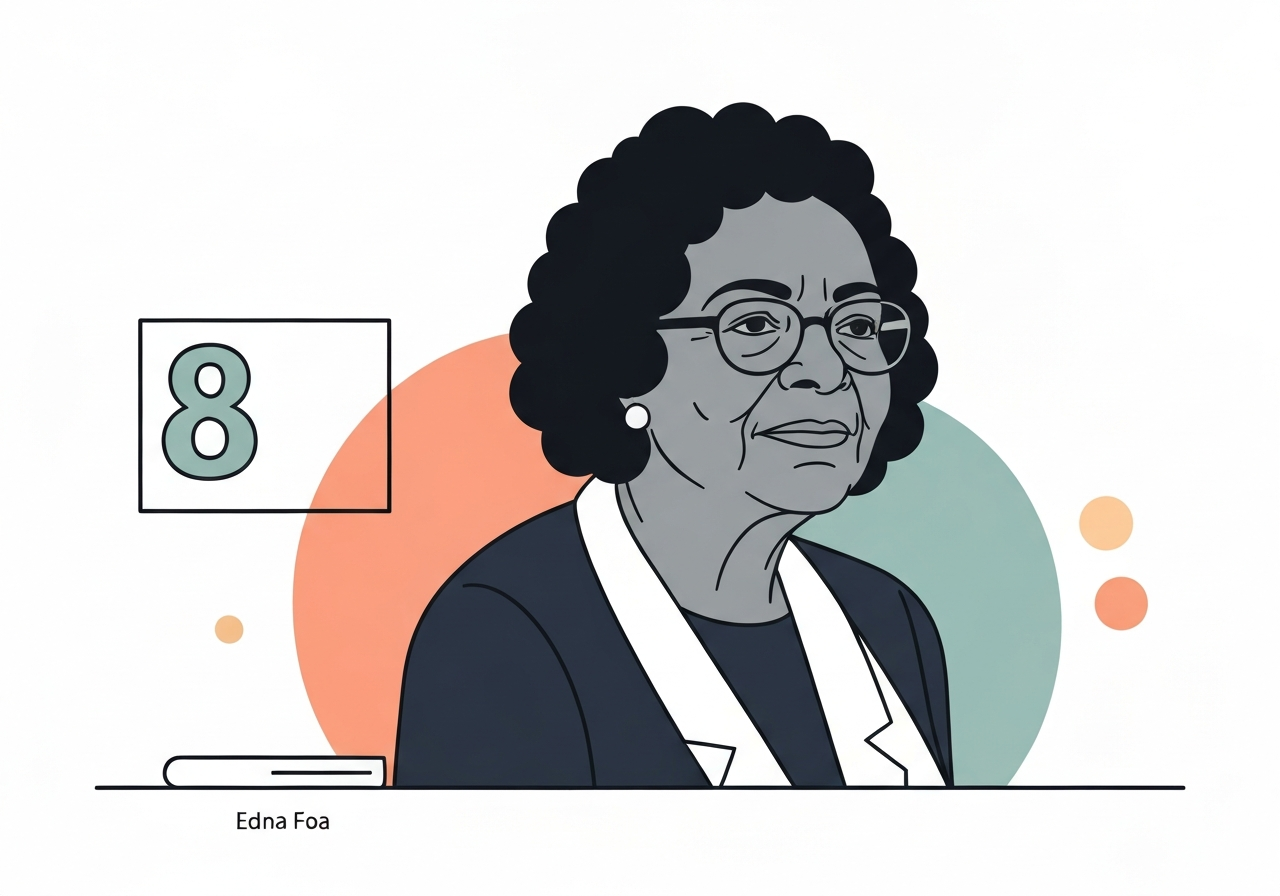
Edna Foa, an Israeli American clinical psychologist who developed prolonged exposure therapy and transformed treatment for post-traumatic stress disorder, died on March 24 in Philadelphia at age 88. Her daughter, Yael Foa, confirmed that complications of pneumonia caused her death. Foa’s methods—pioneered from the late 1960s through the 1980s—shifted clinical practice toward direct, structured confrontation of trauma reminders. Her approach remains widely used and supported by research as an effective intervention for PTSD.
Key Takeaways
- Edna Foa died on March 24, 2026, at age 88; cause of death was complications of pneumonia, confirmed by her daughter Yael Foa.
- Foa completed clinical training in the late 1960s when gradual desensitization was the dominant treatment ethos for severe anxiety.
- In the 1980s she formalized prolonged exposure therapy: a structured protocol typically delivered in eight to twelve 90-minute sessions.
- Prolonged exposure combines repeated, detailed recounting of a traumatic memory in present tense with real-world exposures to feared cues.
- Research over decades has found prolonged exposure to be an evidence-based treatment for PTSD across civilian and military populations.
- Foa’s early clinical choices—moving some patients toward faster, direct confrontation of feared stimuli—helped motivate the protocol she later published.
- The shift she championed changed training standards, influenced clinical guidelines, and affected how health systems treat trauma survivors.
Background
When Foa entered clinical practice in the late 1960s, many therapists used gradual, carefully paced methods such as systematic desensitization to treat intense fears and anxieties. Those approaches often relied on incremental exposure—bringing a feared object or memory closer over long periods—on the assumption that slower progress reduced risk of retraumatization. Foa began to question whether incremental steps alone were sufficient for some patients, observing cases in which avoidance and prolonged caution appeared to maintain, rather than reduce, symptoms.
Across the 1970s and into the 1980s, research on anxiety and learning mechanisms matured, producing new models of fear conditioning, extinction, and memory reconsolidation. Clinicians and investigators sought therapies that could meaningfully reduce intrusive memories and avoidance behaviors that define PTSD. Stakeholders included veterans, survivors of assault and disasters, mental health clinicians, and public health systems grappling with the clinical and economic burden of untreated trauma.
Main Event
Foa’s clinical pivot is illustrated by an early case in which a patient fearful of objects associated with death had been assigned systematic desensitization. Rather than progressing slowly with incremental steps—such as bringing a small cemetery stone progressively closer—Foa took the patient to a funeral home and supported her through direct confrontation of the triggering context. From that and similar cases, she concluded that avoidance maintained distress and that carefully guided, immersive exposure could accelerate recovery.
In the 1980s Foa developed and tested what became known as prolonged exposure therapy. The protocol she advanced typically consisted of eight to twelve sessions, each about 90 minutes, in which patients repeatedly recount the traumatic event in the present tense and then undertake guided, real-world exposure to reminders of the trauma. The intent is to reduce avoidance, extinguish conditioned fear responses, and allow corrective learning about threat and safety.
Over subsequent decades clinicians and researchers adapted the protocol for different populations and settings while preserving its core elements: imaginal exposure to trauma memories, in vivo exposure to feared cues, and repeated practice. Trials and meta-analyses have consistently placed prolonged exposure among the leading empirically supported treatments for PTSD, and it has become part of clinical guidelines in multiple countries.
Analysis & Implications
Foa’s work shifted therapeutic emphasis from cautious, slow desensitization to active engagement with fear memories—an epistemic as well as clinical change. This reorientation influenced training curricula for psychologists and psychiatrists, pushing programs to teach structured exposure techniques and evidence-based outcome measurement. For patients, the approach offered a replicable route to symptom reduction, but it also demanded careful clinician training and supervision to manage distress during sessions.
The broader implications extend to health systems and policy. As prolonged exposure gained evidence, insurers and public health programs increasingly recognized its cost-effectiveness relative to prolonged disability. Yet implementation challenges remain: workforce shortages, provider reluctance to use exposure strategies, and uneven access in rural or under-resourced communities limit reach. Scaling effective training and integrating exposure-based care into primary and specialty settings are policy priorities if population-level benefit is to be realized.
Scientifically, Foa’s protocol stimulated further research into mechanisms of therapeutic change—how repeated retrieval of trauma memories and controlled re-exposure alter fear learning and memory reconsolidation. That research continues to inform hybrid interventions (e.g., combining pharmacologic adjuncts or digital tools) and to refine how exposure is delivered for complex presentations, such as comorbid substance use or persistent dissociation.
Comparison & Data
| Approach | Typical Format | Primary Goal |
|---|---|---|
| Systematic desensitization | Gradual steps; varying session length | Slowly reduce anxiety through relaxation + graded exposure |
| Prolonged exposure (Foa) | 8–12 sessions, ~90 minutes each; imaginal + in vivo exposure | Reduce avoidance and extinguish conditioned fear via repeated, vivid recall and real-life exposure |
The table highlights structural differences: prolonged exposure concentrates therapeutic dose into structured, longer sessions focused on repeated memory retrieval and situational practice. Evidence summaries place prolonged exposure among the most consistently effective therapies for PTSD; however, individual response varies and some patients require adjunctive or longer-term supports.
Reactions & Quotes
Clinicians and researchers reacted to Foa’s passing by noting both the human and scientific legacy of her work. Her clinical examples and subsequent trials provided practical tools now widely taught in training programs.
“We started to feel that she will never get better at that rate.”
Edna Foa (recounting an early patient case)
The remark captures the clinical judgment that propelled Foa toward more direct exposures; it is emblematic of her willingness to challenge prevailing therapeutic conventions. Colleagues have emphasized that her method combined clinical daring with systematic, testable procedures.
“Avoiding those feelings was actually holding the patient back.”
Edna Foa (summarizing her clinical rationale)
This concise statement summarizes the theoretical pivot behind prolonged exposure: that avoidance preserves fear. The quote has been frequently cited in clinical discussions about when and how to employ exposure safely and effectively.
Unconfirmed
- Specific hospital name in Philadelphia and the exact location of death beyond the city were not specified in initial reporting and have not been independently confirmed here.
- Details about every institutional affiliation and the full list of survivors beyond daughter Yael Foa were not included in the source material available for this report.
- Some accounts of the very earliest trials and dates for the formal publication of the prolonged exposure protocol vary across summaries; exact trial start dates are not confirmed in this piece.
Bottom Line
Edna Foa’s career reshaped clinical approaches to trauma by demonstrating that carefully guided, direct engagement with traumatic memories and feared situations can reduce PTSD symptoms. Her prolonged exposure protocol distilled clinical observation into a replicable, testable treatment that has informed guidelines and training worldwide.
As services respond to rising demand for effective trauma care, her legacy highlights both the power of evidence-based psychotherapy and the practical challenges of scaling it: training clinicians, addressing access gaps, and tailoring care for complex cases. For patients and clinicians alike, Foa’s work remains a cornerstone of contemporary PTSD treatment.
Sources
- The New York Times (news report)