
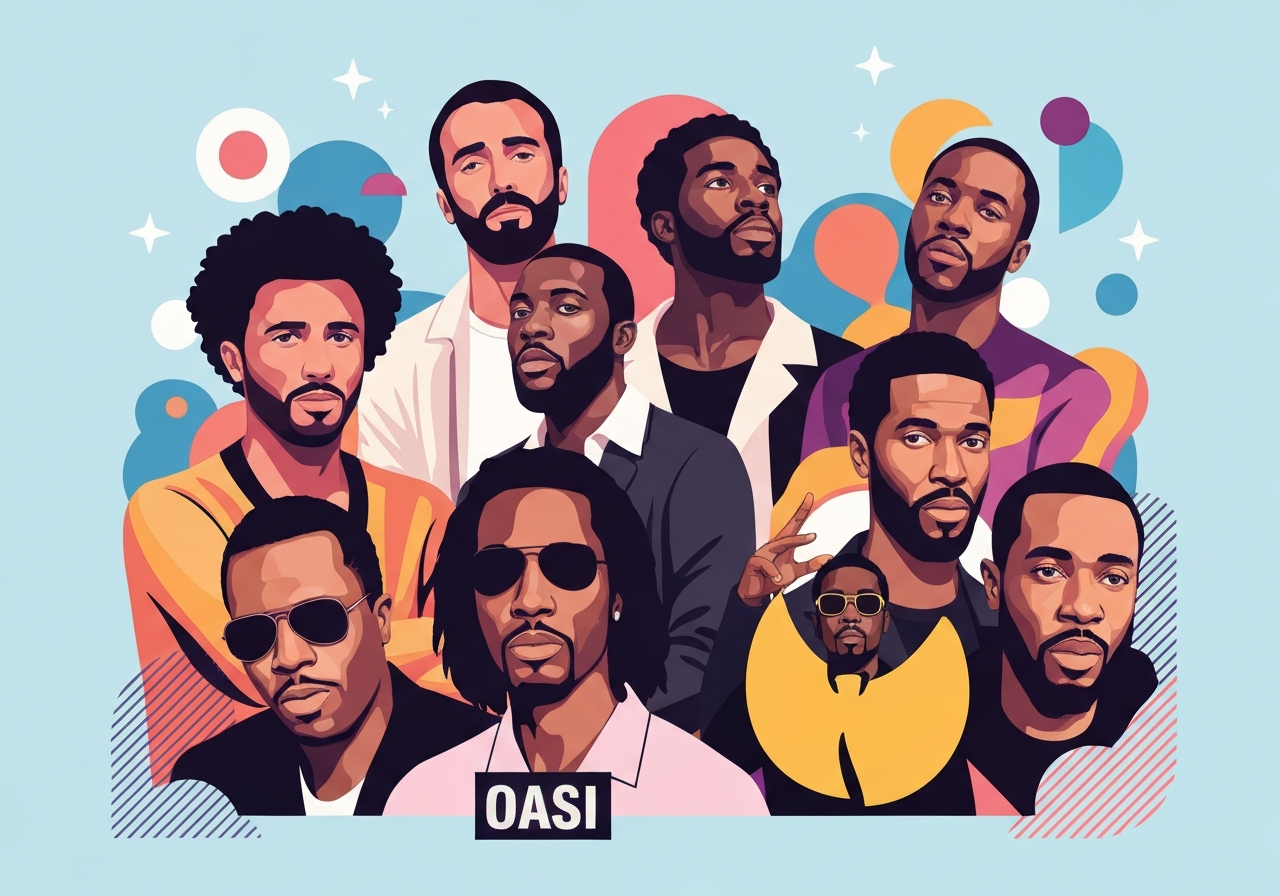
Who: Phil Collins, Iron Maiden, Billy Idol, Queen Latifah, Oasis, Sade, Joy Division/New Order, Wu‑Tang Clan and the late Luther Vandross are among the 2026 inductees to the Rock and Roll Hall of Fame. When & Where: The class was announced on Monday night in the United States during an airing of American Idol; the induction ceremony is scheduled for 14 November at the Peacock Theater in Los Angeles. What: The list includes first-time nominees (notably Wu‑Tang Clan) alongside artists already connected to the Hall (Collins as a member of Genesis). Result: The year’s slate spans genres from post‑punk and Britpop to heavy metal and hip‑hop, plus special-category honorees recognizing early influence, musical excellence and non‑performer contributions.
Key Takeaways
- Nine performers were announced in the 2026 class, including post‑punk figures Joy Division/New Order and Britpop’s Oasis, both cited for Manchester’s musical legacy.
- First‑time nominee Wu‑Tang Clan was inducted on the strength of their 1993 debut Enter the Wu‑Tang (36 Chambers), widely credited as a formative rap record.
- Phil Collins joins the Hall again after his earlier induction with Genesis; Collins has eight Grammy Awards and won Album of the Year in 1985 for No Jacket Required.
- The Hall’s eligibility rule requires an artist’s first commercial recording to be at least 25 years old; nominees were selected by more than 1,200 artists, historians and industry professionals.
- Late R&B star Luther Vandross was included; Vandross sold more than 25 million albums and died in 2005.
- Special categories name early influencers Queen Latifah, Celia Cruz, Fela Kuti, MC Lyte and Gram Parsons; musical excellence honorees include Linda Creed, Arif Mardin, Jimmy Miller and Rick Rubin.
- Ed Sullivan will receive the Ahmet Ertegun non‑performer award, recognizing the TV show’s long‑term cultural role more than five decades after its heyday.
- Notable artists who were nominated but not inducted this year include Mariah Carey, Lauryn Hill, INXS, Melissa Etheridge, Jeff Buckley, Pink, New Edition and Shakira.
Background
The Rock and Roll Hall of Fame inducts artists, non‑performers and industry contributors who meet a 25‑year eligibility rule aimed at assessing long‑term influence rather than momentary popularity. Voters—more than 1,200 in this cycle—come from a pool of musicians, historians and industry figures, a selection process meant to balance peer recognition and historical judgment. Over its history the Hall has broadened beyond a narrow conception of “rock” to encompass hip‑hop, R&B, electronic and world music, a shift reflected in recent classes that mixed legacy rock acts with genre‑defining innovators.
The inclusion of Manchester acts Joy Division and New Order spotlights the city’s outsized role in post‑punk and electronic crossover. Oasis’s return to the spotlight follows the band’s high‑profile reunion and cements Britpop’s ongoing presence in the Hall’s narrative. Meanwhile, the addition of Wu‑Tang Clan signals continued recognition of hip‑hop’s foundational records and collective crews rather than only solo artists.
Main Event
The class announcement came during a nationally televised segment on American Idol, where the Hall’s slate was revealed to a broad audience on Monday night. Performers and industry names named this year cover multiple generations: Phil Collins and Billy Idol represent major pop and rock profiles from the 1980s, Iron Maiden illustrates heavy metal’s British resurgence, and Sade and Luther Vandross recall soul and R&B traditions. Organizers emphasized both the diversity of styles and the longevity of influence in selecting the final list.
Wu‑Tang Clan’s induction marks a rare immediate elevation of a collective whose 1993 debut Enter the Wu‑Tang (36 Chambers) rewired East Coast hip‑hop aesthetics and production. Joy Division and New Order were announced as a paired entry given their overlapping membership and intertwined histories, a move intended to reflect continuity from late‑1970s post‑punk into 1980s synth‑pop innovation. Oasis’s presence underscores Britpop’s commercial and cultural impact in the 1990s and the band’s resumed activity following a recent reunion.
The Hall also disclosed honorees in its three special categories. Queen Latifah, Celia Cruz, Fela Kuti, MC Lyte and Gram Parsons were named for the Early Influence category, reflecting artists whose earlier work shaped later generations. The Musical Excellence awards went to songwriter Linda Creed and producers Arif Mardin, Jimmy Miller and Rick Rubin, acknowledging behind‑the‑scenes craftsmanship. The Ahmet Ertegun non‑performer award was given to Ed Sullivan, highlighting the television host’s role in introducing diverse artists to mass audiences.
Analysis & Implications
The 2026 class further expands the Hall’s stylistic reach, reinforcing that rock’s institutional memory now formally includes hip‑hop collectives and non‑Western influences. Inducting Wu‑Tang Clan alongside legacy rock and pop acts sends a clear signal about the Hall’s evolving canon: influence is evaluated across production innovation, cultural impact and continued citation by contemporary artists. This trend supports a broader redefinition of popular music heritage and how institutions adjudicate it.
For Manchester’s scene, pairing Joy Division and New Order in a single entry acknowledges lineage and personnel continuity, but it also raises curatorial questions about how institutions represent bands with fraught histories—loss, reinvention and differing legal entities. Oasis’s reinstated visibility via induction may renew debate over commercial success versus critical appraisal in Hall decisions, particularly for bands whose public personas were polarizing in their prime.
Commercially, induction often yields a measurable bump in catalog streams and sales; artists and estates frequently see renewed royalties and licensing interest after the ceremony. For estates such as Luther Vandross’s, a Hall nod can translate into curated reissues, documentary projects and cross‑genre collaborations, extending an artist’s marketability. Industry stakeholders—labels, promoters and streaming services—take such endorsements as an opportunity to repackage legacy content for new listeners.
Comparison & Data
| Inductee | Primary Origin | Dominant Genre |
|---|---|---|
| Phil Collins | England | Pop/Rock |
| Iron Maiden | England | Heavy Metal |
| Billy Idol | England | Punk/Pop Rock |
| Queen Latifah | United States | Hip‑Hop |
| Oasis | Manchester, England | Britpop |
| Sade | England | Soul/Jazz/Pop |
| Joy Division / New Order | Manchester, England | Post‑Punk / Electronic |
| Wu‑Tang Clan | Staten Island, US | Hip‑Hop |
| Luther Vandross (late) | United States | R&B/Soul |
The table highlights the geographic and stylistic spread of the class, from Manchester post‑punk to Staten Island hip‑hop. Such variety is increasingly typical of recent inductions and illustrates the Hall’s attempt to map influence rather than enforce genre boundaries. While not exhaustive, the list helps readers situate each act within broader musical lineages and commercial markets.
Reactions & Quotes
Organizers and artists responded to the announcement with statements emphasizing legacy and influence. The Hall framed the class as reflective of decades of innovation across styles and formats.
“This class represents transformative voices across generations and genres, each with a distinct imprint on popular music.”
Rock & Roll Hall of Fame (official statement)
Members of inductee communities and fans noted the personal and cultural significance of the selections, especially for artists whose work reshaped scenes or broke new ground.
“We grew from the streets of Staten Island to change the sound of hip‑hop; being recognized now is validation from peers and history.”
Representative comment attributed to members of Wu‑Tang Clan (public response)
Critics and some fans highlighted omissions from this year’s list, arguing that certain commercial or critically acclaimed artists remain underrepresented despite repeated nominations.
“A list this wide still leaves room for debate about who gets in and why—it’s a reminder that institutional recognition often lags cultural memory.”
Music industry commentator (analysis)
Unconfirmed
- Exact list of performers, presenters and whether surviving members of multi‑member acts will appear at the 14 November ceremony has not been released.
- Details about post‑induction archival releases or reissues tied to these inductions are not yet confirmed by labels or estates.
- Any planned tributes or performance setlists for the ceremony remain unannounced and should be treated as pending until official schedules are published.
Bottom Line
The Rock and Roll Hall of Fame’s 2026 class underscores the institution’s continuing effort to present a pluralistic account of popular music history—one that now more visibly includes hip‑hop collectives, British post‑punk innovators and legacy pop figures. The mix of first‑time nominees and established legends will likely broaden streaming interest and spark renewed discussion about how musical influence is measured and institutionalized.
For listeners and industry observers the induction calendar remains a valuable lens on retrospective cultural valuation: it can elevate catalogues, prompt new scholarly and commercial projects, and reframe careers for new audiences. The full commercial and cultural effects will become clearer after the November ceremony and with subsequent catalogue activity announced by artists, estates and labels.