
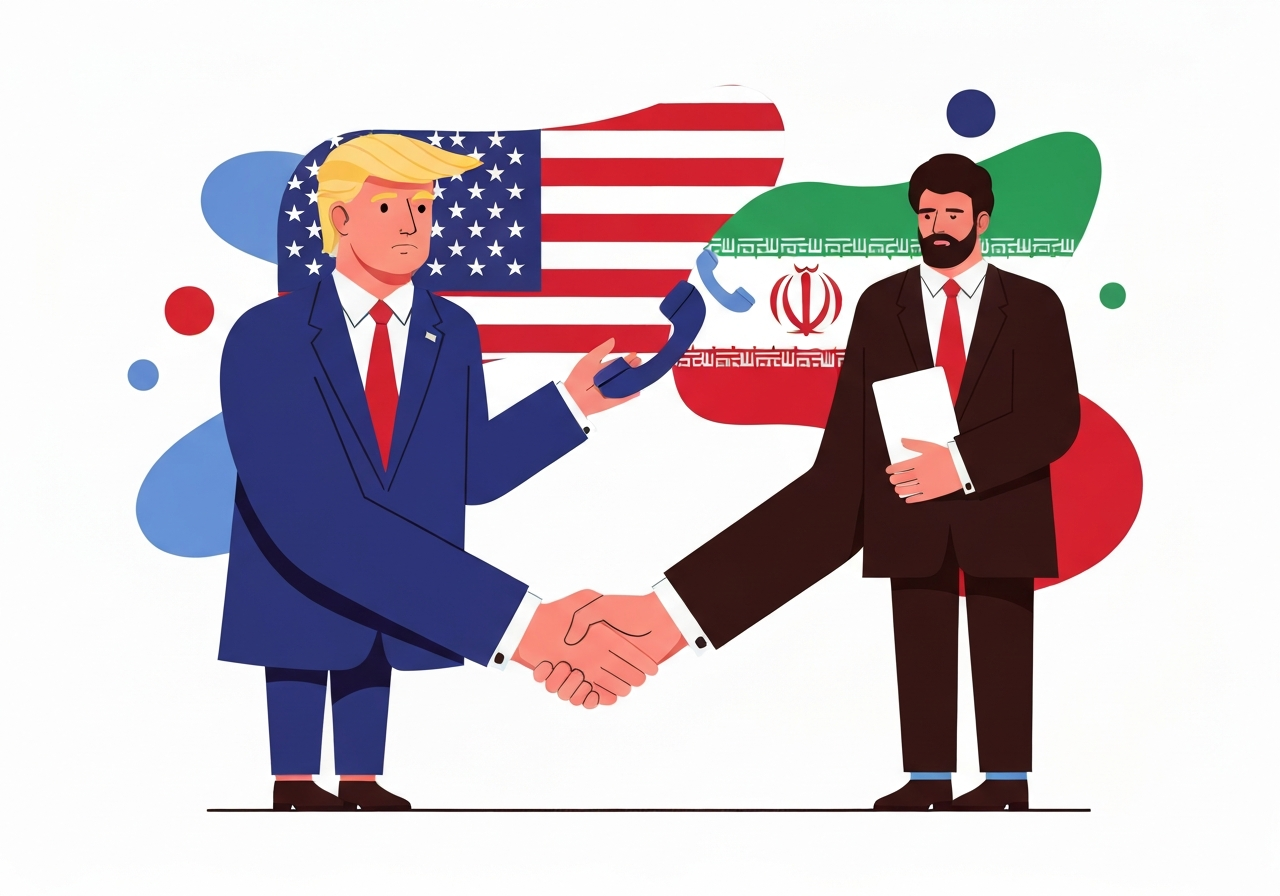
Lead: President Donald Trump said on April 14, 2026, that talks with Iran could resume within “the next two days” in Pakistan after an initial, marathon session in Islamabad failed to produce a deal. Vice President JD Vance — who led the U.S. delegation over the weekend — is expected to head any follow-up meeting before the current ceasefire expires on April 21. Simultaneously, a U.S.-declared naval blockade of Iranian ports along the Strait of Hormuz has sharply curtailed shipping, raising economic and diplomatic stakes. Negotiators remain deadlocked primarily over the timeframe for suspending Iran’s uranium enrichment and the fate of major enrichment sites.
Key takeaways
- President Trump said talks could resume within two days in Pakistan; U.S. officials say no meeting is yet scheduled but planning is under way (April 14, 2026).
- Vice President JD Vance led the weekend talks in Islamabad and is expected to lead a potential second round, joined possibly by special envoy Steve Witkoff and Jared Kushner.
- The main sticking point is a suspension of Iranian uranium enrichment and the timeframe; the U.S. also seeks dismantling of major enrichment facilities and reopening of the Strait of Hormuz.
- Ship-tracking firms and regional observers report daily traffic through the Strait of Hormuz has fallen by more than 90% since the conflict began; U.S. blockade targets traffic entering and leaving Iranian ports.
- Satellite imagery reviewed by CNN shows Iran clearing debris from tunnel entrances at underground missile bases, consistent with efforts to restore launch capability after strikes.
- Separate diplomacy: Israel and Lebanon held their first direct talks in decades in Washington, agreeing to further meetings while Israel declined to commit to a ceasefire in southern Lebanon.
- Humanitarian toll: Lebanese health officials reported at least 35 people killed in 24 hours amid continued Israeli strikes; other tallies put total Lebanese deaths since the conflict began at roughly 2,100.
Background
The current diplomatic push follows a weekend of intensive, face-to-face negotiations in Islamabad that stretched to roughly 21 hours but ended without a deal. U.S. and Iranian teams traded proposals on nuclear, military and security issues while Pakistan hosted trilateral sessions intended to bridge long-standing mistrust. The Biden-era and post-2024 dynamics that shaped previous talks have given way to a new configuration of U.S. envoys — including senior political figures close to the president — tasked with seeking a negotiated off-ramp.
Iran’s nuclear program and the presence of fortified, underground missile bases have been central security concerns for Washington and its regional partners. For Tehran, enrichment capability is framed as a sovereign technological program and a deterrent; for U.S. negotiators, a prolonged or indefinite enrichment pause and physical limits on key facilities are prerequisites to durable de-escalation. The Strait of Hormuz, one of the world’s most important oil chokepoints, has become a leverage point: a U.S.-declared blockade targeting Iranian port access is intended to pressure Tehran while leaving international transit nominally permitted.
Main event
In Islamabad, Vice President JD Vance led the U.S. side; Iran dispatched senior figures including Foreign Minister Abbas Araghchi and parliamentary negotiators. Officials briefed reporters that the principal impasse was not willingness to talk but the timeframe for suspending enrichment: both sides floated suspension proposals but diverged sharply on duration and verification. U.S. representatives also pressed for the dismantling of Iran’s largest enrichment sites and an immediate reopening of the Strait of Hormuz as part of any settlement.
President Trump later told the New York Post on April 14 that “something could be happening” over the next two days in Pakistan, though U.S. officials told CNN no follow-up session was yet finalized. Sources familiar with planning said Trump’s core negotiating team — Vance, special envoy Steve Witkoff and Jared Kushner — remain centrally involved and are discussing logistics and possible venues, with Geneva occasionally mentioned but Pakistan preferred by the president.
On the maritime front, ship-tracking platforms recorded severely reduced traffic through the Persian Gulf and Strait of Hormuz after the U.S. blockade was announced; some vessels nevertheless transited, including the tanker Argo Maris, which departed Bandar Abbas and briefly vanished from public trackers during transit before reappearing. U.S. Central Command said the blockade applies to traffic entering or exiting Iranian coastal waters and that ships not calling at Iranian ports may transit the waterway, a distinction that has led to differing interpretations on the ground.
Separately, satellite imagery shows Iran clearing debris from the entrances of underground missile bases — actions consistent with attempts to reconstitute buried launchers. Analysts say such repair activity is expected after strikes that targeted tunnel mouths. The combination of continued strikes in Lebanon, the U.S.-Iran stalemate, and maritime disruption has widened the conflict’s diplomatic and humanitarian dimensions.
Analysis & implications
The near-term diplomatic outlook hinges on two linked uncertainties: whether Iran will accept a verifiable suspension of enrichment for an acceptable timeframe, and whether Washington will accept arrangements that stop short of dismantling all major facilities. If talks restart quickly and both sides make modest concessions on sequencing and verification, a short extension of the ceasefire or a phased de-escalation is plausible before April 21. However, any ambiguity on enforcement or verification risks rapid unraveling.
The naval blockade amplifies pressure on Iran while imposing economic costs on global commerce. With pre-conflict traffic exceeding 100 transits per day through the Strait of Hormuz, a fall to under 10% of that volume creates immediate supply-chain disruptions for goods beyond oil — from manufacturing components to consumer goods — and raises insurance and rerouting costs for shippers. Those economic ripples may strengthen political incentives for a negotiated pause but also create leverage that could harden Iranian negotiating positions.
Militarily, satellite evidence of repair work at underground missile bases suggests Iran seeks to preserve retaliatory capabilities even while engaging diplomatically. That dynamic — accept damage, repair, then reconstitute — complicates calculations for any party relying on kinetic pressure to impose a permanent limit. Regionally, direct Israel-Lebanon diplomacy, even if tentative, signals an opening for de-escalation on other fronts; yet continuing Israeli strikes and Lebanese civilian casualties show that local conflicts can outpace broader U.S.-Iran negotiations.
Comparison & data
| Metric | Typical (pre-conflict) | Current (April 2026) | Change |
|---|---|---|---|
| Daily vessel transits through Strait of Hormuz | >100 ships/day | <10 ships/day | Down >90% |
| Length of Islamabad talks | — | ~21 hours (continuous session) | One prolonged session |
| Ceasefire expiry | — | April 21, 2026 | Fixed deadline |
These figures put the diplomatic timetable and economic pressure in perspective. A blockade that reduces strait traffic by more than 90% within weeks dramatically raises logistical and political costs for states dependent on Gulf shipping. The 21-hour Islamabad session demonstrates the negotiators’ willingness to engage directly, but the continuing calendar pressure of the April 21 ceasefire deadline compresses options and increases the chance that talks will be rushed or collapse.
Reactions & quotes
International leaders, U.S. officials and regional actors reacted in public comments. Below are representative statements and context.
“The indication we have is that it is highly probable that these talks will restart.”
António Guterres, UN Secretary-General
The UN chief framed renewed diplomacy as likely, signaling international appetite for negotiation and underscoring the UN’s preference for a political solution. Guterres’ statement increases pressure on both sides to pursue credible verification measures if talks resume.
“I feel very good about where we are…We’re going to keep on negotiating and try to make it happen.”
Vice President JD Vance
Vance, who led the U.S. delegation in Islamabad, reiterated White House intent to press for a broad, enforceable settlement — what he described as a “grand bargain.” His comments aim to signal continuity of U.S. negotiating posture and to reassure allies that senior U.S. officials remain directly engaged.
“A blockade is never the answer.”
António Costa, European Council President
European leaders expressed concern that a naval blockade risks escalation and legal controversy, while some Western partners favor a multinational defensive posture rather than unilateral maritime pressure. Costa’s remarks reflect broader European nervousness about disruptions to trade and international legal norms.
Unconfirmed
- A follow-up meeting in Pakistan within two days is being discussed but had no confirmed schedule as of April 14, 2026.
- The precise cargo status and intentions of ships like the Argo Maris remain unclear due to temporary gaps and possible GPS interference in tracking data.
- U.S. intelligence assessments that “roughly half” of Iran’s missile launchers remain intact derive from internal sources and have not been publicly declassified for independent verification.
Bottom line
Diplomacy and deterrence are now running on parallel tracks. Rapidly arranged follow-up talks could extend the ceasefire and avert renewed large-scale fighting, but the April 21 deadline compresses choices and elevates the role of verification, sequencing and trust-building measures. The primary technical disagreement — the length and scope of any enrichment suspension — is solvable in principle but will require politically costly assurances from one or both sides.
Meanwhile, the blockade and stalled negotiations impose real economic costs and humanitarian consequences that ripple beyond the combatants. For policymakers and market participants, the immediate priorities are clarity on whether talks will reconvene, transparent verification steps if they do, and contingency planning for prolonged disruption of Gulf shipping.
Sources
- CNN – Live updates on the Iran conflict and U.S.-Iran talks (news)
- United Nations (official statements by the Secretary-General) (official)
- U.S. Central Command (operational statements on maritime operations) (official)
- MarineTraffic (maritime tracking and vessel movements) (private data provider)
- Joint Maritime Information Center, Bahrain (regional shipping observations) (regional maritime authority)