
Lead
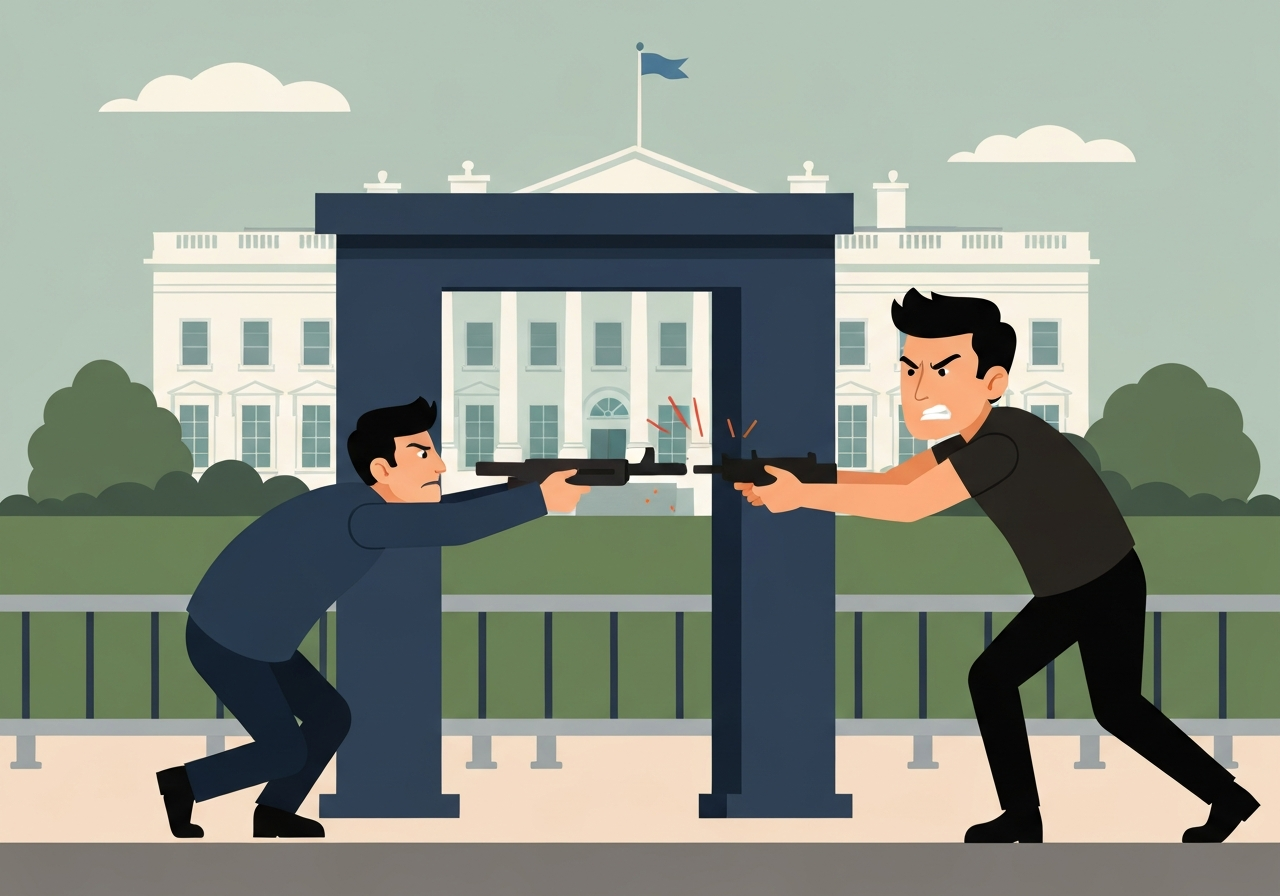
On May 23, 2026, a 21-year-old man opened fire at a U.S. Secret Service checkpoint outside the White House in Washington, D.C., prompting officers to return fire. The suspect, later identified as Nasire Best, was transported to George Washington University Hospital and died there. A bystander was also struck and taken to a hospital; no Secret Service officers were hospitalized. Federal investigators, including the FBI, are on site as officials review the sequence of events and whether the bystander was hit by the suspect’s rounds or by return fire.
Key takeaways
- Incident date and location: May 23, 2026, near 17th Street and Pennsylvania Avenue NW outside the White House.
- Victims: Two people wounded — the suspect (21-year-old Nasire Best) who later died at George Washington University Hospital, and one bystander in serious condition.
- Fire exchanged: Sources reported between about 10 and 30 shots fired during the confrontation; estimates vary by witness and official accounts.
- Weapons and response: The suspect reportedly produced a revolver from a bag and fired at a Secret Service security booth; Secret Service Uniformed Division officers returned fire and struck the suspect.
- Agency status: No Secret Service officers were hospitalized; several were evaluated at the scene.
- Prior contacts: Best had a previous July 2025 encounter with the Secret Service near the White House and was sent to a psychiatric ward, according to sources.
- Leadership briefed: President Trump was at the White House and was briefed; the FBI said it was on scene supporting the Secret Service.
Background
The White House and its immediate perimeter are protected by multiple federal agencies, with the U.S. Secret Service responsible for screening and immediate security at checkpoints and entry points. Incidents that involve gunfire near the Executive Mansion are rare but prompt immediate lockdowns and multiagency responses because of the concentration of protected officials and the public on adjacent streets.
Since mid-2025 there have been several high-profile security breaches and attempts within blocks of the White House, including an incident nearly a month earlier involving a gunman who breached a checkpoint outside a hotel ballroom tied to the White House Correspondents’ Dinner. Those events have intensified scrutiny of perimeter screening, shifts in staffing and equipment at public-facing security posts, and coordination among Secret Service, Metropolitan Police Department and the FBI.
Local law enforcement records and Secret Service logs show that individuals with prior brushes with security or mental-health crises sometimes reappear in public spaces near federal facilities. Officials face the dual tasks of protecting high-value targets while processing civil rights and health-related responses for people in distress.
Main event
At roughly 7:00–7:30 p.m. on May 23, multiple witnesses and law enforcement sources reported what sounded like dozens of gunshots near a Secret Service booth on Pennsylvania Avenue NW. Sources quoted to reporters said the suspect approached the booth, took a revolver from a bag and fired multiple rounds in the direction of officers stationed inside.
Secret Service Uniformed Division officers returned fire at the assailant. Officials transported the wounded suspect to George Washington University Hospital; he later died there. A bystander was also struck and taken to a nearby hospital; officials have not yet publicly confirmed whether that wound came from the suspect or from return fire.
Secret Service spokespersons and law enforcement sources said no Secret Service officers required hospital treatment, though multiple personnel were evaluated on site. The agency confirmed it was working to corroborate initial reports and the FBI publicly noted it was supporting the Secret Service response.
The exchange of gunfire prompted a temporary lockdown of the White House complex and clearing of the North Lawn; the lockdown was later lifted and the press allowed back onto the North Lawn after officials declared the immediate threat contained. Media crews in the area reported ducking to the ground after hearing the shots.
Analysis & implications
Immediate implications center on perimeter screening and how officers assess asymmetrical threats in public-facing positions. A security booth is both a forward observation post and a potential point of vulnerability; the incident will likely trigger reviews of glass and barrier hardening, staffing patterns and the distance between pedestrian thoroughfares and staffed posts.
The suspect’s prior encounter with the Secret Service in July 2025, when he attempted to gain entry near the White House and was sent to a psychiatric ward, raises questions about interagency information-sharing on repeated contacts and whether follow-up, court orders or community mental-health interventions were pursued. Policy discussions will include how to balance civil liberties with preventive monitoring when individuals reappear after prior episodes.
Politically, any shooting near the Executive Mansion escalates pressure on federal and local officials to demonstrate rapid, transparent review while avoiding speculation about motive. The involvement of a bystander adds urgency to ballistic and forensic analysis to determine shot trajectories and sources of all rounds fired, which will affect public messaging and possible criminal or administrative findings.
In the near term, expect a formal Secret Service after-action review and likely congressional scrutiny. Longer-term effects could include investment in nonlethal response tools, expanded training in de-escalation and mental-health triage for uniformed officers stationed at public checkpoints.
Comparison & data
| Metric | This incident (May 23, 2026) | Recent nearby breach (~April 2026) | July 2025 contact |
|---|---|---|---|
| Reported shots fired | Estimated 10–30 | Single breach, no widespread gunfire | None (attempted entry) |
| Wounded | 2 (suspect fatally; 1 bystander seriously) | No reported injuries | No reported injuries; psychiatric detainment |
| Secret Service officers hospitalized | 0 | 0 | 0 |
The table summarizes available figures from initial reports; ranges reflect discrepancies among witness accounts and early law enforcement statements. Forensic ballistic work and official timelines will narrow these ranges as investigators process shell casings, medical records and surveillance footage.
Reactions & quotes
Public officials and agency leaders publicly praised the agents’ rapid response while emphasizing ongoing investigations and concern for the wounded. Below are representative statements with context.
“Grateful for the Secret Service and the agents’ decisive actions to protect President Trump and everyone at and around the White House this evening.”
Senate Majority Leader John Thune (social post)
Leader Thune’s message framed the incident as averted harm to protected parties and highlighted confidence in the agents’ actions; he did not provide operational details.
“We are grateful for our brave Secret Service agents who took quick, decisive action to protect President Trump, and our prayers are with the victims of tonight’s senseless shooting for a speedy recovery.”
House Speaker Mike Johnson (social post)
Speaker Johnson also expressed thanks and extended sympathy to the injured; such statements are typical while operational reviews continue.
“The FBI is on scene and supporting the Secret Service.”
FBI Director Kash Patel (social post)
Director Patel’s brief note signaled interagency involvement; the FBI typically supports evidence collection and federal criminal inquiry when shots occur near protected sites.
Unconfirmed
- Exact number of rounds fired: early reports range from about 10 to 30 shots; precise count awaits ballistic collection.
- Source of the bystander’s wound: authorities have not yet confirmed whether it was caused by the suspect’s fire or by returning fire from officers.
- Motive and intent: investigators have not released a motive; links to prior mental-health treatment are reported by sources but remain a matter for official inquiry and medical records.
Bottom line
The May 23 shooting near the White House resulted in the death of the assailant and a wounded bystander but no hospitalizations among Secret Service officers. The rapid return of fire by Uniformed Division officers appears to have contained the immediate threat. For the public and policymakers, the episode will prompt focused reviews of perimeter protection, interagency information-sharing on repeat contacts and how mental-health encounters are tracked and followed up.
Investigators will need several days to assemble a complete factual record — shell casings, body-worn camera and surveillance video, medical records, and witness statements — before drawing firm conclusions about trajectories, responsibility for the bystander’s wound, and any lapses that policy changes could address. Meanwhile, officials are likely to emphasize both gratitude for officers’ actions and the need for measured, evidence-based findings.