
Lead
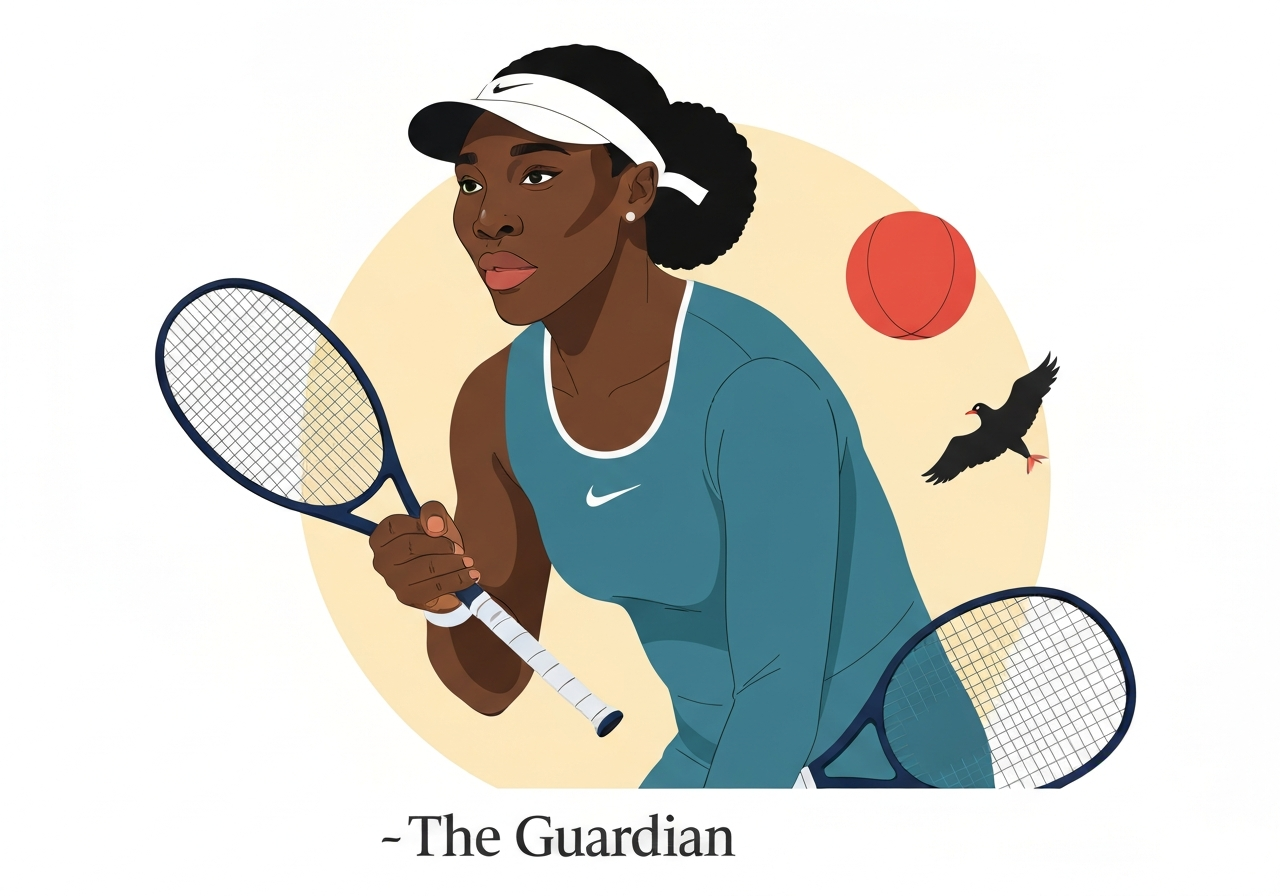
Serena Williams, 44, has announced she will return to professional tennis next week at the Queen’s Club WTA 500 event in west London, entering the doubles draw with a wildcard. The former world No. 1 has not played since the 2022 US Open, where she described stepping away as “evolving away” rather than formally retiring, and she remained listed among retired players until last year. Williams revealed the decision in a short Nike video and a separate statement highlighting Queen’s grass as a meaningful stage for her. The move opens the door to a gradual comeback with potential further entries before Wimbledon, which begins on Monday 29 June.
Key Takeaways
- Serena Williams, aged 44, will play at Queen’s Club next week on a wildcard into the doubles draw of the WTA 500 tournament in west London.
- Williams’ last competitive appearance was the 2022 US Open; she characterized that exit as “evolving away” and remained on the retired players’ list until last year.
- She announced the return with a Nike video and a written statement, saying Queen’s is the right place to start this next chapter.
- Victoria Mboko, a Canadian ranked No. 9 in singles, will partner Williams in the doubles event at Queen’s Club.
- Wimbledon begins on Monday 29 June, roughly three weeks after the first day of Queen’s, limiting preparation time for any singles campaign.
- Williams holds 23 Grand Slam singles titles (the women’s Open-era record) and 14 Grand Slam doubles titles with her sister, Venus.
- She is the only player to have completed the career Golden Slam in both singles and doubles, and she is a seven-time Wimbledon singles champion.
Background
Williams’ competitive absence dates to the 2022 US Open, after which she said she was “evolving away” from full-time tennis, a phrasing that left her status ambiguous. Despite that language she remained listed among retired players until last year, which added to uncertainty over whether she intended any return to the tour. Grass courts have long been central to her legacy—seven Wimbledon singles titles are part of a record Grand Slam haul—and she frames Queen’s as a natural place to restart because of that history.
Speculation about a comeback intensified after Williams re-entered the anti-doping testing pool in December, a step many interpret as preparation for competition given the logistical demands of testing programs. Reports since have described training activity in Florida and social-media posts, including footage of other players training with her, which fed wider expectations that she was preparing to play again in some capacity.
Main Event
The announcement arrived in two parts: a brief Nike video and a written statement from Williams. The Nike clip used a succinct tagline to signal the return, while Williams’ statement explicitly named Queen’s Club as the place she wanted to resume competing. Tournament organisers confirmed she will enter the doubles draw on a wildcard, and the pairing with Victoria Mboko was named ahead of the event.
Mboko, the Canadian currently ranked No. 9 in singles, reacted positively when asked about the partnership at the French Open, saying she and Williams have kept in contact and that she respects Williams’ choice to return on her own terms. The Queen’s doubles entry offers Williams a way to ease back into match play without immediately committing to the greater physical demands of singles.
If Williams opts to pursue singles at Wimbledon, the narrow grass-court window will compress her preparation: Wimbledon begins on Monday 29 June, roughly three weeks after the opening day at Queen’s. That schedule means any decision to enter singles at the All England Club would require rapid escalation of match intensity and recovery management.
Analysis & Implications
Williams’ return is significant for the sport’s commercial and competitive landscape. From a commercial standpoint, her presence generates substantial attention—ticket demand, broadcast interest and sponsor activation typically spike when a player of her stature competes. For the WTA, even a limited doubles appearance lifts event profiles and can influence scheduling and media coverage across the grass-court swing.
Competitively, a staged comeback via doubles is a pragmatic path: doubles matches reduce court time and can help Williams assess match fitness and movement on grass without the sustained physical toll of best-of-three singles. That said, transitioning from doubles to singles quickly—particularly on grass, where reaction time and movement are at a premium—remains a tough ask for any returning player aged 44.
Her return also reshapes narratives around longevity and legacy in women’s sport. Williams’ record—23 Grand Slam singles titles and the rare career Golden Slam in both singles and doubles—sets a high bar for comparisons. Any additional competitive appearances will renew debates about historical rankings and the evaluation of modern-era achievements.
Comparison & Data
| Category | Serena Williams (reported) |
|---|---|
| Grand Slam singles titles | 23 |
| Grand Slam doubles titles (with Venus) | 14 |
| Wimbledon singles titles | 7 |
| Career Golden Slam | Completed in singles and doubles |
The table above summarises the principal career totals cited in the announcement and background reporting. Those figures illustrate why any return, even brief, will attract intense scrutiny: they are central to how Williams’ place in tennis history is measured. For context, Wimbledon’s grass-court season is short—players typically have only a few weeks between clay and the start of the championships—so scheduling choices this month are consequential for preparation.
Reactions & Quotes
Williams’ short-form video and statement prompted immediate public responses from players and media. The tone from peers has been largely supportive, emphasising respect for her legacy and for her decision-making.
“Guess everybody heard the news.”
Nike video announcement (brand statement)
The clip’s concise tagline was followed by a fuller message from Williams explaining her reasons for starting at Queen’s. That written comment framed the tournament as a meaningful and fitting place to begin “this next chapter.”
“Queen’s Club feels like the perfect place to begin this next chapter. Grass has given me some of the most meaningful moments of my career, and I’m excited to be back competing on one of the sport’s most iconic stages.”
Serena Williams (statement)
Victoria Mboko offered a player-level reaction when questioned at Roland Garros, emphasising admiration and a desire to let Williams manage the timing of any comeback. Mboko’s response highlights the mixture of excitement and deference among younger players facing a returning superstar.
“I’m very happy. Me and Serena have stayed in touch, which is really, really nice… If she’s ready to come back on her own terms, then it’s up to her to announce that.”
Victoria Mboko (player)
Unconfirmed
- Whether Williams will enter the Wimbledon singles draw remains unconfirmed and will depend on her fitness and preparation after Queen’s.
- Reports of extensive training in Florida and other behind-the-scenes preparation are based on media accounts and social posts and have not been fully verified by Williams’ camp.
- Any plans beyond Queen’s Club, including a broader singles schedule or a sustained tour return, have not been officially announced.
Bottom Line
Serena Williams’ decision to play doubles at Queen’s Club is a carefully managed return that balances competitive desire, legacy considerations and physical pragmatism. It allows her to re-enter match play in a lower-intensity format while placing the spotlight on one of tennis’ most storied grass-court venues. For fans and the WTA, even a short appearance will have outsized commercial and narrative impact.
Whether this begins a fuller comeback that includes singles at Wimbledon or beyond will be decided in the coming weeks, based on on-court assessments and Williams’ own goals. Until she confirms additional entries, the Queen’s wildcard stands as a clear but measured signal: Serena is ready to compete again, but the shape and scope of her return remain to be seen.
Sources
- The Guardian — news media report summarising the announcement and context.