
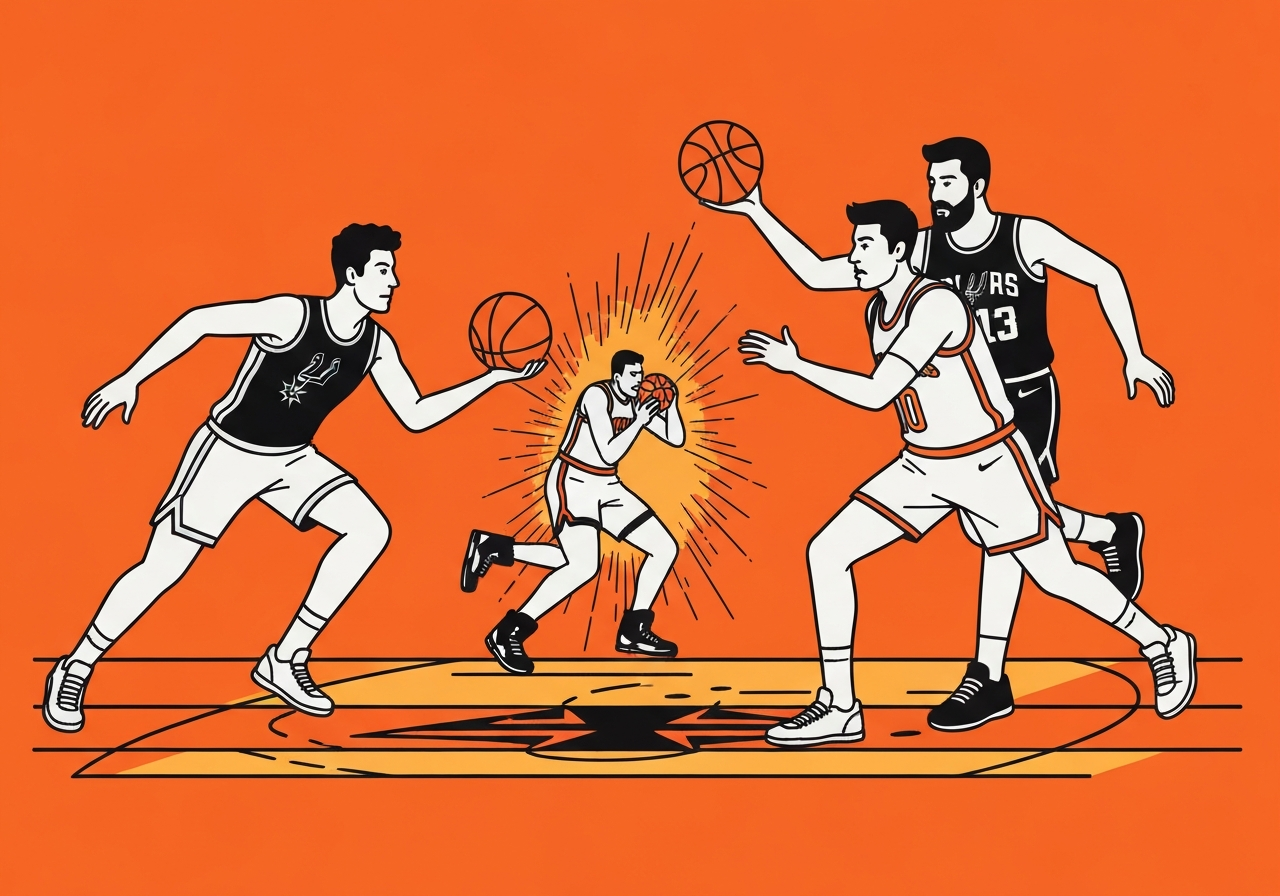
Lead: The New York Knicks hosted the San Antonio Spurs for Game 4 of the 2026 NBA Finals at Madison Square Garden on June 10, tipping at 8:30 p.m. ET on ABC. San Antonio built a commanding first-half advantage — at one point leading 71-47 with 1:35 remaining in the second quarter — while the Knicks tried to respond behind Jalen Brunson and Karl-Anthony Towns. The result of this night’s game could flip the series narrative: the Knicks were aiming for a 3-1 lead, the Spurs for a 2-2 deadlock. Early shooting by the Spurs, particularly from beyond the arc, defined the opening stages.
Key Takeaways
- Spurs dominated early: San Antonio led 41-22 after one quarter and later stretched the margin to 71-47 with 1:35 left in the half.
- Shooting barrage: The Spurs were 15-for-23 (65.2%) in the first quarter, including 6-for-10 (60.0%) from three in that period.
- Victor Wembanyama and Devin Vassell paced the Spurs: Wembanyama had 13 points and 3 rebounds in the opening frame; Vassell scored 12 and was 3-for-3 from deep early.
- Knicks struggled with foul trouble and spacing: Karl-Anthony Towns picked up two quick fouls, and Jalen Brunson was forced to create under duress while finishing with 17 points at one update.
- Bench and adjustments in focus: Jeremy Sochan (a former Spur) checked in for defensive matchups; Knicks coach Mike Brown explored bench options amid the early deficit.
- Series context: The Spurs entered Game 4 down 1-2 in the series (San Antonio 1, New York 2); a Spurs win would even the series, while a Knicks victory could leave San Antonio facing a 3-1 hole.
Background
The 2026 NBA Finals have been a tactical, star-driven duel. New York arrived with Jalen Brunson and Karl-Anthony Towns as focal points offensively, while the Spurs counter with Victor Wembanyama and a rising guard core including De’Aaron Fox and Stephon Castle. San Antonio carried momentum from a 115-111 Game 3 victory in which Wembanyama delivered 32 points, 8 rebounds, 6 assists, 2 steals and 3 blocks — his best performance of the series so far.
Game 4 at Madison Square Garden represented a pivotal moment for both franchises. If the Knicks could win, they would hold a 3-1 advantage that historically makes a Finals comeback extremely difficult; conversely, a Spurs win would restore balance and shift pressure back onto New York. Both coaching staffs prepared for small-lineup versatility, interior matchups and three-point shooting — categories that have tilted games in this series intermittently. Fan expectations and national TV exposure (ABC) have amplified the stakes.
Main Event
San Antonio opened Game 4 with a ferocious first quarter, posting 41 points on 15-of-23 shooting (65.2%) and draining six triples on 10 attempts. Victor Wembanyama and Devin Vassell spearheaded the attack; Wembanyama attacked the rim effectively while Vassell shot 3-for-3 from deep early. New York faltered: Karl-Anthony Towns incurred two early fouls, forcing Mitchell Robinson and others into rotation adjustments, and Jalen Brunson found limited room to operate against a tight Spurs defense.
As the second quarter progressed the Spurs maintained their edge. At 4:54 remaining in the half San Antonio led 66-42, and later held a 71-47 advantage with 1:35 on the clock; in that stretch they were 7-for-14 (50%) from three in the quarter and 14-for-26 (53.8%) on the game in one timestamp. New York attempted countermeasures — including inserting Jeremy Sochan to guard Wembanyama and reintroducing Mitchell Robinson after a quick foul by Ariel Hukporti — but could not erase the gap before halftime in these updates.
Court energy swung between frustration and urgency for Knicks fans. Jalen Brunson provided bursts of scoring — at one update he had 17 points — and Karl-Anthony Towns attacked when available, but offensive flow was intermittently disrupted by turnovers and missed spacing. San Antonio’s defensive rotations and confident perimeter shooting underpinned a rare offensive outburst on Madison Square Garden parquet.
Analysis & Implications
San Antonio’s early shooting performance changed the game’s leverage. When a team is converting above 50 percent overall and near 60 percent from three in a quarter, defensive pressure must be redistributed — often opening driving lanes and paint opportunities for Wembanyama. The Spurs’ ball movement and shot selection in Game 4’s opening stages created high-value looks and put the Knicks in scramble mode defensively.
For New York, Karl-Anthony Towns’ foul trouble is a strategic headache. Early fouls limited Towns’ minutes and aggressiveness in the first half window described in the updates, forcing coach Mike Brown to rely on Mitchell Robinson and bench units to contest Wembanyama. That lineup shuffle can reduce offensive spacing and hamper the Knicks’ ability to manufacture consistent post touches for Towns later in games.
Coaching adjustments will be decisive. San Antonio coach (and game-plan architects) can continue to exploit perimeter mismatches and trust secondary creators like Stephon Castle and Devin Vassell. Conversely, New York needs to find ways to generate cleaner entry passes to Towns and create off-ball movement to free Brunson. Time-of-possession management, targeted screens to free shooters, and protecting Towns from foul trouble will be immediate tactical priorities.
Longer-term, a Spurs victory here would reset narrative pressure and demonstrate San Antonio’s capacity to win in hostile environments; a Knicks win would place New York on the verge of a championship closeout. Either outcome will materially alter league-wide conversations about roster construction, the value of two-way wings, and Wembanyama’s early-career Finals resume.
Comparison & Data
| Snapshot | Spurs Points | Spurs FG | Spurs 3P |
|---|---|---|---|
| End of 1Q | 41 | 15-23 (65.2%) | 6-10 (60.0%) |
| Late 2Q (1:35) | 71 | 14-26 (53.8%) | 7-14 (50.0%) |
These figures are mid-game snapshots reported during the live updates. They illustrate how San Antonio’s hot perimeter shooting in the first quarter produced an early points gap that New York was addressing with personnel and matchup changes. Historical context: the largest comeback in Finals history is 24 points, recorded by the Celtics against the Lakers in Game 4 of 2008 — a benchmark New York would need to surpass for a full recovery if trailing by similar margins.
Reactions & Quotes
“Victor Wembanyama scored many of his Game 3 points around the bucket, helping spark the Spurs’ 115-111 win.”
John Schuhmann, NBA.com (analysis)
“11 THREE-POINTERS FOR THE SPURS 😳 — They hold the lead in Game 4 on ABC!”
NBA (official X/Twitter account)
Context: The Schuhmann line summarizes Wembanyama’s Game 3 impact and underlines why matchups near the rim matter; the NBA account’s social updates captured the crowd reaction and the Spurs’ hot shooting in real time. Public reaction inside Madison Square Garden was a mix of stunned silence and rhythmic encouragement as the Knicks sought to respond.
Unconfirmed
- Whether Karl-Anthony Towns’ second foul in the first quarter would force a prolonged reduction in minutes remains unclear from the live updates.
- Reports that bench rotations will permanently change after this game are speculative; coaches often make temporary adjustments within the game context.
- Any long-term effect of Mitchell Robinson’s fractured right fifth metacarpal on his play in subsequent games is not yet established.
Bottom Line
San Antonio’s hot shooting and early defensive intensity flipped home-court dynamics in Game 4, producing a sizeable multi-quarter advantage that put New York on its heels in the first half. How the Knicks respond — by protecting Towns from foul trouble, re-establishing inside-out rhythm, and generating clean catch-and-shoot opportunities — will determine whether this game becomes a one-off swing or a series-defining moment.
Coaches’ halftime adjustments, bench contributions and whether the Spurs can sustain their efficiency are the three variables to watch. The outcome will materially change the Finals trajectory: a Knicks win inches them closer to a title, while a Spurs victory re-opens the series conversation and validates San Antonio’s resilience on the road.